1. Proper Site Preparation and Grading
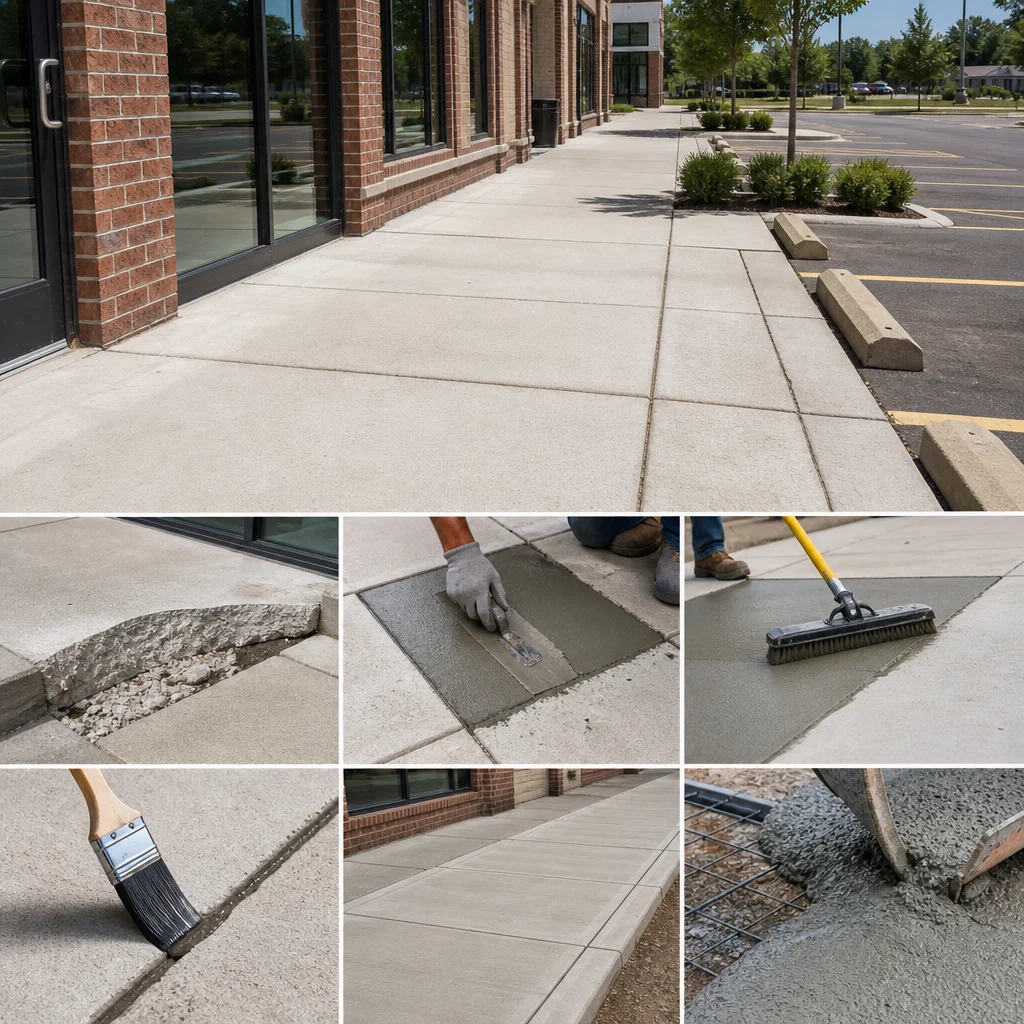
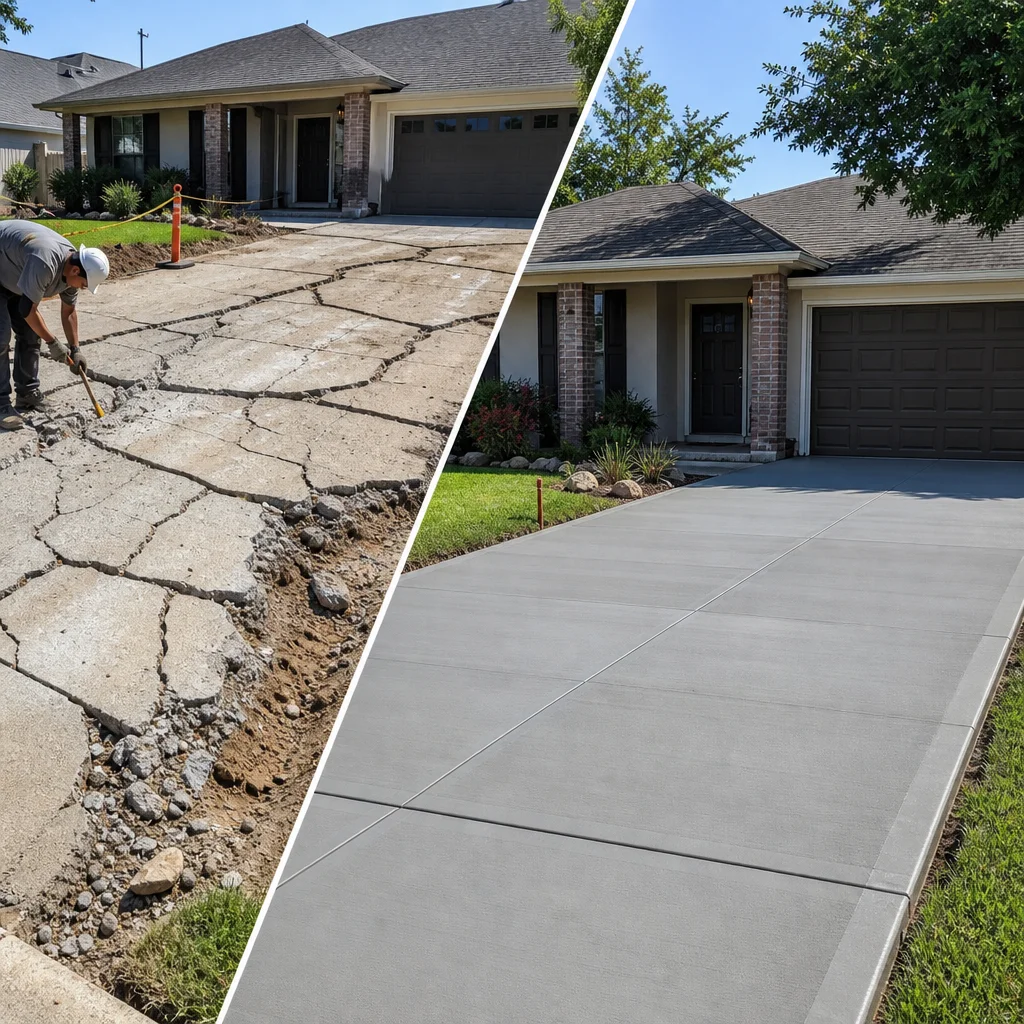
Commercial concrete slab subsidence is one of the most expensive problems a business owner can face. When a slab settles unevenly, it creates trip hazards, structural concerns, and costly repairs that can disrupt operations for weeks. The good news is that proper prevention strategies established during installation can eliminate most settling issues before they start.
We’ve helped dozens of Lafayette-area businesses protect their investments by implementing concrete foundation settling solutions from the ground up. Preventing slab settlement requires attention to multiple factors: soil preparation, material quality, moisture management, and expert installation. Each element plays a critical role, and skipping any one of them significantly increases your risk.
The foundation of a stable commercial slab begins long before concrete is poured. Site preparation determines whether water drains away from your slab or pools underneath it, and whether the soil beneath remains stable or shifts over time.
Our team starts every project with a detailed site assessment. We identify existing drainage patterns, slopes, and soil composition. Proper grading ensures that water flows away from the structure at a minimum slope of 2-3 percent per 10 feet. When water sits beneath a slab, it destabilizes the subgrade and creates voids that lead to settling.
We also remove unsuitable materials like topsoil, organic debris, and clay that retains moisture. These materials compress over time and create uneven settlement patterns. Once the site is cleared, we establish the correct elevation to prevent water from pooling near the building’s perimeter.
What to do next: Have a licensed contractor evaluate your site’s current drainage before scheduling any concrete work. Poor drainage is the leading cause of slab subsidence we see in commercial properties.
2. Quality Soil Compaction Techniques
Loose soil beneath a slab will compress under the weight of the concrete and traffic loads, causing the slab to sink. Proper compaction reduces air voids and ensures the subgrade remains stable for decades.
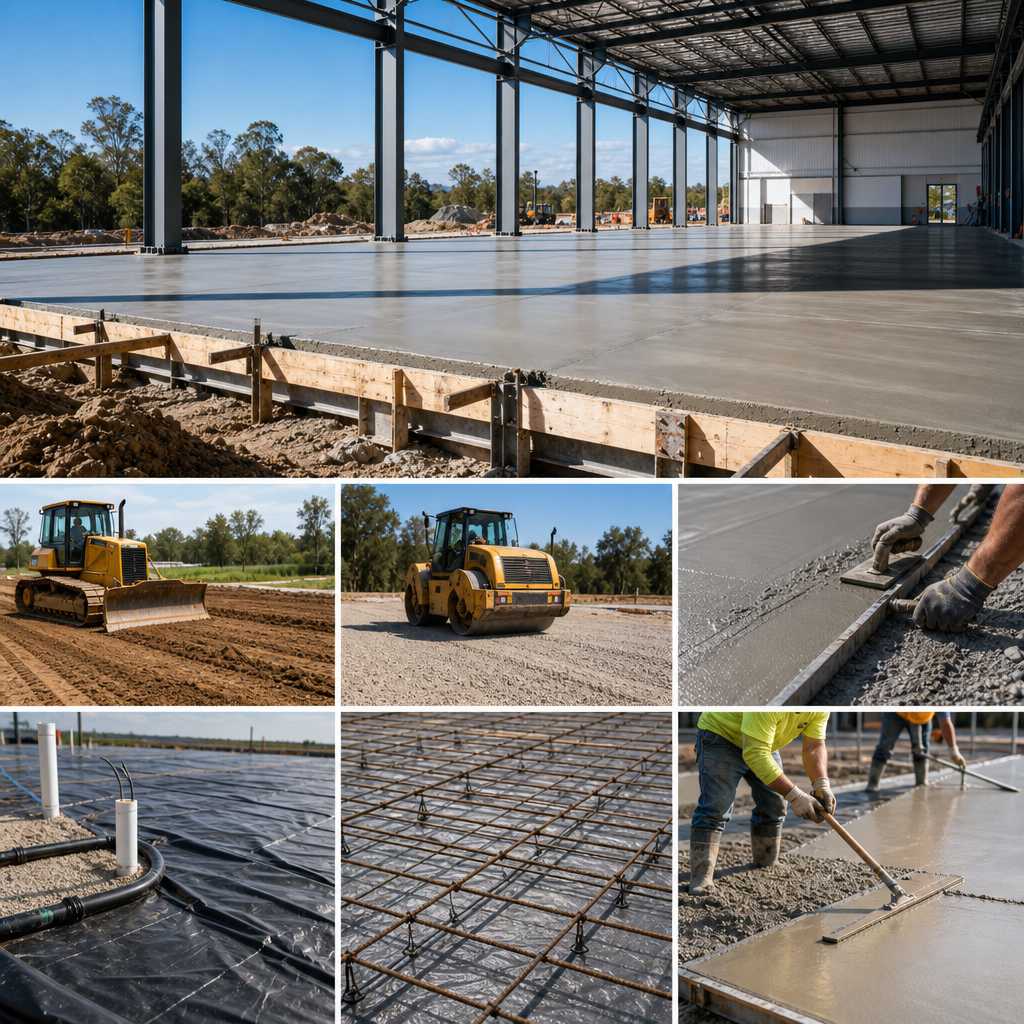
We use vibratory plate compactors and rollers to compress soil in thin, uniform lifts. The process is labor-intensive but non-negotiable. We compact soil in 6-to-8-inch lifts, achieving at least 95 percent of maximum density for each layer. This prevents the “settling over time” scenario where a slab gradually sinks as the soil underneath finally compacts under load.
Different soil types require different compaction approaches. Sandy soils respond well to vibratory methods, while clay-heavy soils may need moisture adjustments before compaction. We test soil density on site to confirm adequate compaction before moving forward. Skipping this step or rushing the process is where cheaper contractors cut corners and cause problems later.
What to do next: Ask any contractor for their soil compaction specifications and test results. If they can’t produce documentation, that’s a red flag.
3. Adequate Base Layer Installation
Once soil is properly compacted, a stable base layer provides additional support and helps manage moisture beneath the slab. We install 4 to 6 inches of crushed stone or recycled asphalt as a base, depending on the intended use and soil conditions.
This base layer serves multiple purposes. It distributes loads more evenly across the subgrade, provides a drainage path for water, and acts as a capillary break that prevents moisture from wicking up into the concrete. The base material must be clean aggregate (not clay-contaminated) and properly compacted in the same manner as the soil below it.
For heavy commercial applications like parking lots or industrial facilities, we may recommend a thicker base layer or a stabilized base. These applications experience concentrated loads and temperature variations that demand extra support. Undersizing the base layer is a common mistake that leads to premature settling in high-traffic areas.
What to do next: Specify base layer thickness in your concrete estimate and confirm it matches the intended use of your slab.
4. Professional Moisture Control Management
Moisture is the hidden culprit in many settling problems. Water beneath a slab can soften the subgrade, encourage differential settling, and create corrosion risks for reinforcement. Controlling moisture requires multiple layers of defense.
We install vapor barriers (typically 6-mil polyethylene sheeting) to block capillary moisture from rising into the concrete. The barrier is placed directly on the prepared base layer, with overlapped seams taped to prevent gaps. In areas with high groundwater or poor drainage, we may recommend a more robust solution like a sealed membrane system or a drainage mat.
We also manage moisture during the curing process. Concrete needs to cure slowly and evenly. If one side of a slab dries faster than the other, differential shrinkage creates internal stress and can warp or crack the surface. We cover freshly poured slabs and manage site conditions to ensure even curing.
What to do next: Ask your contractor about their moisture control plan before pouring. If they’re not addressing moisture prevention, your slab is at risk.
5. Strategic Reinforcement and Support Systems
Concrete has excellent compressive strength but poor tensile strength. Without proper reinforcement, slabs crack under stress, and cracks allow water to reach the base layers, accelerating settling.
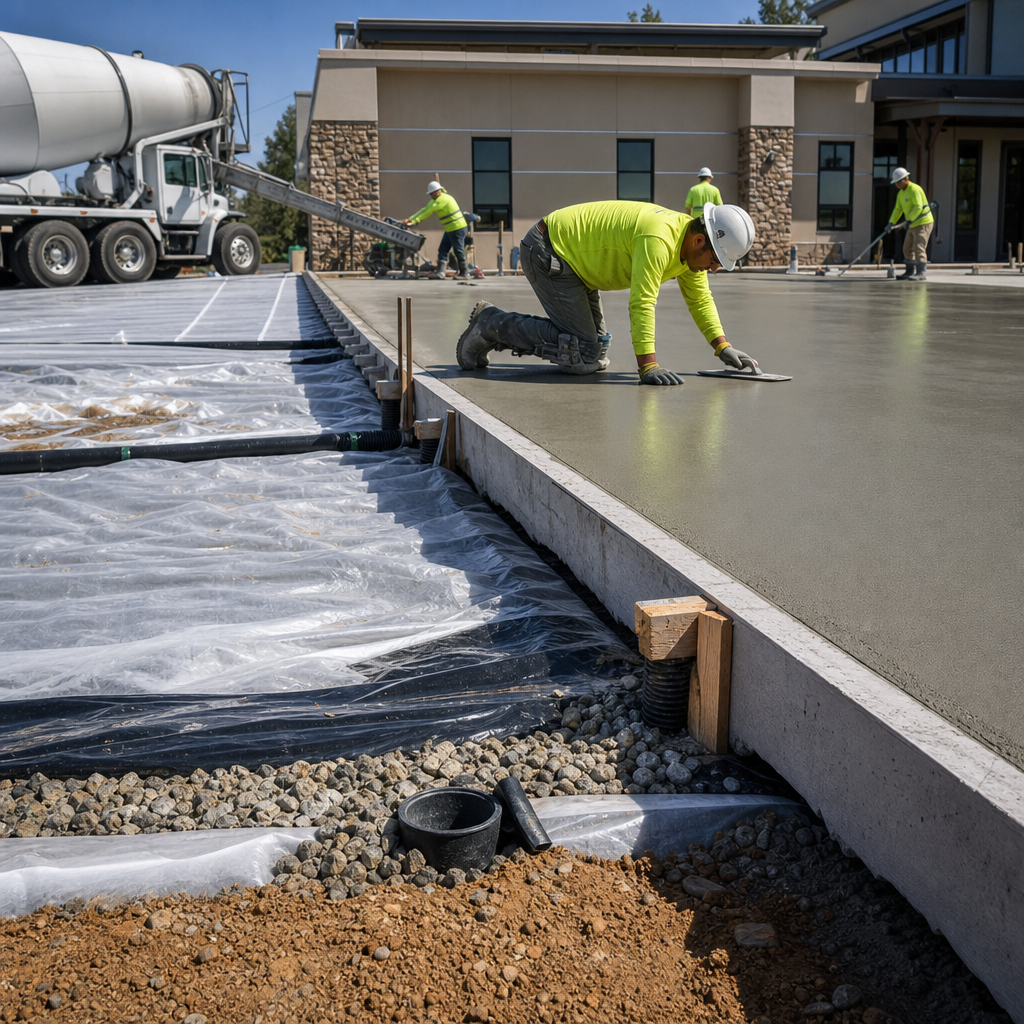
We use wire mesh, rebar, or fiber reinforcement depending on the application and load requirements. For commercial slabs, rebar is typically superior because it provides consistent reinforcement throughout the depth of the concrete. We place rebar in a grid pattern, ensuring proper spacing and concrete coverage to prevent corrosion.
We also consider whether a slab needs additional structural support. In areas with poor soil conditions or very heavy loads, a thickened slab, post-tensioning, or even a pile-supported foundation may be necessary. These systems cost more upfront but prevent catastrophic settling that would otherwise require expensive remedial work.
What to do next: Discuss your slab’s intended use and load requirements with your contractor. They should recommend specific reinforcement based on your application, not use a one-size-fits-all approach.
6. Regular Inspection and Maintenance Schedules
Prevention doesn’t end after the concrete cures. Ongoing maintenance catches problems early before they become expensive.
We recommend annual inspections for commercial slabs in the first three years after installation. During these inspections, we look for early signs of settling: hairline cracks, uneven surfaces, or drainage issues. We also check that sealants and caulking remain intact around the slab’s perimeter.
Our inspection process is detailed but straightforward. We use precision straightedges to measure surface variations, assess concrete condition, and verify that drainage is functioning as designed. If we spot developing issues, we can address them with concrete leveling or targeted repairs before they affect the structure.
What to do next: Schedule an inspection within the first year after your slab is installed. Early detection of minor issues prevents expensive repairs later.
7. Professional Installation by Licensed Contractors
Every prevention strategy in this article depends on expert execution. Cutting costs on installation quality guarantees future settling problems that will cost far more to repair.
We’re a licensed and insured concrete contractor, and that certification means we’ve met specific training and safety standards. More importantly, we stand behind our work. We understand local soil conditions, weather patterns, and drainage challenges in Lafayette because we work here every day. That local expertise translates into better outcomes for your specific property.
When you choose a contractor, verify their license, check references with other commercial property owners, and review their approach to each prevention strategy. Ask them to explain their site preparation process, base layer specifications, moisture control plan, and inspection protocols. Their answers will tell you whether they’re building your slab right.
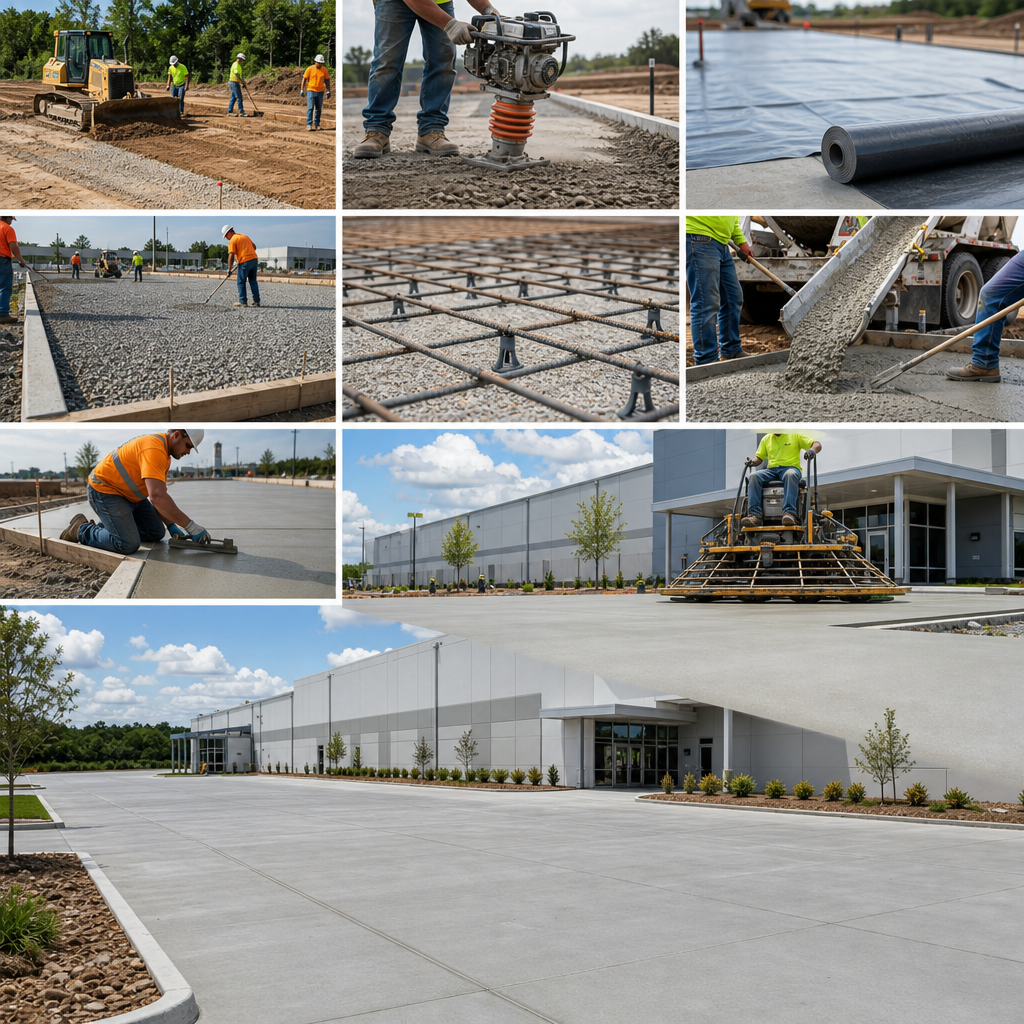
We recommend getting estimates from concrete slab contractors who can document their process and stand behind their work with warranties. A low-cost bid from an unlicensed operator might seem appealing initially, but it’s a false economy. The cost difference between quality installation and problem installation pales in comparison to the expense of fixing a settling slab.
What to do next: Contact us for a free no-obligation estimate. We’ll evaluate your site, explain our prevention strategy, and provide detailed specifications so you understand exactly how we’ll protect your investment.
—
Preventing commercial concrete slab settling is achievable when you address site preparation, soil compaction, base layers, moisture control, reinforcement, maintenance, and professional installation as an integrated system. Each element matters, and none can be overlooked. We’ve completed hundreds of commercial concrete projects across Lafayette and nearby areas, and the ones that remain perfectly stable decades later are the ones where we invested in prevention from day one.
Contact Conkrete Workz today to discuss your concrete project and learn how we prevent settling problems before they start.
Frequently Asked Questions (FAQ)
What causes commercial concrete slabs to settle?
We’ve found that concrete slab settling typically results from inadequate site preparation, poor soil compaction, or insufficient base layers beneath the concrete. Moisture infiltration and lack of proper drainage can also cause the soil to shift over time, leading to subsidence. By addressing these factors during the initial installation phase, we help our clients avoid costly settling issues down the road.
How often should we inspect our commercial concrete for settling issues?
We recommend scheduling professional inspections at least annually, with more frequent checks if you notice any visible cracks or uneven surfaces. Early detection allows us to address minor issues before they develop into major structural problems. Our team can assess your slab’s condition and recommend preventative maintenance tailored to your specific property.
Can you fix a commercial concrete slab that’s already settling?
Yes, we offer concrete leveling and repair services for slabs that have already begun to settle. Depending on the severity and cause, we may use techniques like mud jacking or polyurethane injection to restore the slab to its proper level. However, we always emphasize that preventing settling through proper initial installation is far more cost-effective than correcting it later.