Why Your Driveway Sinks and What It Means for Your Home
A sunken driveway isn’t just an eyesore. It signals something deeper is happening beneath the surface, and the longer you wait, the more expensive the problem becomes. At Conkrete Workz, we’ve helped hundreds of Lafayette property owners address driveway settling before it turns into a foundation threat.
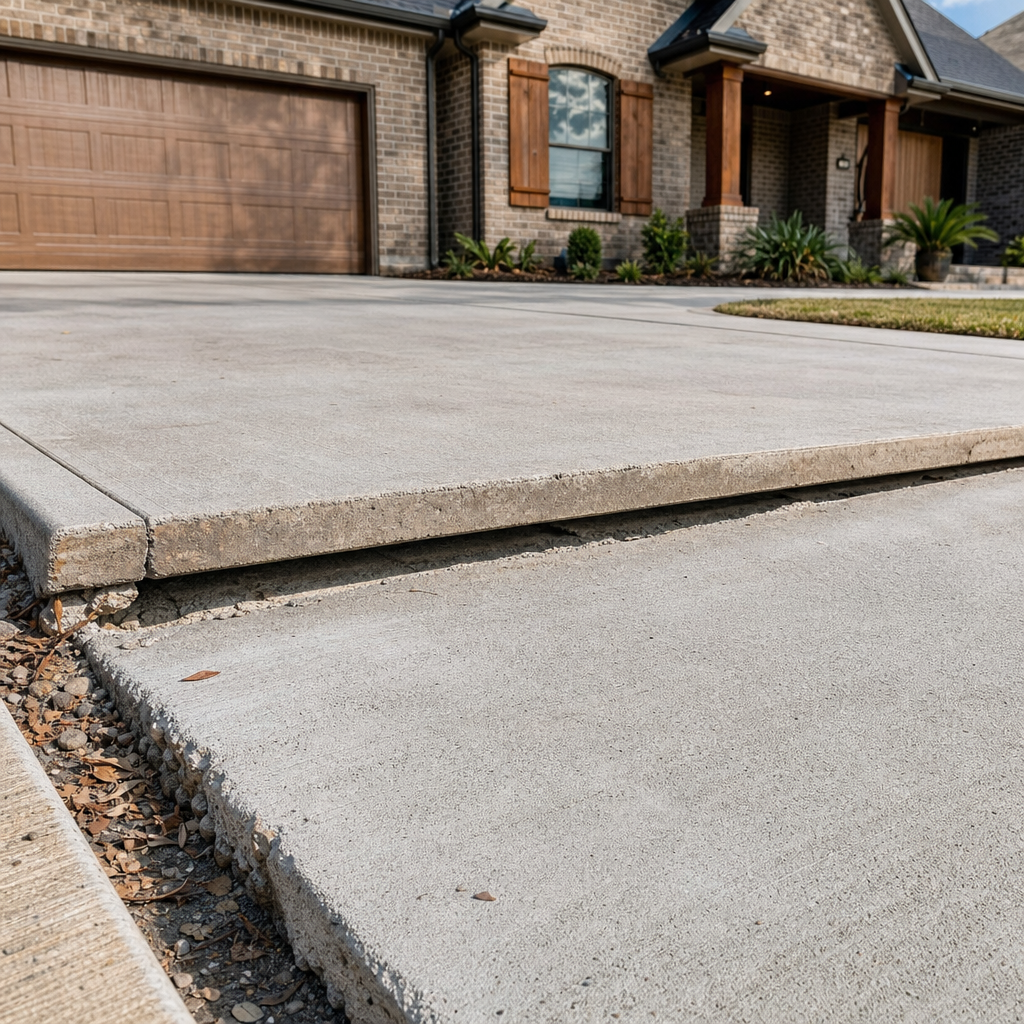
Concrete driveways settle for predictable reasons. The soil underneath your driveway compacts unevenly over time, especially in Louisiana’s wet climate where soil expansion and contraction cycles stress the foundation. Heavy vehicles, poor drainage, and natural ground movement all accelerate the process.
When your driveway sinks, it typically means one or more of these factors at work:
- Soil erosion beneath the slab from water pooling or poor grading
- Expansive clay soil that swells when wet and shrinks when dry
- Insufficient base preparation under the original concrete
- Tree roots growing underneath and displacing soil
- Settled fill material that wasn’t compacted properly
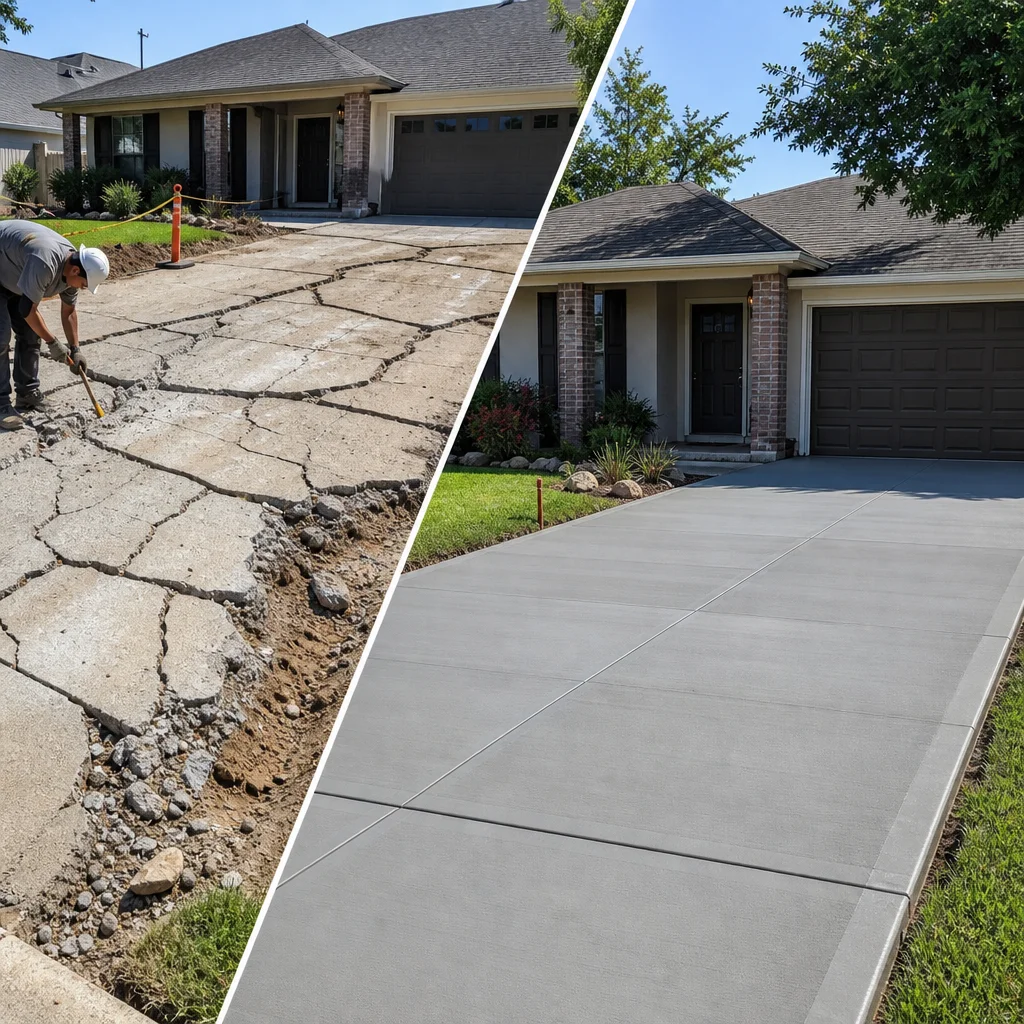
The visible dip or slope you see is your driveway’s top surface following the shifting foundation below. What matters now is understanding that this movement rarely stops on its own. Louisiana’s seasonal moisture changes keep soil conditions unstable, meaning a slightly sunken section today can become significantly worse within a year or two.
The Real Dangers of Ignoring Sunken Concrete
A sunken section of driveway creates immediate practical problems and hidden structural risks. Water pools in low spots, accelerating concrete deterioration and creating a tripping hazard at the transition. Your vehicle scrapes on steep lips between sections, potentially damaging suspension components.
Beyond those visible issues, settling concrete signals foundation instability. If your driveway is sinking, the soil conditions affecting it may also affect adjacent structures like walkways, patios, or even your home’s foundation. We’ve seen situations where homeowners ignored a small driveway dip only to discover the same settling pattern extending toward their house.
Concrete cracks follow settlement. Once cracking begins, moisture seeps deep into the slab, accelerating deterioration and making repairs far more complex and costly. What could be addressed with concrete leveling today might require full replacement in five years.
Insurance implications matter too. If a guest is injured by a trip hazard created by sunken concrete, you’re liable. Documentation of a known hazard that you ignored strengthens their claim.
How We Diagnose Driveway Settlement Issues
Our assessment begins with a physical inspection of your entire driveway, not just the most obvious sunken area. We check the slope and direction of settling, look for cracks, and examine how water moves across the surface. These details tell us whether we’re dealing with localized settling or a widespread foundation problem.
We also evaluate the surrounding area. Is your yard grading directing water toward the driveway? Are there trees nearby that might be causing root damage? Has the soil shifted uniformly or in irregular patterns? These questions help us understand whether the problem is actively worsening or has stabilized.
We ask about the driveway’s history: when it was installed, whether you’ve noticed changes over specific seasons, and if the settling accelerated recently. This context helps us determine whether we need a quick leveling fix or if deeper soil stabilization is necessary before proceeding.
Once we understand the conditions, we explain our findings clearly and recommend the most practical solution for your situation.
Our Concrete Leveling and Repair Process
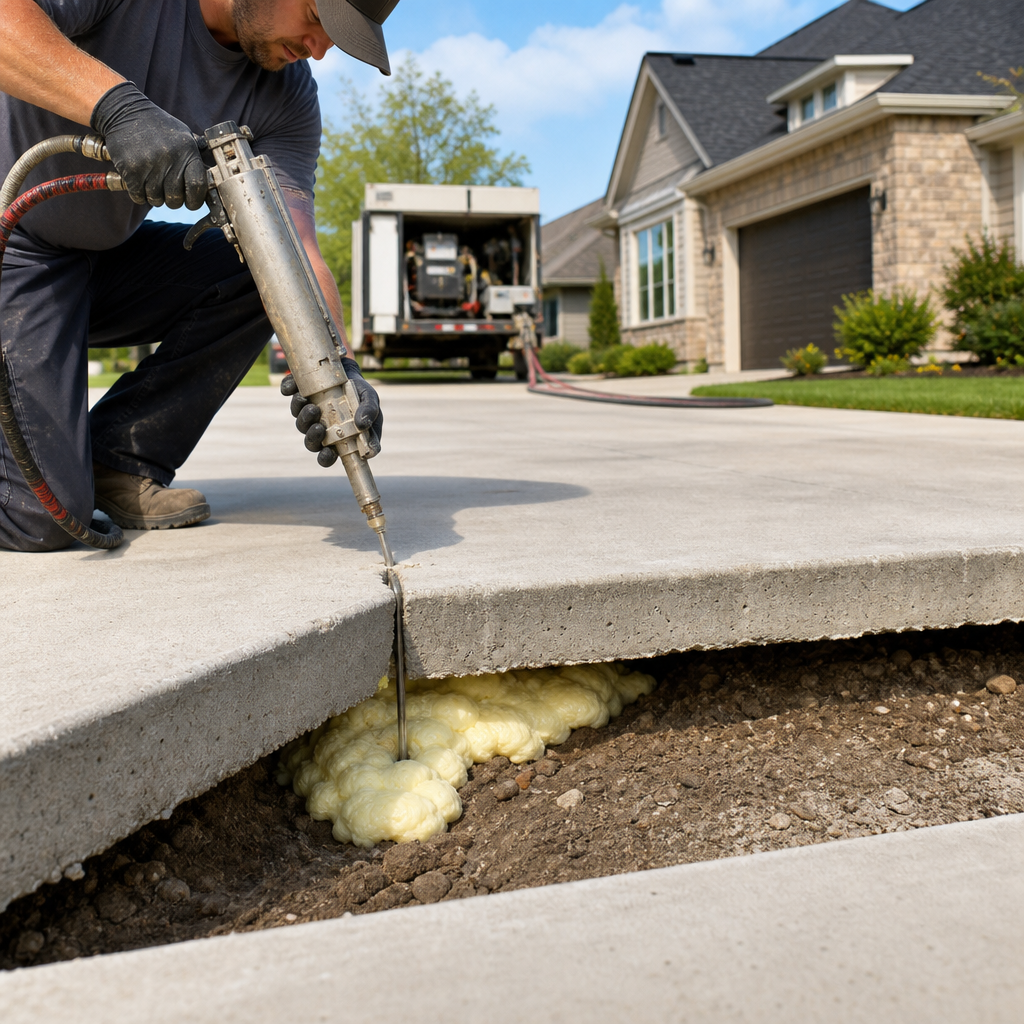
When the underlying soil is stable but the concrete has settled, we use polyurethane foam injection to restore your driveway. This approach is far faster and less invasive than removing and replacing the slab.
Here’s what the process looks like:
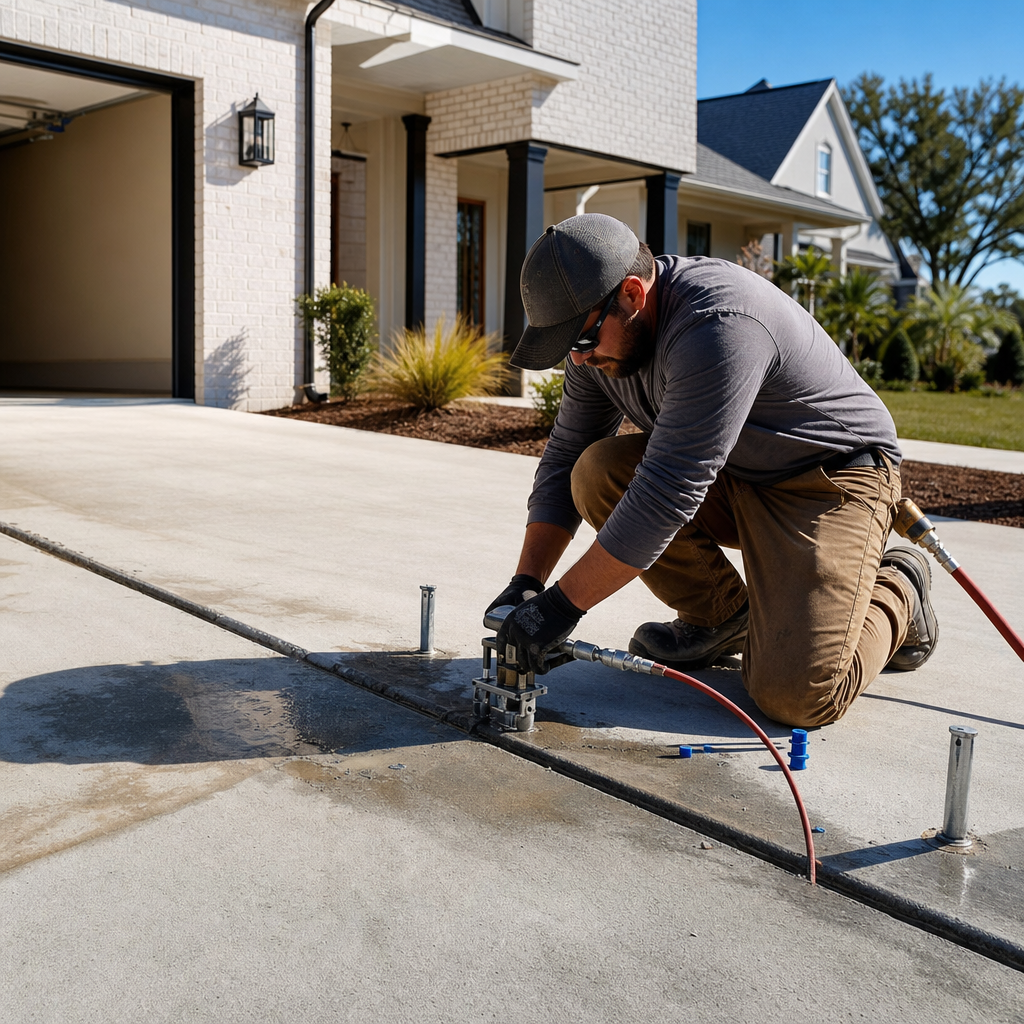
We drill small ports strategically through the sunken concrete section. Then we inject polyurethane foam through those ports into the void spaces and unstable soil beneath. The foam expands, compacting the soil and gently lifting the concrete back to its original level. This typically takes a few hours per section, depending on the area’s size.
Once the concrete is level, we seal the injection ports and address any cracks in the surface. The foam is permanent, won’t compress over time, and isn’t affected by Louisiana’s moisture cycles the way soil alone is.
For driveways with more extensive cracking or where soil conditions remain unstable, we recommend concrete repair or full replacement with improved base preparation. We’ll be honest about which option makes sense for your specific situation.
Why DIY Fixes Fall Short for Sunken Driveways
Self-help solutions circulating online promise quick fixes, but they address symptoms rather than root causes. Filling gaps with caulk or patching cracks delays the inevitable without stopping the settling.
Renting concrete leveling equipment and attempting this yourself creates risks that aren’t obvious until something goes wrong. The foam injection requires understanding soil conditions, calculating proper pressure and volume, and knowing exactly where to inject for maximum effectiveness. Too much pressure can damage nearby structures or create new problems. Insufficient pressure wastes money and doesn’t solve the problem.
Worse, DIY mistakes create liability issues. If foam injection damages your home’s foundation or a neighboring property, you’re responsible for those costs. Professional liability insurance protects you when we handle the work.
Amateur repairs also void any guarantees about durability. We stand behind our leveling work because we control every variable and use commercial-grade materials. We know our repairs will last because we’ve engineered them properly from the start.
Our Licensed and Insured Approach to Your Driveway
We’re a licensed and insured concrete contractor in Lafayette, which means we operate under building codes and maintain insurance coverage for any issues that arise during our work. That matters more than it might seem.
Our team has the specific training required for foam injection, pressure grouting, and concrete repair. We understand Louisiana’s building requirements and soil conditions in ways a typical handyperson simply won’t. When we inspect your driveway, we’re evaluating not just what we see but what the local building code requires for a permanent solution.
Our insurance protects your property. If something unexpected happens during our work, you’re covered. If we inadvertently damage a utility line or neighboring structure, insurance handles it. That’s the difference between getting the lowest price and getting a solution you can trust.
We also maintain equipment properly, use quality materials, and document our work. That documentation becomes valuable if you ever file a property damage claim or sell your home.
The Timeline and Cost of Professional Driveway Repair
Foam injection leveling typically takes one to three days, depending on how large an area needs treatment and how many sections have settled independently. We can usually complete a standard residential driveway in a single day.
Costs vary based on the driveway size, how much settling has occurred, and what additional repairs are needed for cracks or deterioration. A straightforward leveling job might cost $1,500 to $3,500 for a typical residential driveway. Full concrete replacement, if needed, costs more but provides a permanent solution with a 10-year warranty.
We provide a free no-obligation estimate. During that assessment, we explain exactly what we recommend, why we recommend it, and what it will cost. No surprises, no pressure, and no obligation to proceed.
The investment in professional repair is typically much less expensive than replacing an entire driveway or dealing with foundation damage to your home later. When you compare the cost of leveling to the cost of full replacement or the cost of ignoring the problem, professional repair is the practical choice.
Long-Term Solutions We Provide Beyond the Fix
We don’t just inject foam and leave. We address the conditions that caused the settling in the first place, or we explain why the settling has stabilized and won’t worsen.
For many driveways, improving grading and drainage is the key to preventing future problems. We check how water flows across and around your driveway, and we recommend grading adjustments that direct water away from the slab. Sometimes this is simple; sometimes it requires minor landscaping changes.
We also discuss preventive maintenance like sealing the concrete surface to reduce water penetration and extending the driveway’s lifespan. Sealed concrete resists cracking and deterioration far more effectively than unsealed concrete, which is especially important in Louisiana’s humidity.
For properties where tree roots are a factor, we explain whether the tree needs removal or whether strategic leveling can address the damage and prevent worsening.
How We Protect Your Investment After Repair
All our concrete leveling and repair work comes with a warranty covering the materials and workmanship. We stand behind what we do, and we’re willing to make it right if something goes wrong within the warranty period.
We also encourage regular inspections, especially after heavy rain or during seasonal soil shifts. Catching new settling early means quick, affordable fixes rather than expensive emergency repairs.
Keep records of our work and the estimates we provide. These documents matter if you’re selling your home or filing an insurance claim related to foundation issues. Professional documentation shows that you addressed the problem responsibly.
Sealed driveways require occasional resealing, typically every two to three years in Louisiana’s climate. We can schedule that maintenance or provide recommendations for contractors who offer that service.
Getting Your Free No-Obligation Estimate Today
If your driveway is sinking or settling unevenly, we invite you to contact us for a free estimate. We’ll inspect your property, explain what we find, and recommend the best solution for your situation without any pressure to decide immediately.
Call us or visit our website to schedule your assessment. We serve Lafayette and nearby areas, and we’re ready to help you protect your property and avoid bigger problems down the road. Your driveway repair starts with understanding what’s actually happening beneath the surface, and that’s what we do best.
Frequently Asked Questions (FAQ)
What causes concrete driveways to sink and settle?
We see sunken driveways happen when the soil beneath your concrete loses density or shifts over time. This can result from poor drainage, soil erosion, heavy vehicle weight, or natural ground movement. We diagnose the root cause during our inspection so we can address the actual problem rather than just treating the symptom.
How long does driveway leveling repair typically take?
Our concrete leveling process usually takes one to three days depending on the size of your driveway and the extent of settling. We use modern techniques that require minimal disruption to your property, and we’ll give you a specific timeline during your free estimate. Most customers can use their driveway again within 24 hours of completion.
What’s the difference between replacing my sunken driveway versus leveling it?
We typically recommend leveling first because it’s more cost-effective and preserves your existing concrete when possible. Leveling works well for driveways that are structurally sound but have settled unevenly. We only recommend full replacement if the concrete is severely cracked or damaged beyond repair, and we’ll be honest about which option makes sense for your specific situation.