Why Driveway Curing Time Matters for Your Property
Concrete doesn’t simply dry. It chemically transforms into a solid surface through a process called curing, and this phase determines whether your driveway lasts 10 years or 30 years. Most property owners underestimate how critical the first weeks are after installation.
During curing, the concrete gains strength gradually. Using your driveway too early or exposing it to harsh conditions can create cracks, uneven settling, and surface deterioration that becomes expensive to repair. Understanding concrete driveway curing time helps you protect your investment and ensures the surface performs as designed.
In Lafayette’s humid subtropical climate, curing conditions are unique compared to other regions. Getting this right means fewer repairs down the road and reliable daily functionality for your home or business.
Understanding Concrete Curing: The Critical First Days
Concrete curing is fundamentally different from drying. When concrete hardens, water is absorbed into the chemical reaction between cement, sand, and aggregate. This hydration process is what creates strength and durability, not simply moisture evaporating away.
The first 24 to 48 hours are the most critical. During this window, the concrete reaches roughly 40-50% of its design strength. The surface may feel hard enough to touch, but the interior is still developing. At 7 days, you’re looking at approximately 70% strength. Full strength typically develops by 28 days, though in some cases it can take longer.
This is why contractors protect fresh concrete carefully during the initial curing phase. Rushing the process or allowing disturbances compromises the chemical reaction happening beneath the surface.
Standard Curing Timeline for Driveways
Here’s what typical curing looks like for a residential driveway:
- Days 1-2: Concrete reaches about 40-50% strength; surface hardens but interior is still setting
- Days 3-7: Strength increases to 70%; concrete is more stable but still vulnerable
- Days 7-14: Continues building; you can usually walk on the driveway but vehicle traffic is not recommended
- Days 14-28: Reaches near-full strength; most of the strength development is complete
- Beyond 28 days: Continues subtle strengthening; some concrete compounds reach full strength closer to 90 days
For most residential driveways in Lafayette, we recommend keeping vehicle traffic off the surface for at least 7 days. For commercial applications or heavier-use surfaces, a 14-day cure is safer.
The 28-day mark is the standard industry benchmark because that’s when the vast majority of strength development is complete and the surface can handle normal use safely.
Factors That Affect Your Driveway Cure Time
Several variables influence how quickly your concrete reaches usable strength:
Concrete mix design: Different formulas cure at different rates. A high-early-strength concrete can reach 50% strength in just 24 hours, while standard mixes take longer. We select the appropriate mix based on your project timeline and climate conditions.
Temperature during curing: Warmer conditions accelerate curing; cold temperatures slow it dramatically. This is especially relevant in Lafayette, where winter temperatures are mild but can still impact the process.
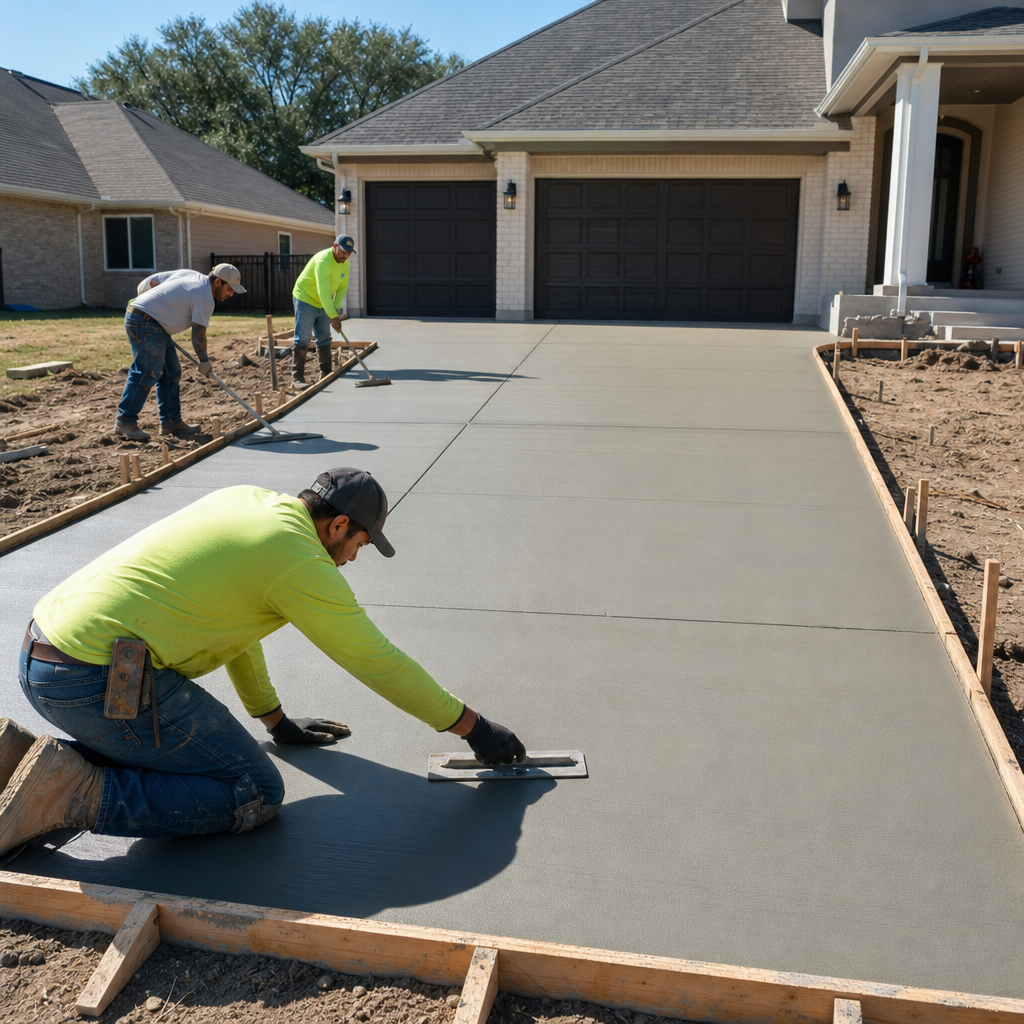
Moisture availability: Concrete needs moisture to cure properly. Too-dry conditions can interrupt hydration and weaken the final surface.
Thickness and depth: Thicker slabs cure more slowly because water must penetrate deeper into the concrete. A thin sidewalk cures faster than a 6-inch driveway foundation.
Air exposure: Concrete exposed to direct sun, wind, and low humidity can develop surface cracks because the top dries faster than the interior cures.
Weather Conditions in Lafayette and Cure Time Impact
Lafayette’s climate presents both advantages and challenges for concrete curing. Our warm, humid air generally supports the curing process better than arid or cold climates do. Humidity keeps the concrete surface from drying too quickly, which prevents surface cracking.
However, our seasonal rain creates other considerations. Heavy rain during the first 48 hours can wash away cement from the surface, creating a weakened top layer. Summer heat and afternoon storms require careful planning and protection during the initial curing phase.
In spring and fall, when temperatures are moderate and rainfall is variable, we monitor weather forecasts closely to protect fresh concrete. Winter installations cure more slowly due to cooler temperatures, potentially adding several days to the standard timeline.
Our team watches the extended forecast and adjusts our curing protection strategies accordingly. This attention to Lafayette’s specific weather patterns ensures consistent, high-quality results across all seasons.
How We Ensure Proper Curing at Conkrete Workz
We take proper concrete curing seriously because it’s where durability is truly built. From the moment we finish the final surface, our process includes several protective measures.
Immediately after installation, we apply a curing compound to the surface. This seals in moisture and slows evaporation, allowing the hydration process to work properly. In hot or windy conditions, we may add protective coverings such as plastic sheeting to further control moisture loss.
We maintain the concrete at appropriate moisture levels during the first week by light misting if needed, particularly during our hot Lafayette summers. Our team also controls access to the driveway, ensuring foot traffic is minimal and vehicle traffic is completely prohibited during the critical early days.
Before releasing a driveway for normal use, we verify that curing has progressed adequately. This isn’t guesswork; we apply our professional experience to assess strength development and confirm the surface is ready for your needs.
What You Can and Cannot Do During Curing
Understanding restrictions during the curing period helps you collaborate effectively with the process:
Avoid driving on the driveway for at least 7-14 days. Even light vehicle traffic can create ruts, cracks, or uneven settling during early curing.
Keep foot traffic to a minimum for the first 48 hours. Walking on the fresh surface can leave depressions.
Do not apply sealers, coatings, or paint for at least 28 days. These products require a fully cured substrate to bond properly.

Avoid pressure washing or water-blasting the surface. Excess water during curing can damage the developing strength.
Don’t salt or treat the surface with de-icers during winter curing. These chemicals interfere with the hydration process.
You can gently rinse the driveway with light water spray after the first 48 hours to keep it moist, which actually supports curing. Keeping the area clear of heavy items, lawn equipment, and construction debris also helps.
Signs Your Driveway Has Fully Cured
Several observable indicators show when your driveway is ready for normal use:
Color stabilization: Fresh concrete darkens as it cures. Once the color reaches a consistent, stable tone across the entire surface, significant curing has occurred.
Surface hardness: By day 7, you should be unable to press your fingernail into the concrete. Resistance to scratching increases notably as curing progresses.
No dust or chalking: A fully cured surface doesn’t produce powder or dust when you rub it with your hand.
Moisture level: The surface may feel slightly damp even after several days, which is normal. A completely dry surface can sometimes indicate surface-level cracking.
Sound test: Dropping a small object on a fully cured driveway produces a solid, hard sound rather than a dull thud.
By day 28, all these indicators should be evident, and your driveway is safe for regular use. If you notice any soft spots, crumbling edges, or surface deterioration, contact us immediately so we can assess whether an issue developed during curing.
Common Curing Mistakes and How to Avoid Them
Property owners sometimes inadvertently damage driveways during curing by misunderstanding what the concrete needs:
Driving on it too early is the most frequent issue. The surface may look hard after a few days, but internal strength is still developing. Wait the full recommended period before vehicle traffic.
Overwatering or not watering at all creates problems. Too much water can weaken the surface; too little allows surface cracking. Proper moisture balance is essential.
Sealing or coating too soon traps moisture unevenly and creates adhesion problems. Always wait the full 28-day curing period before applying sealers.
Ignoring weather protection during installation allows rain, extreme heat, or wind to disrupt the curing process. Protective measures during the first 48 hours are critical.
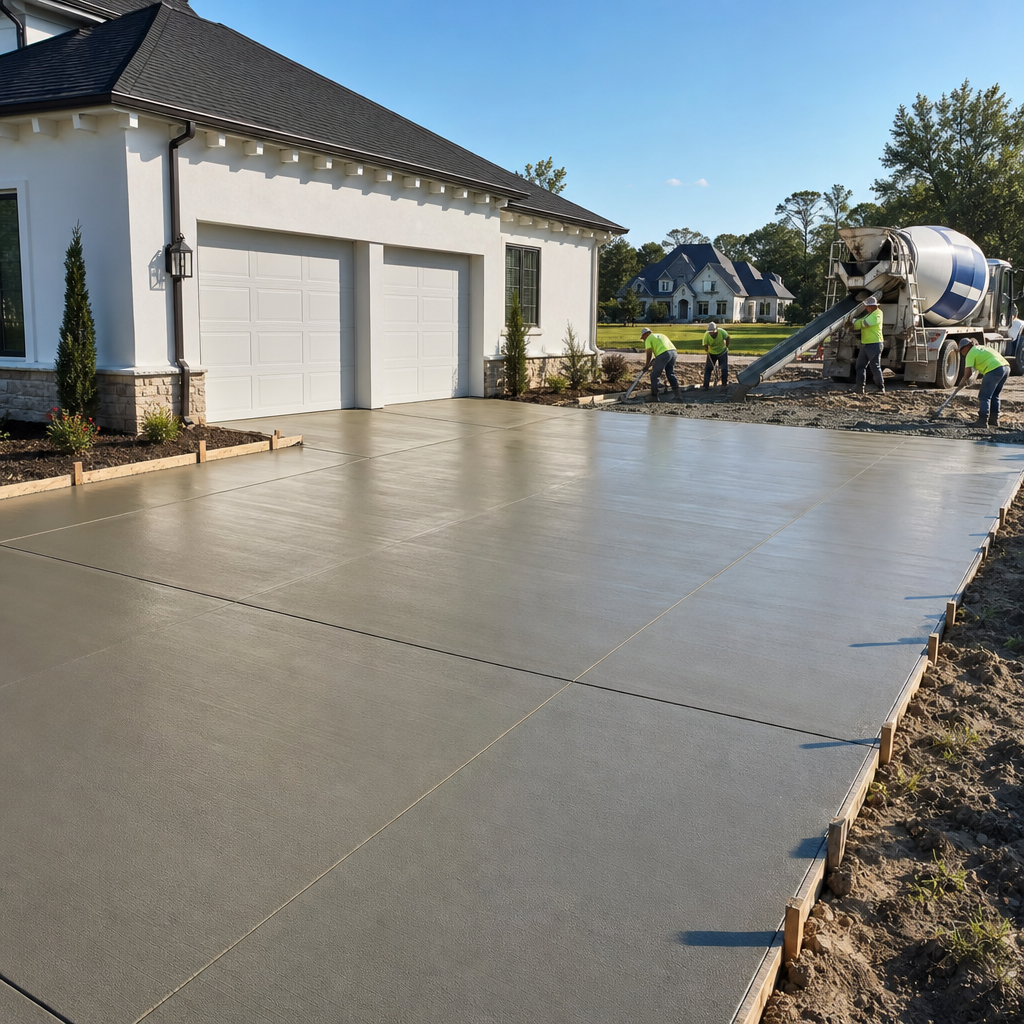
Moving heavy items onto the driveway during early curing creates stress points and uneven settling. Keep the surface clear for at least two weeks.
Not allowing proper drainage around the new driveway. Standing water during curing weakens concrete and promotes settling. Ensure surrounding ground slopes away from the surface.
Our Professional Curing Process Protects Your Investment
When you hire us as your driveway contractor, curing management is included in our service. We don’t simply pour concrete and leave; we guide it through the entire development process.
Our team applies industry-standard curing compounds, monitors weather conditions, and implements weather-specific protection strategies suited to Lafayette’s climate. We provide clear written guidance about what you can and cannot do during curing so expectations are aligned.
We’re also available if questions arise during the first few weeks. Occasional concerns about appearance or hardness are normal, and we can assess whether your driveway is progressing normally or if any adjustments are needed.
Our approach focuses on long-term durability. A properly cured driveway provides reliable performance for decades, reducing the need for costly repairs and maintaining your property’s value and functionality.
Schedule Your Professional Driveway Installation Today
Your driveway’s lifespan starts with professional installation and expert curing management. If you’re planning a new driveway installation in Lafayette or the surrounding areas, contact us today for a free no-obligation estimate.
We’ll discuss your project timeline, explain our curing process specific to your situation, and ensure you understand what to expect during the critical first weeks. Our licensed and insured team handles everything from concrete selection through final curing, delivering results you can rely on.
Reach out to Conkrete Workz today and let’s protect your concrete investment from the start.
Frequently Asked Questions (FAQ)
How long does concrete take to cure before we can use our driveway?
We recommend waiting at least 7 days before driving on your new concrete driveway, though full curing typically takes 28 days. During that first week, the concrete reaches about 70% of its final strength, which is sufficient for vehicle traffic. However, we advise avoiding heavy trucks or parking in the same spot repeatedly until the full 28-day curing period is complete to ensure maximum durability.
What weather conditions in Lafayette affect how long our concrete takes to cure?
Our Lafayette humidity and temperature fluctuations can significantly impact curing speed. Hot, dry weather actually slows curing because concrete needs moisture to cure properly, so we often mist newly poured driveways during summer months. Cold weather below 50 degrees can extend curing time considerably, which is why we plan concrete work carefully around seasonal changes to protect your investment.
What should we avoid doing while our new driveway is curing?
During the first 7 days, we ask that you keep vehicles, foot traffic, and heavy objects off the concrete. You should also avoid power washing, applying sealant, or allowing water to pool on the surface during curing. Once we confirm the driveway has reached proper strength, we’ll let you know it’s safe to resume normal use and discuss any finishing treatments we recommend.