Why Louisiana’s Climate Demands Special Patio Solutions
Lafayette summers bring intense heat, humidity that tops 70 percent, and sudden downpours that can flood a standard patio in minutes. Your outdoor living space sits at the intersection of moisture, UV exposure, and thermal stress that most standard construction methods simply aren’t designed to handle.
When we work with homeowners in the Lafayette area, we see the same pattern: a beautiful patio installed elsewhere, then shipped down to Louisiana only to fail within a few years. The concrete cracks. The decorative coating peels. Algae and mold colonize shaded corners. Water pools instead of draining.
That’s because Louisiana’s climate isn’t just “hot and humid.” It’s a specific combination of factors that demand a specific approach. High moisture year-round accelerates concrete deterioration. Salt air from nearby coastal regions chemically attacks concrete surfaces. Temperature swings between air-conditioned indoors and 95-degree outdoor heat create expansion and contraction cycles that standard installation methods can’t manage.
We design patios with these conditions front and center, not as an afterthought. That means choosing materials, finishes, drainage systems, and installation techniques built explicitly for Louisiana’s demands.
The Problem with Standard Concrete in High-Humidity Areas
Standard concrete placed without regional consideration fails in predictable ways. The concrete itself absorbs moisture from the air and ground, which enters through capillaries and micro-cracks. Once inside, that moisture freezes and thaws in winter (less frequent here, but it happens), or promotes mold, efflorescence (white salt deposits), and internal corrosion of reinforcement steel.
Most generic contractors use basic concrete mixes that don’t account for Louisiana’s water exposure. They apply decorative coatings that look good for six months, then start bubbling and flaking as moisture pushes through from below. The result is a patio that requires constant maintenance, staining, and eventually, complete replacement.
Drainage is where standard installations really stumble. A typical patio in drier climates can get by with a slight slope and standard base prep. Here, inadequate drainage means standing water becomes a breeding ground for algae and mold, and trapped moisture accelerates concrete breakdown from underneath. Within two to three years, homeowners are looking at costly repairs.
Our approach reverses this trajectory. We use concrete mixes specifically formulated to resist moisture absorption, apply sealers that actually protect rather than just enhance appearance, and build drainage systems that manage Louisiana’s rainfall volume.
How We Build Patios That Withstand Louisiana Weather
We start with concrete mix design. Standard mixes won’t work here. We specify higher water-cement ratios and air-entrainment that includes tiny air bubbles throughout the concrete. These bubbles absorb expansion forces from freeze-thaw cycles (which do occur in rare deep freezes) and slow moisture penetration. We also add supplementary cementitious materials that improve durability over time.
Base preparation is where durability truly starts. We excavate to proper depth, compact the subgrade uniformly, and install a drainage layer that keeps groundwater from wicking up into the concrete. This base prevents the capillary rise that would otherwise pull moisture into your patio from below. Most contractors skip or shortcut this step. We don’t.
Reinforcement matters too. We use wire mesh or rebar spaced to minimize cracking from thermal stress and settling. Louisiana’s soil conditions vary significantly (clay-heavy near bayous, sandier inland), so we assess your specific site and adjust reinforcement accordingly.
The concrete gets power-finished to a smooth, dense surface that resists water penetration. We then apply a breathable penetrating sealer that lets the concrete shed moisture while protecting against staining and chemical attack. This isn’t a coating that sits on top and peels; it works within the concrete’s surface layer.
Decorative Finishes That Last in Coastal Conditions
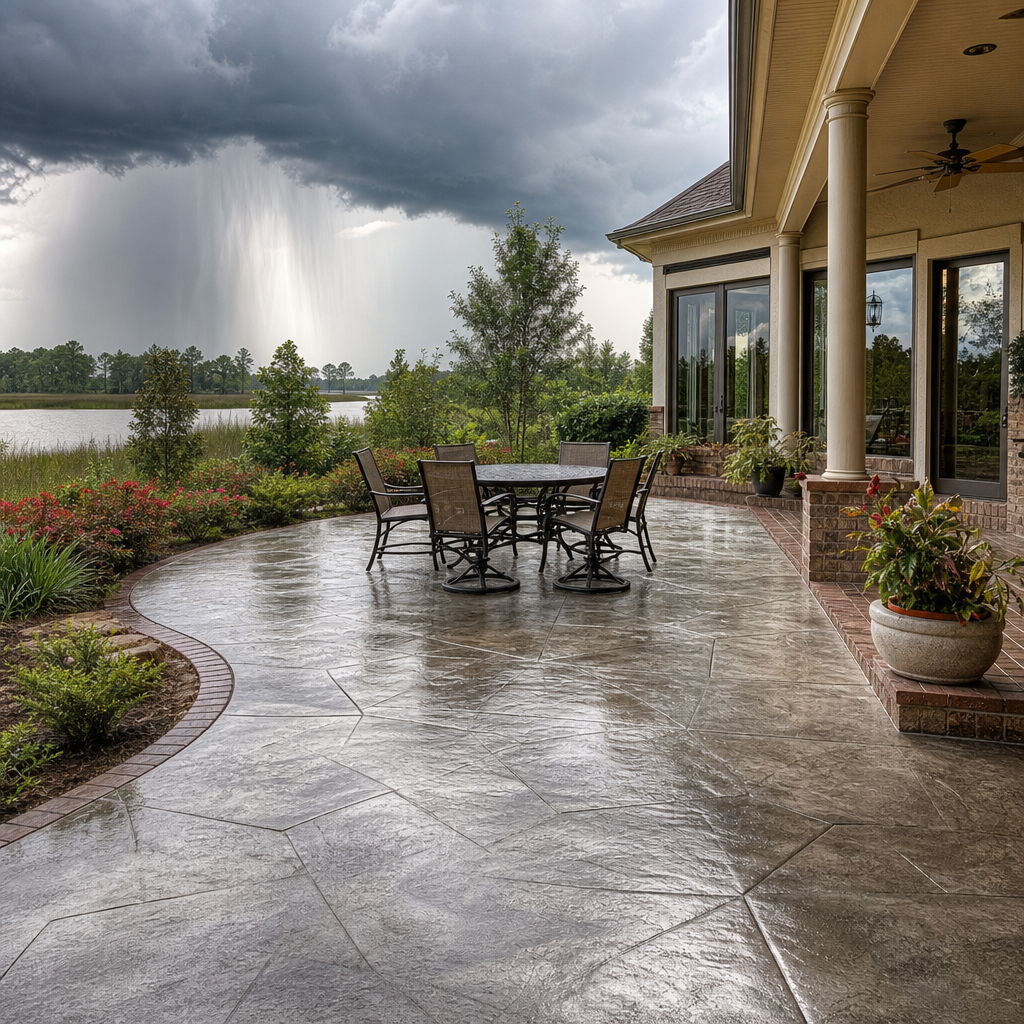
Decorative concrete in Louisiana can be stunning, but only if it’s engineered to hold up. Stamped patterns, colored finishes, and polished surfaces all look fantastic initially. The trick is selecting finishes that won’t fade, crack, or require constant touch-ups.
Stamped finishes work well here when we use high-quality acrylic or polyurethane sealers rated for UV exposure and moisture. The patterns create visual interest without compromising durability if installed correctly. We recommend darker colors for Louisiana properties because they’re less likely to show algae growth and staining.
Integral color (color mixed into the concrete itself) lasts longer than surface-applied dyes because it can’t peel or flake. If your patio gets scratched or worn, the color remains consistent underneath. For Lafayette homeowners who want visual impact without maintenance headaches, integral color is often the smarter choice.
Polished concrete and decorative scoring create sophisticated looks and work beautifully in covered patio spaces where direct sun exposure is reduced. In full-sun areas, we typically recommend a brushed finish or durable patio finishes that balance aesthetics with practical traction as humidity creates slippery surfaces.
Exposed aggregate finishes give you texture, slip resistance, and visual depth while holding up exceptionally well to Louisiana’s weather. The aggregate creates air gaps that allow the surface to dry quickly after rain, reducing algae growth.
Proper Drainage and Foundation for Longevity
Standing water is concrete’s enemy in any climate. In Louisiana, where humidity is already high and rainfall is frequent, drainage isn’t optional. It’s structural.
We slope patios at a minimum 1/8-inch per foot toward strategically placed drainage channels or toward the landscape. This gentle slope is barely noticeable to the eye but crucial for water management. Water that sits even briefly becomes a vector for algae, mold, and ice formation.
Beneath the surface, we install perforated drain tile or a granular drainage layer that captures water from below and directs it away from the patio’s footprint. French drain systems work particularly well in Lafayette’s clay-heavy soils, creating a pathway for water to exit before it can accumulate under your patio.
The foundation itself matters enormously. Proper compaction of base materials prevents settling, which causes cracks where water can enter. We use a pneumatic roller or plate compactor to achieve 95 percent standard proctor density. This dense base eliminates the voids that cause differential settling.
We also consider your local soil type and groundwater conditions. If your property sits in an area prone to standing water, we may recommend a deeper aggregate base, additional drain tiles, or even a raised patio structure. Site-specific assessment beats one-size-fits-all approaches.
Maintenance Tips for Your Weather-Resistant Patio
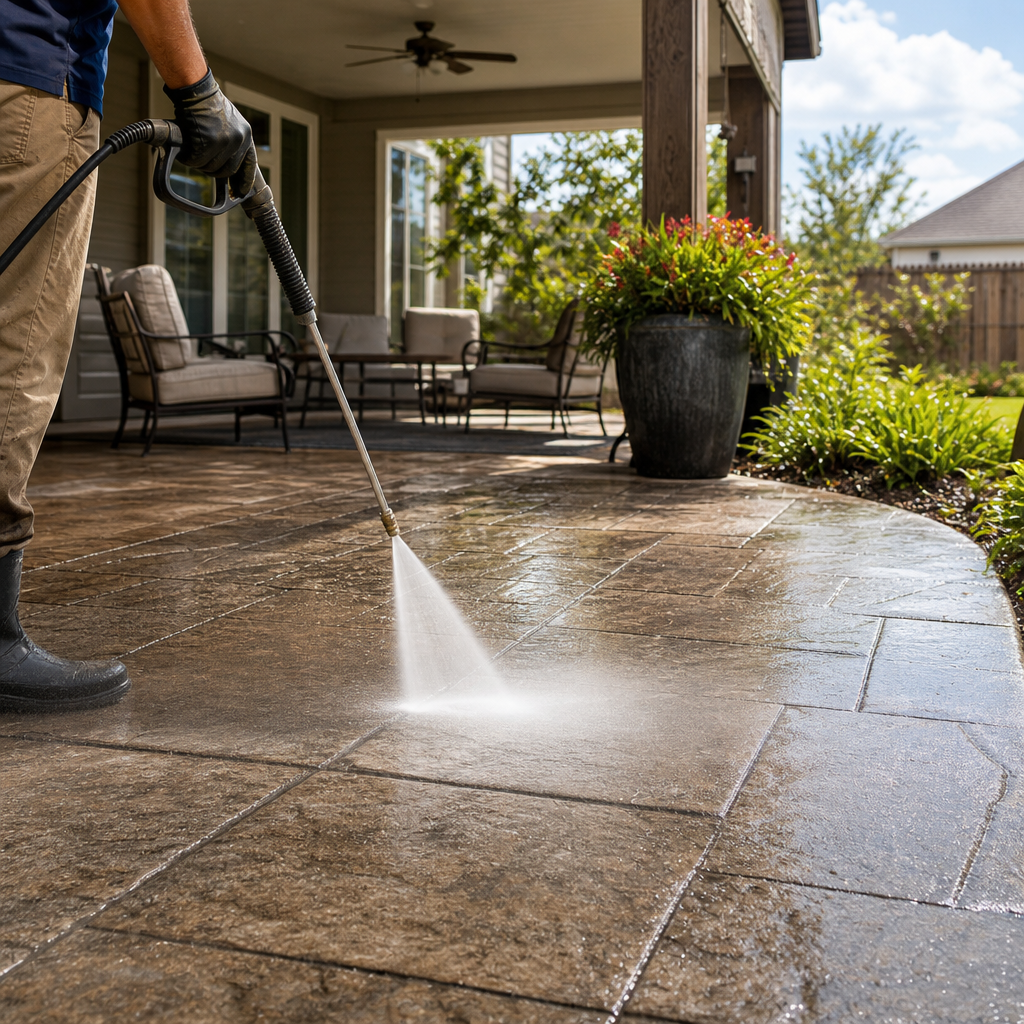
Even a well-built, weather-resistant patio needs basic maintenance to stay in top condition. Louisiana’s humidity means algae can develop faster than in drier regions, so we recommend pressure washing your patio annually or semi-annually.
Seal your patio every two to three years. Louisiana’s intense UV and moisture means sealers break down faster than in other regions. We recommend penetrating sealers over film-forming coatings because they don’t trap moisture underneath. A two-part epoxy sealer works particularly well if you want maximum protection.
Clear debris promptly. Leaves, pine needles, and dirt trap moisture and promote algae growth. A simple broom keeps these materials from accumulating in crevices.
Address small cracks immediately. A hairline crack can become a serious problem within months once moisture finds its way in. We seal cracks with polyurethane crack filler that remains flexible as the concrete expands and contracts.
Watch for efflorescence (white, chalky deposits). While not necessarily harmful, it indicates moisture is moving through the concrete. If you see it, increase ventilation, ensure drainage is working properly, and consider a dehumidifier nearby if the patio is under a covered structure.
Real Results from Lafayette Homeowners
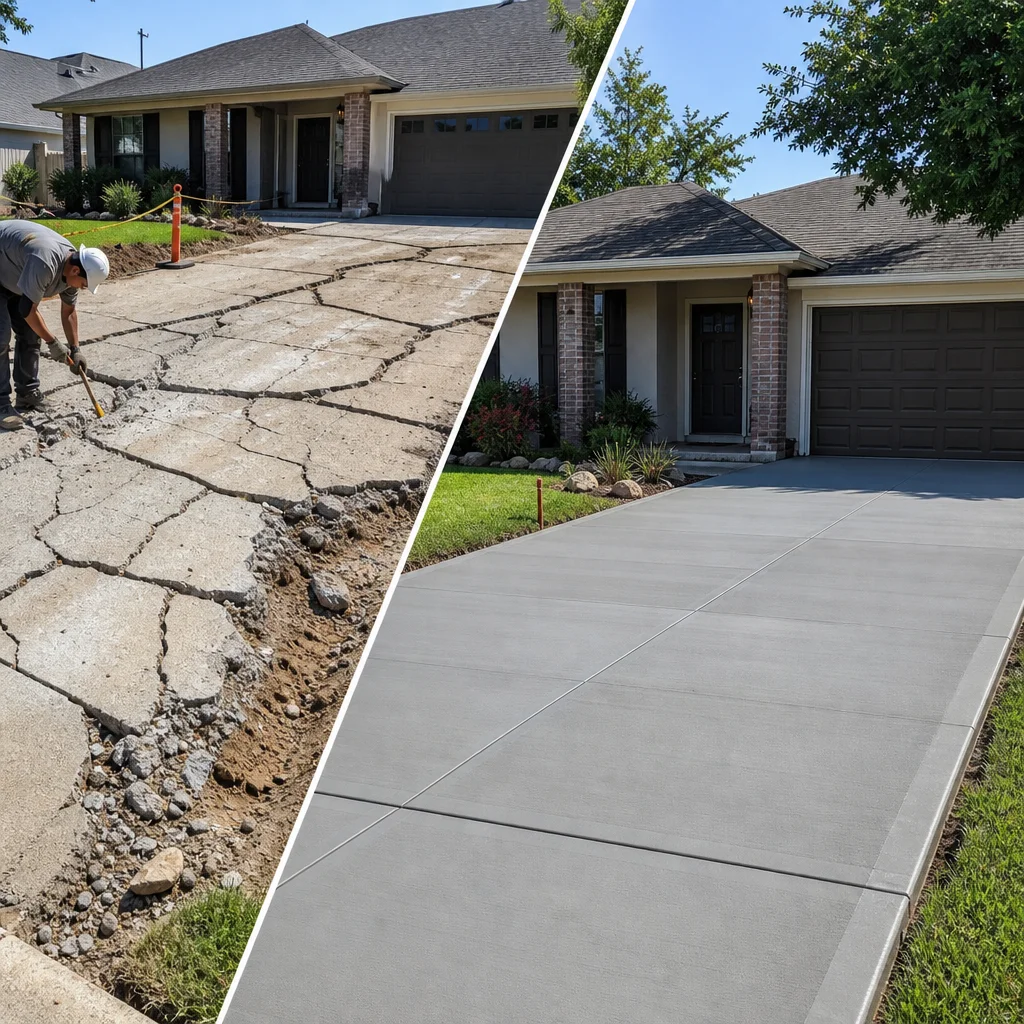
We recently completed a 600-square-foot decorative patio for a homeowner in Broussard whose standard stamped concrete was showing cracks and algae growth after just three years. We removed the old patio, built a new one with our moisture-resistant mix, integral gray coloring, and a French drain system. Two years later, the homeowner reports zero cracking, minimal algae (just routine annual cleaning), and the stamped pattern still looks crisp.
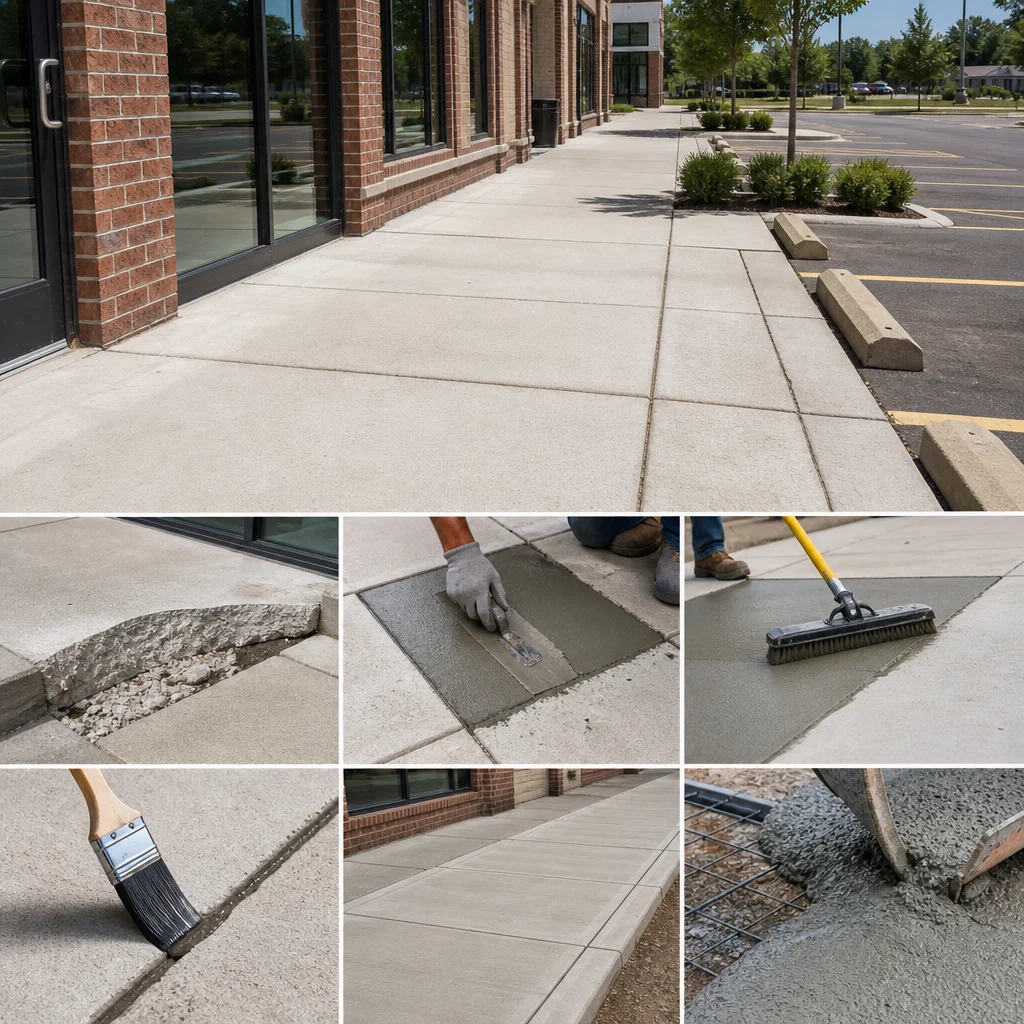
Another project in downtown Lafayette involved a commercial property owner who needed a durable customer parking area. We installed 4,000 square feet of decorative scored concrete with a brushed finish and integrated drainage channels. The contractor handling his building maintenance noted that water from Louisiana’s frequent rain moves off the surface within minutes, preventing the ponding that had plagued his previous lot.
A residential client in Youngsville wanted a backyard entertainment space. We designed a 500-square-foot patio with an exposed aggregate finish, separate lounge area with a polished overlay, and subtle slope that directs water to a landscape drain. Three years in, the homeowner hasn’t had a single crack or structural issue.
These outcomes stem from the same principles: proper mix design, aggressive drainage, quality installation, and finishes selected for Louisiana’s specific conditions.
Choosing Between Decorative Options for Your Space
Your choice of finish depends on sun exposure, foot traffic, intended use, and aesthetic preference. Start by assessing how much direct sun your patio receives. Full-sun areas benefit from lighter-colored, textured finishes because they stay cooler and resist algae better. Shaded areas under a covered structure can handle polished finishes or darker colors without slippery conditions.
Consider foot traffic patterns. High-traffic zones need slip-resistant surfaces, especially in Louisiana where humidity creates slick conditions. Brushed finishes or exposed aggregate outperform polished surfaces in these areas. Low-traffic accent areas can feature more elegant finishes like polishing or subtle scoring.
Think about maintenance tolerance. Integral color and brushed finishes require the least upkeep. Stamped finishes with decorative sealers require more frequent resealing. Polished surfaces look incredible but demand more attention in humid climates.
Budget also plays a role. Basic brushed finishes cost less upfront and hold up excellently. Stamped or polished finishes cost more but deliver visual impact. Our team can walk you through the cost-benefit of each option for your specific project during a free consultation.
Our Installation Process for Maximum Durability
We begin with a thorough site assessment. We evaluate soil type, drainage patterns, groundwater depth, and sun exposure. This information guides every decision downstream, from mix design to base depth to finish selection.
Next comes precise excavation and subgrade preparation. We remove unsuitable soils, compact the base uniformly, and install drainage infrastructure before any concrete is poured. This foundation work determines whether your patio lasts 20 years or needs replacement in five.
Concrete delivery and placement follow strict protocols. We specify the truck arrival, monitor slump and air content, and place concrete in controlled sections rather than all at once. This prevents cold joints and ensures uniform curing conditions across your entire patio.
Finishing happens while the concrete is still workable. We strike off excess concrete, float the surface to the desired smoothness or texture, and cut any scoring or pattern lines. Timing is critical in Louisiana’s heat and humidity, so we work efficiently during optimal curing windows.
Curing takes seven to fourteen days depending on temperature and humidity. We protect the concrete with curing compounds or wet burlap to ensure it reaches full strength. Rushing this step compromises durability significantly.
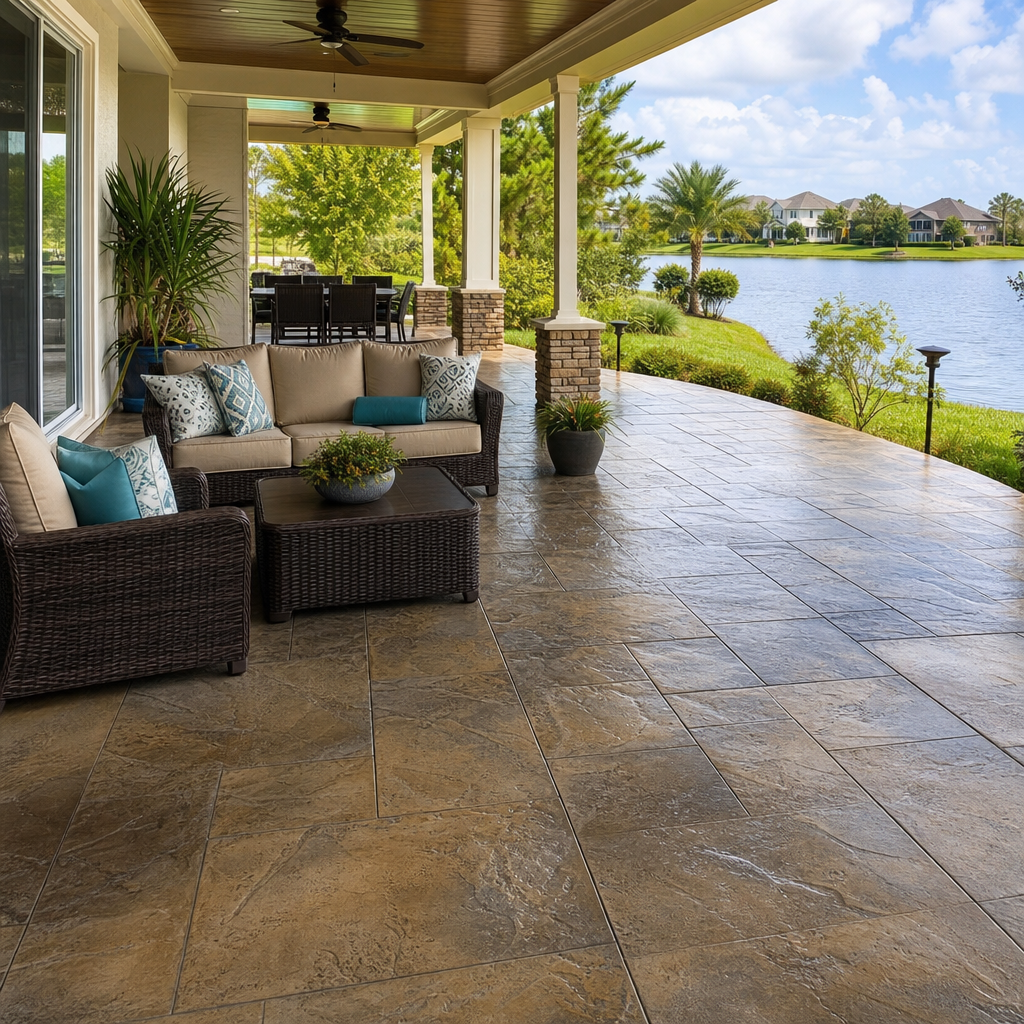
Only after proper curing do we apply sealers and deliver the finished patio.
Protecting Your Investment Year-Round
A weather-resistant decorative concrete patio is built to last, but protecting it year-round keeps it looking and performing like new. During Louisiana’s wet season (summer and fall), increase maintenance frequency. Clean algae buildup promptly, ensure drainage channels remain clear, and monitor for any unusual cracking or settling.
Winter brings different challenges. While Louisiana rarely sees deep freezes, those rare events can stress concrete if moisture has accumulated. Running a dehumidifier in covered patio spaces during humid stretches helps prevent moisture buildup. Avoid applying salt-based ice melt products, which chemically attack concrete.
Spring is the ideal time for professional resealing. This protects your patio through the intense UV and moisture exposure of summer.
Document your patio’s condition with photos each year. This helps you spot changes early and track what maintenance approaches work best for your specific property.
Get Your Weather-Resistant Patio Designed Today
Louisiana’s climate demands expertise, and we’ve spent years perfecting patio installations that thrive here. Our concrete patio contractor team understands the specific challenges Lafayette homeowners face and knows exactly how to address them.
We offer free, no-obligation estimates where we assess your site, discuss your vision, and outline the best approach for your property. We’ll walk you through finish options, drainage strategies, and maintenance expectations so you can make an informed decision.
Ready to invest in a decorative concrete patio that will look beautiful and perform flawlessly for decades? Contact us today to schedule your on-site consultation. We serve Lafayette and surrounding areas, and we’re committed to delivering patios that withstand Louisiana weather.
Frequently Asked Questions (FAQ)
Why does our team recommend special concrete mixes for Lafayette patios?
We’ve found that standard concrete doesn’t hold up well to Louisiana’s intense heat and humidity, which causes cracking and surface degradation over time. Our weather-resistant mixes include additives that reduce water absorption and improve flexibility, allowing your patio to expand and contract with seasonal changes without damage. We design every patio with our climate specifically in mind so you won’t face costly repairs within a few years.
How often should we come back to maintain our decorative patio?
We recommend having your patio professionally sealed every 2-3 years to maintain its appearance and weather resistance in our humid environment. Between professional visits, we suggest regular cleaning and prompt repair of any small cracks to prevent water penetration. Our maintenance guide provides specific seasonal tasks that help extend your patio’s lifespan significantly.
What drainage solutions do we include in our patio installations?
We incorporate proper slope and subsurface drainage systems into every patio we build so water doesn’t pool and cause structural problems. Our foundation preparation includes compacted base layers and perimeter drainage that directs moisture away from your home. This approach prevents the moisture-related deterioration that we see in poorly drained patios throughout Lafayette.