Why Lafayette’s Clay Soil Causes Driveway Settling
Sunken concrete driveways are one of the most common structural problems we address for Lafayette property owners. The culprit isn’t poor installation or cheap materials—it’s the unique soil composition beneath your property. Understanding why your driveway is settling, and what to do about it, can save you thousands in unnecessary replacement costs.
Lafayette sits on layers of expansive clay soil that behaves very differently from the compacted rock bases found in other regions. This clay expands when it absorbs moisture (during heavy rains or seasonal flooding) and contracts during dry periods. Over months and years, this continuous expansion and contraction shifts the soil beneath your concrete, creating voids and unstable support zones.
When the soil subsides or becomes compacted unevenly, your driveway loses its foundation. A section may drop a quarter-inch one year, then another half-inch two years later. The process is gradual but relentless. We’ve seen driveways in well-maintained properties develop significant depression patterns simply because the underlying clay couldn’t maintain consistent density.
Concrete itself is rigid and inflexible. While it can withstand surface wear and freeze-thaw cycles, it cannot bridge expanding or contracting soil gaps without cracking and sinking. If you’ve noticed your driveway developing low spots near the street or settling near the garage, you’re experiencing classic clay-soil subsidence.
The Real Problem With Sunken Concrete
A sunken driveway creates far more than a cosmetic eyesore. Beyond the obvious trip hazards and water pooling, structural problems compound over time. Water collects in low spots and seeps into cracks, accelerating concrete deterioration and weakening the soil foundation further. This cycle of moisture, movement, and deterioration typically accelerates repair costs every season you delay action.
Property value is another practical concern. Potential buyers and appraisers immediately notice uneven driveways, often flagging them as signs of underlying foundation issues throughout the property. Even if your driveway is the only problem, the visual evidence triggers broader concerns.
The most serious risk involves foundation and structural integrity. If settling occurs near your home’s footings or extends toward the house, the same soil subsidence threatening your driveway also threatens your foundation. We’ve consulted on situations where delayed driveway repair masked deeper foundation settling that ultimately required expensive remediation.
How We Diagnose Concrete Settling Issues
Our process begins with a detailed site assessment. We visually inspect the entire driveway surface, marking low spots and measuring settlement depth with precision tools. We also evaluate how water drains across the surface and identify cracks that indicate shifting or movement patterns.
Next, we probe soil conditions beneath the concrete. This includes checking soil moisture content, density, and identifying any voids or soft pockets. We assess whether settling is localized to the driveway or part of a broader pattern affecting other concrete on the property.
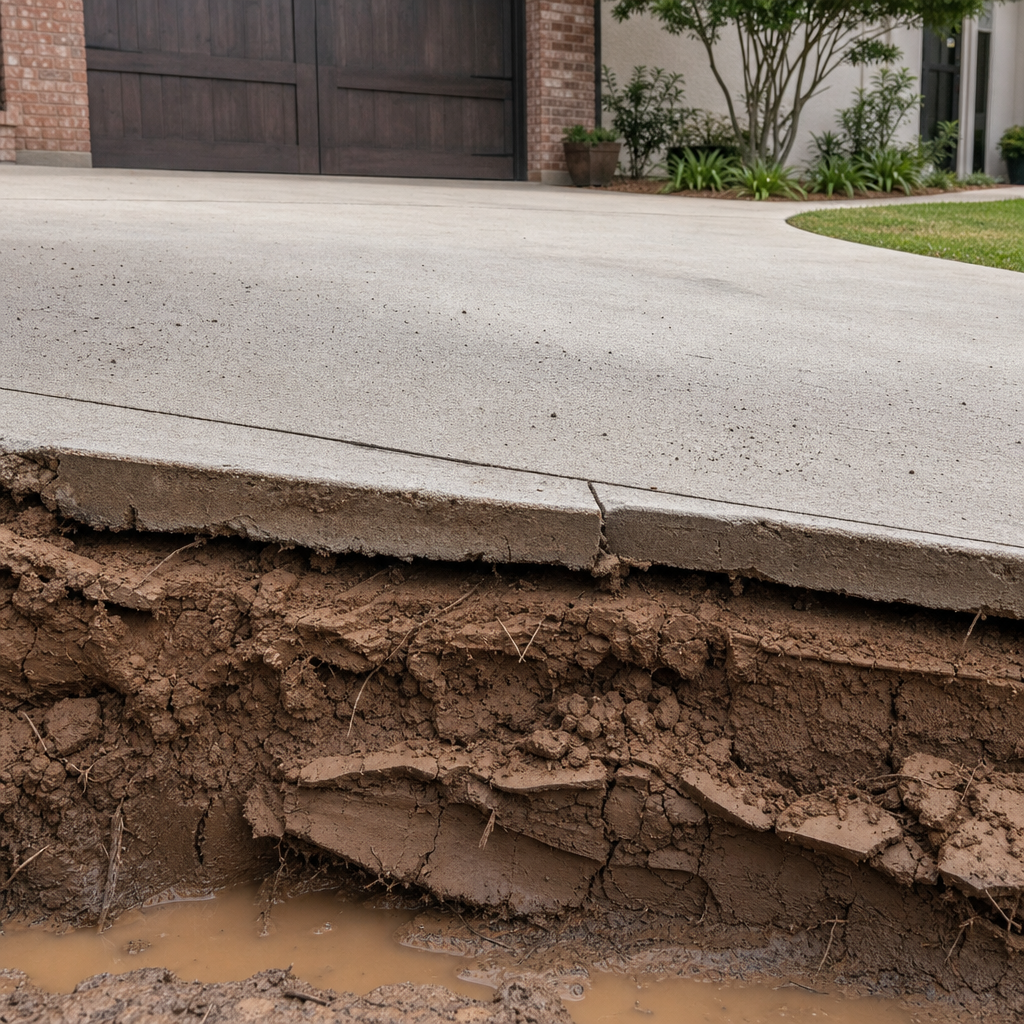
We also review the driveway’s age, previous repairs, and installation quality. A driveway that settled uniformly typically indicates soil subsidence. One showing isolated depression patterns may point to specific voids or localized compaction failure.
This diagnostic work is complimentary when you request an estimate from us. We document everything with photos and measurements so you understand the exact scope of the problem before we propose any solution.
Our Concrete Leveling Process
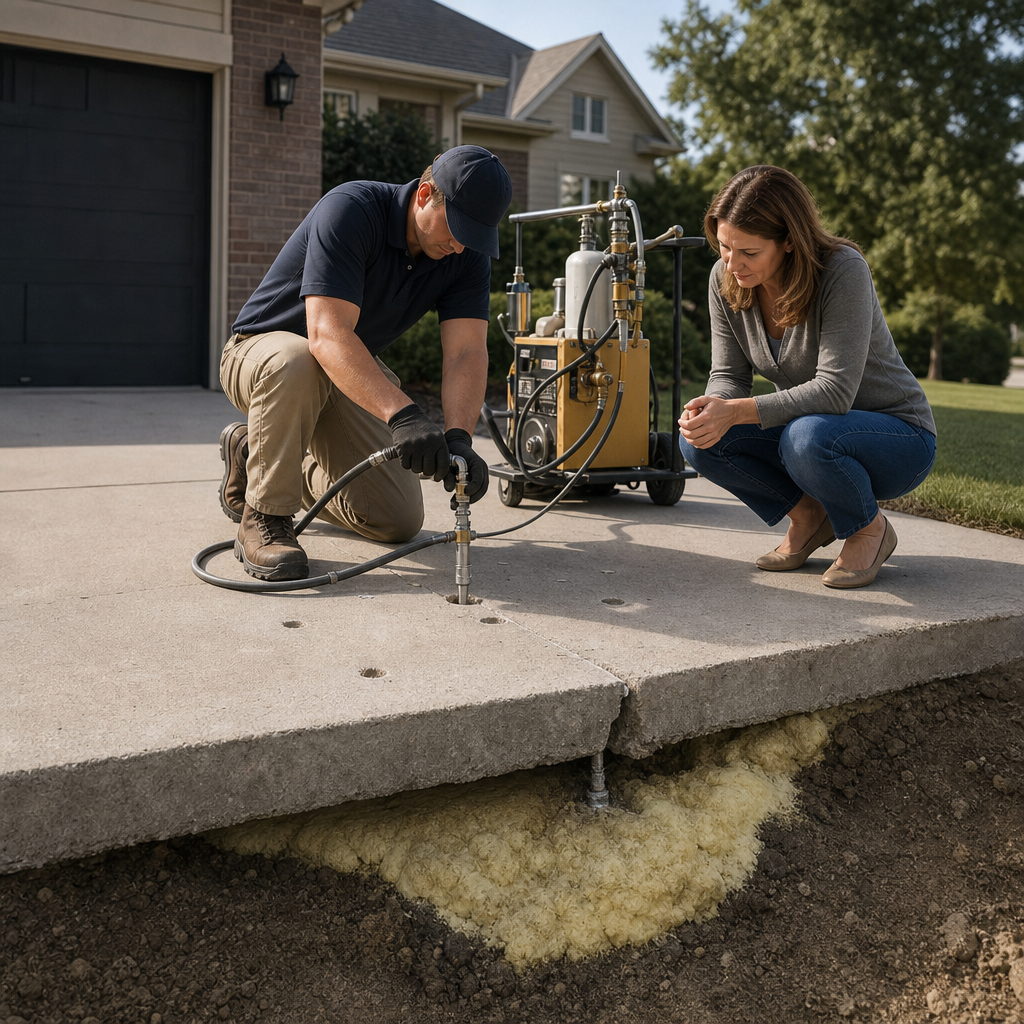
Concrete leveling offers a practical, cost-effective alternative to full replacement. Our process involves hydraulically injecting a specialized polyurethane foam beneath sunken sections. The foam expands to fill voids and lifts the concrete back to its original elevation.
Here’s how it works in practice: We drill small access holes (typically half-inch diameter) in predetermined locations across the settled area. Through these holes, we inject the foam slowly and carefully. As it expands, it fills every void and gradually raises the concrete slab. Real-time monitoring ensures we achieve the correct elevation without over-lifting.
The process typically takes a few hours for most driveways. The material hardens in minutes, allowing traffic within hours—far faster than replacement, which requires removal, hauling, site preparation, and new installation spanning days or weeks.
Our team handles all surface restoration, including patching injection holes so they’re nearly invisible. The result is a level driveway that functions and drains properly, without the expense and disruption of replacement.
Foundation Repair Solutions We Provide
If settling extends to your home’s foundation or if structural issues suggest deeper problems, we expand our approach beyond driveway repair. We work with soil engineers and structural specialists to assess foundation stability and recommend appropriate solutions.
Our foundation repair services include:
- Helical pier installation to stabilize foundations on shifting soil
- Mudjacking or foam lifting for sunken concrete slabs and patios
- Drainage improvements to manage water infiltration and soil saturation
- Repair of foundation cracks showing active movement
We don’t recommend solutions beyond our licensed scope, but we connect you with trusted structural engineers when your situation warrants their expertise. Protecting your home’s structural integrity is the priority, and sometimes that means coordinating multiple specialists.
Why Our Approach Outperforms Replacement
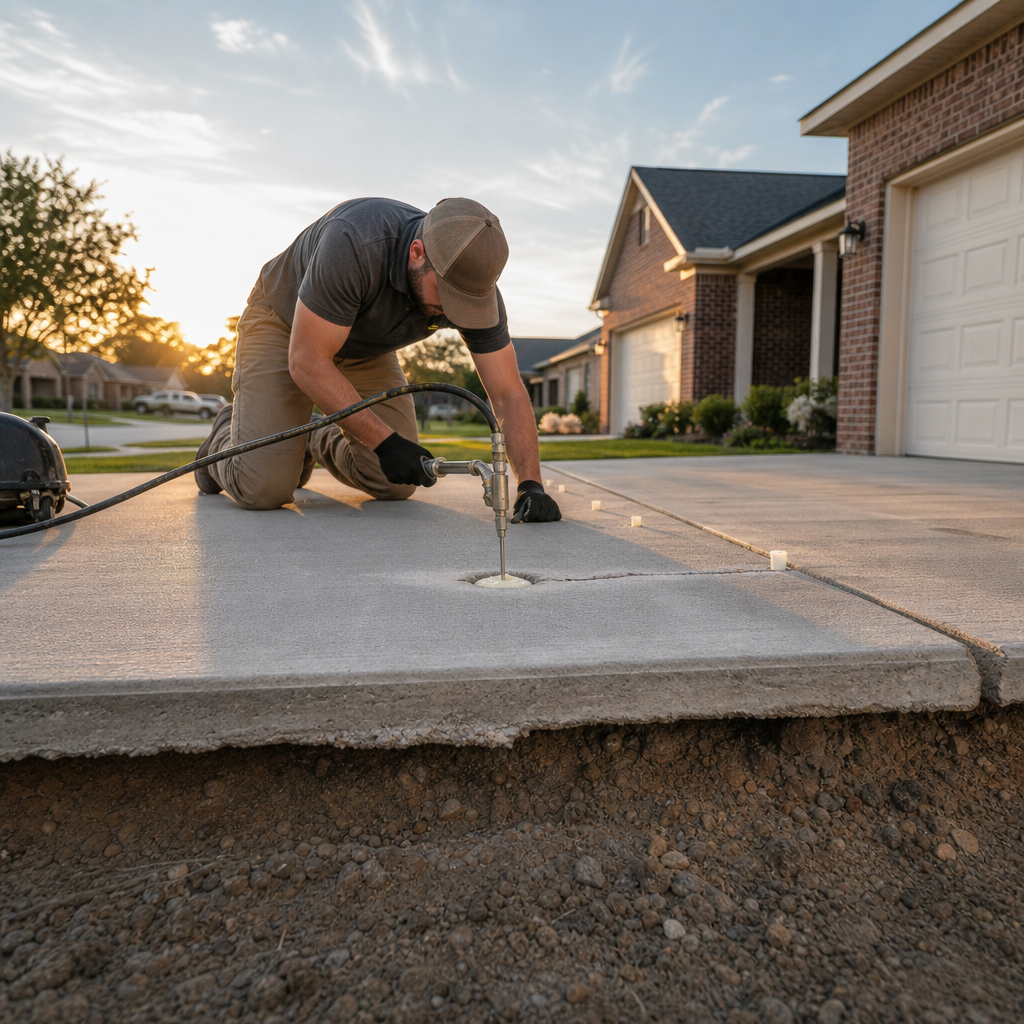
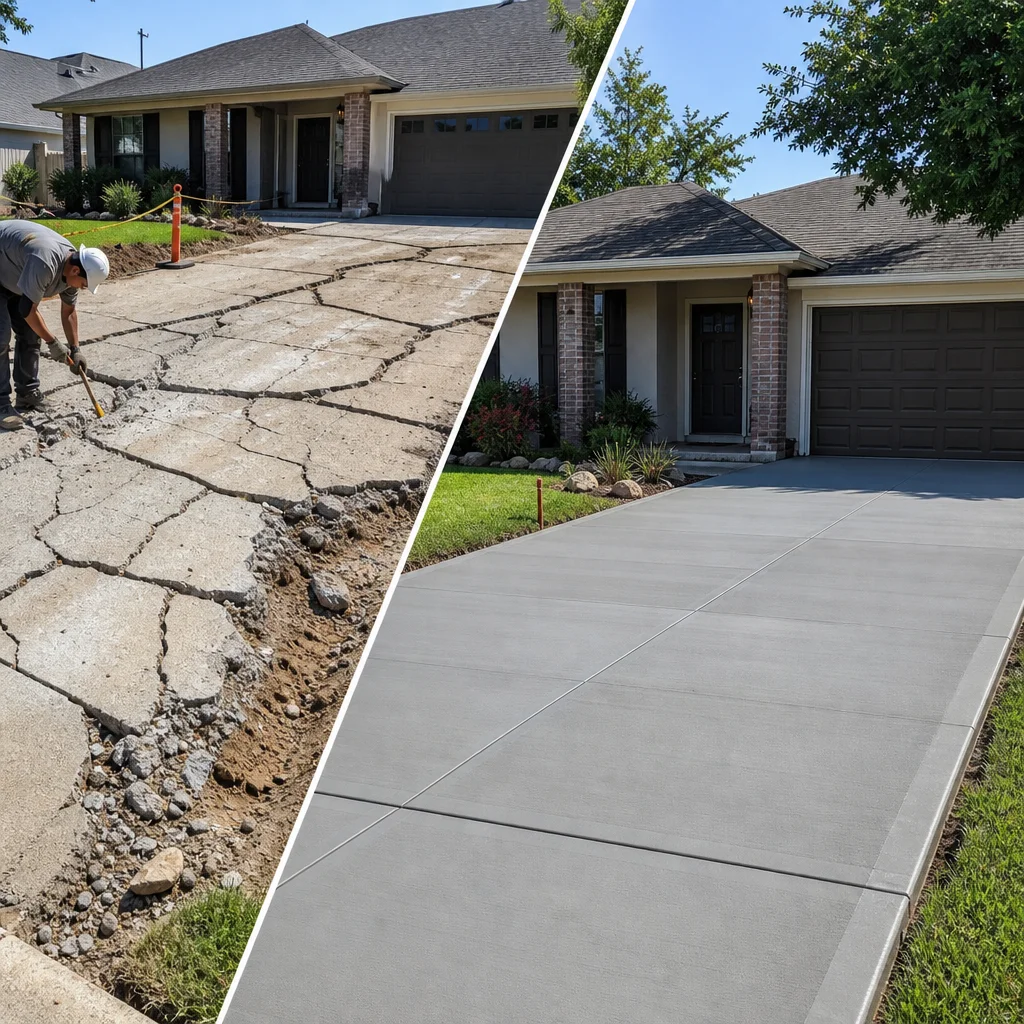
Replacement means tearing out a functioning driveway, removing tons of concrete, excavating and re-preparing the subgrade, and pouring new concrete. This process is disruptive, expensive, and doesn’t address the underlying soil problem. Your new driveway will settle again if the soil conditions aren’t improved.
Concrete leveling and polyurethane foam injection directly address the root cause: filling voids and re-supporting the existing slab. The concrete itself remains structurally sound. You’re restoring functionality at roughly one-quarter to one-third the cost of replacement.
We’ve leveled driveways that have performed well for over a decade post-repair. The foam injection creates a stable, permanent support layer that adapts to minor seasonal soil movement without re-settling.
Signs Your Driveway Needs Immediate Repair
Watch for these warning indicators that prompt prompt action:
- Depressions holding standing water after rain
- Cracks radiating from low spots or following a pattern
- Visible gaps between the driveway and adjacent concrete (sidewalk, patio, or garage apron)
- A seesaw effect where one end of a section is noticeably higher than the other
- Active movement (cracking that appears or worsens month to month)
Early intervention prevents minor settling from becoming severe. A half-inch depression is much simpler to address than a two-inch drop. Don’t wait for the problem to become dramatic.
Our Licensed Team and Service Guarantee
We’re a fully licensed and insured concrete contractor serving Lafayette and the surrounding region. Our crews are trained in modern leveling techniques and bring decade of experience addressing Louisiana soil conditions specifically.
We provide a written guarantee on all repair work. If leveling doesn’t achieve stable support or if settling recurs prematurely due to our workmanship, we stand behind the repair. We also carry comprehensive liability insurance protecting your property.
When you choose us, you’re working with a local team invested in our community’s reputation. We solve problems we understand deeply, rather than applying generic approaches to Lafayette’s unique challenges.
Protecting Your Driveway Long-Term
Beyond repair, ongoing maintenance extends driveway life. Seal your concrete every 2-3 years to prevent water infiltration that weakens both the slab and underlying soil. Grade your yard away from the driveway so surface water doesn’t saturate the foundation.
Monitor for new cracks or settling after major rain events. Clay soil conditions are normal here, but awareness lets you catch problems early. Many Lafayette property owners benefit from periodic inspection, especially after particularly wet seasons.
If you address drainage issues contributing to soil saturation, you reduce future settling risk. This might mean adding gutters, extending downspouts away from the driveway, or improving yard slope. These investments protect not just the driveway but your entire foundation.
Getting Your Free Repair Estimate Today
We offer free, no-obligation estimates on all sunken concrete driveway repair work. During your estimate appointment, we’ll assess your specific situation, explain findings clearly, and outline repair options with transparent pricing.
Contact us today to schedule your complimentary inspection. We’ll help you understand whether your driveway needs leveling, foundation repair, or broader solutions. With Lafayette’s challenging soil conditions, early action prevents small problems from becoming expensive ones.
Frequently Asked Questions (FAQ)
Why does my concrete driveway sink in Lafayette?
We’ve found that Lafayette’s clay soil expands and contracts significantly with moisture changes, causing the ground beneath your concrete to shift and settle unevenly. When clay absorbs water during heavy rains or loses moisture during dry periods, it moves beneath your driveway and creates those dangerous sunken spots. This is why concrete settling is so common in our area compared to other regions.
What’s the difference between your leveling service and full replacement?
We use concrete leveling to lift and stabilize your existing driveway by injecting material beneath it, which costs significantly less than removing and pouring new concrete. Our leveling approach preserves your driveway while addressing the root cause of settling, and most of our customers can use their driveway again within hours. Replacement takes longer, costs more, and doesn’t solve the underlying soil issues that caused the problem in the first place.
How do we know if your driveway needs repair right away?
We recommend contacting us immediately if you notice standing water pooling on your driveway, visible cracks spreading across the surface, or sections that have dropped more than a quarter-inch below surrounding areas. These warning signs mean the settling is progressing and could create safety hazards or allow water damage to your foundation. We offer free estimates so we can assess the situation and recommend the best solution for your specific driveway.