Why Curing Time Matters for Your Lafayette Driveway
The moment we pour concrete, the clock starts on one of the most critical phases of any driveway project. Curing isn’t just about waiting for the surface to feel dry. It’s the chemical process where concrete hydrates and gradually hardens into its final strength. Rush this phase, and you risk a driveway that cracks, chips, or fails prematurely. Get it right, and you have a surface that stands up to decades of Louisiana weather and daily use.
Most property owners don’t realize that concrete reaches only 70% of its ultimate strength after the standard 28-day curing period. The deeper layers continue to harden for months. During those first weeks, your driveway is vulnerable. Traffic, heavy loads, and exposure to the elements can all compromise the structural integrity if the concrete hasn’t had adequate time to set properly.
Lafayette’s climate adds another layer of complexity. Our hot, humid conditions accelerate some aspects of curing while creating challenges in others. Understanding how your local environment affects the process helps you protect your investment from day one.
Standard Curing Timeline vs Louisiana Heat Acceleration
Under textbook conditions, concrete reaches adequate strength for light traffic after seven days and full utility strength after 28 days. However, those timelines assume moderate temperatures (around 70 degrees Fahrenheit) and consistent moisture levels.
Lafayette’s heat changes this equation. When temperatures exceed 85 degrees, concrete cures faster initially. The chemical reactions happen more quickly, which sounds beneficial but creates real risks. Rapid early curing can lock in stress, making the concrete more brittle rather than stronger. You may see a surface that feels hard within days, but the internal structure hasn’t developed the flexibility needed to handle our region’s seasonal expansion and contraction.
Here’s the practical difference: A driveway poured in spring with standard conditions might support light vehicle traffic by day 10. That same driveway poured in peak summer might appear ready in 5-6 days but lack the resilience needed for the Louisiana climate. We recommend waiting the full 28 days regardless of how quickly the surface seems to harden, though in summer heat, certain protective measures become even more important.
How Temperature Affects Concrete Strength Development
Temperature drives the hydration process, but the relationship is not straightforward. Warmer conditions accelerate hydration, which speeds strength gain in the first week. Yet this rapid gain often comes with a tradeoff: the concrete becomes less dense and potentially weaker overall.
When concrete cures too quickly, water evaporates faster from the surface while the interior is still setting. This creates internal stress and increases the likelihood of surface cracks, even before anyone drives on the driveway. Our Lafayette heat can trigger this problem even when you’re actively trying to protect the concrete.
Cold temperatures slow the entire process. If concrete pours during winter or cool nights drop below 50 degrees, hydration nearly stalls. A driveway that would gain strength in 7 days during summer might take 14 days in winter. Freezing temperatures are particularly damaging to fresh concrete, which is why winter pours in Louisiana are less common but require specialized handling.
The sweet spot for concrete curing sits between 60 and 80 degrees. In that range, concrete develops strength steadily and predictably. Our team times many of our driveway installations for spring and early fall, when Lafayette’s temperatures remain in that ideal window.
Humidity and Moisture Control in Lafayette’s Climate
Humidity profoundly impacts how concrete cures. The concrete needs adequate moisture to complete the hydration process. Too little moisture, and the surface dries faster than the interior can set, creating weak spots and cracks. Too much standing water, and the concrete becomes porous and weak.
Lafayette’s Gulf Coast humidity provides natural moisture, which helps the curing process. However, this same humidity creates conditions where standing water can accumulate on your new driveway, especially during our frequent summer storms. Proper drainage design and temporary water management are essential during the curing phase.
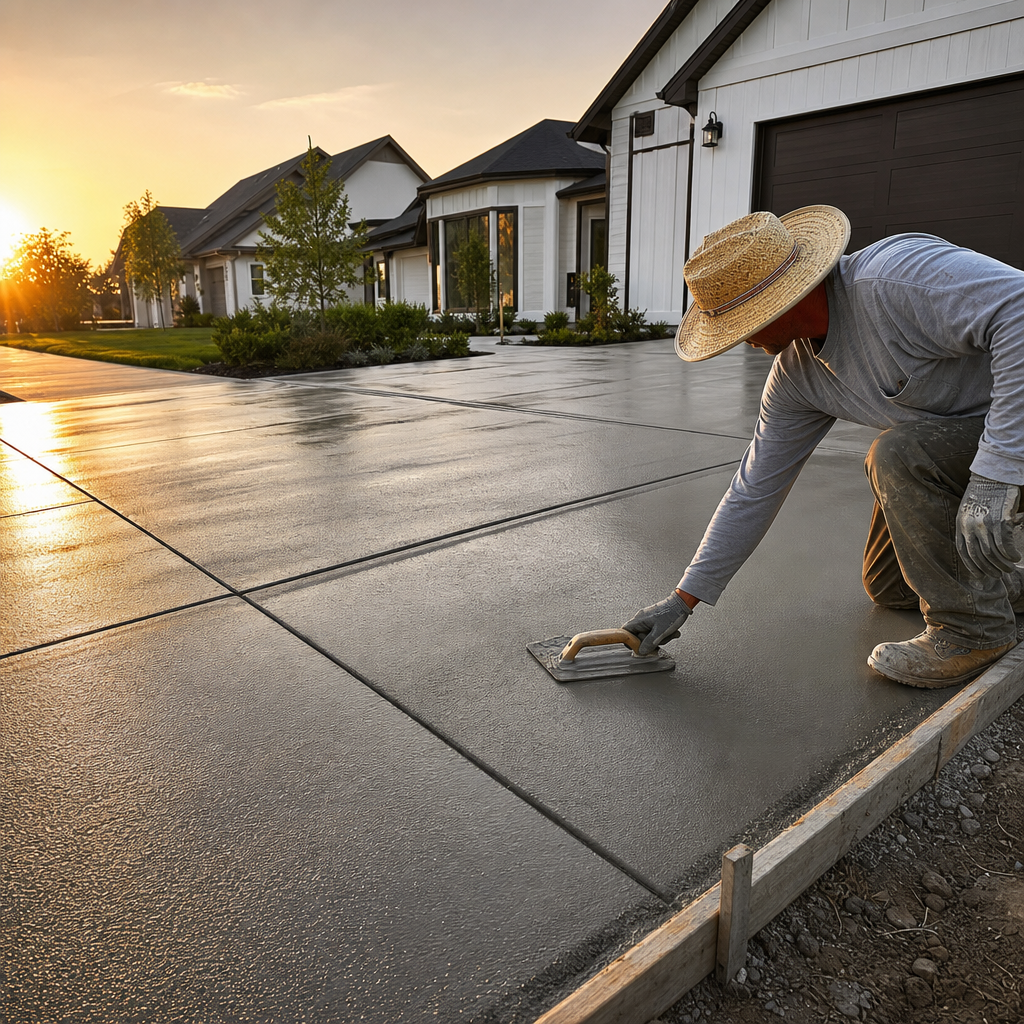
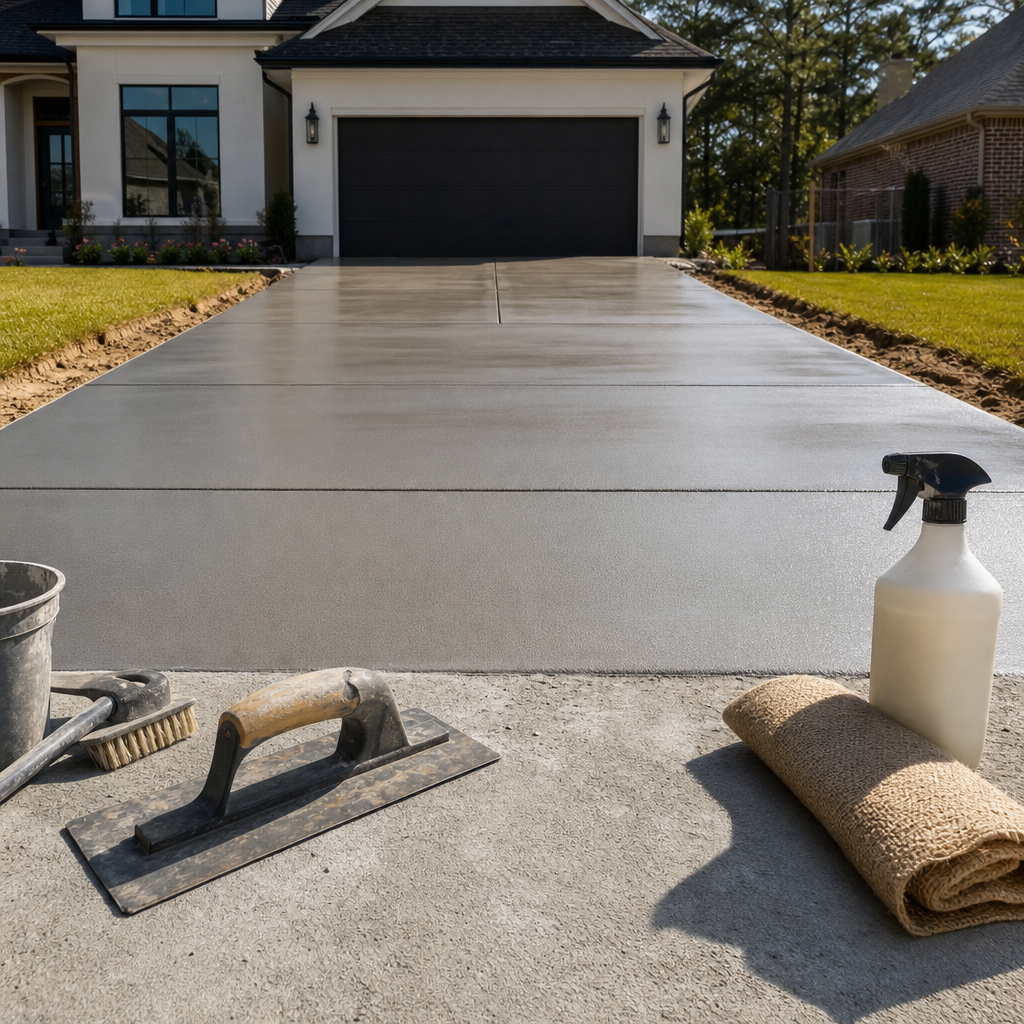
We implement moisture retention techniques tailored to our climate. Rather than relying on plastic sheeting (which traps water and can damage the surface), we use breathable coverings and misting schedules that maintain optimal moisture levels without saturation. This approach takes advantage of our humid environment while preventing water pooling that weakens concrete.
The first 7-10 days are critical for moisture management. If the surface dries too quickly, we see random cracking patterns that compromise both appearance and longevity. If excessive water remains, we risk a weakened top layer. Our team monitors weather forecasts and adjusts protection measures before and after rainfall to maintain that precise balance.
Our Professional Curing Techniques for Optimal Results
We employ several proven methods to optimize curing conditions specific to Lafayette’s environment. The approach depends on the season, expected weather, and your specific project timeline.
Moisture management: We apply curing compounds that form a breathable barrier, reducing surface water loss while allowing the concrete to continue hydrating properly. These compounds are far more sophisticated than simply spraying with water.
Temperature monitoring: On particularly hot days, we may install temporary shade structures to prevent excessive surface heating. This keeps the concrete within the ideal temperature range and prevents the thermal stress that creates cracking.
Timing: We schedule pours strategically to avoid the hottest parts of the summer when possible. A driveway poured in late afternoon allows the concrete to set during cooler nighttime hours, creating more consistent strength development.
Drainage planning: Temporary barriers and drainage channels prevent water from pooling on your driveway while moisture is still escaping from below. This is especially important in the first 72 hours.
We provide detailed care instructions for every driveway we install, including guidance on when the surface can handle traffic and how to maintain proper conditions during the curing phase. These instructions account for Lafayette’s specific climate patterns.
Common Mistakes That Extend Driveway Curing Time
Property owners often inadvertently extend curing time by making well-intentioned but counterproductive decisions. The most common mistake is excessive water exposure during the first two weeks. Washing or driving through standing water on a curing driveway can damage the surface and force the concrete to “re-cure,” essentially resetting the clock on strength development.
Another frequent error is applying sealants too early. If you seal a driveway before it’s fully cured, the sealant traps moisture inside and prevents proper hydration. This typically extends curing time by several weeks and can result in a weaker final product. We always recommend waiting at least 30 days before sealing.
Heavy loads and traffic before the concrete is ready also delay curing. Not because the concrete needs more time after the fact, but because premature stress damages the structure and requires the undamaged portions to compensate, creating internal cracking. Even the weight of construction equipment left on the surface can cause lasting damage.
Poor drainage during installation sets a problematic foundation. If water pools under the concrete or around the edges, it interferes with the entire curing process and can cause settling or cracking months later.
Why Rushing Your Driveway Leads to Long-Term Damage
The temptation to use your new driveway before it’s fully cured is understandable, but the consequences are expensive and difficult to reverse. Proper concrete curing establishes the foundation for decades of performance. Skip or abbreviate this phase, and you’re setting yourself up for problems that emerge months or years down the road.
A driveway that bears traffic before full curing doesn’t gain additional strength over time the way a properly cured surface does. Instead, any existing cracks or weak points propagate and expand. What might have been a hairline fracture in week three becomes a structural issue by year two. Water infiltrates these cracks, freezes in winter, and accelerates deterioration.
In Lafayette’s climate, prematurely cured driveways often show surface spalling (where small chunks of concrete chip away) within 2-3 years. They’re more susceptible to damage from our freeze-thaw cycles, even though freezing is rare here. The underlying cause is usually incomplete curing that weakened the surface layer.
We’ve seen driveways that needed replacement after just 5-7 years because owners drove on them too early. Properly cured driveways we’ve installed regularly perform well for 20+ years. The difference in cost between waiting 28 days and replacing a driveway is substantial.
Our Proven Method for Faster, Stronger Driveways
We’ve refined our process over years of Lafayette installations to balance speed with strength. Our approach gets you using your driveway sooner without compromising durability.
We use high-strength concrete mixes appropriate for Louisiana’s soil and climate conditions. These formulations allow us to achieve usable strength faster than standard concrete while maintaining long-term durability. The concrete reaches the 3,500 PSI strength needed for typical residential traffic in 7-10 days under our management.
Our environmental monitoring during curing is precise. We don’t guess at conditions. Our team checks temperature, humidity, and forecast data throughout the curing process and adjusts protection measures accordingly. This active management prevents the setbacks that extend timelines.
We also provide a clear schedule for what your driveway can handle at each phase. At day 7, you can handle foot traffic and light vehicle movement. By day 14, the driveway supports regular driving. At day 28, you have the fully cured surface ready for heavy loads, and it’s safe to apply sealant. This staged approach lets you use your property while we protect the concrete’s development.
Traffic Restrictions During the Curing Process
Understanding these restrictions helps you plan your household around the project and protects your investment.
Days 1-3: No traffic whatsoever. The concrete is still developing initial set. Even foot traffic can leave marks or damage the surface.
Days 4-7: Light foot traffic only. No vehicles under any circumstances. The concrete is developing strength but remains vulnerable to weight and stress.
Days 8-14: Light vehicle traffic is acceptable for essential purposes (e.g., pulling a single car into the driveway). Avoid parking heavy vehicles or allowing multiple cars to sit on the driveway during this window.
Days 15-28: Normal vehicle use is acceptable, but heavy loads (moving trucks, concrete pumpers) should wait until after day 28.
After day 28: Full use including heavy equipment, sealing, and all standard driveway activities.
During summer months in Lafayette, these timelines can accelerate slightly due to heat, but we recommend not reducing these windows. The appearance of hardness doesn’t indicate full strength development, and the Louisiana humidity provides enough benefit without rushing the process.
Seasonal Considerations for Lafayette Concrete Projects
Lafayette’s four distinct seasons each present different curing challenges, and our approach adjusts accordingly.
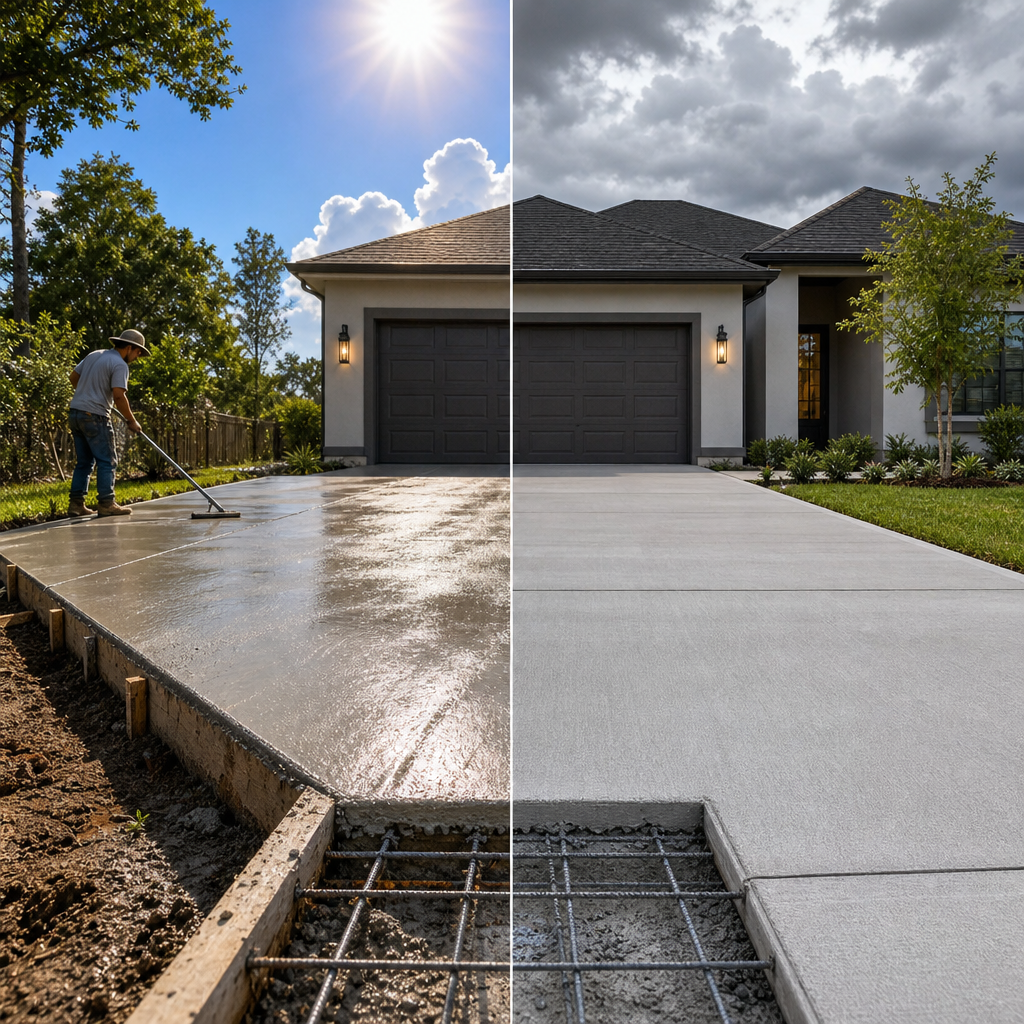
Spring and fall offer ideal conditions. Temperatures hover in the 65-80 degree range, and rainfall patterns are predictable. These are our preferred seasons for driveway installation because curing proceeds smoothly with minimal intervention required.
Summer accelerates curing but creates risk. High temperatures and sudden thunderstorms require active management. We monitor forecasts closely and protect driveways from both excessive heat and water saturation. Summer projects need our full attention throughout the process.
Winter slows everything down. While freezing is rare in Lafayette, even cool nights below 55 degrees noticeably slow hydration. Winter driveways take longer to cure and require protection from any cold snaps that might occur. We rarely schedule concrete pours in winter unless it’s unavoidable.
South Louisiana climate conditions affect not just curing but the entire lifespan of your driveway. Scheduling your project for optimal seasonal conditions is one of the smartest decisions you can make.
Why You Should Trust Our Expertise for Your Driveway Investment
A driveway is one of the most visible and heavily used features of your property. The decision to hire us isn’t just about pouring concrete; it’s about protecting an asset that will serve your home for two decades or more.
Our team has completed hundreds of driveway installations throughout Lafayette and the surrounding areas. We understand how local soil conditions, seasonal weather patterns, and groundwater affect concrete performance. This deep regional knowledge directly translates to driveways that outlast expectations.
We don’t cut corners on curing. Some contractors rush the process to turn projects faster and schedule the next job. We manage the timeline properly because we stand behind our work. Every driveway we install comes with our commitment to proper curing protocols tailored to Lafayette’s specific conditions.
Beyond installation, we provide detailed maintenance guidance that helps you preserve your driveway’s condition. We’re available to answer questions during the curing phase and beyond, ensuring you understand exactly how to care for your investment.
When you choose Conkrete Workz, you get licensed, insured professionals who approach every project with the precision and attention to detail that concrete demands. We offer free no-obligation estimates for your driveway project, and we’re happy to discuss how our proven curing methods will deliver a driveway built to last. Contact us today to schedule your consultation and take the first step toward a durable, beautiful driveway.
Frequently Asked Questions (FAQ)
How long does concrete take to cure for a driveway in Lafayette’s climate?
We typically see concrete cure in about 7 days under standard conditions, but Lafayette’s heat can accelerate this to 5-6 days. However, we recommend waiting the full 7 days before driving on your new driveway, even if it feels hard to the touch, since concrete continues gaining strength over several weeks. Our team manages the curing process carefully to ensure your driveway reaches optimal strength rather than just surface hardness.
What mistakes should we avoid during the curing period?
The most common error we see is allowing foot and vehicle traffic too early, which can cause permanent damage before the concrete fully sets. We also advise against power washing or applying sealers during the first 28 days, as this interferes with the curing process. Lafayette’s humidity can create a false impression of dryness on the surface while the interior is still curing, so patience is essential.
Does Lafayette’s heat and humidity really change how we should care for a new driveway?
Yes, both factors significantly impact curing in ways that differ from cooler regions. We adjust our moisture control techniques to account for Louisiana’s humidity and apply protective coverings when temperatures spike, since excessive heat can cause surface cracking. Our experience with local conditions allows us to recommend the best care strategy for your specific project timeline.