Why Your Home’s Foundation Matters: Understanding Monolithic Slab Foundations
Your foundation is literally what holds your home up. A monolithic slab foundation is a single continuous concrete pour that creates both the foundation and the floor system in one step. This approach has become increasingly popular in Louisiana homes because it works well with our regional soil conditions and climate.
We’ve installed hundreds of monolithic slabs across Youngsville and Broussard, and homeowners consistently appreciate how this system delivers a solid, durable base for residential construction. Unlike traditional foundations with separate footings and grade beams, a monolithic slab combines everything into one unified structural element. The result is a foundation that resists the settlement issues common in our area while providing excellent load distribution across the slab’s entire surface.
Understanding this foundation type matters because it directly affects your home’s longevity, your insurance costs, and how well your structure handles Louisiana’s moisture and seasonal soil movement. When you know what’s underneath, you can make better maintenance decisions and spot problems early.
Common Foundation Problems We See in Youngsville and Broussard
The Lafayette area presents specific foundation challenges. Our soil contains high clay content, which expands when wet and shrinks when dry. This cycle creates pressure that can crack or shift foundations over time.
Common issues we encounter include:
- Uneven settling caused by poor soil compaction or inadequate site preparation
- Cracks radiating from corners or running across the slab in seemingly random patterns
- Water infiltration and moisture accumulation beneath the slab
- Edge settling where the perimeter sinks lower than the interior
- Stair-step cracking indicating structural movement
Many older homes in the area were built on poorly prepared sites or used outdated foundation methods that didn’t account for local soil behavior. We frequently see homeowners dealing with sloped floors, sticking doors, and visible foundation damage as a result. These problems typically worsen over time if left unaddressed, affecting your entire home’s structural integrity.
Monolithic slab foundations, when installed correctly by experienced professionals, address most of these issues from the start.
How Monolithic Slab Foundations Differ from Traditional Alternatives
Several foundation types are available, and understanding the differences helps explain why monolithic slabs work particularly well here.
Pier and beam foundations elevate the structure above ground, creating crawl space underneath. They’re common in older homes but allow more movement and can be vulnerable to moisture and pest issues in humid climates like ours.
Conventional stem wall and footing systems separate the foundation into parts: footings dig deep into stable soil, and stem walls rise to grade. This approach requires more labor and materials and creates more joints where cracks can develop.
Monolithic slabs pour the footing and floor as one unit, eliminating these joints. We thicken the perimeter edges (creating what builders call a “turned-down edge”) to handle edge loads, and we reinforce everything with steel to control cracking. The result is fewer weak points and a simpler structure that moves as one piece if any settling occurs.
For homes in Youngsville and Broussard, this unified approach means better performance under our soil conditions. You’re getting a foundation designed for regional realities rather than compromised by patched-together systems.
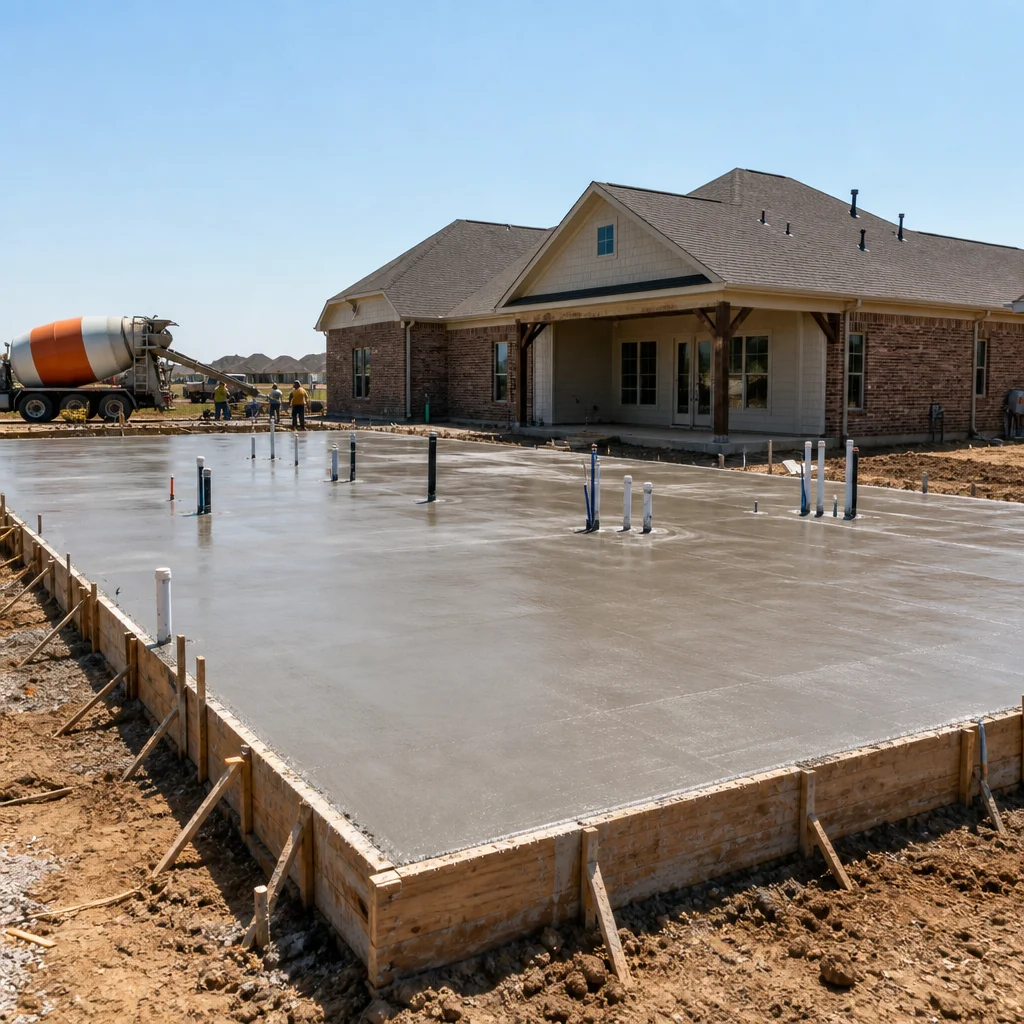
Our Complete Monolithic Slab Installation Process
We follow a systematic approach that ensures your foundation starts right.
Site preparation begins with removing topsoil, grading for proper drainage, and compacting the subgrade. This step is critical and often rushed by inexperienced contractors. We use a plate compactor and multiple passes to achieve proper density. Poor compaction leads to settling, so we don’t cut corners here.
Moisture barrier installation comes next. We place a polyethylene vapor barrier beneath the slab to prevent ground moisture from wicking upward. In Lafayette’s humidity, this step protects your flooring and reduces moisture-related problems.
Form setting and leveling establishes precise heights and slopes. We set wooden or metal forms around the perimeter and check elevations multiple times. Any deviation here affects your finished floor level and water drainage.
Rebar placement creates the reinforcement grid. We space steel reinforcement according to structural requirements, typically in a grid pattern with specified spacing. This steel controls crack propagation and ties the slab together.
Concrete pouring and finishing happens all at once. Our team coordinates delivery, pours the concrete, screeds it level, and finishes the surface. We don’t stop at a rough surface; we trowel and finish to the specifications your contractor requires.
Curing takes time. We protect the slab and keep it moist for at least seven days to allow proper strength development. Rushing this phase weakens the concrete, so we manage the timeline carefully.
Quality Materials and Equipment We Use for Your Foundation
We specify concrete mixtures based on local soil conditions and your structure’s load requirements. Our concrete typically meets 4000 PSI strength at 28 days, well above minimum codes for residential work.
Our reinforcement steel comes from reputable suppliers with proper mill certifications. We use either #4 or #5 rebar depending on span and loads, placed at 18-inch or 24-inch centers as design requires.
For finishing, we employ industry-standard tools: long-handled trowels for smoothing, power trowels for larger areas, and brooms for slip-resistant surfaces if you prefer texture. Our equipment fleet includes vibratory compactors for proper subgrade preparation, laser levels for precise grading, and concrete saws for control joints that reduce random cracking.
We don’t substitute materials or skip steps to save money. Your foundation needs quality inputs to deliver years of reliable service, and we maintain those standards on every project.
Why Choose Concrete Works for Your Foundation Project
Our team brings specific expertise to monolithic slab installation in this region. We understand how Lafayette and Broussard soils behave through seasons, and we prepare accordingly.
We’re licensed and insured, which matters more than you might think. Licensing requirements exist because improper foundation work causes expensive problems. Our credentials demonstrate we’ve met professional standards and maintain proper insurance protection for your project.
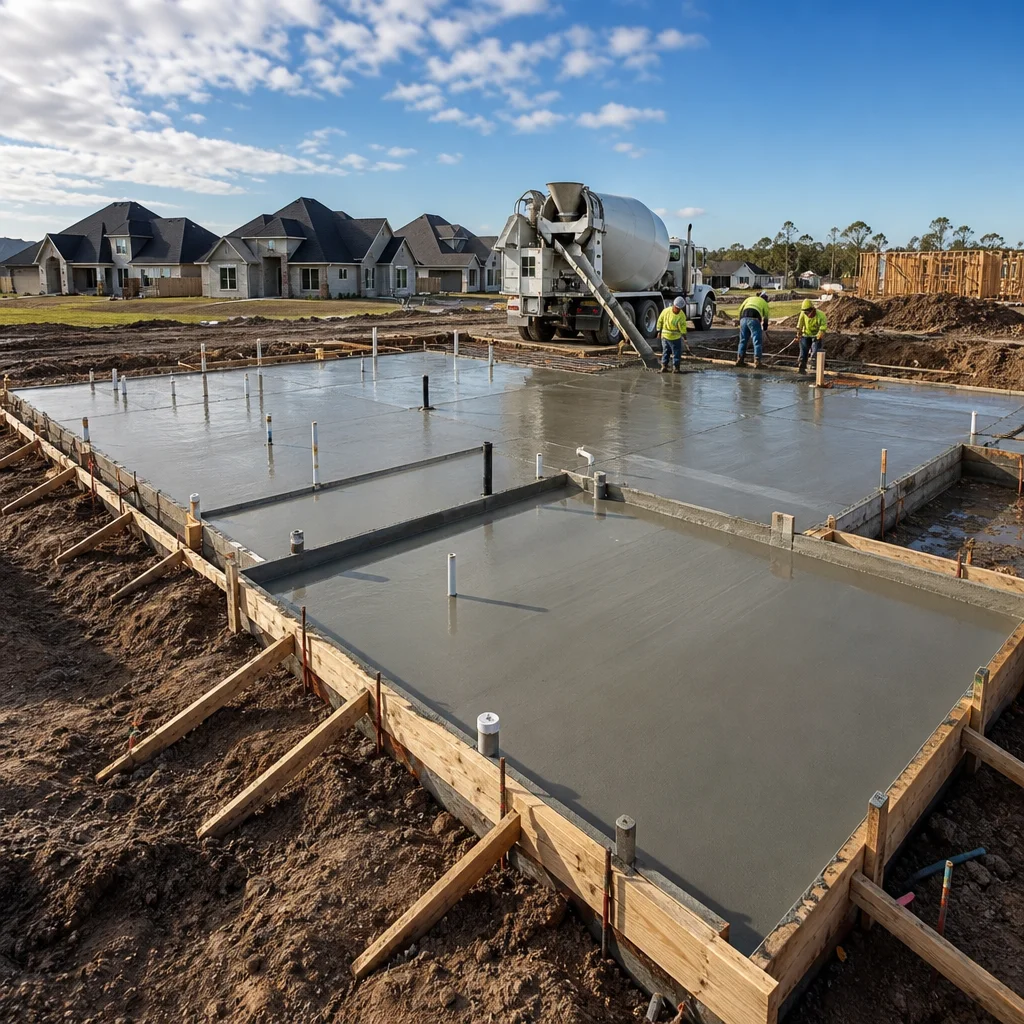
Our process includes multiple quality checks. We inspect compaction, verify reinforcement placement, monitor concrete curing conditions, and document everything. If we spot an issue, we address it immediately rather than hoping it won’t matter later.
We also provide free no-obligation estimates. You’ll get a detailed assessment of your site, a realistic timeline, and a clear price before we begin. No hidden charges or surprise invoices.
Foundation Maintenance Tips to Protect Your Investment
A properly installed monolithic slab requires minimal maintenance, but attention to a few key areas extends its lifespan significantly.
Control water drainage by maintaining gutters, downspouts, and grading around the foundation perimeter. Water should drain away from your home, not pool against the slab edge. Even small low spots can allow water to accumulate and cause problems.
Monitor for cracks on a routine basis. Small hairline cracks are normal and non-structural, but wider cracks or step-pattern cracking warrant professional evaluation. We can assess whether a crack is simply cosmetic or indicates movement.
Avoid point loads where possible. Don’t stack heavy materials directly against foundation edges or support beams on small areas. Distributed weight works better than concentrated pressure.
Seal control joints periodically with polyurethane or concrete caulk. These planned joints allow controlled movement; keeping them sealed prevents water infiltration.
Maintain consistent moisture in the soil around your foundation rather than cycling between extremely wet and dry. This reduces stress from expansion and contraction.
The Cost Benefits of Monolithic Slab Foundations
Monolithic slabs cost less to install than traditional stem wall and footing systems because they require fewer materials, less formwork, and simpler labor sequences. You’re paying for one pour instead of coordinated multiple pours.
Beyond initial installation, operational costs remain low. Monolithic slabs don’t require under-house ventilation or moisture management systems common with pier and beam foundations. You avoid crawl space access and related maintenance.
Insurance companies often view monolithic slabs favorably, sometimes offering modest premium reductions for homes built on modern, stable foundations. While not dramatic, these savings compound over years of homeownership.
Energy efficiency improves with monolithic slabs because there’s no gap between the structure and ground, reducing air infiltration and thermal bridging. Your heating and cooling work more efficiently on a well-sealed foundation.
The real financial benefit emerges over time. A properly installed monolithic slab experiences minimal settling, requires no major repairs, and supports your entire structure reliably for decades. You avoid the expensive foundation repairs that plague homes built on inadequate systems.
Addressing Cracks and Settling Issues in Existing Slabs
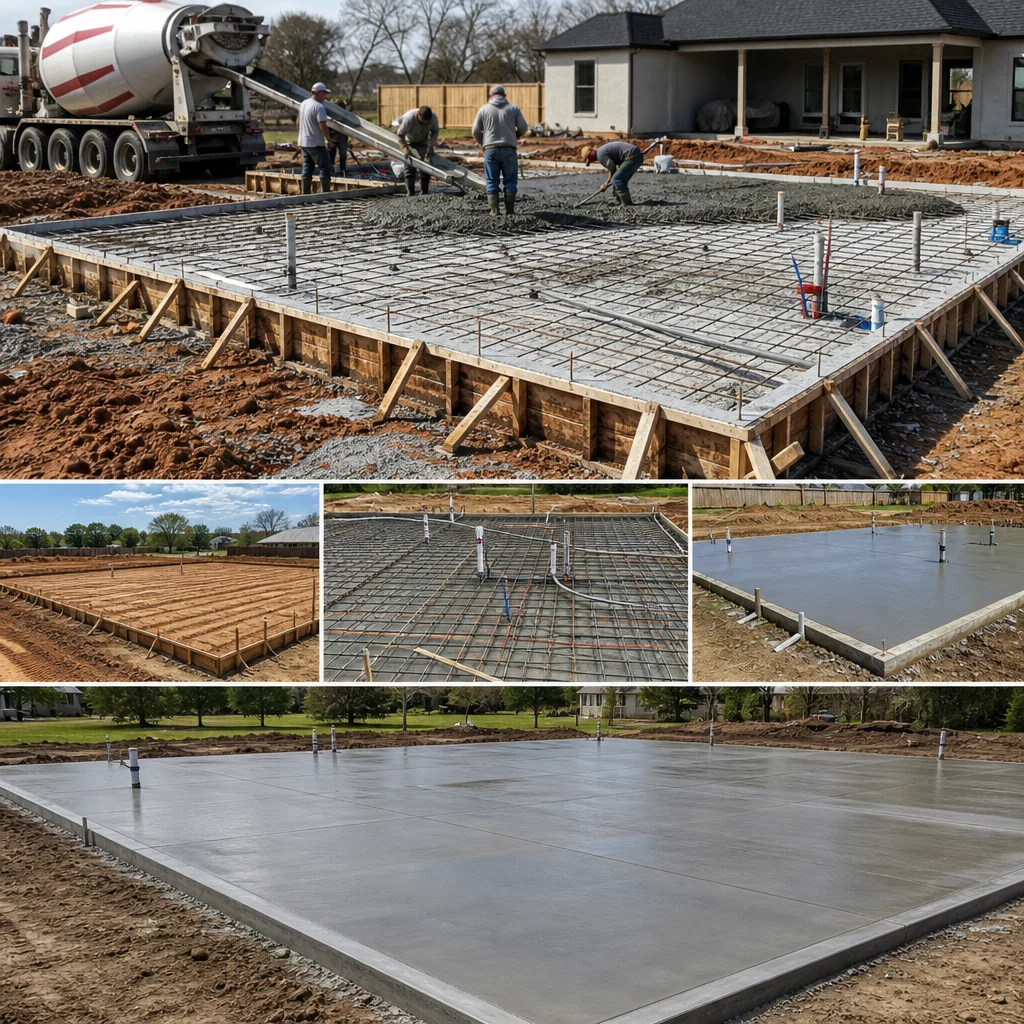
Not every Youngsville and Broussard home has a new slab. If you own an older property, you might be dealing with foundation issues in an existing monolithic or conventional slab.
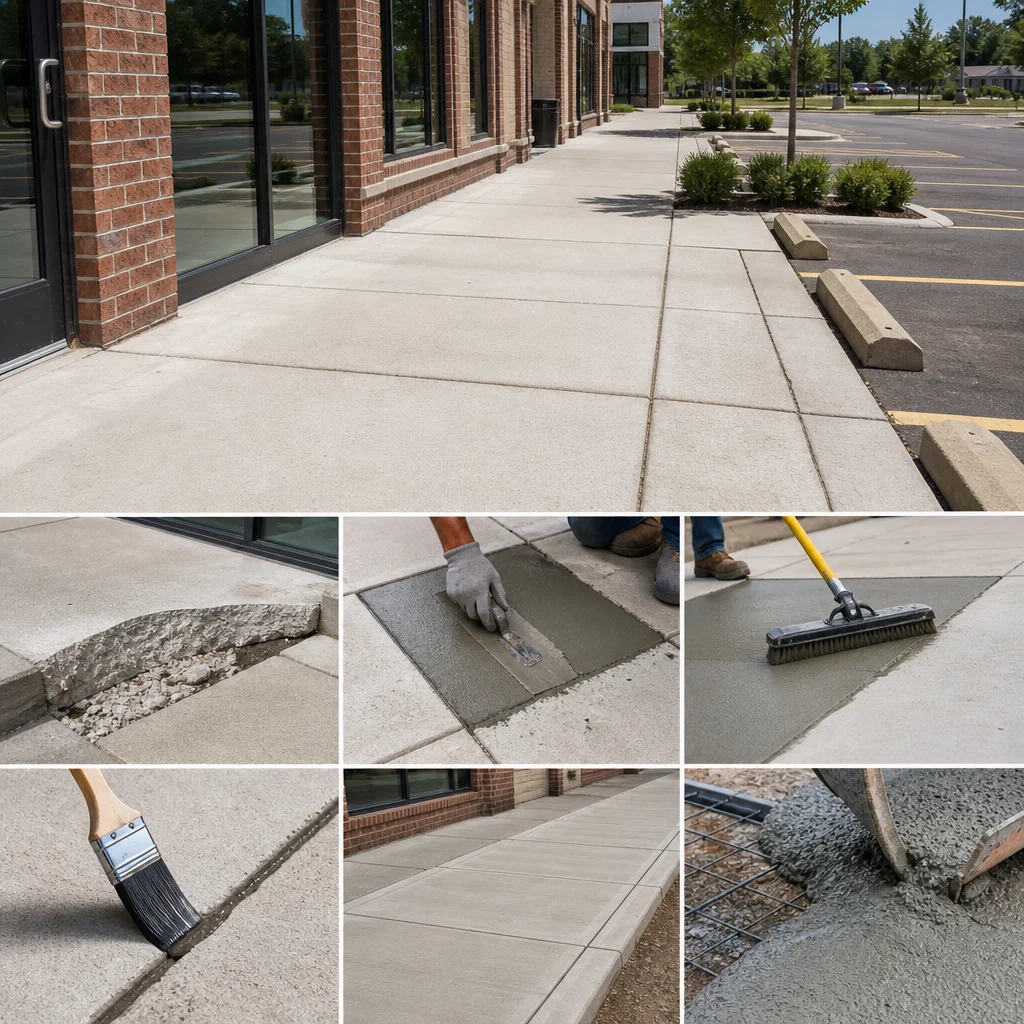
Minor cracks can be sealed using concrete repair caulk or epoxy injection. These methods prevent water entry and stop crack growth. We assess each crack’s width and pattern to determine the appropriate repair method.
More significant cracks indicating structural movement require professional evaluation. Sometimes we can lift and stabilize a settled slab using mudjacking or polyurethane injection, techniques that raise the concrete back to proper level and restore support.
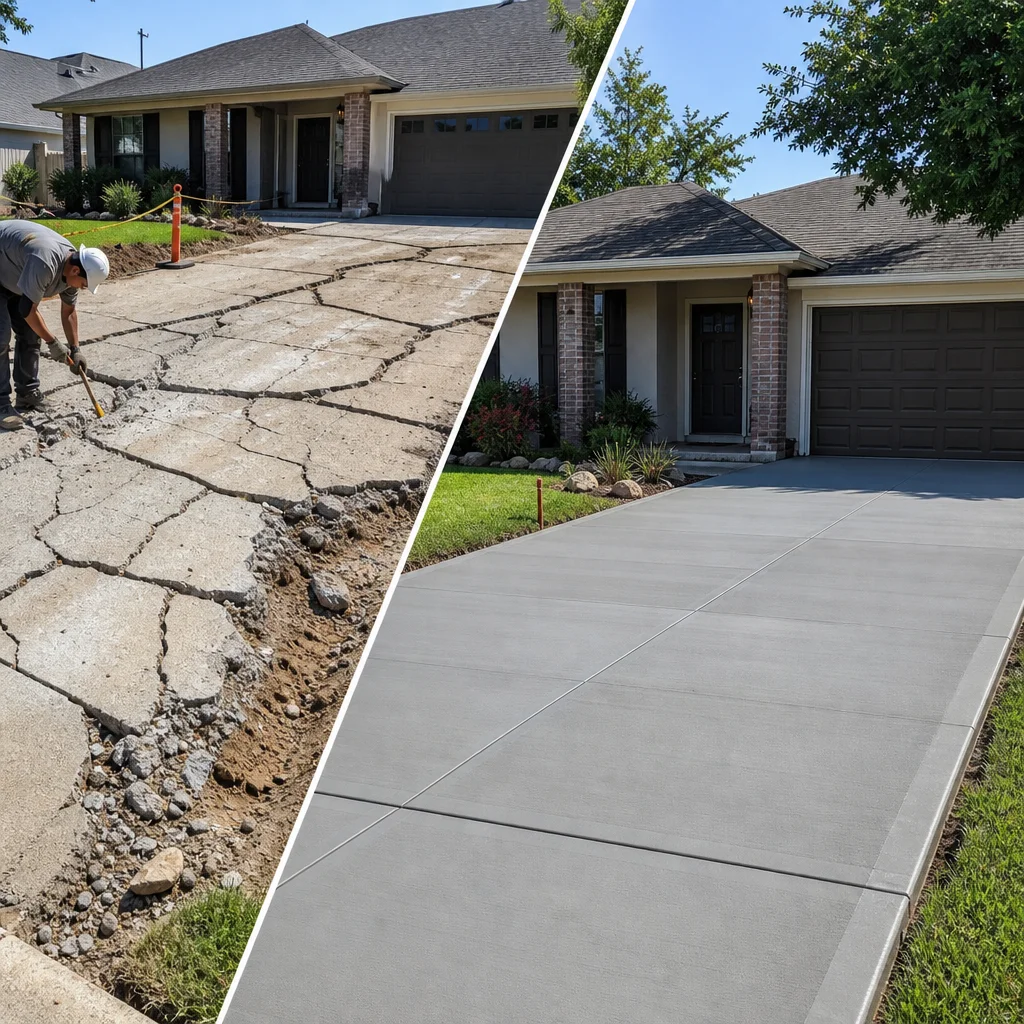
In some cases, especially where settling is severe or widespread, a new monolithic slab may be the most cost-effective long-term solution. We can remove the damaged slab and install a new one properly prepared for local conditions.
The key is getting an accurate diagnosis early. Small problems caught quickly cost far less to fix than waiting until settling damages your walls or creates safety hazards.
Getting Your Free No-Obligation Foundation Estimate Today
If you’re planning a new home, building an addition, or concerned about your existing foundation, we’re ready to help. Contact Concrete Works for a free, no-obligation estimate on your monolithic slab foundation installation or foundation concerns.
Our foundation contractor team will visit your property, assess site conditions, discuss your project requirements, and provide a detailed quote. You’ll understand what’s involved, the timeline, and the investment required before making any commitment.
Reach out to us online or by phone to schedule your estimate. We serve Youngsville, Broussard, Lafayette, and surrounding areas with professional concrete foundation services backed by experience and local expertise. Your home’s foundation is too important to leave to chance.
Frequently Asked Questions (FAQ)
What makes monolithic slab foundations different from other foundation types?
We install monolithic slabs as a single, unified concrete pour that combines the footing and slab in one step, which reduces construction time and potential weak points. Unlike traditional foundations that require separate footing and slab layers, our monolithic approach provides excellent stability for homes in the Youngsville and Broussard area where soil conditions can shift seasonally.
How long does a monolithic slab foundation typically last?
We’ve found that properly installed monolithic slabs can serve your home for 50 years or more when maintained correctly. The longevity depends on factors like soil drainage, climate exposure, and how well you address any minor cracks early on, which is why we provide maintenance guidance after installation.
What should I do if my existing slab is cracking or settling?
We recommend having us inspect the damage first since not all cracks require immediate repair. Our team can determine whether you’re dealing with minor surface cracks or more serious settling issues, then recommend the best repair approach to protect your foundation and prevent costlier problems down the road.