1. Standard Concrete Driveways: Why We Recommend This Cost-Effective Choice
Your driveway takes a beating. Louisiana’s heat, humidity, and seasonal rain create conditions that crack, fade, and weaken concrete over time. When replacement becomes inevitable, you face real choices about materials, durability, and cost. We’ve helped hundreds of Lafayette homeowners navigate this decision, and we want to share what actually works in our climate.
Standard concrete remains the smartest choice for most Lafayette homeowners. It delivers durability, low maintenance, and straightforward pricing without compromising on performance.
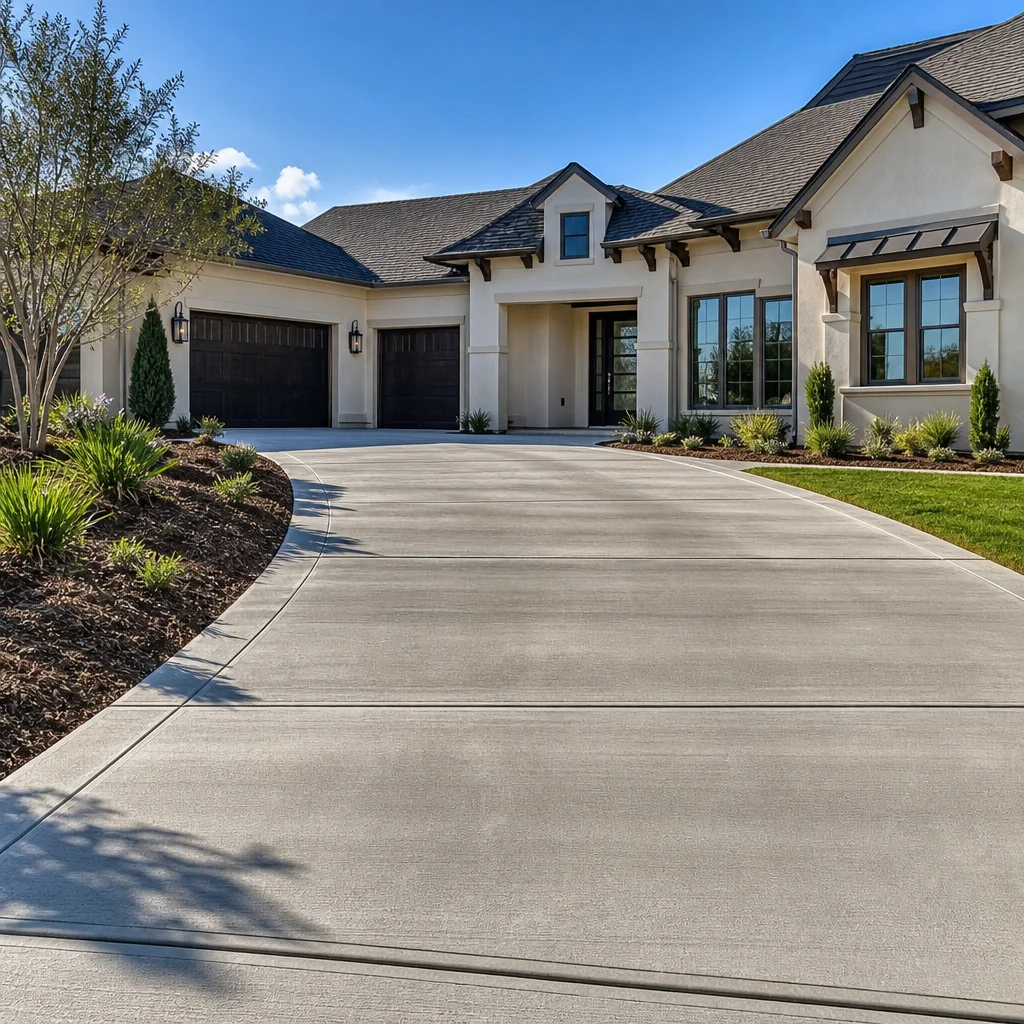
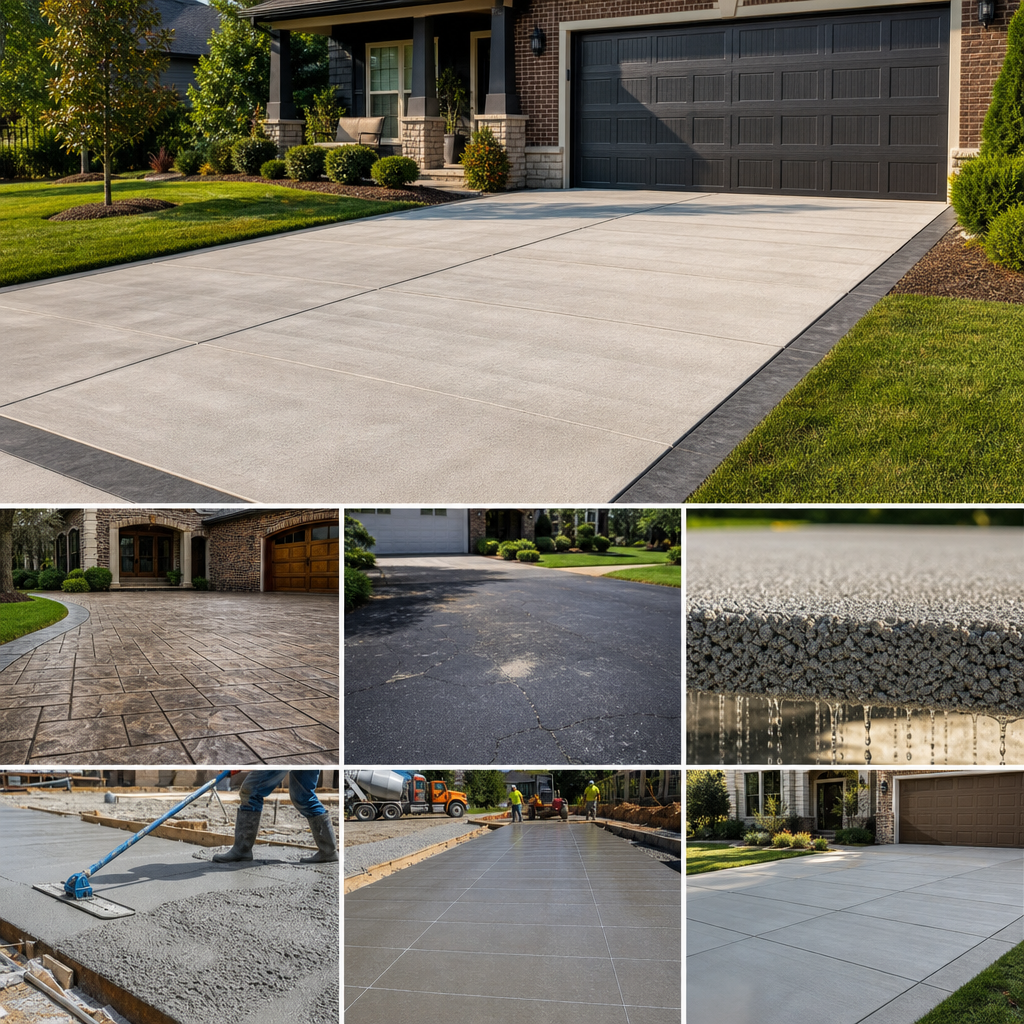
A properly poured concrete driveway lasts 25-40 years in our climate when installed correctly. Unlike alternatives that degrade faster under Louisiana’s sun and moisture, concrete withstands seasonal temperature swings and heavy rainfall. You won’t deal with the constant patching that asphalt demands, and you won’t face the shifting that can crack newer surfaces.
The upfront cost sits between $3,000 and $8,000 for a typical residential driveway (roughly $8-12 per square foot for labor and materials), depending on your property size and site conditions. When you calculate the lifespan against maintenance costs, concrete delivers exceptional value. Compare that to asphalt, which needs seal coating every 2-3 years and repaving every 15-20 years, and the math becomes clear.
We pour concrete driveways with proper slope for drainage, appropriate thickness (4 inches standard for residential use), and reinforcement to prevent cracking. The finishing process matters too. A smooth trowel finish looks clean and professional while providing good traction, even when wet.
What to do next: If longevity and predictable costs matter most to you, standard concrete is your foundation. Get a concrete driveway cost estimate to see actual pricing for your property size.
2. Stamped Concrete Finishes: Premium Aesthetics That Last
Stamped concrete transforms a functional surface into a design statement. If curb appeal matters and your budget allows, this option delivers luxury without the luxury price tag.
Stamped patterns mimic brick, slate, stone, or wood while maintaining concrete’s durability. The process happens while the concrete cures: we press textured mats into the surface, creating the illusion of individual pavers or cut stone. Colors are added before stamping to enhance the realistic appearance.
The cost premium runs $2-4 per square foot above standard concrete, so your total investment lands around $11-16 per square foot. Yes, that’s higher upfront, but you’re getting a finished surface that rivals expensive stone or brick installations without the cracking, settling, or maintenance those materials require.
Stamped concrete performs just as well as standard concrete structurally. It lasts the same 25-40 years, resists Louisiana’s weather equally, and requires minimal upkeep beyond annual sealing. The main difference is visual: your driveway becomes an extension of your home’s character rather than just a parking surface.
One consideration: stamped finishes show dirt more readily than plain concrete, so you’ll want to rinse it occasionally. That’s a small trade-off for the aesthetic impact most homeowners find worth it.
What to do next: If your home’s exterior deserves an upgrade in curb value, request samples and photos of our stamped concrete work in Lafayette. Visual proof beats descriptions every time.
3. Asphalt Alternatives: Understanding Why They Fall Short
Asphalt sounds attractive when comparing upfront costs. Initial installation runs $2-3 per square foot, undercutting concrete significantly. But here’s what asphalt buyers discover after a few Louisiana summers: it’s a money pit in disguise.
Asphalt softens in heat, creating ruts where vehicles park regularly. Our summers regularly exceed 95 degrees, which accelerates this deterioration. You’ll notice visible wear within 3-5 years, even with proper maintenance. Seal coating every 2-3 years costs $50-100 (small but accumulating), and you’ll face crack filling, pothole patching, and eventual repaving at 15-20 years.
By year 20, an asphalt driveway has consumed more money than concrete while delivering a worn-out surface. The environmental impact is worse too: asphalt produces volatile organic compounds as it breaks down, and the material doesn’t biodegrade or recycle cleanly.
Weather cycling compounds asphalt’s problems. Lafayette’s humid winters followed by scorching summers cause expansion and contraction that cracks the surface. Moisture seeps into these cracks, freezing during cold snaps (rare but damaging when they occur) and creating potholes that spread rapidly.
We’ve seen too many customers regret choosing asphalt. The “savings” evaporate in maintenance costs while you’re left with a deteriorating surface that looks tired long before it stops functioning.
What to do next: If someone quotes you cheap asphalt, ask them to project total costs over 25 years including seal coating, repairs, and replacement. The real number will surprise you.
4. Permeable Concrete Solutions: Eco-Friendly Drainage Benefits
Permeable concrete serves homeowners who prioritize environmental responsibility and drainage management. It’s specialized, but it solves real problems in our Louisiana climate.
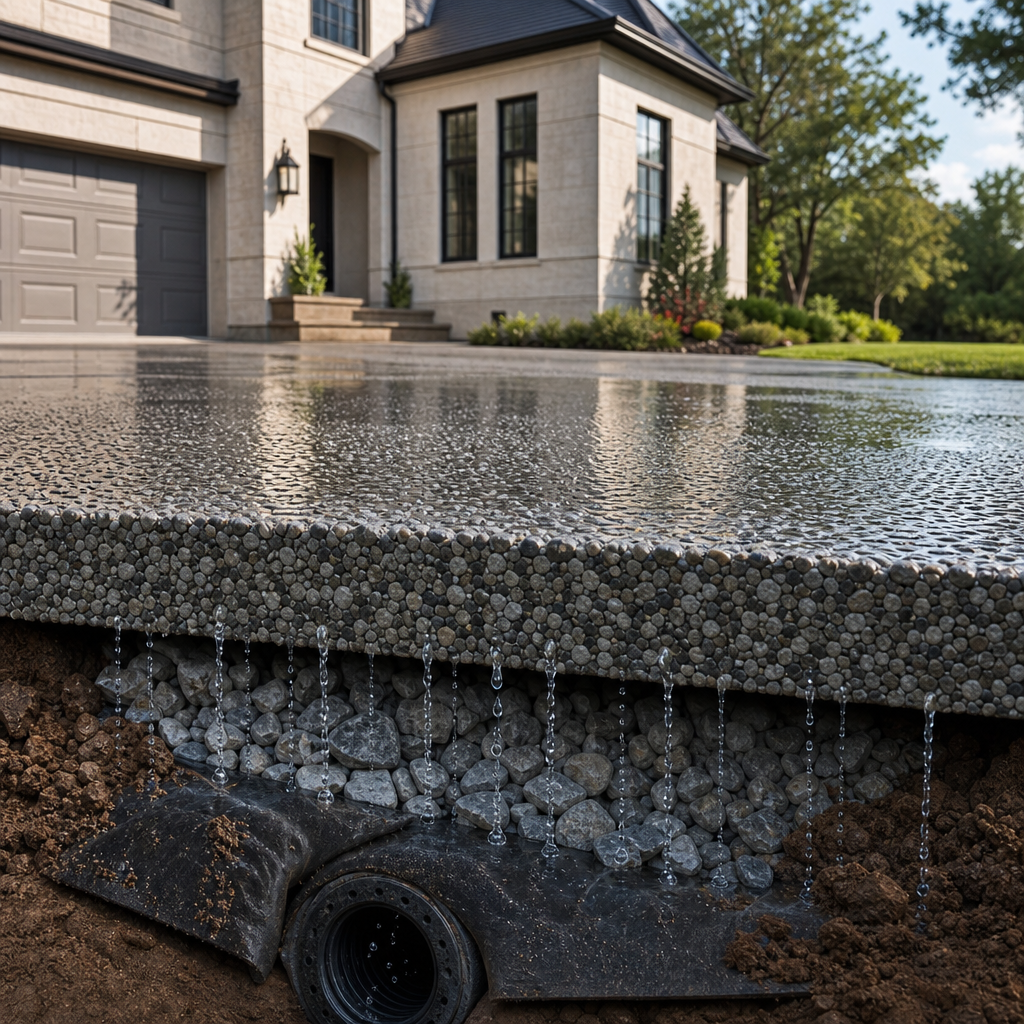
Standard concrete is solid and impermeable, which means rainwater runs off your driveway toward storm drains or landscaping. In Lafayette, where heavy rain is common, this runoff can overwhelm drainage systems and erode lawns. Permeable concrete allows water to pass through the surface into a gravel base below, where it filters naturally into the soil.
The material looks nearly identical to standard concrete but contains larger aggregate (stones) with space between them. Water flows through these spaces rather than across the surface. The structural performance is comparable to standard concrete for typical residential vehicle loads.
Installation costs 15-25% more than standard concrete because the base preparation is more involved. You need a properly engineered gravel sublayer and sometimes a membrane to prevent groundwater from rising. These details matter for long-term performance.
Permeable concrete shines if your property struggles with drainage, you’re building near wetlands or environmentally sensitive areas, or local regulations encourage low-impact development. It’s also ideal if you want to reduce your environmental footprint while solving water management challenges.
Maintenance is slightly different: you’ll want to vacuum or sweep it occasionally to prevent surface clogging, but repairs and longevity match standard concrete.
What to do next: If drainage is an issue on your property, describe the situation when requesting your estimate. We’ll assess whether permeable concrete makes sense for your specific site.
5. Concrete Overlay Resurfacing: Extending Your Current Driveway Life
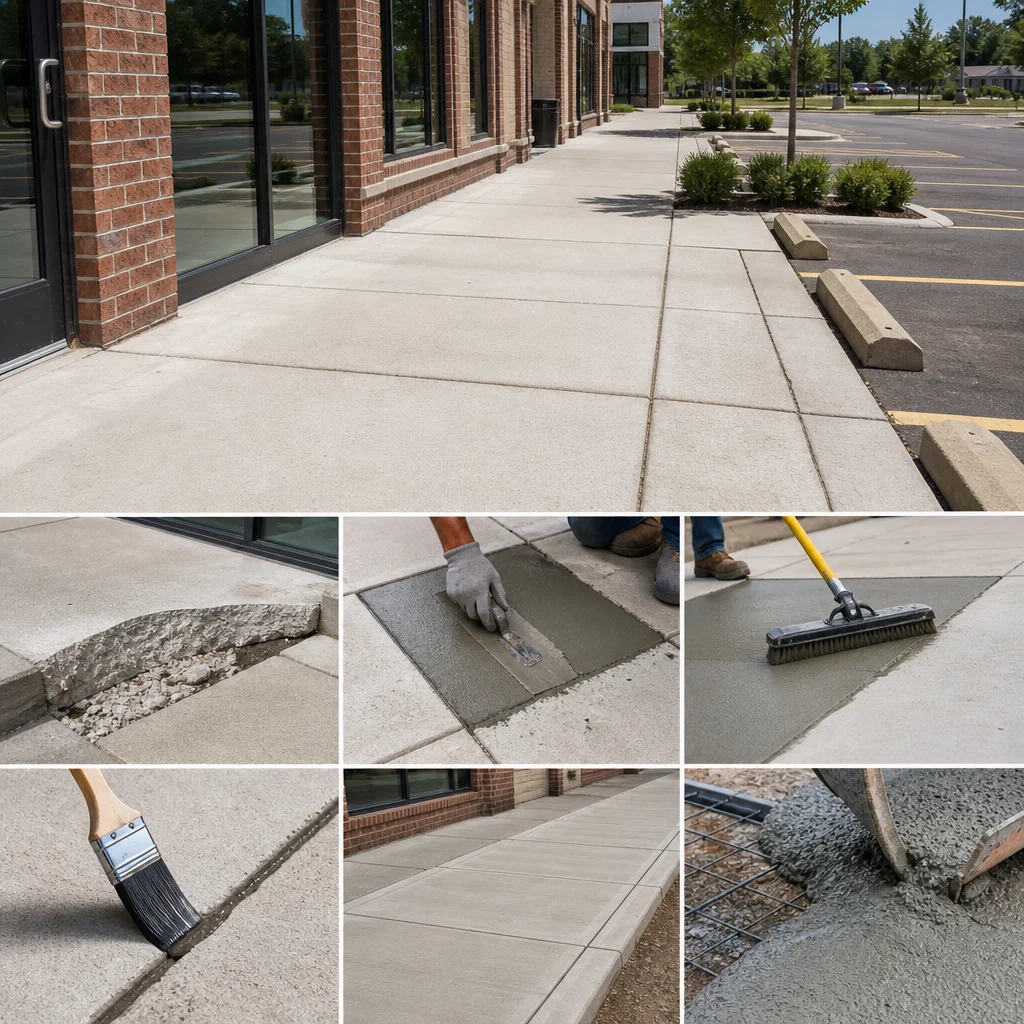
Before assuming your driveway needs complete replacement, consider overlaying the existing surface. If your foundation is structurally sound but the top layer is cracked or stained, an overlay extends life at a fraction of replacement cost.
We clean and prepare your existing concrete, apply a bonding agent, then pour a fresh 2-3 inch layer of concrete on top. The result is a like-new surface at 40-60% of full replacement cost. Overlay work runs $4-8 per square foot versus $8-12 for new installation.
This option works when your existing driveway doesn’t have major structural damage like large settlement cracks, severe potholes, or base failure. If those issues exist, overlaying masks the problem temporarily but won’t solve it long-term. A proper inspection determines whether overlay makes sense for your specific situation.
Overlays deliver genuine value for homeowners in transition. Maybe you’re planning to sell in a few years, or you want to refresh your property’s appearance without the expense and disruption of full removal and replacement. The new surface performs well and looks excellent.
The durability of an overlay depends on the underlying surface. If the original concrete was well-built and just aging cosmetically, the overlay can last 20+ years. If underlying structural problems exist, expect 10-15 years before those issues resurface.
What to do next: Request an inspection to determine if your current driveway is a candidate for overlay resurfacing. This honest assessment could save you thousands.
6. Professional Installation: Why Our Licensed Team Ensures Superior Results
Material choice matters, but installation quality determines actual performance. This is where we distinguish ourselves from budget contractors.
We’re licensed and insured with years of experience in Lafayette’s specific climate conditions. That experience translates to details that homeowners often overlook but that determine whether a driveway lasts 40 years or fails in 15.
Proper slope is critical. We ensure water drains away from your home and doesn’t pool on the surface, which accelerates deterioration. We design appropriate thickness based on your soil type and intended use, not just follow a generic standard. We use reinforcement methods suited to Lafayette’s expansion/contraction patterns.
Weather timing matters too. Pouring concrete during temperature extremes or high humidity affects curing. We schedule installations during optimal conditions and manage the curing process carefully to prevent premature cracking.
Site preparation isn’t glamorous but it’s essential. We excavate to appropriate depth, compact the base properly, and address drainage concerns before pouring anything. Cutting corners on prep work shows up as settling and cracking within 2-3 years.
When you get estimates from different contractors, you’re not just comparing price. You’re comparing experience, insurance coverage, warranty backing, and the quality of craft that determines whether your investment delivers decades of reliability.
What to do next: Ask potential contractors about their experience with local soil conditions, their warranty coverage, and references from recent work. Installation quality isn’t visible in the price alone.
7. Getting Your Free No-Obligation Estimate: Our Simple Process Today
Ready to move forward? Our estimate process is straightforward and truly no-obligation.
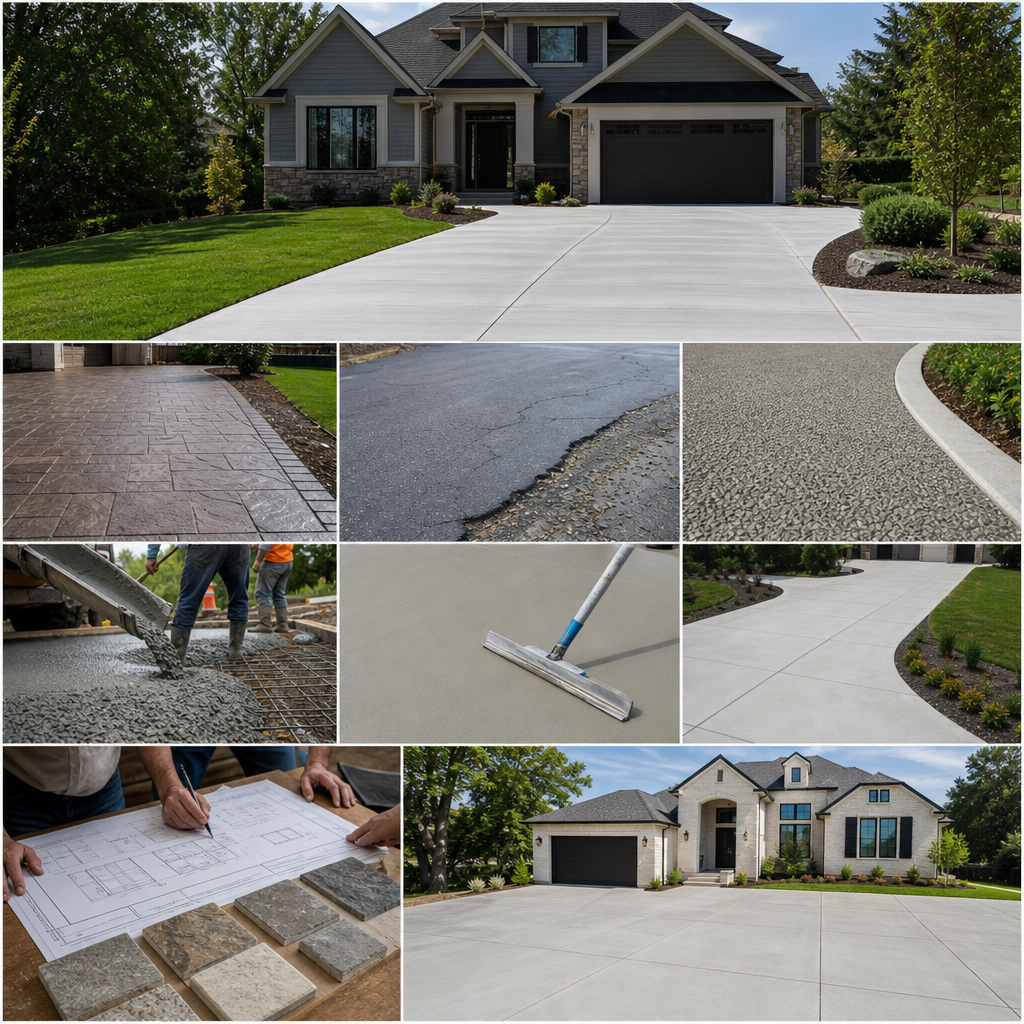
Contact us through our website or phone. We’ll ask basic questions about your property, your driveway dimensions, and what you’re hoping to achieve. We schedule a time to visit your property and assess site conditions, existing surface, drainage patterns, and any special requirements.
During the on-site visit, we measure precisely, discuss your material options, explain how our recommendation fits your specific situation, and answer every question you have. We’re not high-pressure salespeople; we’re problem-solvers who want you to feel confident in whatever you decide.
You’ll receive a detailed written estimate showing material costs, labor, timeline, and what’s included. We explain the warranty, our insurance coverage, and our process for handling the project from start to finish.
Most homeowners compare 2-3 estimates before deciding. That’s smart. We’re confident enough in our pricing, quality, and professionalism to compete with anyone in Lafayette. What you’ll notice is that our estimates include specifics about site prep, curing time, and design details that budget estimates often gloss over.
The entire process takes less than a week from initial contact to written estimate. Once you decide to move forward, we schedule installation at your convenience and manage the entire project professionally.
Your next step: Contact us today for your free estimate. You’ll get honest guidance on the best driveway solution for your property, your budget, and your long-term needs. We’re licensed, insured, and ready to deliver the quality installation that transforms your driveway from a liability into an asset.
Frequently Asked Questions (FAQ)
What’s the typical cost difference between driveway replacement and repair?
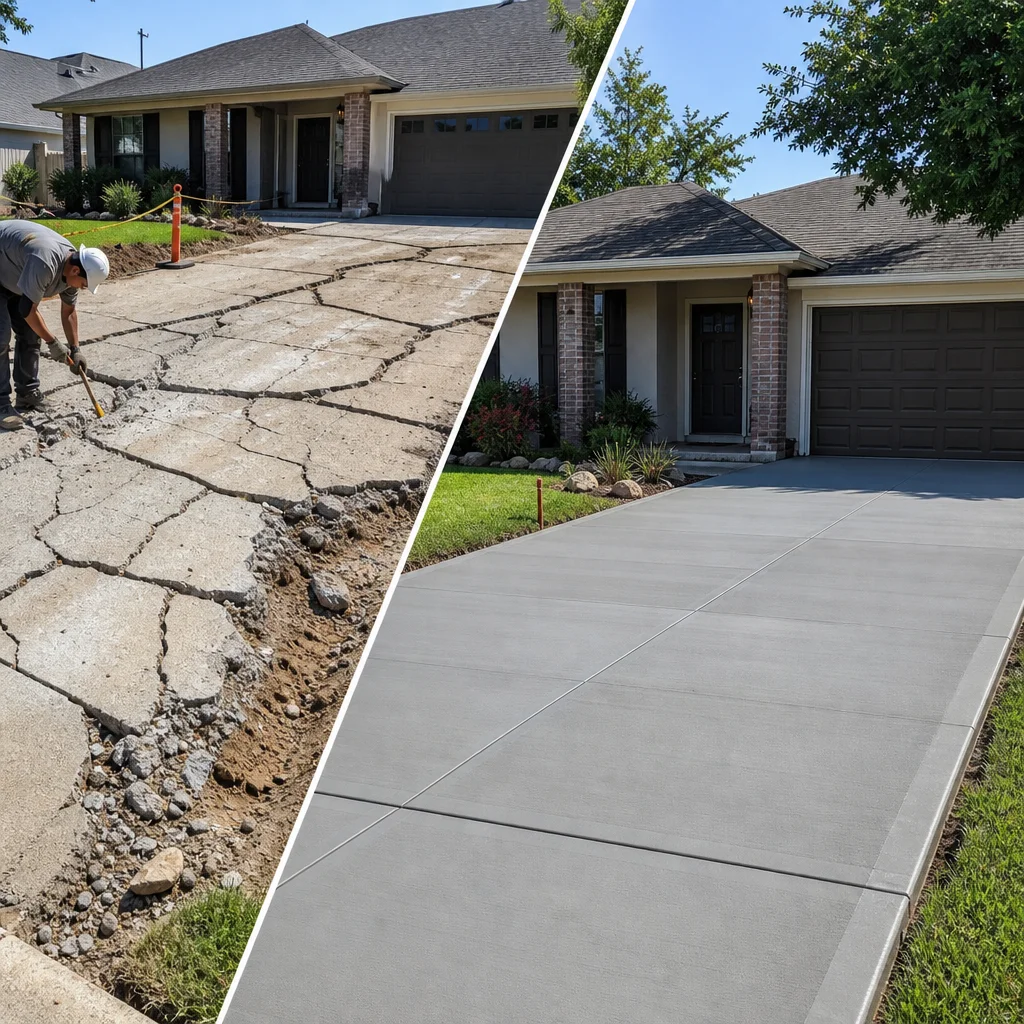
The cost depends on your driveway’s condition and size, but we generally find that repair makes sense for minor cracks or small damaged sections. Once damage covers more than 30% of your driveway or structural issues develop, we typically recommend full replacement since repairs become temporary solutions. We’ll assess your specific situation during our free estimate and recommend the most economical approach for your property.
How long does a concrete driveway installation take?
Our installation timeline varies based on driveway size and weather conditions, but most residential projects take 3 to 5 days from start to finish. We need to prepare the base, pour the concrete, and allow proper curing time before you can use your driveway. We’ll provide you with a specific timeline when we visit your Lafayette property for your estimate.
Why should we choose concrete over asphalt for our driveway?
We recommend concrete because it typically lasts 30 to 40 years with minimal maintenance, while asphalt requires resealing every few years and only lasts 15 to 20 years. Concrete also withstands Louisiana’s heat and moisture better and gives you more design options like stamped finishes or permeable surfaces. We can discuss which material fits your budget and long-term goals when we meet for your free consultation.