Why Concrete Slab Protection Matters for Lafayette Property Owners
Your concrete slab is one of the largest investments you’ll make on your property. Whether it’s a driveway, patio, or foundation, that concrete supports everything above it and endures Louisiana’s challenging climate year-round. The problem is that most property owners don’t realize drainage and grading are just as critical to longevity as the concrete itself.
Here in Lafayette, we deal with heavy rainfall, humid summers, and clay soil that shifts seasonally. Without proper drainage and grading, water pools around your slab, seeps underneath, and creates conditions that lead to cracking, settling, and structural damage. We’ve seen homeowners spend $3,000 to $8,000 replacing a driveway that could have lasted decades with correct grading from the start.
The difference between a slab that lasts 20 years and one that fails in five years often comes down to how water moves around and beneath it. That’s why understanding the relationship between drainage, grading, and concrete protection should be a priority before you pour.
The Problem: How Poor Drainage Damages Concrete
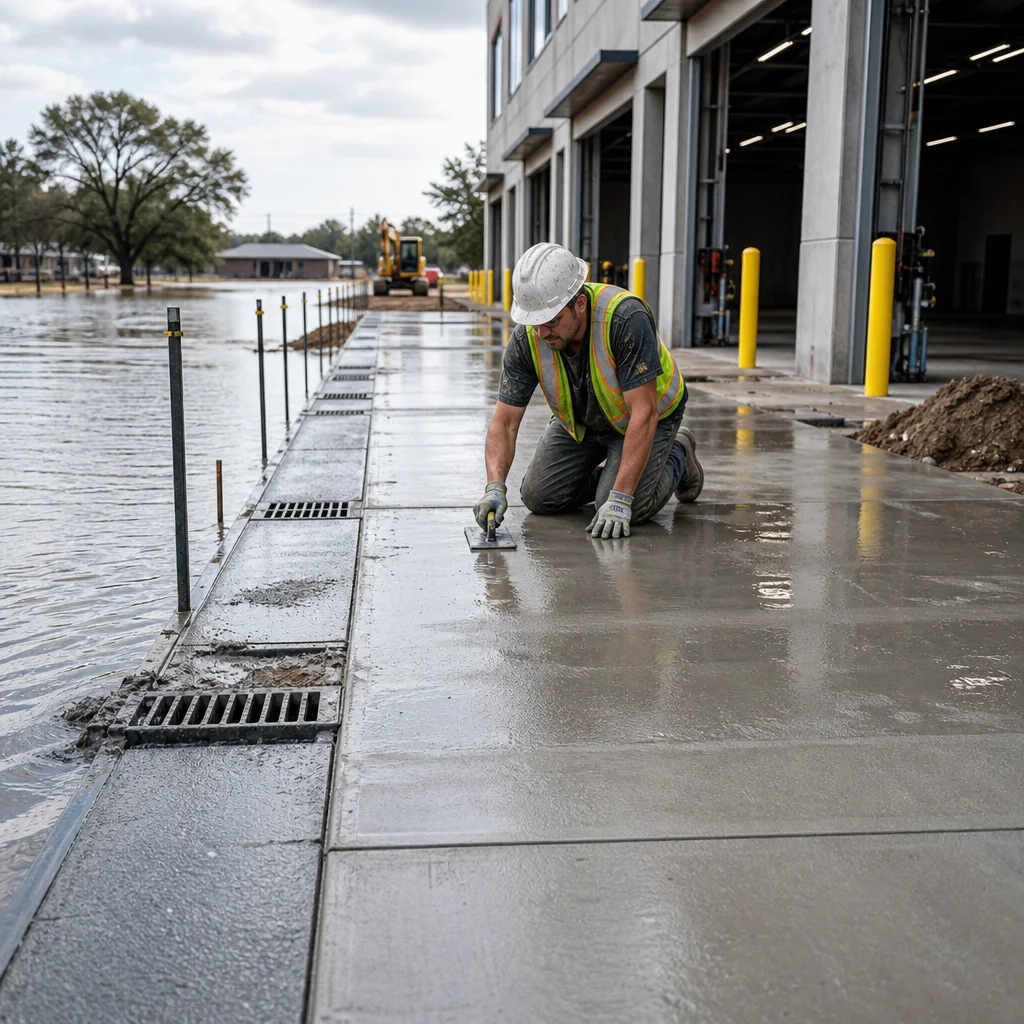
Water is concrete’s silent enemy. When water accumulates around a slab instead of flowing away, it doesn’t just sit on the surface, it infiltrates. It seeps through microscopic cracks, gets underneath the slab, and begins working against the foundation below.
Here’s what happens next. Water saturation softens the soil supporting your concrete. The base material compresses unevenly. Freeze-thaw cycles in winter expand ice pockets beneath the surface, creating pressure from below. Over time, you get settlement, heaving, and cracking that appears random but actually follows a predictable pattern: wherever water gathered, structural failure follows.
We’ve repaired countless driveways where standing water was the culprit. Homeowners would describe the damage as “sudden” or “unexpected,” but the reality is the water damage started months or years earlier. The cracks were just the visible symptom.
Poor drainage also accelerates concrete deterioration at the surface. Repeated wet-dry cycles break down the concrete’s integrity. Salt from de-icing products penetrates more easily through moisture-compromised concrete. What begins as a drainage problem becomes a full structural issue.
Common Grading Mistakes That Lead to Costly Repairs
We see the same preventable mistakes repeated across Lafayette properties. Understanding these errors helps you avoid them.
Flat or inverted slope: Many properties grade slightly toward the house instead of away from it. Even a 1/4-inch per foot slope sounds minimal until you realize water will flow the wrong direction, collecting at your foundation or pooling on your driveway.
Surrounding soil too high: When landscaping or yard work raises soil level against your slab, water has nowhere to escape. It’s trapped between the elevated soil and your concrete, creating persistent moisture underneath.
Missing or inadequate drainage: A slab with no perimeter drainage channel or subsurface drain system forces all water to find its own path, which usually ends up being through your slab.
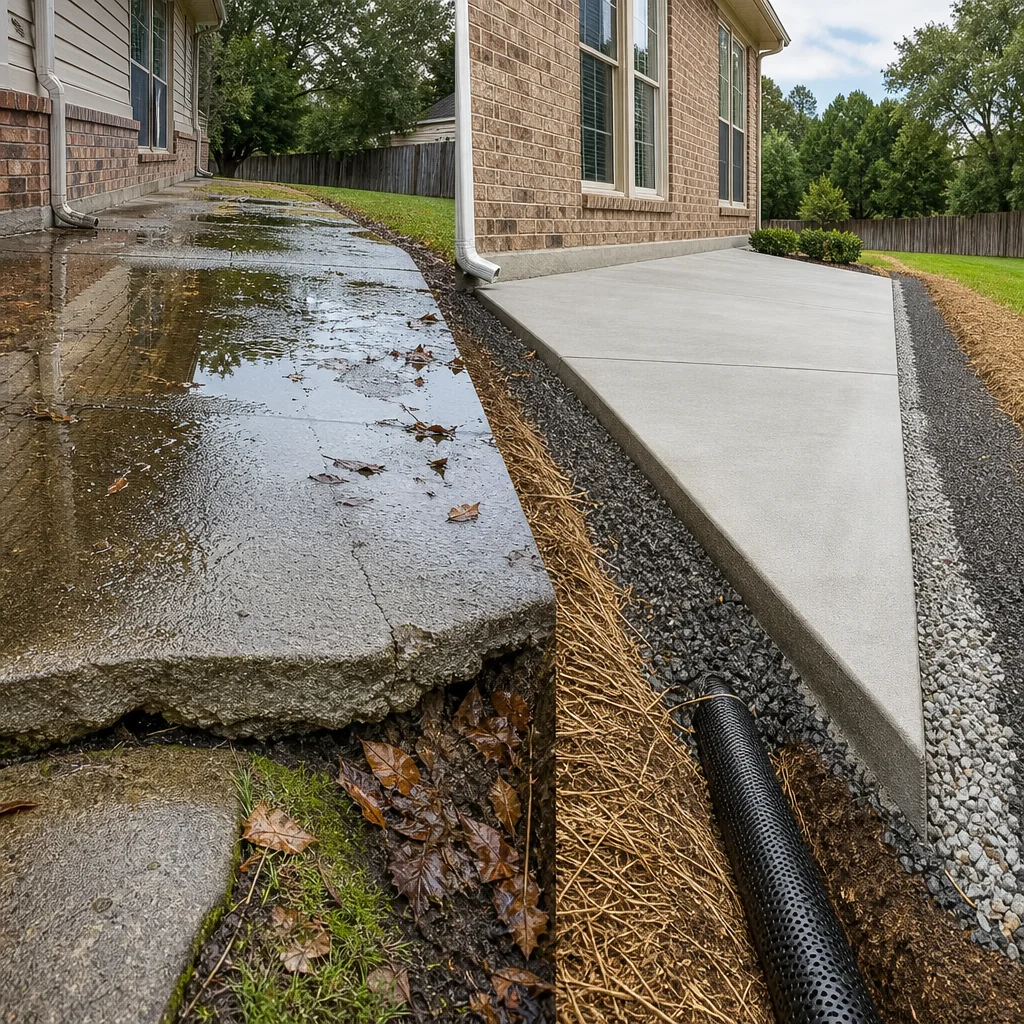
Poor base preparation: Grading starts before concrete is poured. If the base material isn’t properly compacted and sloped, no amount of surface grading will fix it later.
Ignoring Lafayette’s clay soil: Our region’s expansive clay soil shifts with moisture content. Clay soil driveway issues are common because standard grading practices don’t account for how clay behaves. You need grading that compensates for seasonal clay movement.
The cost of fixing these mistakes ranges from $1,500 for minor re-grading to complete slab replacement at $5,000 or more. Prevention is drastically cheaper than repair.
Our Professional Drainage Assessment Process
When we evaluate a property for drainage and grading, we don’t rely on assumptions. We perform a comprehensive site assessment that examines how water actually moves across your property.
First, we measure existing slopes and identify low points where water collects. We use laser levels to verify gradient accuracy because even experienced eyes can miss subtle problems. We examine soil composition, compaction, and permeability to understand how quickly water drains through the base.
Next, we assess surrounding conditions. We look at the height of neighboring soil, the condition of any existing drainage features, and how your slab sits relative to your foundation and landscaping. We check for cracks, surface deterioration, or settling patterns that indicate past water damage.
We also evaluate subsurface conditions. If accessible, we inspect the base material beneath your slab to see if it’s compacted properly and if there’s adequate gravel for drainage. For properties with existing moisture issues, we may recommend additional investigation.
Based on this assessment, we provide a detailed report with photographs, measurements, and specific recommendations. We explain what the grading problems are, why they matter for your property specifically, and what solutions will protect your investment long-term.
This assessment costs nothing. We offer free no-obligation estimates because we’d rather have you make an informed decision based on facts than wonder if you’re making the right choice.
Superior Grading Techniques We Use
Proper grading isn’t one-size-fits-all, especially in Lafayette. We tailor our approach based on soil type, existing conditions, and the specific purpose of your concrete.
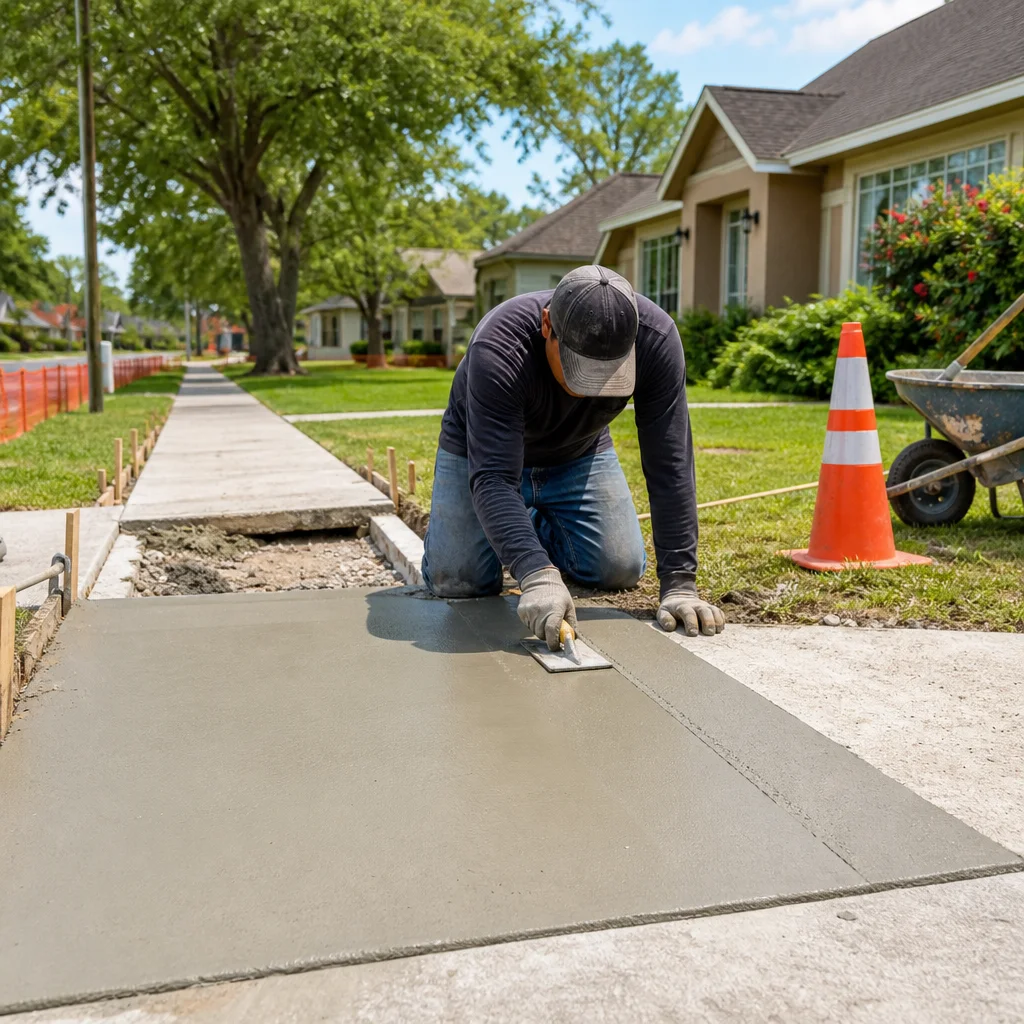
Sloped construction: For new driveways and patios, we establish minimum 1/4-inch per foot slope away from structures. This sounds modest, but across a 30-foot driveway, it creates 7.5 inches of elevation change, ensuring water flows decisively away from your property.
Perimeter drainage channels: We create subtle swales or channels around slabs that guide water safely away. These aren’t unsightly ditches, they’re carefully graded transitions that blend with your landscape while doing essential work.
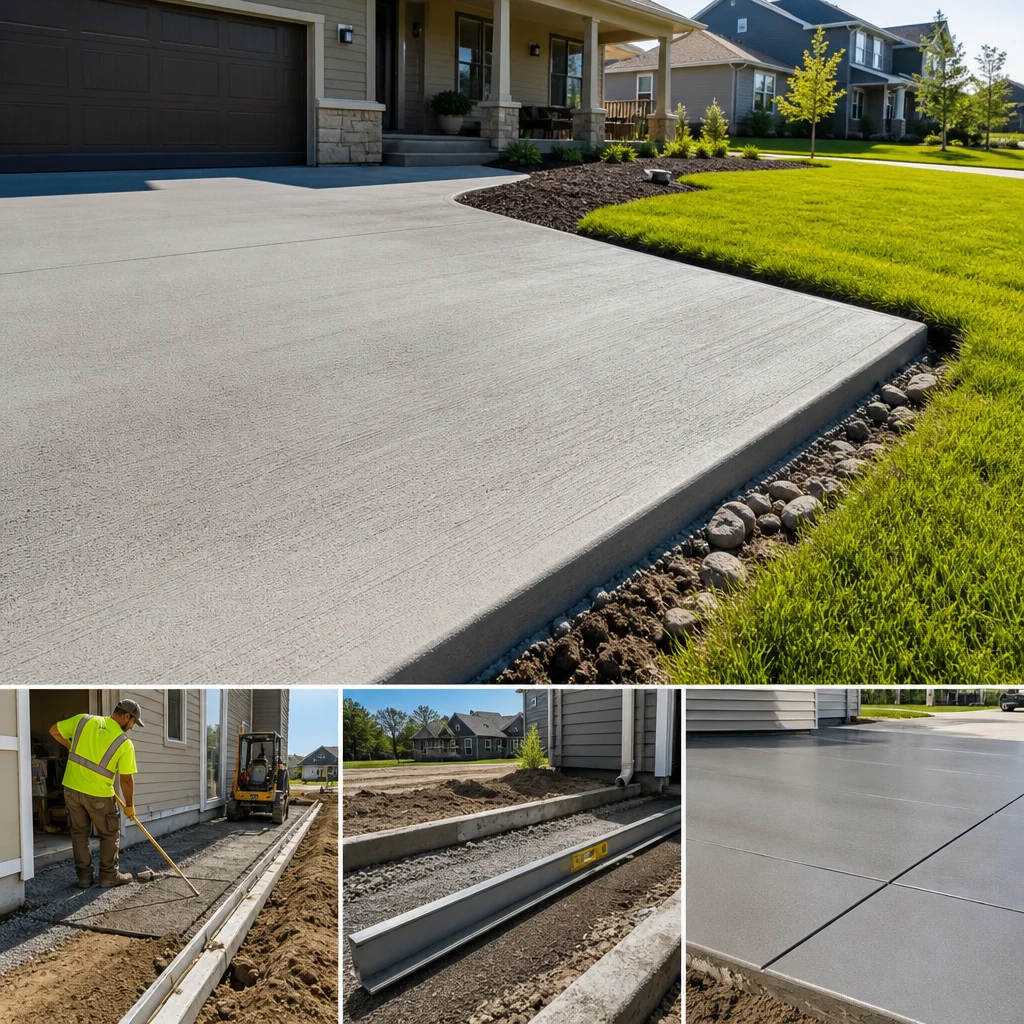
Subsurface drainage systems: For high-risk areas or existing problem properties, we install French drains or perforated drain pipe beneath the slab perimeter. These systems capture water before it can accumulate underneath your concrete.
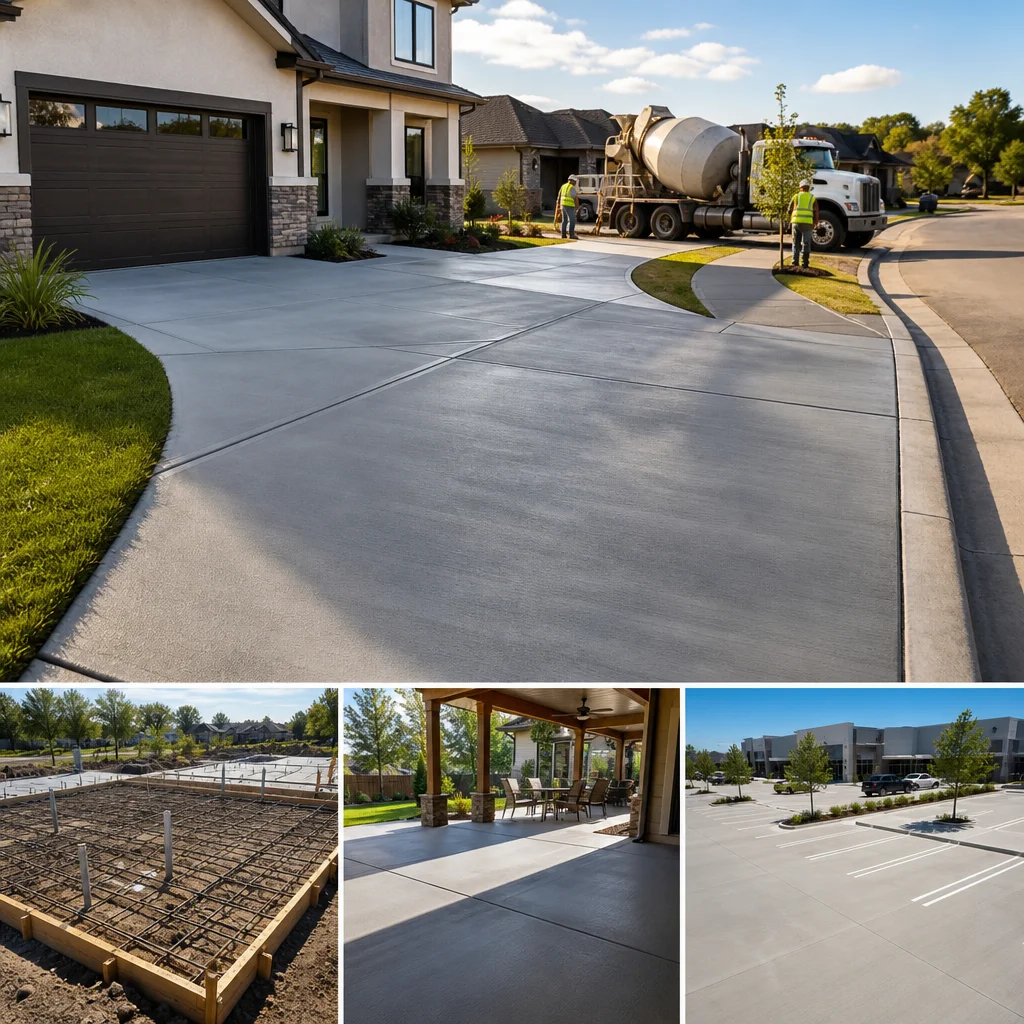
Base material optimization: Before pouring new concrete, we place and compact proper base material, typically 4 to 6 inches of gravel that allows water to drain through. We verify compaction meets specifications because a poorly compacted base fails just as surely as poor surface grading.
Soil management: For properties with clay soil, we may recommend removing and replacing clay with more stable material in critical areas, or we adjust grading to minimize water retention around clay zones.
Each technique addresses specific problems on your property. We don’t upsell unnecessary features, but we do implement every measure needed to give your concrete the protection it deserves.
Long-Term Cost Comparison: DIY Drainage vs. Professional Solutions
The temptation to handle grading yourself is understandable. Renting equipment and moving dirt seems straightforward. But the actual costs tell a different story.
A DIY approach might cost $300 to $800 in equipment rental and material. However, mistakes are expensive. Re-grading incorrectly means doing it again, or worse, discovering the problem after damage has already occurred. By then, you’re repairing concrete instead of preventing failure.
Professional grading typically costs $800 to $2,500 depending on property size and complexity. For a new slab, it’s often included as part of the overall project. For existing slabs, it’s a focused investment.
Here’s the economic reality: professional grading protects a $3,000 to $8,000+ concrete investment. If proper grading prevents even one year of premature concrete failure, it pays for itself. If it extends your slab’s life by five to ten years, which it typically does, the return is exceptional.
Factor in that DIY grading errors can damage not just your concrete but also your foundation, and the comparison becomes clear. We’ve seen properties where improper drainage cost homeowners $15,000 in cumulative foundation repair because the original grading mistake went unaddressed.
Why Our Expertise Prevents Future Foundation Issues
The connection between slab grading and foundation health isn’t obvious to most property owners, but it’s fundamental. Your foundation and slab are part of the same system.
When water accumulates around a concrete slab, it doesn’t stay at the slab level. It migrates toward your foundation, saturating the soil beneath. Saturated soil loses bearing capacity. It swells and shrinks with moisture fluctuations. In Lafayette’s climate, this cycle is constant.
A settling or heaving slab often signals deeper foundation movement. By the time foundation issues become visible, water damage has been occurring for months. Fixing the foundation alone without addressing the drainage problem means the issue returns.
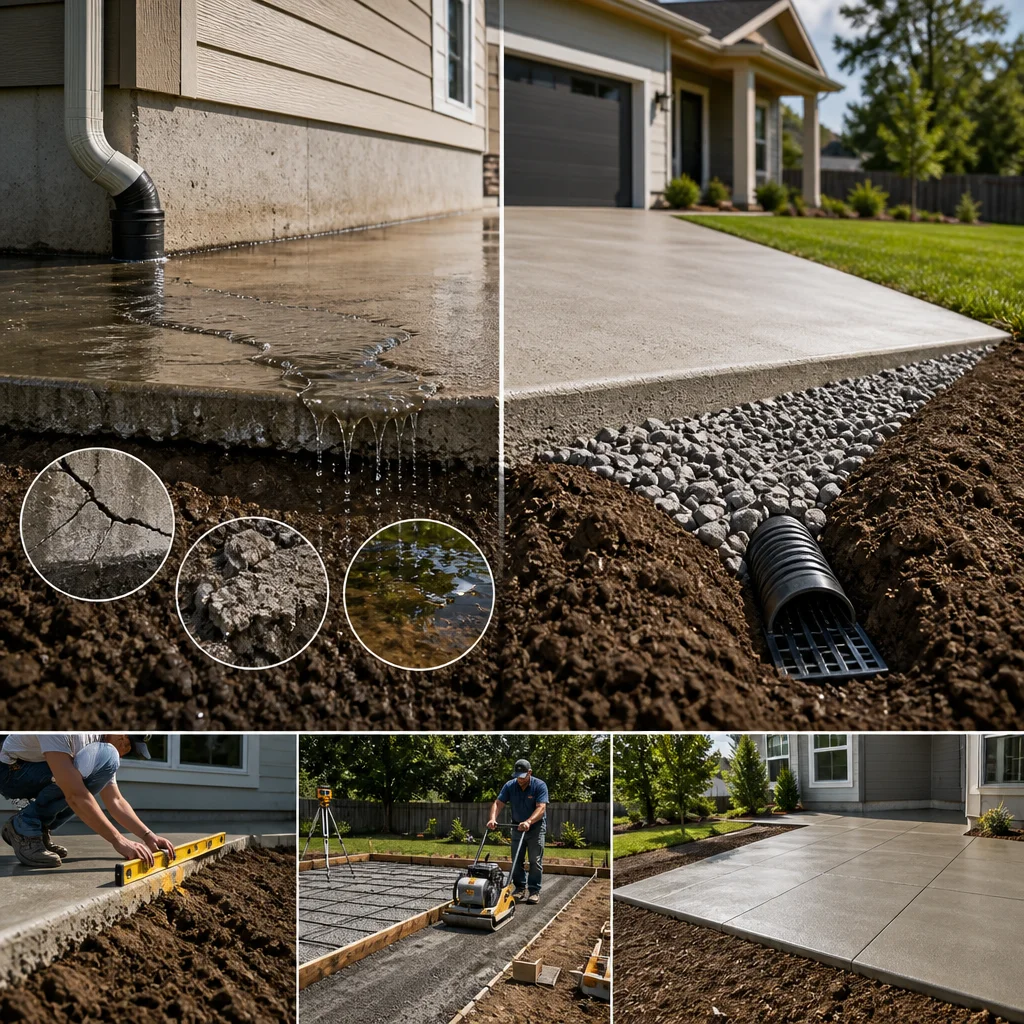
Our approach integrates slab grading with foundation protection. When we design proper drainage for your concrete, we ensure water is directed away from your foundation perimeter as well. We recommend foundation contractor services when subsurface conditions warrant additional protection.
This integrated perspective means you’re not just protecting today’s concrete, you’re preventing tomorrow’s foundation problems. It’s the difference between treating symptoms and addressing root causes.
Why Concrete Works is Your Best Choice for Slab Protection
We’re not just concrete contractors who pour slabs and move to the next job. We’re specialists in how concrete and drainage work together in Lafayette’s specific environment. Our team understands clay soil behavior, Louisiana’s weather patterns, and the common failure points we see repeatedly across our region.
When you work with us, you get an assessment based on actual site conditions, not estimates or guesswork. You get grading designed for your property’s specific challenges. You get a licensed and insured team that stands behind the work and remains available if questions arise later.
We’ve built our reputation on preventing problems rather than just fixing them. That’s why property owners throughout Lafayette trust us with their most significant investments. We deliver concrete solutions that last, supported by grading and drainage expertise that most contractors don’t possess.
Contact us today for a free no-obligation assessment of your concrete slab’s drainage and grading. Let’s make sure your investment is protected for decades to come.
Frequently Asked Questions (FAQ)
How does poor grading lead to concrete damage on Lafayette properties?
When we assess a property with inadequate grading, water pools around the concrete slab instead of flowing away from it. This standing water seeps beneath your driveway, patio, or foundation, causing erosion, frost heave, and cracking over time. We’ve seen properties suffer thousands in damage because improper slope allowed moisture to accumulate rather than drain naturally.
What’s the difference between what we do and typical DIY drainage attempts?
Our grading process includes precise slope calculations, strategic placement of drainage channels, and proper soil preparation before any concrete is poured. Many homeowners attempt quick fixes like adding gravel or redirecting gutters, but these temporary solutions don’t address the underlying drainage system. We design lasting protection that keeps water moving away from your slab for decades, not just seasons.
Why should we handle your drainage assessment instead of waiting for problems to appear?
We identify grading issues before they become expensive foundation problems or safety hazards on your property. Our professional evaluation catches subtle drainage failures that homeowners typically miss until cracks appear or settling occurs. Early intervention through proper assessment and correction saves you considerably more than addressing damage after it’s already started.