Why Lafayette’s Flood Zones Create Unique Concrete Challenges
Commercial property owners in Lafayette face a concrete problem that most businesses outside flood-prone areas never encounter. When your foundation shifts or your slab heaves, operations can grind to a halt. Equipment doors won’t close properly. Inventory racks tilt. Customers notice cracks and uneven surfaces. At Concrete Works, we’ve spent years perfecting strategies to keep Lafayette’s commercial slabs stable, even when nature works against us.
This isn’t a problem that goes away on its own. Without proper prevention and intervention, settling and heaving will progressively damage your investment and create safety hazards for your employees and customers.
Lafayette’s geography puts us in a tricky position. We sit in an area with high water tables, seasonal flooding, and soil that expands and contracts dramatically with moisture changes. Our clay-heavy soil composition becomes problematic when water saturates it during heavy rains or extended wet seasons.
Unlike drier regions where concrete settles predictably, our environment creates competing forces. Soil swells when wet and shrinks when dry, constantly shifting beneath your slab. Storm surge, poor drainage, and inadequate grading compound these issues. A commercial slab built without accounting for these conditions will eventually move, no matter how thick the concrete pour.
We’ve observed that properties just a few miles apart can experience different settling rates based on their elevation, drainage patterns, and underlying soil composition. This is why a generic concrete solution won’t work here. Your building’s specific location and moisture exposure profile matter enormously.
How Water Damage Leads to Settling and Heaving Problems
Water infiltration is the primary culprit behind most slab movement we see in Lafayette. When water penetrates soil beneath your foundation, several damaging processes kick in simultaneously.
First, excess moisture causes clay soil to expand. This upward pressure creates heaving, where sections of your slab literally lift. The pressure can be surprisingly strong, cracking concrete that seems structurally sound. A slab that heaves 1/4 inch might not seem significant until doors jam and equipment won’t roll smoothly.
Second, when that water eventually drains or evaporates, the soil shrinks, leaving voids underneath your slab. Your concrete loses support and settles into those gaps, creating depression areas, stress cracks, and structural weakness.
Poor drainage is usually the starting point. If your site wasn’t graded properly during installation, or if drainage systems have deteriorated, water pools around your foundation. The longer water sits near your slab, the more damage accumulates. We’ve seen commercial properties lose several inches of elevation in problem areas over just five to ten years.
Cracks in the slab itself accelerate this cycle. Water finds those cracks, infiltrates the sub-base, and the damage accelerates exponentially.
The Real Costs of Ignoring Slab Movement Issues
The financial impact of slab settling and heaving extends far beyond cosmetic concern. We’re talking about potential business interruption, liability exposure, and compound repair costs.
When your loading dock settles unevenly, forklifts can tip or refuse to operate safely. Customers see cracked floors and assume poor maintenance overall. Structural damage to the building’s frame can develop if foundation movement is severe. Insurance claims related to water damage or structural issues often carry significant deductibles.
But here’s the escalation factor: early-stage settling costs $3,000-$8,000 to address properly. Waiting two years while the problem worsens can push repair costs to $15,000-$30,000 or more. In worst cases, partial slab replacement becomes unavoidable, which can cost $40,000 and up depending on the area affected.
Beyond the immediate expense, ongoing operational disruptions create hidden costs. Downtime during repairs, equipment relocation, and employee safety concerns all add up. We recommend addressing any signs of settling or heaving immediately rather than hoping the problem stabilizes on its own.
Our Comprehensive Foundation Assessment Process
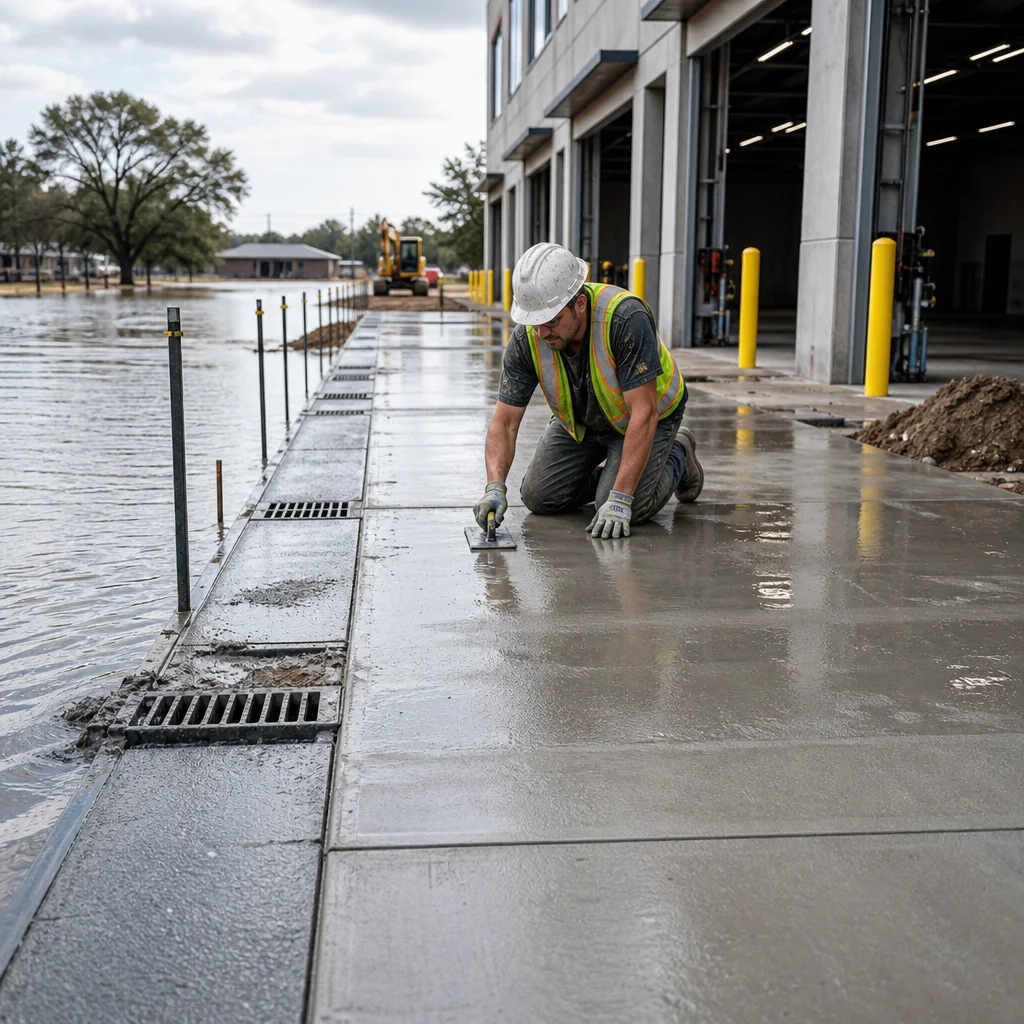
Our team begins every commercial concrete project with a detailed site evaluation. We’re not just looking at the slab; we’re analyzing the entire system that supports it.
Here’s what our assessment includes:
- Soil testing to determine composition, water absorption rates, and expansion potential
- Ground elevation mapping to identify drainage problem areas
- Moisture content measurement both at the surface and several feet below
- Visual inspection of existing concrete for cracks, displacement, or movement patterns
- Review of site grading, nearby water sources, and subsurface conditions
- Documentation of any previous flooding or water infiltration history
We use specialized equipment to measure slab elevation across your property in a grid pattern. This reveals high spots, low spots, and areas where heaving or settling has already begun. Sometimes the human eye can’t detect movement that’s already 1/2 inch or more, but our equipment catches it.
Once we have this data, we develop a customized strategy. A warehouse near a retention pond needs different solutions than a retail building on higher ground. The assessment phase typically takes 4-6 hours for a medium-sized commercial property and costs nothing because we offer free no-obligation estimates.
Proven Solutions We Use to Stabilize Commercial Concrete
After assessment, we implement solutions tailored to your specific conditions. One size doesn’t fit all in Lafayette’s flood zones.
For properties experiencing active settling, we use polyurethane injection systems. These inject expanding foam beneath the slab to lift it back to proper elevation and fill voids that water created. The process is precise, non-invasive, and typically faster than complete slab replacement. Your business remains operational, and we can often complete the work during off-hours.
For heaving caused by soil expansion, we create strategically placed relief joints that allow controlled movement without damage. We also install or improve perimeter drainage systems to redirect water away from your foundation. Proper drainage is often the single most effective heaving prevention method.
Foundation underpinning is necessary for severe cases. We install reinforced support pilings that reach stable soil layers beneath the problematic upper soil, essentially bypassing the problematic clay entirely.
Concrete resurfacing and self-leveling overlays work when settling is minor and cosmetic restoration is your goal. We can overlay new concrete over settled areas, smoothing out the grade while adding protective layers against future water penetration.
Preventative Maintenance Strategies for Flood-Prone Properties
Prevention requires ongoing attention, especially for flood-prone properties. We recommend a maintenance schedule that keeps problems from developing in the first place.
Quarterly drainage inspections are essential. We check that gutters, downspouts, and perimeter drains are clear and functioning properly. A single clogged drain can cause water to pool around your foundation, and you might not notice until damage appears.
Sealcoating your concrete every 2-3 years creates a water-resistant barrier that slows infiltration. This simple step dramatically extends slab life in our moisture-heavy climate.
Monitor grading around your building. Soil tends to settle and slope toward foundations over time, directing water toward rather than away from your structure. Annual regrading of problem areas prevents water from accumulating against your slab.
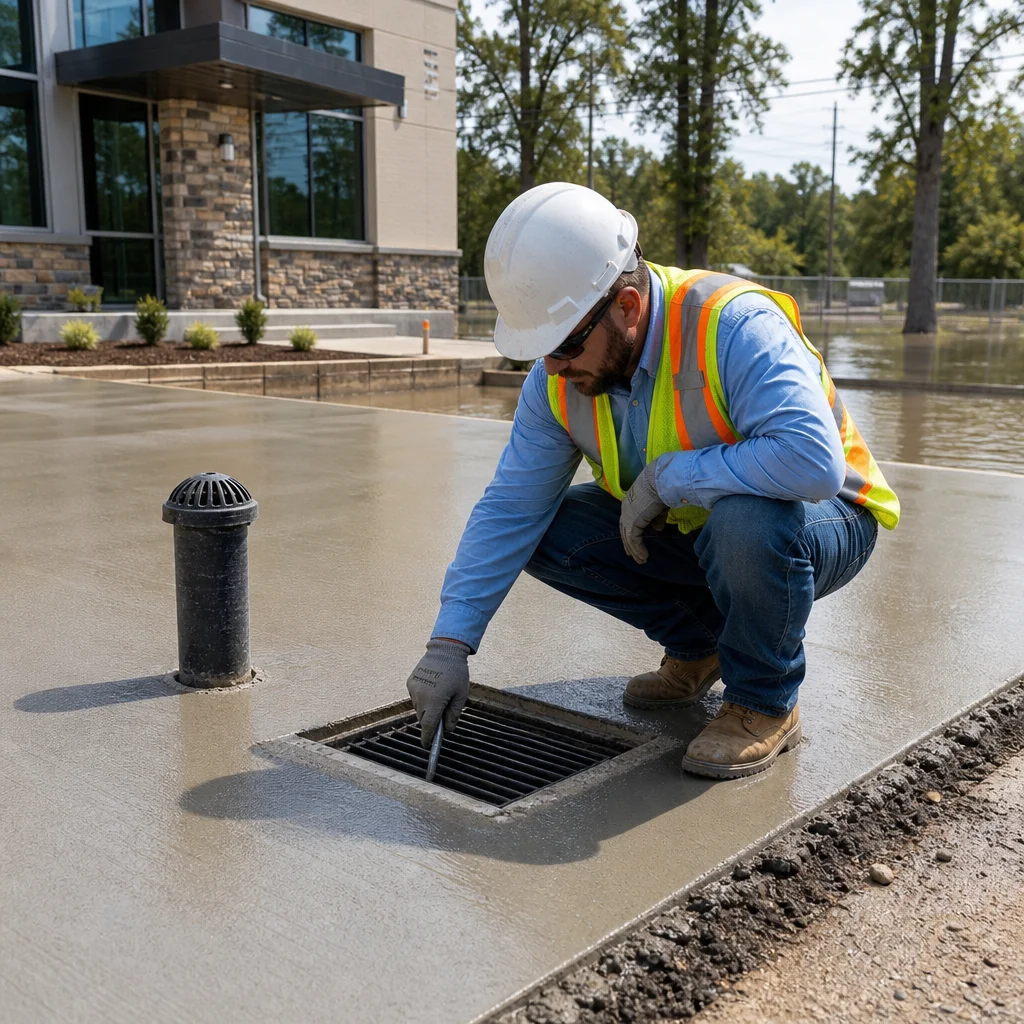
Consider installing a sump pump and subdrain system if your property sits in a particularly high-risk flood zone. These actively manage subsurface moisture rather than relying on passive drainage alone.
Document any movement you notice. Small cracks appearing in new locations or doors that suddenly stick are early warning signs. Catching these issues early, before they compound, saves thousands in repair costs.
Our Installation Methods That Resist Settlement
When we build new commercial concrete for Lafayette properties, we engineer for settling and heaving from day one.
We start with proper site preparation and grading that slopes water away from the foundation. We install perimeter drainage systems that capture and redirect subsurface water. The base preparation includes compacted aggregate layers with adequate drainage pathways, not just a thin gravel bed.
We specify concrete mixes formulated for our climate. Standard mixes used elsewhere don’t perform identically here. Our concrete includes additives that improve water resistance and reduce cracking tendency.
For critical applications like warehouse floors and loading docks, we use reinforced concrete with wire mesh or rebar patterns that distribute stress. We also install control joints strategically to allow controlled cracking rather than random damage.
The foundation depth is calculated based on soil conditions. Shallow slabs fail in flood zones. We ensure adequate depth and bearing capacity by engineering specifically for Lafayette’s soil profile.
How We Address Existing Damage and Restore Stability
If your commercial property already shows signs of settling or heaving, we can restore stability without requiring complete demolition and replacement in most cases.
Our concrete leveling process uses hydraulic pressure or polyurethane injection to carefully lift settled sections. We monitor elevation changes in real time and stop when we reach the target grade. The process is precise enough to avoid overcorrection that creates new problems.
For severely cracked slabs, we assess whether structural integrity remains adequate. If so, we repair cracks using epoxy injection, which restores strength and prevents further water infiltration. If damage is extensive, we recommend targeted slab replacement in affected zones rather than the entire surface.
We always address the root cause simultaneously. Leveling a slab while leaving drainage problems unsolved means the settling will eventually return. Our approach includes both the symptom correction and the underlying issue resolution.
Depending on the severity, restoration typically requires 2-7 days of active work. We coordinate around your operational schedule when possible.
Why Professional Intervention Beats DIY Approaches
Some business owners consider applying concrete patches or self-leveling products themselves. This almost always creates more problems than it solves.
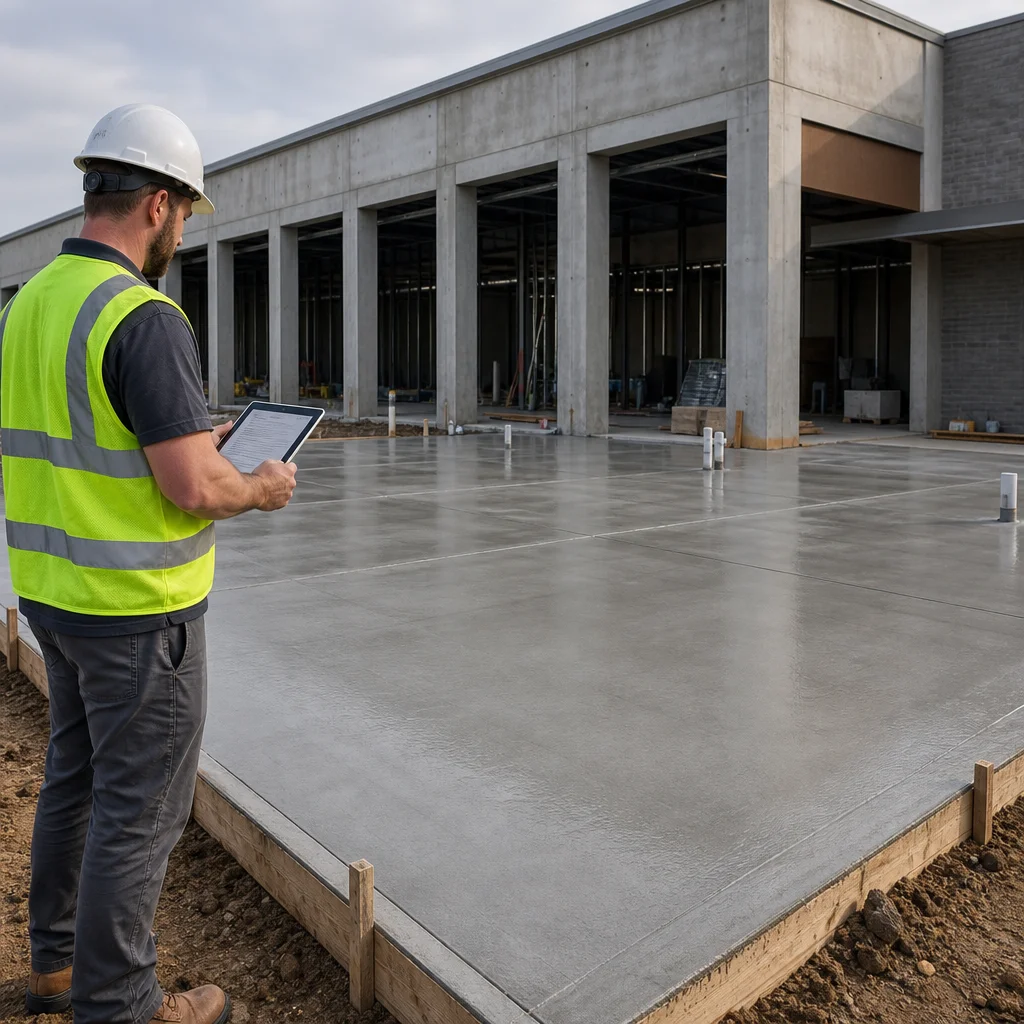
Professional assessment requires equipment most building owners don’t have access to. We can measure soil conditions, moisture levels, and subsurface voids accurately. Without this data, you’re essentially guessing at the real problem.
Concrete leveling and stabilization demand precision and experience. Injecting foam incorrectly can create uneven lifting that damages the slab further. Using the wrong repair materials for Lafayette’s wet climate leads to early failure even if the initial repair appears successful.
Drainage system installation involves grading, trenching, and proper slope calculations. A DIY approach often results in systems that don’t actually move water away from your foundation effectively.
Warranty and liability matter too. If a DIY repair fails and causes equipment damage or injuries, your business carries the full responsibility. Our work comes with warranties, and we carry full insurance coverage.
Professional concrete contractors understand how settling and heaving interact with your specific property, soil type, and climate. We can predict future problems and prevent them before they occur. That foresight is the real value we deliver.
Getting Your Free No-Obligation Estimate Today
If you’re concerned about slab movement, drainage problems, or foundation stability at your Lafayette commercial property, we’re ready to help.
We offer free no-obligation estimates that include our comprehensive assessment process. There’s no pressure and no hidden fees. We’ll explain exactly what we found, what problems could develop, and what solutions make sense for your situation.
Contact Concrete Works today to schedule your assessment. Call us or visit our website at https://conkreteworkz.com/ to request your free estimate. We serve Lafayette and nearby areas, and we’re licensed and insured for commercial work of any size.
The best time to address foundation issues is before they compound. Let’s protect your commercial property and avoid the costly repairs that come from ignoring slab movement.
For further reading: Slab settling prevention guide.
Frequently Asked Questions (FAQ)
Why does our team recommend foundation assessments for commercial properties in Lafayette flood zones?
We’ve found that Lafayette’s unique soil conditions and seasonal flooding create stress on concrete foundations that isn’t always visible to the untrained eye. Our assessments identify early warning signs of settling or heaving before they become costly structural problems, and we can catch water infiltration issues that will only worsen over time.
What’s the difference between slab settling and heaving, and how do we treat each?
Settling occurs when soil beneath your concrete compacts or washes away, causing the slab to sink unevenly. Heaving happens when soil expands from excess moisture, pushing the slab upward. We address settling through concrete leveling and stabilization techniques, while heaving requires us to manage soil moisture and sometimes adjust drainage systems to prevent future movement.
How can we help if our concrete is already showing signs of damage from settling or heaving?
We start with a thorough evaluation to determine the root cause and extent of the damage. Depending on what we find, we may use concrete leveling injection, slab replacement, or drainage improvements to stabilize your foundation and prevent the problem from recurring.