Why Commercial Slabs Settle in Flood-Prone Areas
Commercial slab settling isn’t just an inconvenience. When it happens in flood-prone areas like Lafayette, it becomes a serious structural threat that can cost tens of thousands to repair. We’ve worked with dozens of property owners in the region who didn’t understand why their concrete was cracking and sinking until water damage had already begun. The good news is that settling is largely preventable when you understand what causes it and take the right precautions upfront.
Concrete slabs settle when the soil beneath them loses bearing capacity. In flood zones, this happens faster and more severely than in drier climates. Saturated soil simply cannot support the weight of a building the way dry, compacted soil can.
When water sits beneath your slab for extended periods, it reduces soil density and creates voids. These voids collapse under the weight of your structure, causing uneven settling. A seemingly solid foundation can drop several inches over time, creating cracking patterns that spread quickly through concrete.
The problem compounds when soils are clay-heavy, which is common across Louisiana. Clay swells when wet and shrinks when dry, creating constant movement that destabilizes whatever sits on top. Your slab gets caught in this cycle of expansion and contraction, developing stress fractures that eventually become structural failures.
The Unique Challenges Lafayette Faces with Concrete Foundations
Lafayette’s geography creates specific challenges for concrete work that builders in other regions simply don’t encounter. Our city sits just above sea level with a high water table. During heavy rain events or seasonal flooding, groundwater rises rapidly and stays elevated for weeks.
This isn’t a one-time event you can plan for. The entire year brings moisture pressure from below. Summer humidity keeps soil saturated, winter rains add more water, and spring flooding can raise groundwater levels by several feet. Your commercial slab experiences constant hydrostatic pressure.
Existing commercial properties built 10, 20, or 30 years ago often have inadequate drainage systems designed by older standards. These properties are especially vulnerable because their preventative infrastructure is outdated. If you own or manage a commercial property in Lafayette, understanding your slab’s current condition is essential.
How Water Intrusion Damages Your Commercial Slab
Water doesn’t just make soil soft. It creates chemical reactions that actively weaken concrete. Water carrying minerals and salts migrates through concrete pores, leaving deposits that expand and crack the material from inside.
When water reaches the rebar reinforcement inside your slab, corrosion begins. Rust takes up more physical space than steel, creating internal pressure that fractures concrete from within. This damage happens invisibly for months or even years before visible cracks appear on the surface.
Freeze-thaw cycles accelerate this damage in winter months. Water trapped in concrete freezes, expands, and creates micro-fractures. The next thaw allows more water in, and the cycle repeats. Over multiple winters, these tiny cracks compound into significant structural problems.
The timeline for serious damage is often shorter than property owners expect. We’ve seen commercial slabs lose 2-3 inches of elevation in a single year when water intrusion goes unchecked.
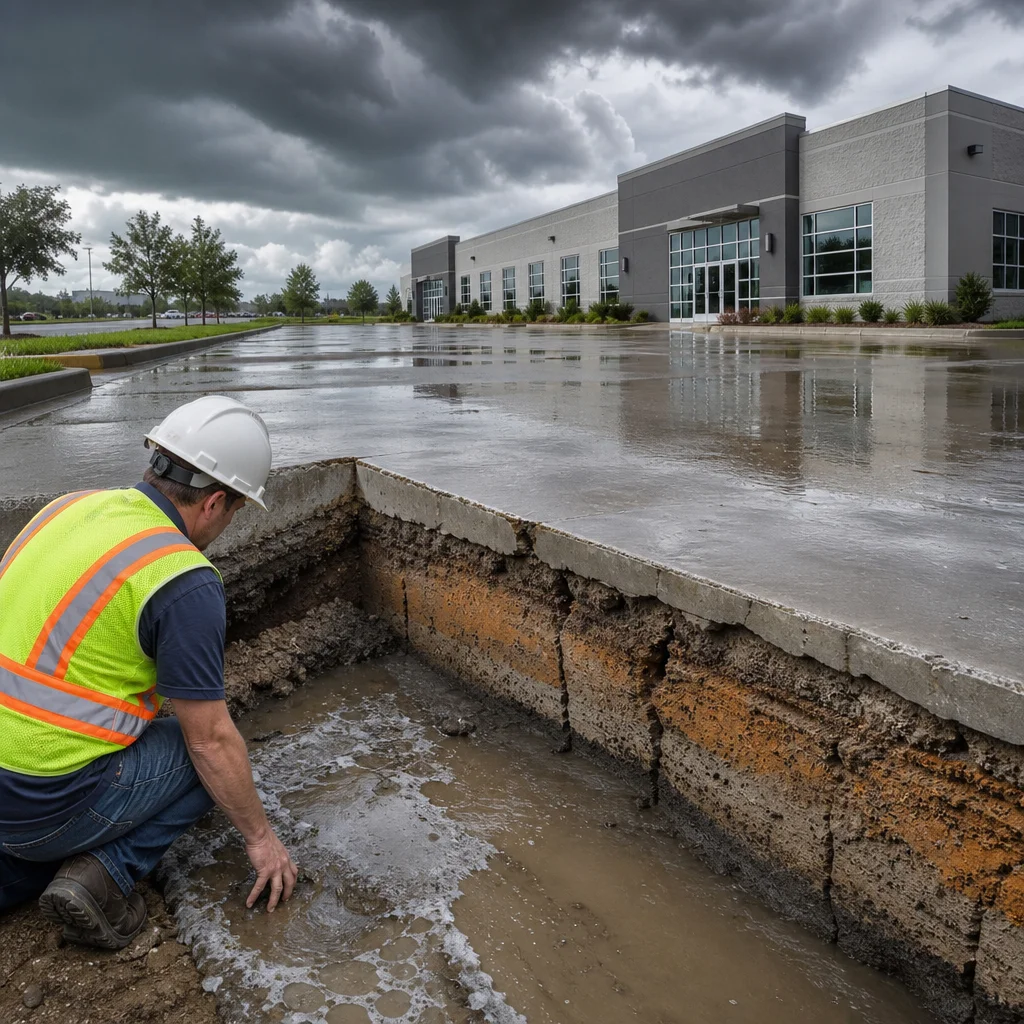
Soil Displacement and Subsidence in High-Water Regions
Subsidence is the technical term for soil sinking, and it happens constantly in flood zones. When water saturates clay-based soils, the soil itself compresses and loses elevation. This isn’t settling of your slab alone, it’s the ground beneath your slab dropping.
Piping is another process we see frequently in Lafayette. Water moving through soil creates channels that wash fine soil particles away, leaving voids that collapse over time. These voids form unpredictably and can create sudden sinkholes beneath your slab.
Expansive clay movement creates cyclical subsidence. During dry periods, clay shrinks and creates horizontal gaps. Water refills those gaps, clay swells, and the slab is pushed upward unevenly. This repetitive vertical movement creates stress patterns that concrete cannot withstand indefinitely.
Commercial properties built on fill dirt or reclaimed land face even greater risk. Poorly compacted fill settles naturally over time, especially when exposed to water. We recommend a professional soil assessment for any commercial property that hasn’t had a geotechnical evaluation within the last 5 years.
Our Proven Prevention Methods for Flood Zone Properties
We’ve developed prevention strategies specifically for Lafayette’s challenging conditions. The foundation starts with proper site preparation and drainage design that anticipates the region’s water problems rather than hoping they won’t occur.
Our prevention approach includes:
- Installing perimeter drainage systems that intercept water before it reaches your slab
- Creating interior vapor barriers that reduce moisture intrusion from below
- Specifying concrete mixes with air entrainment and water-resistant additives
- Implementing grading that slopes away from structures, even when space is limited
- Designing sump pump systems that activate automatically during water events
- Using proper compaction standards that exceed standard building codes
We also recommend preventive slab settling strategies that address the full scope of potential problems rather than treating symptoms after damage appears.
Foundation Assessment and Drainage Solutions We Provide
Before recommending any repair or prevention strategy, we conduct a comprehensive foundation assessment. This includes moisture testing, soil evaluation, and visual inspection for existing damage patterns.
We use moisture meters to measure water content at various depths beneath your slab. We examine your existing drainage infrastructure to identify failures. We photograph crack patterns and measure differential elevation to understand how much settling has already occurred.
Based on this assessment, we design custom drainage solutions. Interior systems include perimeter drains that catch water before it reaches your slab foundation. Exterior improvements might include French drains, catch basins, and downspout extensions that direct water away from the building.
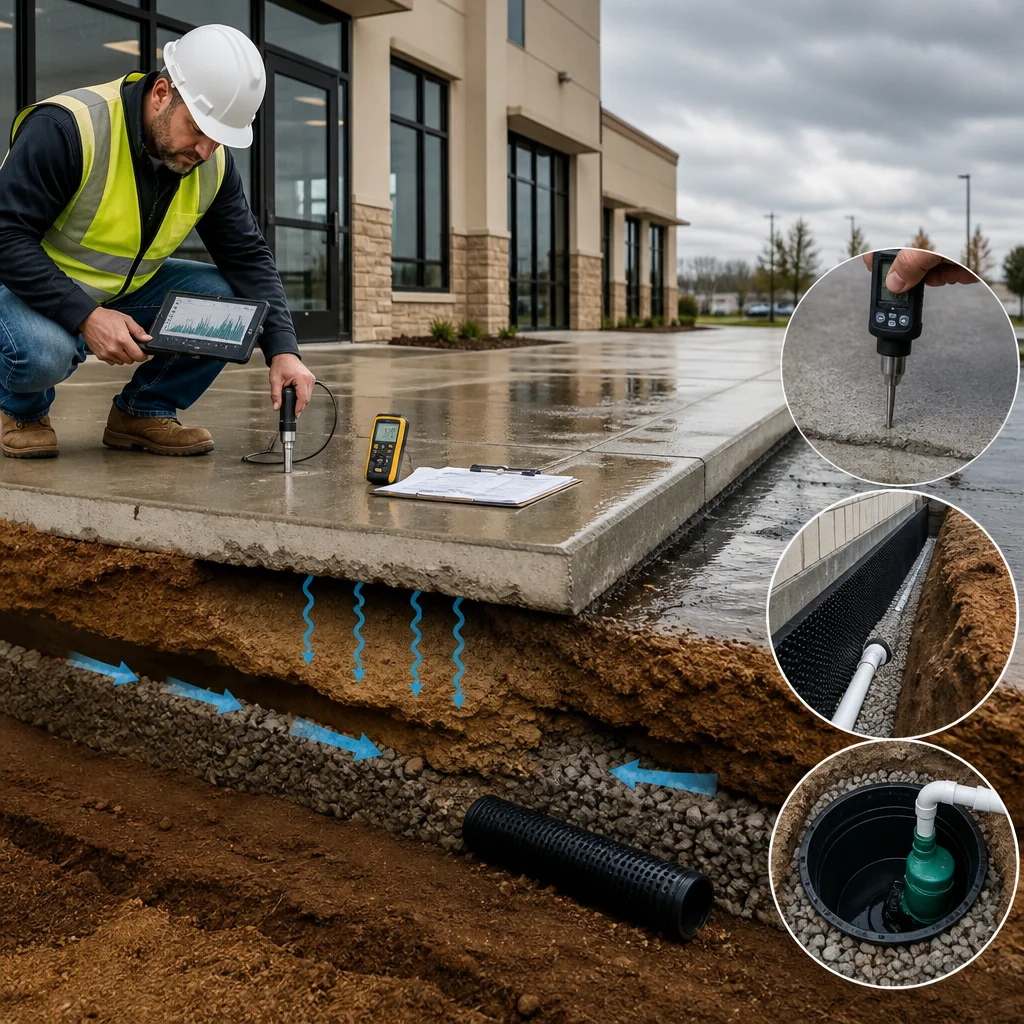
For many properties, we recommend installing or upgrading sump pump systems. A properly sized pump with battery backup ensures water removal continues even during power outages. This simple upgrade prevents thousands of dollars in foundation damage during flood events.
Concrete Leveling and Mudjacking for Settled Slabs
When settling has already begun, concrete leveling and mudjacking stabilize your slab and restore proper elevation. These are different processes that serve different purposes, and we choose based on your specific situation.
Mudjacking involves injecting stabilizing material beneath the settled slab to lift it back to proper elevation. This material fills voids created by soil displacement and provides new bearing support. The process is relatively non-disruptive and restores functionality quickly.
Concrete leveling takes a similar approach using polymers instead of traditional mud. This method works well for severely damaged slabs or areas where traditional mudjacking won’t provide adequate support.
Both processes have limits. They’re most effective when applied before settling becomes severe. Once major structural damage has occurred, full slab replacement may be necessary. Early intervention through professional assessment prevents reaching that point.
Long-Term Monitoring and Maintenance Strategies
Preventing future settling requires ongoing attention. We recommend annual inspections for commercial properties in flood zones. These inspections check for new cracks, measure differential elevation, and assess drainage system function.
Maintaining your drainage systems is equally important. Gutters should be cleared of debris to ensure water flows away from the building. Downspout extensions should reach at least 5-6 feet from your foundation. We often find that simple maintenance prevents settling more effectively than expensive repairs.
Document the condition of your slab with photographs and measurements. This baseline helps you identify changes early. If you notice new cracks appearing, contact us promptly rather than waiting for the problem to worsen.
Seasonal water management varies throughout the year. Spring brings peak flooding risk, summer humidity keeps soils saturated, and winter freeze-thaw cycles create their own damage patterns. Understanding these seasonal variations helps you anticipate problems rather than react to them.
Protecting Your Investment with Proper Slab Installation
If you’re planning new commercial construction or major renovation, proper slab installation determines whether settling becomes a problem 5 years or 50 years from now.
Specifications should include stabilized subgrade preparation with proper compaction. Concrete thickness should account for load requirements plus safety margin. Reinforcement should be adequate for anticipated stress, with proper concrete cover over rebar to prevent corrosion.
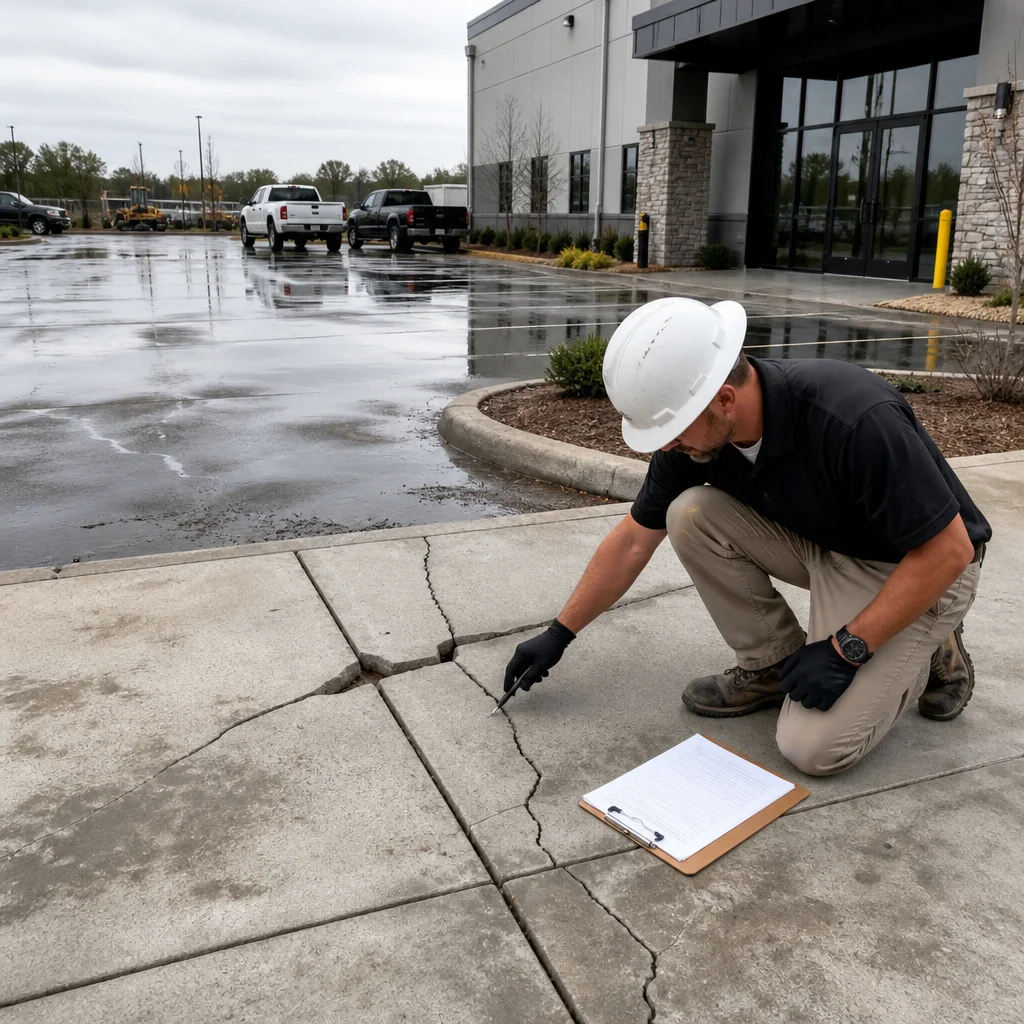
Drainage design is non-negotiable in Lafayette. Your slab needs comprehensive moisture control both beneath and surrounding the structure. Vapor barriers, subslab depressurization systems, and perimeter drains should be installed during construction, not retrofitted later.
We work with architects, engineers, and general contractors to ensure concrete specifications meet the demands of our region’s unique conditions. Properties built to our standards avoid the settling problems we see in older structures.
When to Call Our Team for Immediate Inspection
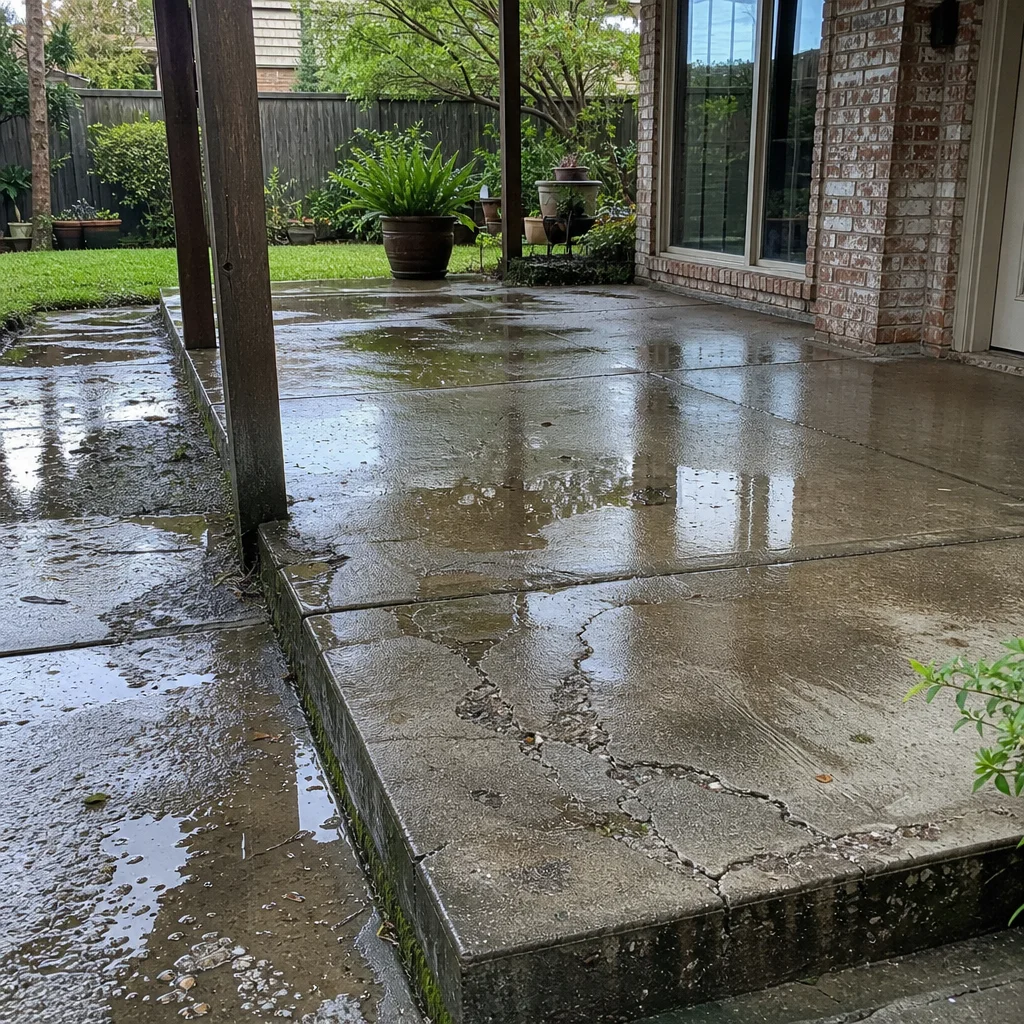
Contact us if you notice any of these warning signs: new cracks in your slab or building foundation, uneven floors that affect door operation, visible separation between walls and concrete, areas where water pools near your foundation, or any differential elevation across your slab surface.
Don’t wait for problems to become emergencies. A small crack that costs $500 to address now becomes structural damage that costs $15,000 to repair in two years.
We provide free no-obligation estimates for all commercial properties. Our team will assess your situation, explain what we find, and recommend appropriate next steps. Whether you need drainage improvements, concrete repair, or ongoing monitoring, we’ll design a solution that protects your investment.
Contact Concrete Works today to schedule your foundation assessment and learn how we can prevent settling in your Lafayette commercial property.
Frequently Asked Questions (FAQ)
Why do commercial slabs settle more in Lafayette’s flood zones?
We’ve found that the combination of heavy rainfall, high water tables, and clay-heavy soil creates perfect conditions for slab settling in our area. Water intrusion weakens the soil beneath concrete, causing it to shift and compact unevenly. When soil becomes displaced or subsides, your slab follows, leading to cracks and structural issues that compound over time.
What prevention methods do we recommend for flood-prone properties?
We focus on three key strategies: proper drainage installation to redirect water away from your foundation, appropriate slab thickness and reinforcement during initial installation, and regular soil assessment to catch settling before it becomes severe. We also offer foundation monitoring services so we can track any movement and address problems early.
When should we inspect my commercial slab if I’m concerned about settling?
We recommend contacting us immediately if you notice cracks, uneven surfaces, or water pooling around your foundation. The sooner we assess your slab, the more options we have to stabilize it. We provide free no-obligation inspections so you can understand exactly what’s happening beneath your property.