Understanding Lafayette’s Driveway Permit Requirements
Replacing a driveway isn’t just about pouring concrete and smoothing it out. In Lafayette, like most jurisdictions, your project must clear permitting hurdles and comply with local building codes before work can begin. Many property owners skip this step hoping to save time and money, only to face costly fines, problems with insurance claims, or difficulty selling their property later. We’ve guided hundreds of customers through Lafayette’s permit requirements, and we’ve learned that understanding the process upfront eliminates headaches down the road.
Lafayette, Louisiana requires permits for most driveway replacement and new installation projects. The specific requirements depend on factors like the size of your driveway, whether it’s residential or commercial, and any site-specific conditions like drainage considerations or proximity to utilities.
Generally, you’ll need to apply through Lafayette’s Building and Development Department. The application process requires basic information about your property, the scope of work, and details about the contractor you’ve selected. You’ll submit site plans showing the driveway dimensions, slope, and how it connects to your property’s existing infrastructure. Some applications are straightforward and approved within a few days, while others involving larger commercial properties or properties with special circumstances may take longer.
The permit fee structure varies based on project cost. Smaller residential driveway replacements typically fall in a lower fee bracket, while extensive commercial work can involve higher permitting costs. When you work with us, we help you understand these costs upfront so there are no surprises.
Why Permit Compliance Protects Your Property Investment
Skipping permits might seem like a shortcut, but it exposes you to serious risks. Without a permit, you have no official record that the work met building codes, which can create problems when you sell your home or file an insurance claim. If damage occurs to your driveway within a few years and you need to claim it on insurance, the insurer may deny coverage if the original work wasn’t permitted.
Additionally, code-compliant installations protect the structural integrity of your property. Building codes exist for good reasons: they ensure proper drainage, adequate load-bearing capacity, and materials suited to Louisiana’s climate and soil conditions. Skipping these safeguards means your driveway could fail prematurely, and repairs become your financial burden.
From a legal standpoint, unpermitted work can result in fines or citations. If a future buyer discovers unpermitted driveway work, they may require you to tear it out and redo it correctly, essentially doubling your cost. Permit compliance protects your property value and your peace of mind.
Key Regulations We Help Our Clients Navigate
Lafayette’s concrete standards align with Louisiana state building codes and include several specific requirements:
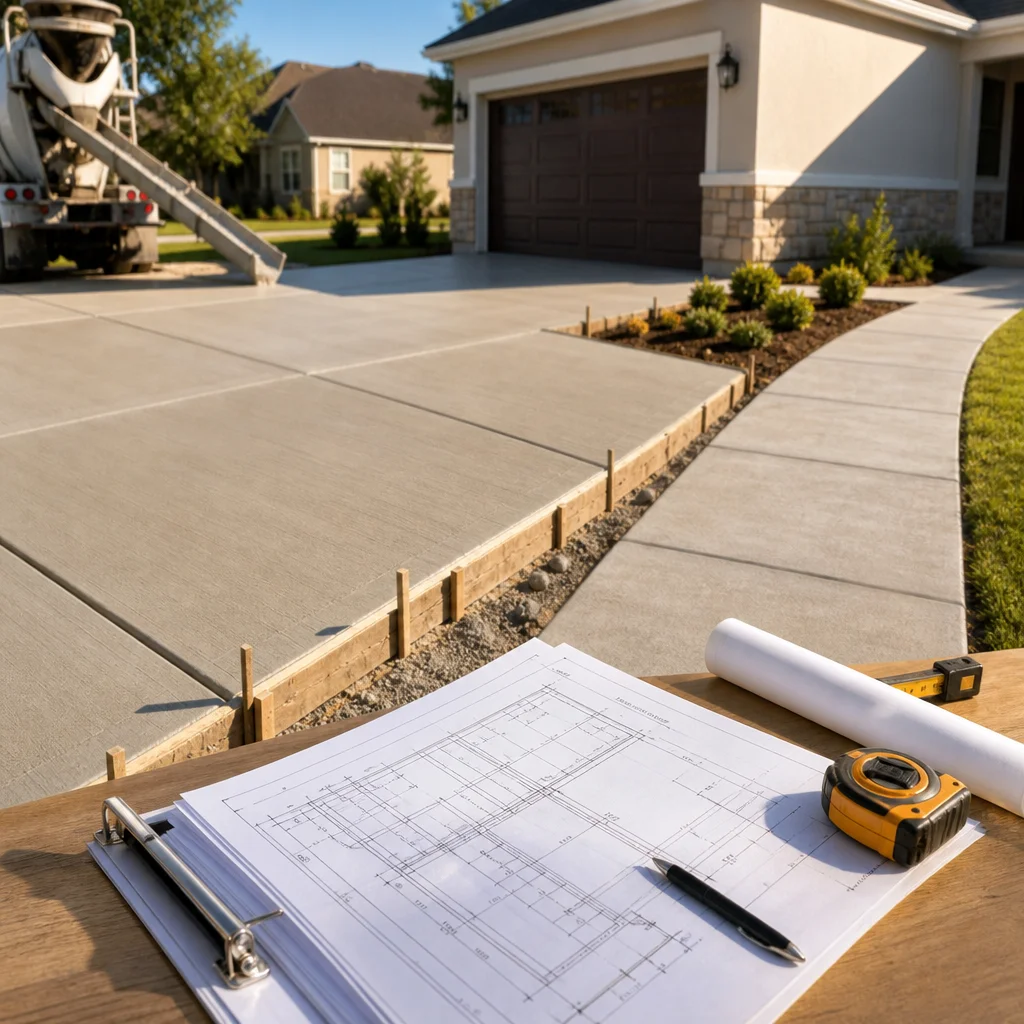
- Thickness and reinforcement: Residential driveways typically need 4 inches of concrete with reinforcing mesh or rebar to handle weight distribution and prevent cracking.
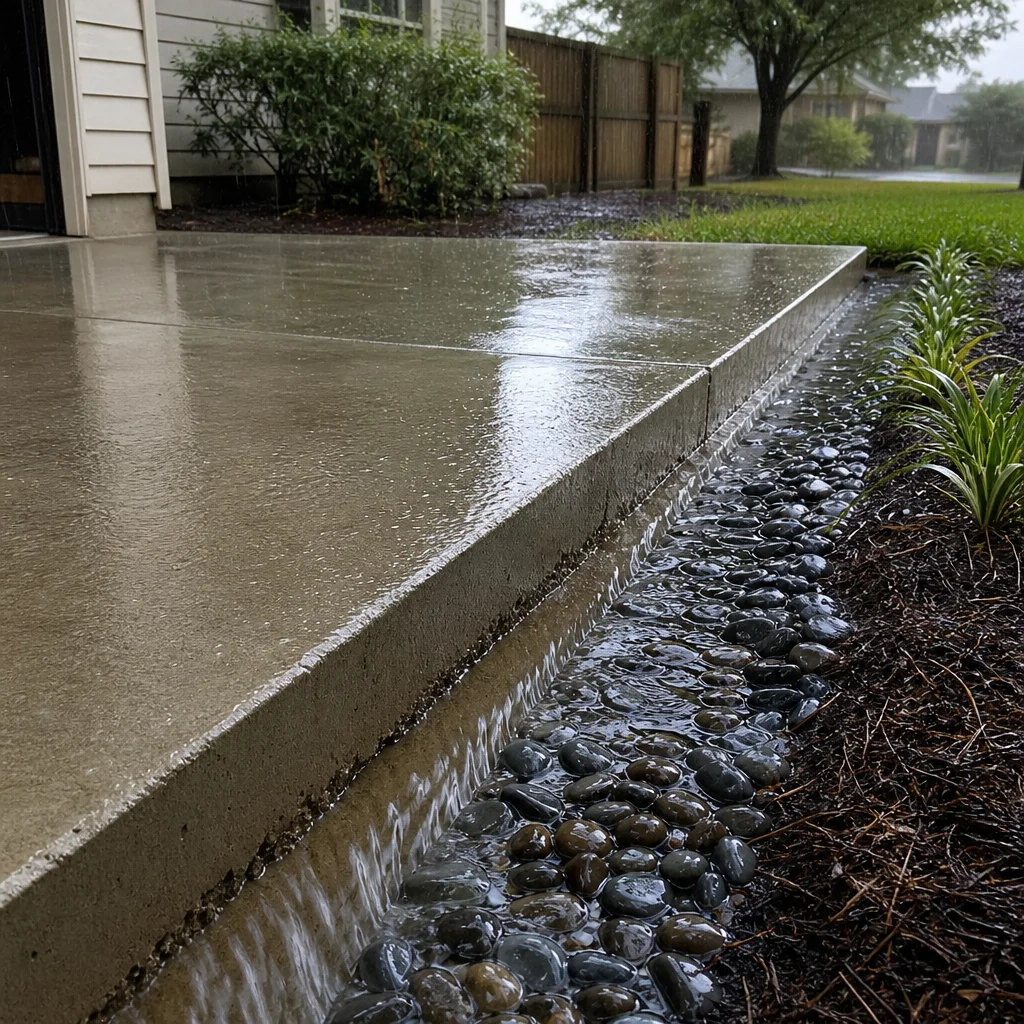
- Slope and drainage: Your driveway must slope at least 1/8 inch per foot to direct water away from your foundation and prevent pooling, which damages concrete over time.
- Subgrade preparation: The base layer beneath concrete must be properly compacted and graded. This prevents settling and uneven wear.
- Joint spacing: Control joints and expansion joints must be placed at intervals to accommodate concrete’s natural movement in Lafayette’s hot, humid summers and occasional cold winters.
- Setback requirements: Your driveway must meet minimum distance standards from property lines, utilities, and storm drains.
We handle these technical details on your behalf. Our team knows Lafayette’s specific requirements inside and out, and we design every project to exceed code minimums, giving you a driveway built to last.
Residential vs. Commercial Driveway Permit Differences
Residential driveway permits are typically faster and require less documentation than commercial projects. A homeowner replacing a standard driveway usually submits a simple application with basic property information and a straightforward site plan. Approval often comes within a week.
Commercial driveways involve more complexity. Larger parking lots, higher traffic loads, and ADA accessibility requirements mean more detailed engineering and planning. Commercial permits may require traffic impact studies, detailed drainage plans, and specifications for reinforced concrete rated for heavier vehicles. Approval timelines stretch to several weeks or longer depending on project scope.
We handle both residential and commercial work regularly. For residential clients, we manage the permit paperwork so you can focus on planning your new driveway’s appearance. For commercial projects, we work with engineers and submitters to ensure all documentation meets requirements, reducing delays.
Common Permit Mistakes and How to Avoid Them
We’ve seen property owners and contractors stumble over the same issues repeatedly. The most frequent mistake is underestimating the timeline. Many people assume they can start work immediately after deciding to replace a driveway, but permitting takes time. Plan for at least one to two weeks for residential approvals and several weeks for commercial work.
Another error is providing incomplete or inaccurate site plans. If your application is missing critical details like property dimensions or utility locations, the city will send it back for corrections, adding weeks to the process.
Choosing an unlicensed contractor to save money is perhaps the costliest mistake. An unlicensed contractor can’t legally pull permits, and if they install your driveway anyway without proper permits, you inherit the liability. Working with a licensed and insured Lafayette contractor ensures your project stays compliant from start to finish.
Finally, overlooking drainage and slope requirements during installation creates problems immediately after completion. Water pools on your driveway, accelerating deterioration and voiding any warranty.
Our Streamlined Permit Process for Hassle-Free Replacements
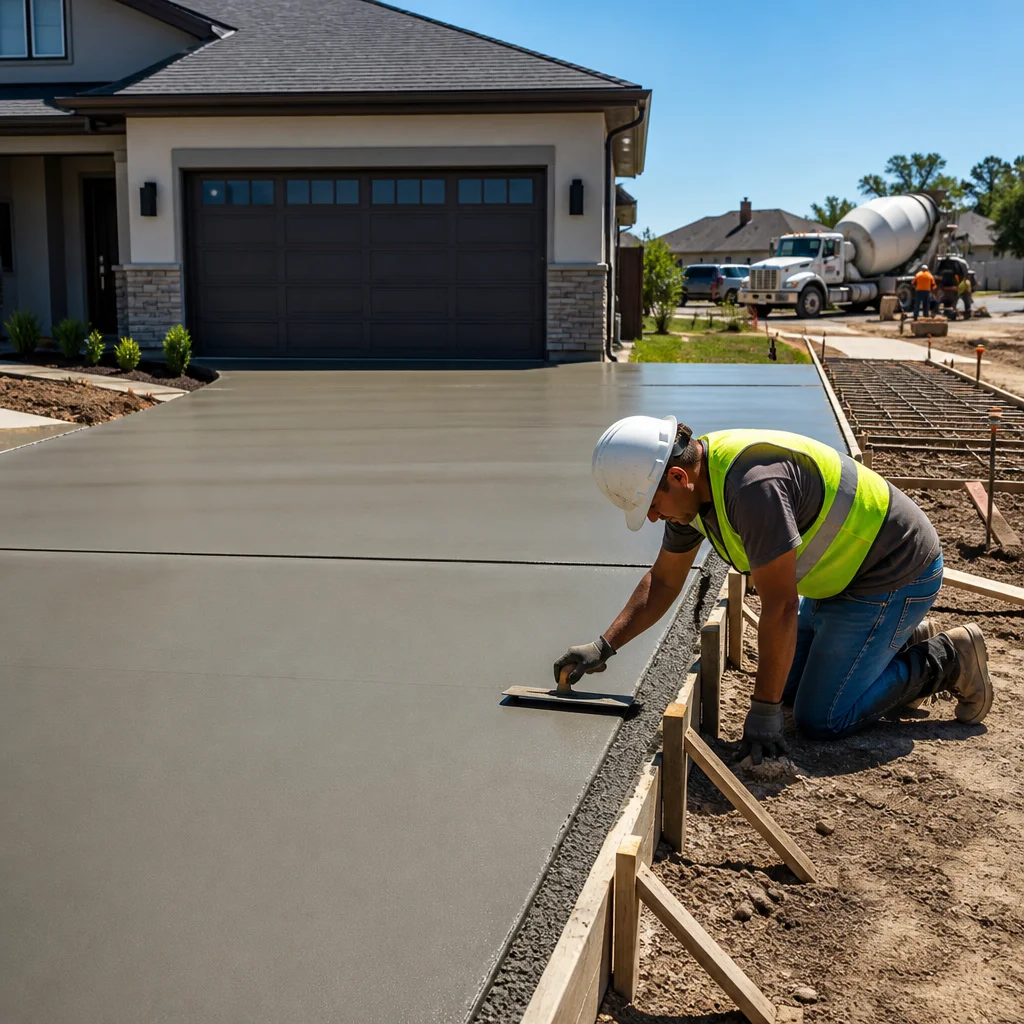
We’ve refined our permitting process to eliminate friction. Here’s how we handle it:
- We conduct a free site evaluation and discuss your project scope, timeline, and budget.
- Our team prepares all required documentation, including accurate site plans and material specifications.
- We submit your application to Lafayette’s Building and Development Department and track its status.
- Once approved, we schedule your project and coordinate with inspectors as needed during installation.
- We pull the final inspection and ensure you receive documentation of code compliance.
You don’t attend meetings or chase down the city. We manage the administrative side while you plan the look and feel of your new driveway. This approach saves most customers two to four hours of their own time and ensures nothing slips through the cracks.
Timeline and Cost Considerations for Permitted Work
A typical residential driveway replacement with permitting takes four to six weeks from application to completion. The first one to two weeks cover permitting, then installation usually runs three to five days depending on driveway size and site conditions. If weather delays occur or soil conditions require additional site work, the timeline extends slightly.
Permitting costs vary. A residential driveway permit in Lafayette typically ranges from $150 to $400 depending on project cost. Commercial permits can exceed $1,000. These are separate from your contractor costs. We provide a complete estimate that breaks down permitting fees, material costs, labor, and any additional site work needed.
Planning ahead prevents budget surprises. When you call us for your initial consultation, we discuss total project cost including permitting so you understand the full investment before committing.
How We Ensure Full Code Compliance on Every Project
Compliance starts with our design. Before we pour a single yard of concrete, we verify slope, drainage patterns, reinforcement placement, and joint spacing against Lafayette codes. Our team has installed hundreds of permitted driveways in the area, so we know exactly what inspectors look for.
During installation, we document our work with photos and notes that support the final inspection. We use high-quality materials rated for Louisiana’s climate: air-entrained concrete that resists freeze-thaw cycles, proper reinforcement, and expert finishing that achieves required slope tolerances.

When the inspector visits, we’re ready. We can show our work, explain our methods, and answer questions confidently. Nearly all our projects pass inspection on the first visit because we build them right from the beginning.
Choosing the Right Contractor for Permitted Driveway Work
Not every concrete contractor handles permitting equally. Some avoid it entirely and push customers to work directly with the city, creating confusion and delays. Others claim they’ll handle permits but neglect critical details.
The right contractor has experience navigating Lafayette’s specific requirements, maintains proper licensing and insurance, and views permitting as part of delivering quality work, not an obstacle to minimize. When interviewing contractors, ask about their permit success rate and how many projects they’ve completed in Lafayette over the past three years.
We’re the ideal partner for permitted driveway work because we combine permit expertise with installation excellence. We’ve completed hundreds of permitted projects in Lafayette, we maintain all required licenses and insurance, and we stand behind our work with warranties that are only valid on permitted, code-compliant installations. We handle the complexity so you get a beautiful, compliant driveway without the headache. Contact us for a free no-obligation estimate, and we’ll walk you through the entire process.
Frequently Asked Questions (FAQ)
Do we handle all the permit paperwork for driveway replacement in Lafayette?
Yes, we manage the entire permit process for our clients. Our team handles the applications, inspections, and compliance documentation so you don’t have to navigate Lafayette’s local requirements on your own. We’ve worked with the permitting offices extensively, which allows us to streamline the process and keep your project moving forward.
What’s the typical timeline for a permitted driveway replacement project?
We usually see permits approved within 2 to 3 weeks, though this can vary depending on current city workload and the complexity of your project. Once we receive approval, our concrete installation typically takes 3 to 7 days depending on the driveway size and weather conditions. We’ll give you a detailed timeline estimate during our initial consultation so you know exactly what to expect.
Why should we hire a licensed and insured contractor for permit work instead of doing it ourselves?
Permitted work requires strict adherence to local codes and building standards, and our licensed team knows exactly what Lafayette inspectors are looking for on every project. If code violations occur during inspection, we’re responsible for corrective work rather than leaving you with unexpected expenses. Our insurance also protects your property throughout the entire replacement process.