Why Your Lafayette Home Needs Professional Foundation and Driveway Work
Your home’s foundation and driveway are among the most critical investments you’ll make as a Lafayette property owner. These structures bear enormous loads, protect your family, and determine how long your property will hold its value. When either fails, repair costs quickly spiral into tens of thousands of dollars.
Lafayette’s climate presents unique challenges. Our humid subtropical conditions, seasonal moisture fluctuations, and occasional soil movement create stress that generic concrete solutions simply cannot handle. A properly installed foundation slab and driveway installation requires site-specific expertise, precise engineering, and materials chosen for our region.
We’ve spent years learning how Lafayette soil behaves and what installation methods prevent future cracking, settling, and surface degradation. Professional installation isn’t a luxury; it’s protection against costly emergency repairs and structural damage that affects everything from your home’s resale value to your family’s safety.
Common Foundation and Driveway Problems We See in Lafayette Properties
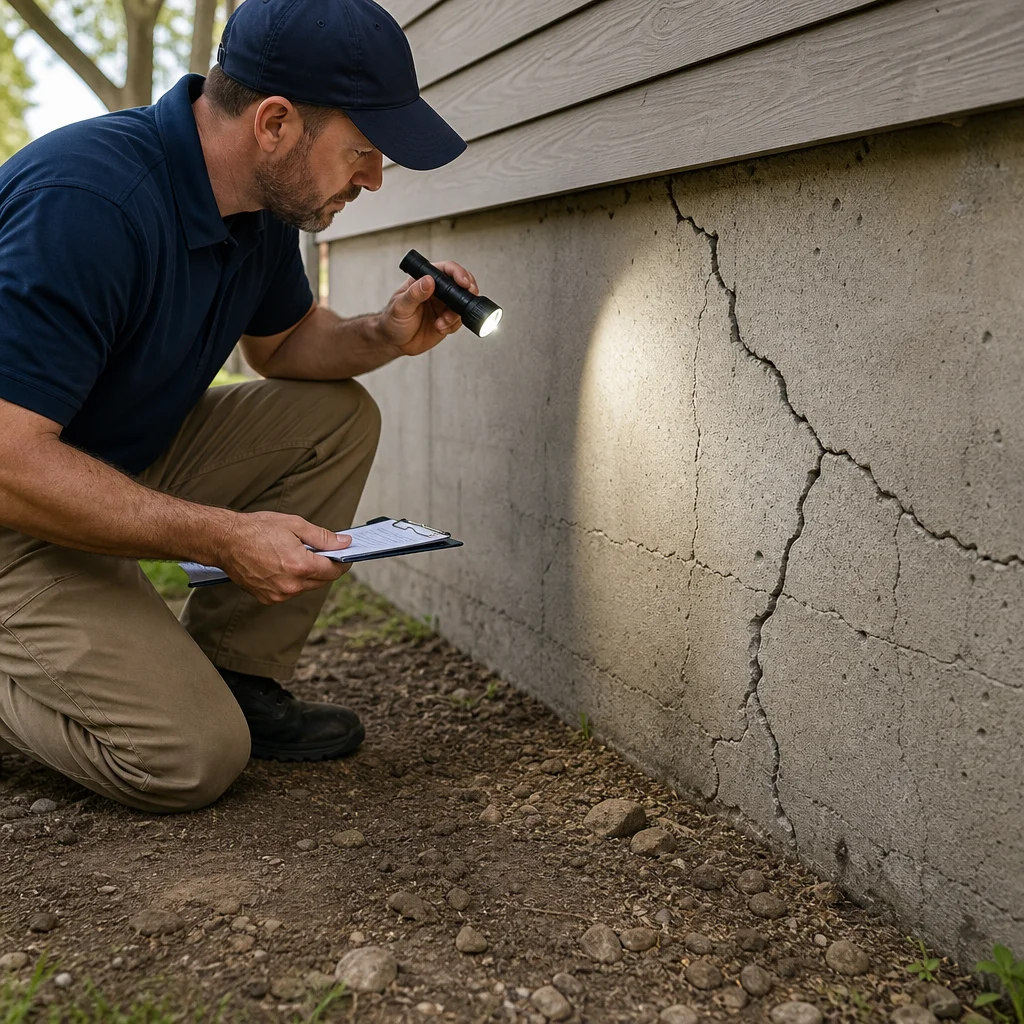
Most foundation and driveway issues we encounter stem from improper initial installation or deferred maintenance. The problems we see most frequently include settling and cracking, which occur when soil shifts beneath the slab, water damage from poor drainage or inadequate base preparation, and surface spalling where concrete flakes away from freeze-thaw cycles and salt exposure.
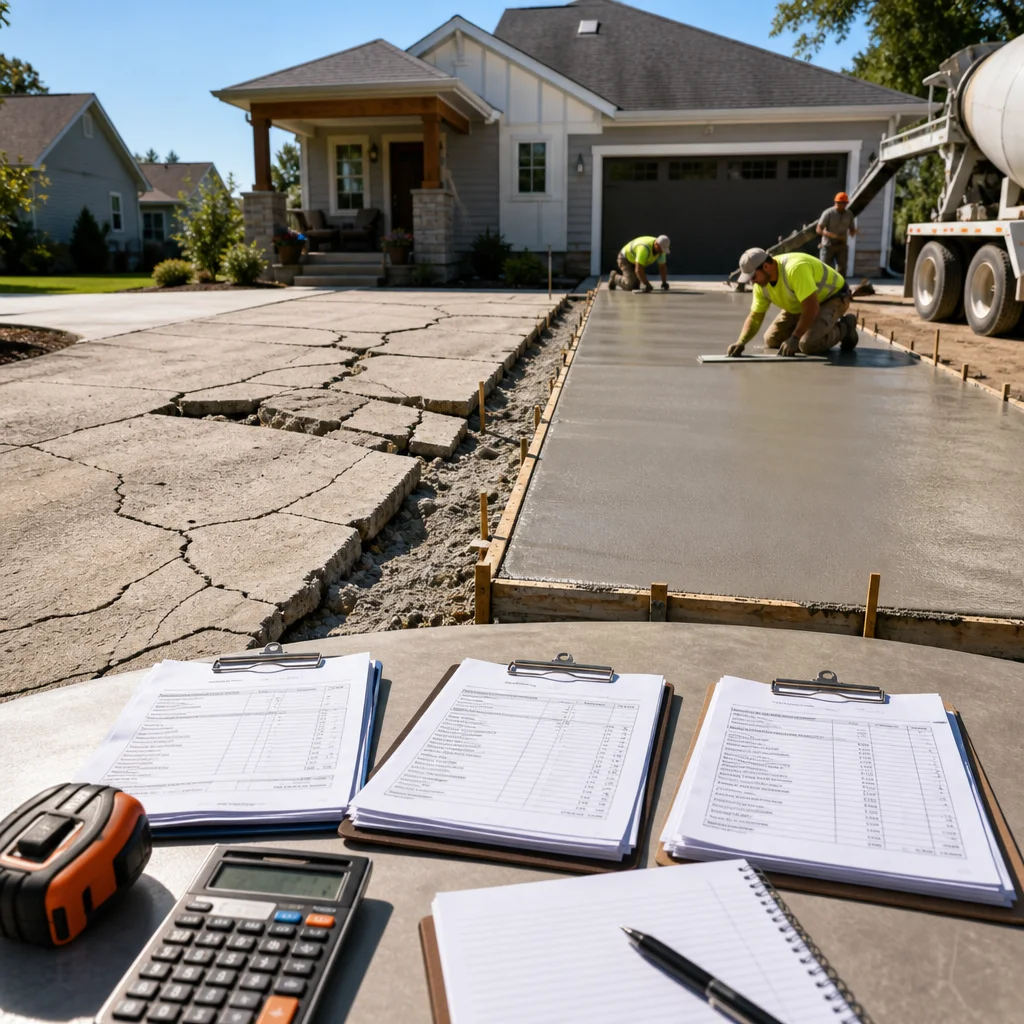
Concrete driveway failures typically appear as alligator cracking (interconnected cracks resembling a reptile’s skin), potholes that expand each season, and uneven sections where one slab has settled relative to another. Many homeowners mistakenly believe these are cosmetic issues. They’re not. Once cracking begins, water infiltrates the base layers, accelerating deterioration exponentially.
For foundations specifically, we see cracks that start hairline and widen over months, efflorescence (white powdery deposits indicating moisture movement), and in severe cases, structural shifts that affect door and window operation. These problems almost always trace back to inadequate site preparation, poor drainage design, or substandard materials used during the original installation. Catching these early prevents exponentially more expensive structural repair work later.
How Our Installation Process Protects Your Investment
Our installation process begins with thorough site assessment and soil analysis. We don’t assume conditions; we test them. We evaluate soil bearing capacity, drainage patterns, subsurface moisture, and local ground movement history. This information directly shapes our design approach for your specific property.
Proper base preparation is non-negotiable. We excavate to appropriate depths, remove problematic soils if necessary, and compact the subgrade in controlled layers. This foundation work often determines whether your slab or driveway lasts 15 years or 30 years. We then install engineered base materials selected for Lafayette’s soil and climate conditions, ensuring proper drainage away from the concrete structure.
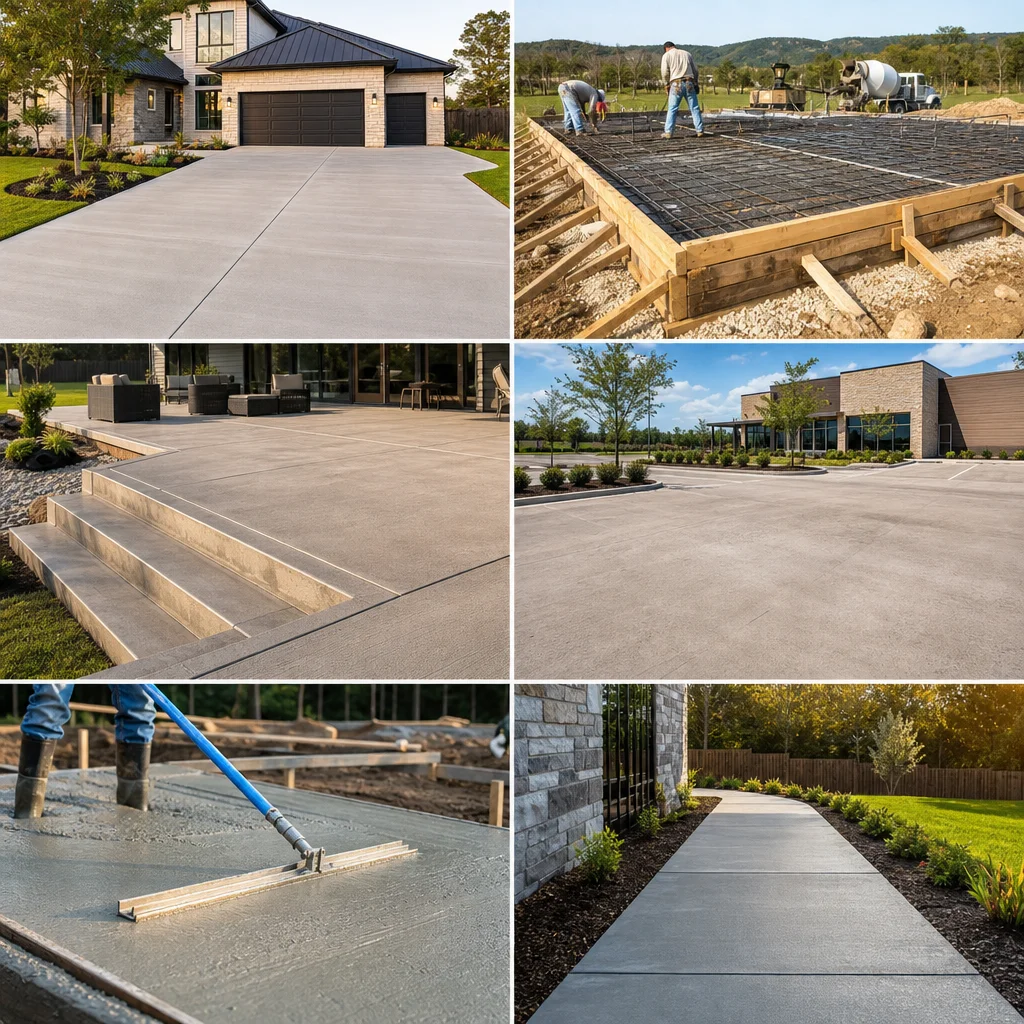
Reinforcement selection matters tremendously. We use wire mesh or rebar patterns designed specifically for residential versus commercial loads and for your property’s soil characteristics. Our formwork is precisely leveled and braced to prevent shifting during pour. When concrete cures, it sets to exact specifications rather than settling into whatever shape gravity dictates.
Quality control measures run throughout installation. We monitor concrete mix design, slump testing (consistency), air content, and curing conditions. These might sound technical, but they directly translate into concrete that won’t crack prematurely or fail when Louisiana heat and humidity stress the material.
Foundation Slab Installation: Building a Solid Base for Your Home
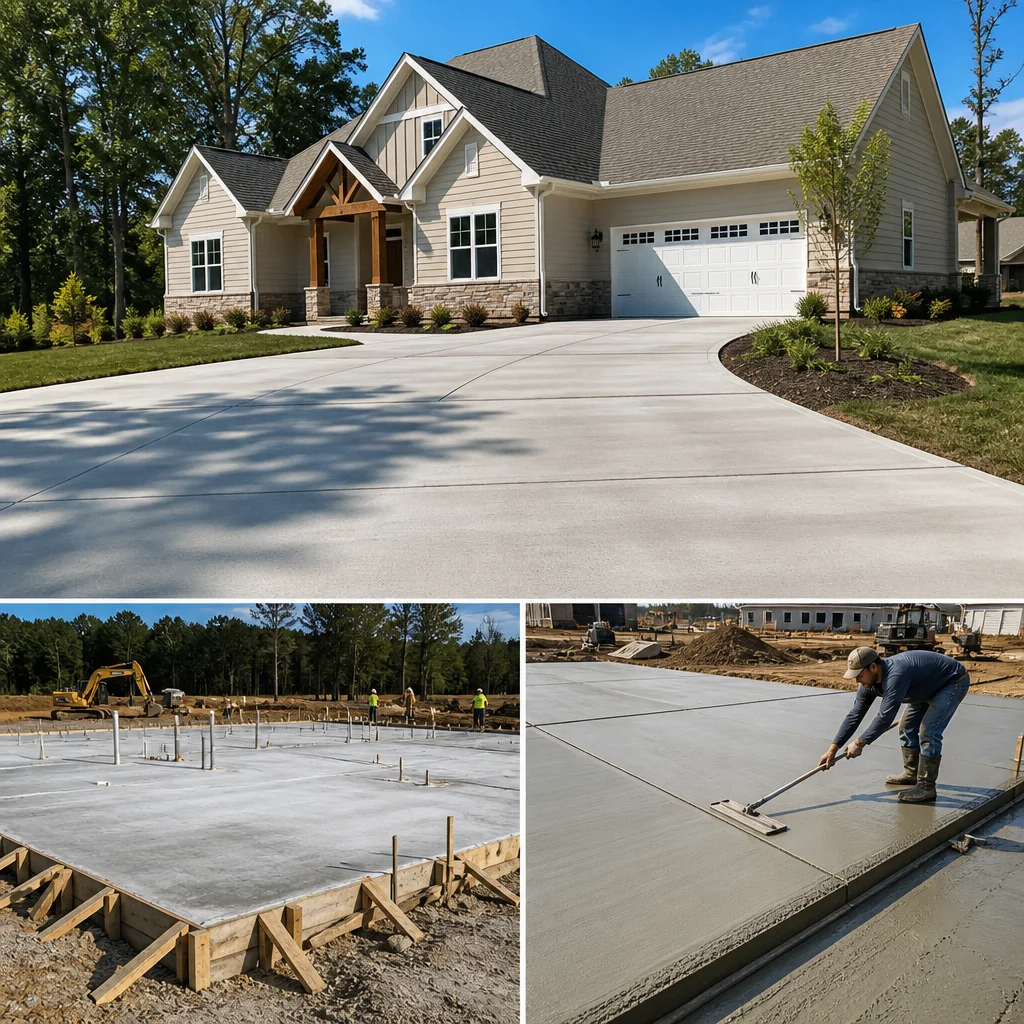
A foundation slab does one primary job: provide a stable, level surface that distributes your home’s weight evenly across the soil. When that job fails, the entire structure suffers. We approach slab installation with the understanding that this isn’t just concrete; it’s the literal foundation of your property’s structural integrity.
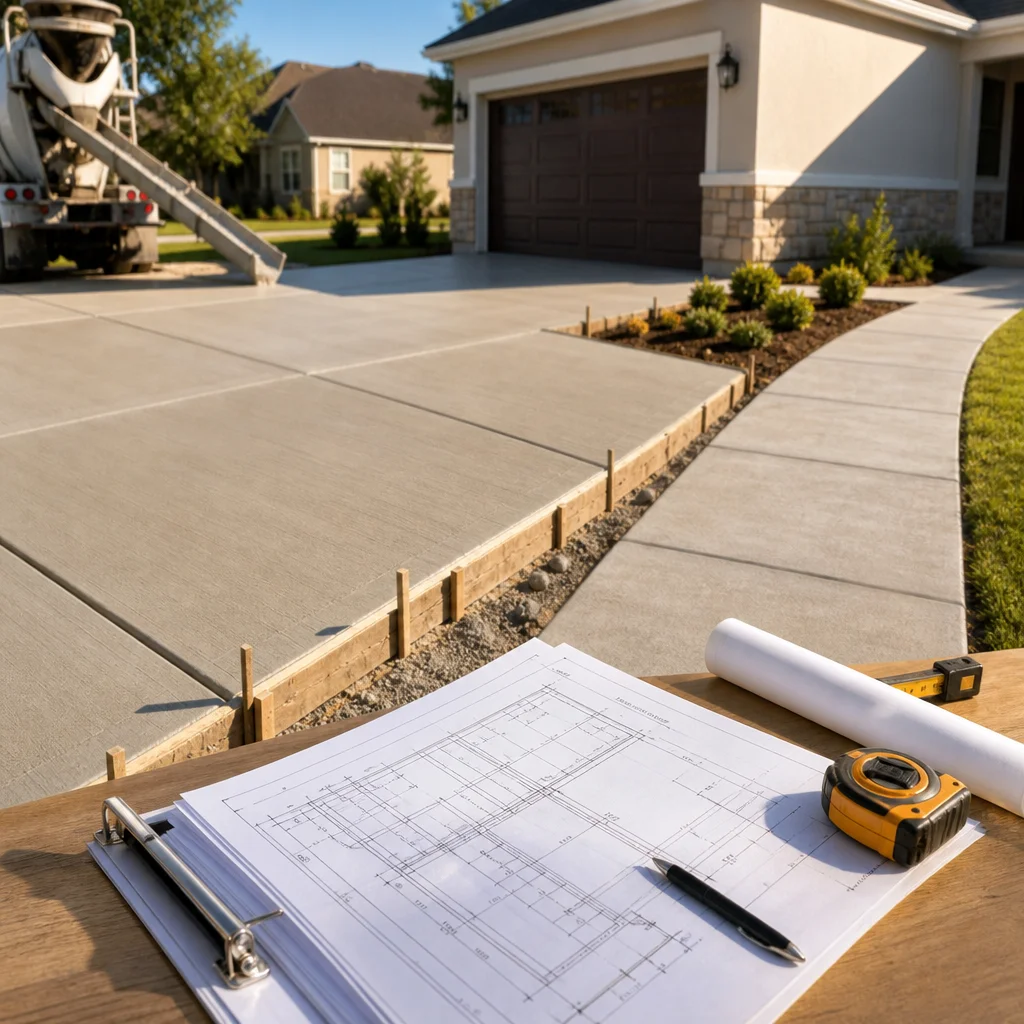
Our process starts with perimeter surveys using laser levels to establish exact grade and slope. For residential slabs, we typically recommend 4 to 6 inches of concrete depth, though this varies based on soil analysis and building codes. We install moisture barriers beneath the concrete to prevent capillary action from pulling groundwater upward through the slab. This single step prevents countless moisture-related problems inside your home.
We pay particular attention to control joints and expansion joints. These deliberate breaks allow concrete to move slightly as temperature and humidity change without causing chaotic cracking elsewhere. Improperly spaced or omitted joints cause concrete to crack wherever it’s weakest rather than at planned locations. Our joint placement follows both engineering best practices and local Louisiana conditions.
For homes with pier-and-beam foundations requiring additional slab work or concrete basement floors, our approach adapts to your specific structure. We’ve worked with older Lafayette homes requiring foundation reinforcement and newer construction needing flawless concrete work. Each situation receives the same rigorous attention to detail.
Professional Driveway Installation for Lafayette Residential Properties
Your driveway endures constant stress: vehicle weight, temperature cycling, moisture infiltration, and chemical exposure from road salt and automotive fluids. A well-installed Lafayette driveway installation should handle these demands without deteriorating for 20-30 years.
We begin driveway projects by evaluating existing drainage. Poor drainage is the leading cause of premature driveway failure in our region. We often modify grading or install drainage solutions alongside the new concrete to redirect water away from the structure. The base preparation mirrors our slab work: compacted layers, proper slope, and engineered composition.
Driveway concrete typically measures 4 inches thick for residential use, though we adjust for heavier anticipated loads. Our concrete mix is formulated specifically for driveway service, with air-entrainment that helps resist freeze-thaw damage and crack resistance additives. Control joints are spaced appropriately (typically every 4-6 feet for residential driveways) to manage the inevitable stress concrete experiences.
We finish driveways with a broom texture that provides traction while being attractive. The final surface is sealed shortly after curing, creating a moisture barrier that extends service life significantly. This seal must be reapplied every few years, but it’s a small investment compared to the protection it provides against salt, oil, and water damage.
Our Licensed and Insured Team Approach
We maintain full licensing and insurance for all concrete work in Louisiana. This isn’t merely regulatory compliance; it’s your protection. Licensed contractors have demonstrated knowledge of local building codes, proper installation techniques, and safety practices. Insurance protects your property during construction and protects you from liability if anyone is injured on your property.
Our team members undergo ongoing training in new techniques, material innovations, and equipment operation. We don’t cut corners or use shortcuts that appear quicker but compromise quality. Every crew member understands that their work will be scrutinized for years and that reputation is built one project at a time.
We also carry workers’ compensation insurance. If an accident occurs, your homeowner’s insurance won’t cover injuries to our crew, and an uninsured worker’s injury could create liability for you. Our insurance ensures proper coverage and professional handling of any incidents. This protects both our team and your property.
Why DIY Solutions Fall Short for Foundation Work
Foundation and driveway work might appear straightforward to the untrained eye, but they involve engineering, material science, and local knowledge that takes years to develop. DIY concrete projects typically fail because they skip essential steps like proper site preparation or base engineering.
Many homeowners underestimate the importance of subgrade preparation, assuming they can pour concrete directly on existing ground. This approach virtually guarantees failure as soil compaction is insufficient, water drainage is uncontrolled, and settling occurs unpredictably. The concrete might hold for a few years before problems emerge, making the root cause invisible to anyone not trained in concrete failure analysis.
Equipment also matters. Proper concrete finishing requires specialized trowels, levels, and techniques that produce the correct surface slope and texture. Hand finishing often leaves high and low spots that eventually catch water and deteriorate. Professional finishing equipment and trained operators eliminate these problems.
Beyond technical issues, foundation work requires knowledge of building codes, permit requirements, and inspection procedures. We navigate these requirements; homeowners working independently often discover post-completion that their work doesn’t meet code or won’t pass inspection, requiring expensive modifications.
Quality Materials We Use for Long-Lasting Results
Material selection directly determines how long your concrete will serve you. We source concrete from suppliers who maintain consistent quality standards and can provide documentation of material testing. Our concrete mix designs are customized for intended use and Lafayette environmental conditions.
For base materials, we use compacted crushed stone or engineered subbase products that provide superior drainage and load distribution compared to generic fill. These materials cost more than loose earth, but they extend concrete life by years and prevent settling-related cracking.
We specify reinforcement materials based on application. For slabs, we use wire mesh or rebar that resists corrosion in our humid climate and provides proper strength distribution. For heavy-use driveways, we might recommend post-tensioning or additional reinforcement depending on soil analysis results.
Sealants receive the same attention. We apply concrete sealers that provide moisture protection without trapping moisture within the concrete itself. These sealants are formulated for our climate and reapplied on schedules that maintain protection throughout the structure’s service life.
Timeline and What to Expect During Your Project
Project timelines vary based on scope and weather conditions, but we follow consistent phases that our Lafayette clients can expect. Site preparation typically requires 2-5 days depending on excavation needs and base installation. This phase is critical and never rushed; proper base work determines success.
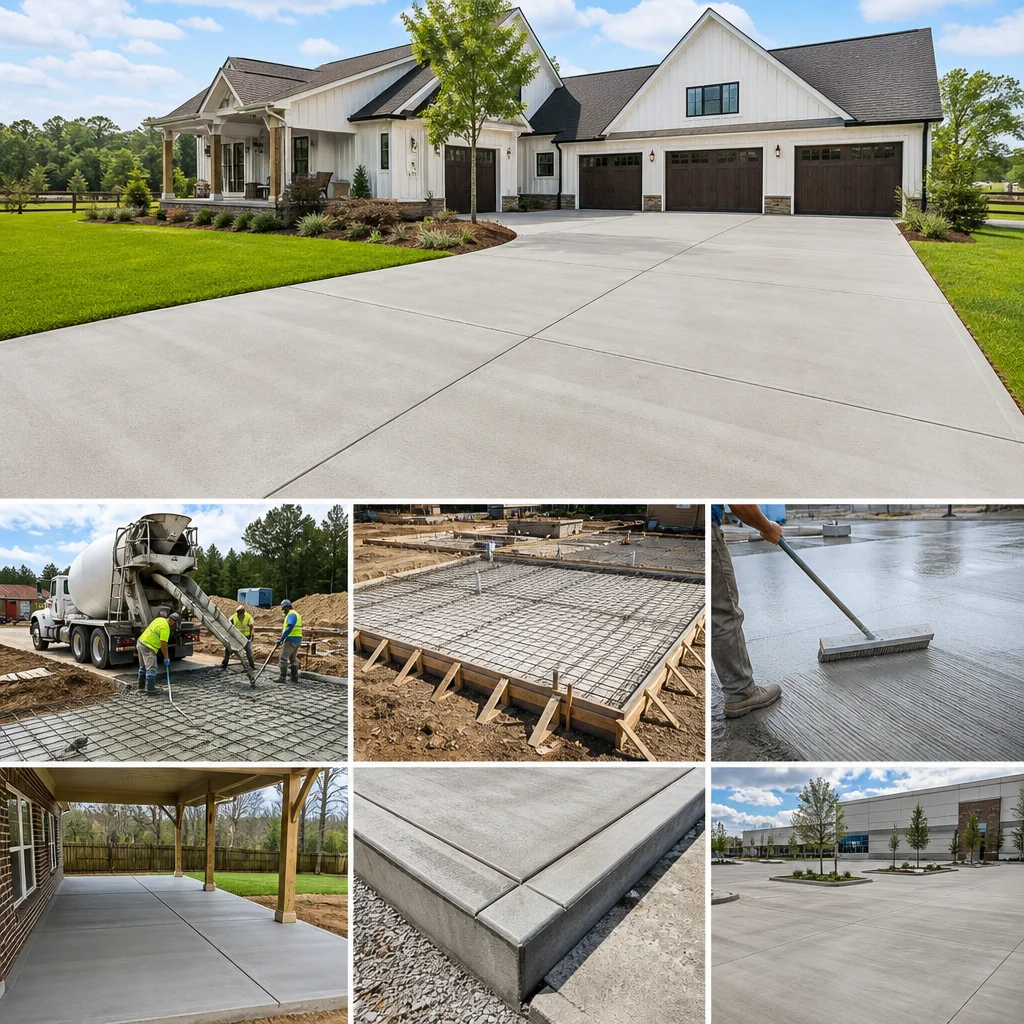
Formwork installation follows, which might take 1-3 days for typical residential projects. We ensure everything is level, braced, and ready for concrete placement. Weather monitoring is constant during this phase; we don’t pour concrete in heavy rain or extreme temperatures.
Concrete placement usually occurs in a single day for most residential projects. We coordinate scheduling to ensure favorable weather and proper crew availability. Once concrete is poured, finishing work begins immediately, typically completed the same day.
Curing requires 7 days minimum before heavy use, though concrete continues gaining strength for 28 days. We advise clients on curing conditions and any special care needed. In Louisiana heat, proper curing management is especially important to prevent surface checking or strength loss.
Sealing typically occurs after 28 days of cure time. We coordinate this final step and provide instructions for ongoing maintenance that preserves your investment.
Free Estimate: Your First Step Toward a Stronger Foundation
We offer free, no-obligation estimates for all foundation slab and driveway projects. Our estimate process includes site evaluation, discussion of your specific needs, and transparent pricing with no hidden costs. We arrive at estimates based on your property’s actual conditions rather than generic assumptions.
Contact us today to schedule your estimate. We’ll evaluate your property, answer your questions, and explain exactly what professional installation looks like for your situation. Our team is ready to help Lafayette property owners protect their investments with quality concrete work that lasts.
Frequently Asked Questions (FAQ)
How long does a typical driveway or foundation slab installation take?
Our installation timeline varies depending on the scope of work, but most residential driveway projects take between 3-7 days from start to finish. Foundation slab work typically requires 1-2 weeks, accounting for site preparation, pouring, and proper curing time. We’ll provide you with a detailed timeline during your free estimate so you know exactly what to expect.
What makes professional installation better than attempting this work ourselves?
Foundation and driveway work requires specialized equipment, proper grading techniques, and knowledge of local soil conditions that DIY approaches simply can’t replicate. We’ve seen numerous failed projects in the Lafayette area where improper installation led to cracking, settling, and costly repairs within just a few years. Our licensed and insured team ensures your concrete is installed correctly the first time, protecting your property investment for decades.
Do you service areas outside of Lafayette, Louisiana?
We primarily serve Lafayette and the surrounding areas within a reasonable distance from our base of operations. We recommend contacting us directly at https://conkreteworkz.com/ to confirm whether your specific location falls within our service range and to discuss your project needs.