Why Foundation Cracks Demand Immediate Attention in Louisiana
Louisiana’s unique climate and soil conditions create an environment where foundation problems develop faster than in many other regions. Our combination of high moisture, expansive clay soils, and seasonal flooding means foundation damage can escalate quickly if left unchecked. A small crack today might become a major structural issue within months.
We’ve seen countless homeowners and business owners in Lafayette ignore early warning signs, only to face repairs that cost three to five times what an initial assessment would have revealed. The difference between catching a crack early and waiting until it spreads across multiple walls can mean the difference between a manageable repair and a foundation replacement.
What you should do now: Schedule a free inspection if you’ve noticed any visible cracks, settling, or moisture issues. Early detection saves money and prevents safety hazards.
The Two Categories: Understanding Structural vs. Cosmetic Damage
Not all foundation cracks are created equal. Understanding the difference between cosmetic and structural damage determines whether you need urgent repairs or can safely monitor the situation.
Cosmetic cracks are typically hairline fissures (less than 1/8 inch wide) that occur in the concrete as it naturally cures and shifts slightly. These surface-level breaks don’t compromise the structural integrity of your foundation and often require only cosmetic sealing to prevent water intrusion. They’re common and usually low-risk.
Structural cracks, by contrast, indicate that movement is occurring within the foundation itself. These cracks are wider (typically 1/4 inch or larger), may be stair-stepped across concrete blocks, run diagonally, or continue below the surface. Structural damage means the concrete is failing to support load properly, which threatens the entire structure above it.
The key difference: cosmetic cracks are about appearance and minor water prevention, while structural cracks demand professional intervention to stabilize and repair the underlying problem.
Common Causes of Foundation Cracks in Our Region
Lafayette’s foundation challenges stem from several specific factors that distinguish our region from drier climates. Understanding these causes helps you recognize why cracks develop and why quick action matters.
Soil settlement and clay expansion is the primary culprit here. Louisiana’s clay-rich soils swell when wet and shrink when dry. This constant movement pulls the foundation, creating stress and fractures. Heavy rains followed by dry periods amplify this cycle.
Poor drainage and standing water around your foundation accelerate damage. When water pools against your home’s perimeter, it saturates the soil and creates hydrostatic pressure that pushes against concrete walls. Over time, this pressure causes cracking and structural failure.
Age and material fatigue affect older foundations. Concrete weakens as it ages, especially in our humid climate. Freeze-thaw cycles, though less severe than northern winters, still contribute to degradation over decades.
Subsurface settling occurs when soil beneath your foundation compresses unevenly. This happens when underlying clay loses moisture or when the soil was improperly compacted during initial construction. Your foundation drops or shifts, creating severe cracks.
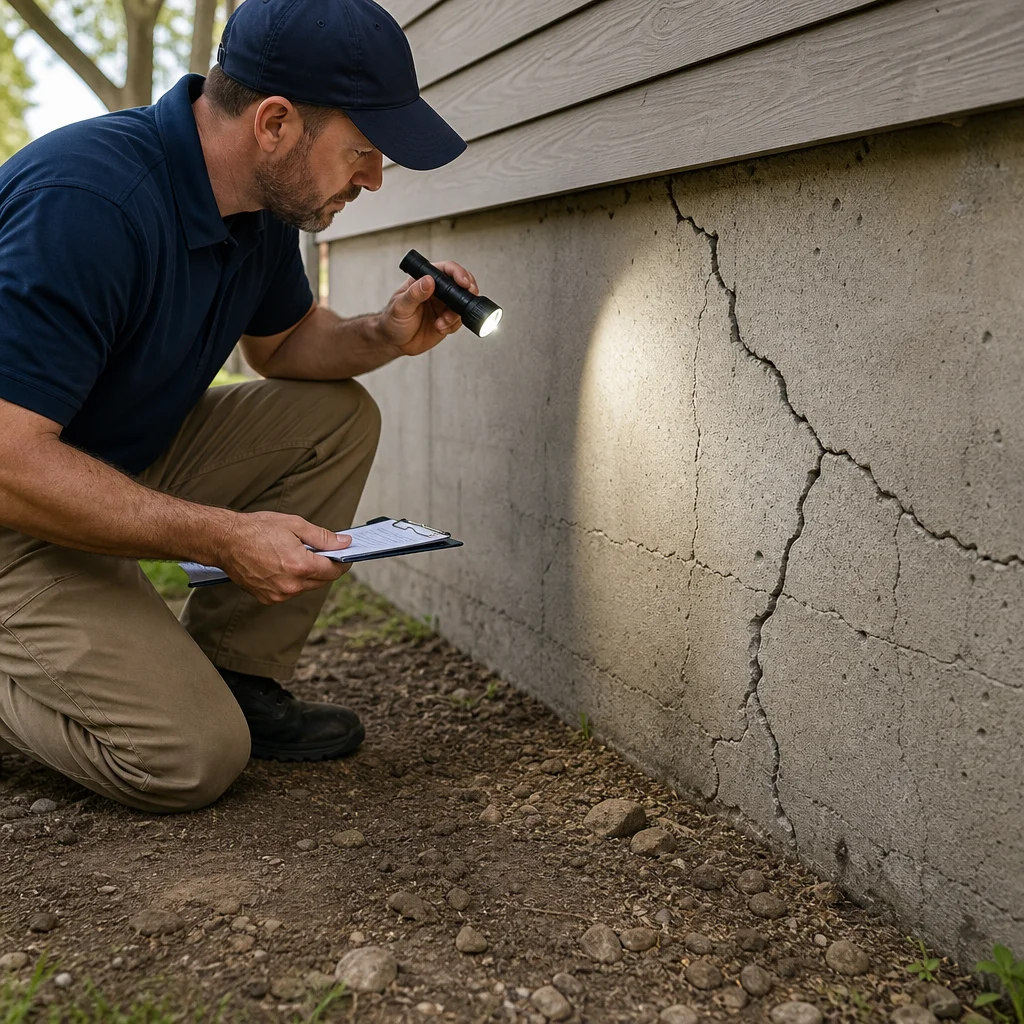
Tree roots seeking moisture can exert surprising force on foundations, particularly in crawl spaces and areas with mature vegetation nearby.
How We Assess Your Foundation’s True Condition
Our assessment process goes beyond a quick visual inspection. We evaluate the full picture of your foundation’s health using proven techniques that reveal hidden damage and underlying causes.
We begin with a thorough visual inspection, measuring crack width, length, and direction while documenting their location. We look for patterns: are multiple cracks radiating from one point? Do they run horizontally, vertically, or diagonally? The pattern tells us whether movement is active and what forces are causing it.
We check for secondary indicators like door and window misalignment, water staining, efflorescence (white powder deposits), and gaps where walls meet the floor. These signs reveal whether the foundation is currently moving or has settled.
For more complex situations, we may recommend moisture testing, soil assessment, or structural analysis. We assess drainage conditions around your property to determine if water management is contributing to the problem.
Our team documents everything with photos and detailed notes so you understand exactly what we found and what it means for your property.
Warning Signs That Indicate Serious Foundation Problems
Certain symptoms indicate your foundation needs professional attention immediately. Know these warning signs so you can act before conditions worsen.
Visible cracks wider than 1/4 inch demand professional evaluation. If cracks are stair-stepped through concrete blocks or brick, growing visibly, or appearing in multiple locations, contact us right away.
Doors and windows that stick or won’t close properly often signal foundation movement. When your foundation shifts, it warps the frames around openings, making them bind or gap. This problem typically worsens over time.
Sloping or uneven floors inside your home indicate settling or subsurface failure. Walk through your home with a level or simply observe how a ball rolls across the floor. Noticeable slopes suggest structural movement.
Water seeping into basements or crawl spaces combined with cracks means water is actively penetrating through foundation failures. This moisture promotes mold growth and further concrete deterioration.
Visible separation between walls and the foundation is particularly serious. If your exterior wall is pulling away from the concrete, structural failure is occurring.
Bowing walls bend outward due to hydrostatic pressure or settlement. This is always a structural emergency requiring immediate professional attention.
Our Foundation Repair and Stabilization Solutions
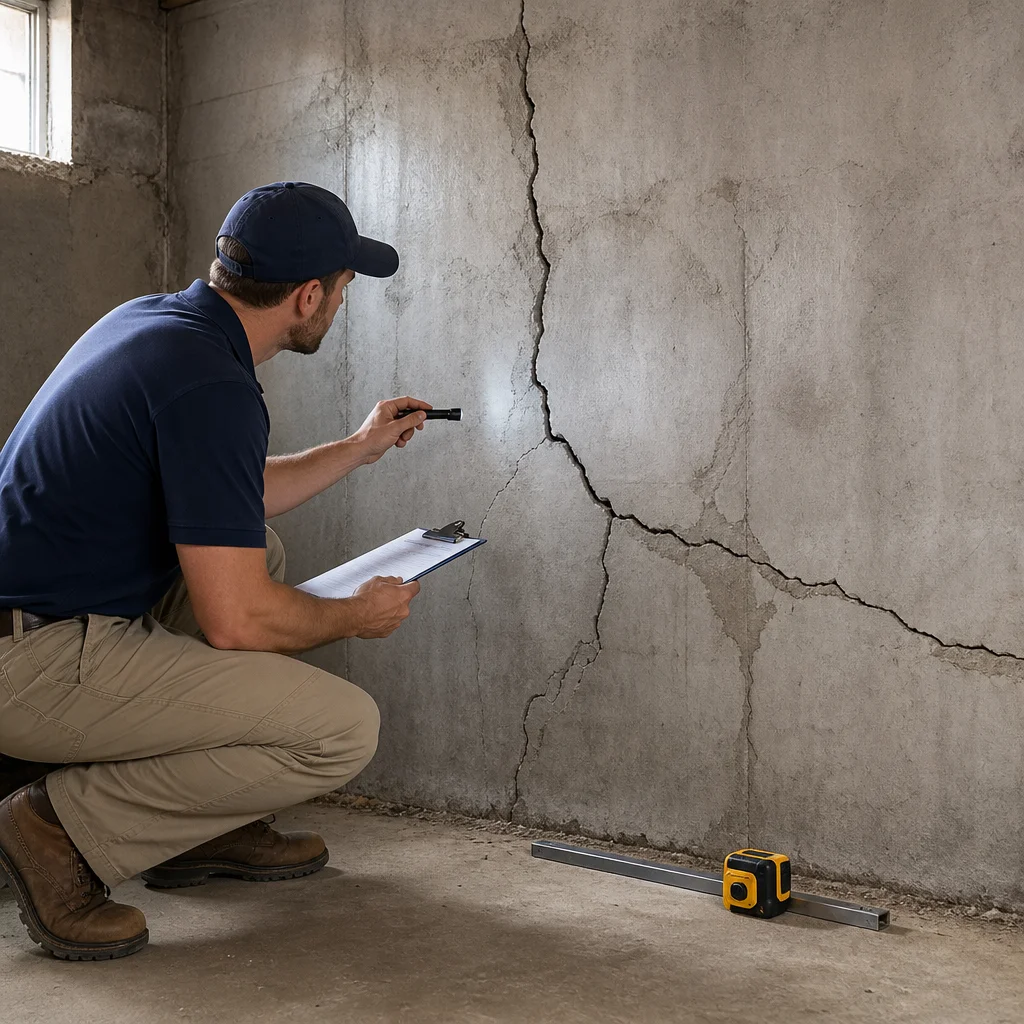
We offer multiple repair approaches depending on your foundation’s condition and the underlying cause. Our goal is always to address the root problem, not just patch the symptom.
For minor cosmetic cracks, we apply specialized concrete sealants that prevent water intrusion while maintaining the concrete’s breathability. These sealants flex slightly as the concrete naturally moves, preventing re-cracking.
For structural cracks, we use concrete patching and injection techniques that rebuild the concrete’s structural capacity. We inject high-strength epoxy or polyurethane into cracks, restoring load-bearing capability and waterproofing the break.
When foundation settling or subsurface failure is the root cause, we may recommend mudjacking (lifting concrete slabs by injecting material beneath them) or installing permanent stabilization systems. Piering systems are sometimes necessary for serious structural failure.
We always address the underlying cause. If poor drainage is causing the damage, we recommend gutter improvements, grading adjustments, or french drain installation. If a tree’s roots are damaging your foundation, we discuss removal or professional root management.
The Cost of Delaying Foundation Crack Assessment
Delaying an assessment almost always increases your ultimate repair costs. The math is straightforward: small cracks are cheaper to fix than large ones, and prevention is always less expensive than repair.
A small crack addressed within months might cost $300-800 to seal and monitor. The same crack ignored for a year could require $2,000-5,000 in structural repair. Severe structural failure resulting from long-term neglect can exceed $15,000-30,000 and may require extensive bracing or rebuilding.
Beyond financial cost, delayed repairs threaten your property’s safety and value. Foundation problems make homes difficult or impossible to sell. Lenders may refuse to finance purchases with known foundation damage. Insurance claims become complicated when you knew about damage but failed to address it.
Water damage cascades from foundation cracks, affecting framing, insulation, electrical systems, and creating mold. These secondary damages compound your repair costs exponentially.
How Our Licensed Team Protects Your Investment
Our licensing and insurance mean you’re protected throughout the repair process. We’re fully licensed with the Louisiana Residential Construction Commission and maintain comprehensive general liability and workers’ compensation insurance. This protects you from liability if an accident occurs on your property.
We guarantee our work and stand behind our repairs with documented warranties. If our repair fails due to our workmanship or methods, we return and fix it at no cost. This commitment exists because we’re confident in our technique and materials.
Our team receives ongoing training in the latest foundation repair methods and materials. We use only high-quality products proven to perform in Louisiana’s climate, not cheap alternatives that fail prematurely.
We provide detailed written estimates before any work begins so you understand exactly what we’re doing and what it costs. No surprise invoices or scope creep.
The Process: From Inspection to Complete Resolution
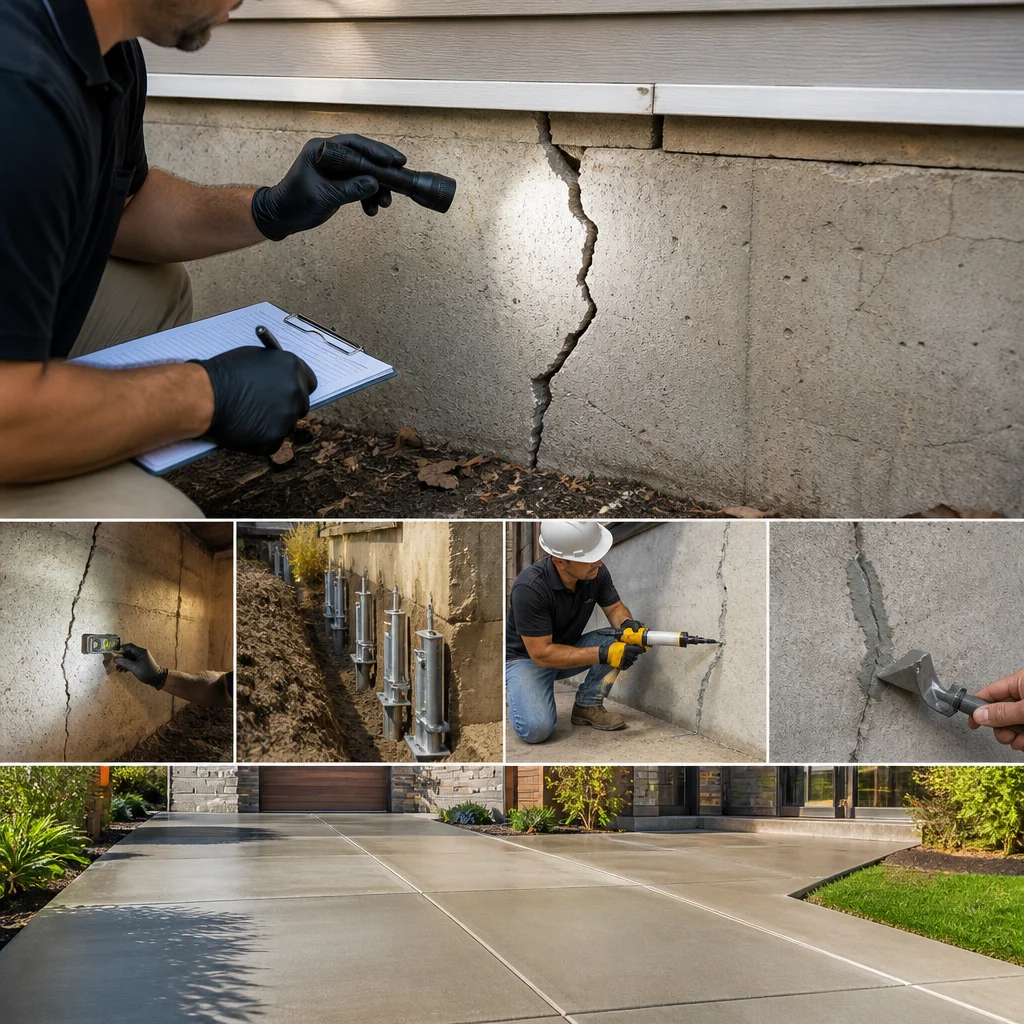
Here’s what happens when you contact us about a foundation concern.
Initial consultation and scheduling: You call or request a free estimate through our website. We schedule a convenient time to visit your property, typically within 2-3 business days.
Comprehensive inspection: Our team inspects the affected area, documents cracks and symptoms, and asks questions about when you first noticed problems and whether they’ve changed. We identify the cause and explain our findings clearly.
Written assessment and recommendation: We provide a detailed written report explaining what we found, why it happened, and what repair approach we recommend. We answer all your questions and discuss timeline and costs.
Repair planning: If you approve, we schedule the work at a time convenient for you. We explain what to expect during repair, how long it will take, and any preparation needed on your part.
Professional repair execution: Our licensed technicians perform the work to our exacting standards. We keep your property clean and minimize disruption to your daily routine.
Final inspection and warranty documentation: Upon completion, we inspect the repair, test functionality, and provide documentation of materials used and warranty terms.
Don’t let foundation cracks compromise your Lafayette property. Contact us today for a free, no-obligation assessment of your foundation’s condition. We’ll give you straight answers about what you’re facing and what it takes to fix it.
For further reading: Foundation problems threaten value.
Frequently Asked Questions (FAQ)
What should we look for in a foundation crack inspection?
We recommend starting by checking for horizontal cracks, which tend to be more serious than vertical ones, as well as stair-step patterns in brick or block. Watch for cracks wider than 1/8 inch, signs of water seepage, or multiple cracks appearing in your foundation. When you spot any of these warning signs, our team can perform a detailed assessment to determine whether you’re dealing with cosmetic damage or a structural issue that needs immediate attention.
Why does Louisiana’s climate make foundation cracks more common?
Our region’s clay soil expands and contracts significantly with moisture changes, which puts constant stress on foundations year-round. Combined with heavy seasonal rainfall and occasional flooding, this creates an environment where foundation movement happens faster here than in many other parts of the country. We’ve seen countless foundations damaged by these regional conditions, which is why early detection is so critical for property owners in Lafayette.
How quickly should we address a foundation crack once it’s discovered?
The sooner you reach out, the better we can protect your investment, since small cracks can spread rapidly as foundation movement continues. We typically recommend scheduling our free no-obligation estimate within a few weeks of spotting a crack, rather than waiting to see if it gets worse. Delaying assessment often means repair costs multiply, so contacting us early gives us the best opportunity to stabilize your foundation before significant structural damage develops.