Why Patio Durability Matters in Lafayette’s Climate
Your patio is more than just outdoor space. It’s an investment in your home’s value and your family’s enjoyment. In Lafayette’s climate, durability isn’t optional—it’s essential.
Our region experiences high humidity, intense summer heat, and frequent moisture exposure. These conditions accelerate wear on outdoor concrete surfaces faster than they would in drier climates. A patio that isn’t built and finished properly can develop cracks, discoloration, and surface deterioration within just a few years.
When we design and construct patios, we account for Lafayette’s specific environmental pressures. The right finish choice, combined with proper installation, means your patio stays attractive and functional for 10, 15, or even 20 years. That’s the difference between viewing your patio as a temporary feature and a lasting part of your property.
Action item: Evaluate your current patio’s condition. Does it show signs of cracking, fading, or uneven settling? These are indicators that professional assessment and finishing solutions could extend its life significantly.
The Challenge: Moisture and Heat Damage to Standard Patios
Concrete is porous. Without protection, it absorbs moisture like a sponge. In Lafayette’s humid environment, water penetrates the surface, then freezes and expands during cooler months (or in air-conditioned spaces). This freeze-thaw cycle creates micro-fractures that grow into visible cracks over time.
The moisture problem compounds when you factor in algae and mold growth. Shaded areas of patios become slippery and discolored. Dark stains develop not from dirt alone, but from biological growth that feeds on the porous concrete surface.
Additionally, UV rays and heat cause unfinished concrete to fade and become brittle. The surface loses its integrity and begins spalling (flaking away in small pieces). Standard concrete sealer applied carelessly or using low-quality products can peel within a season, leaving the concrete vulnerable once again.
These aren’t minor cosmetic issues. Structural damage starts small and accelerates. A small crack becomes a tripping hazard, then a water pathway that compromises the concrete’s foundation integrity.
How Our Concrete Solutions Withstand Humid Conditions
We address humidity and heat damage through a layered approach. First, we engineer proper substrate preparation and drainage before concrete is even poured. Second, we apply professional-grade protective coatings. Third, we recommend maintenance schedules that keep finishes effective year-round.
Our concrete patio solutions start with quality materials and expert installation. We use air-entrained concrete mixes that resist freeze-thaw damage better than standard mixes. The air bubbles provide space for water expansion without creating stress fractures.
Next, we apply finishes specifically chosen for humid climates. These aren’t consumer-grade products. We use commercial-quality sealers and coatings that remain flexible through temperature swings and maintain adhesion even as moisture conditions fluctuate.
We also design patios with slope and drainage considerations from the beginning. Water doesn’t pool on our patios; it flows away from the structure toward proper drainage areas. This simple but critical design element prevents many humidity-related problems before they start.
Seal Coatings: Our First Line of Defense
Seal coatings are your concrete’s shield against moisture intrusion and UV damage. We apply penetrating sealers that soak into the concrete’s pores, filling them without creating a surface film that can peel. Think of it like waterproofing from within.
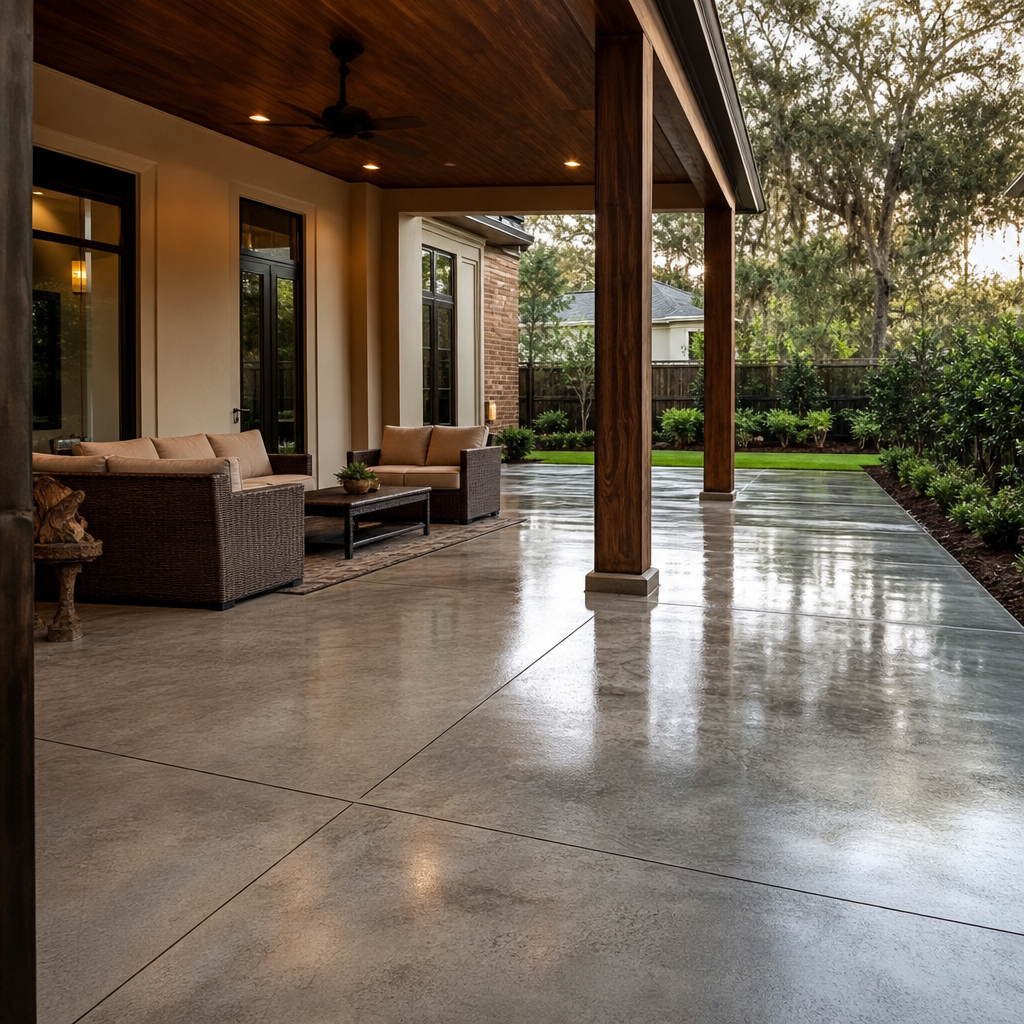
For humid climates, we typically recommend either:
- Penetrating sealers: These absorb into the concrete and create a hydrophobic barrier while maintaining the concrete’s natural appearance. They don’t add shine or require frequent reapplication in most cases.
- Acrylic sealers: These create a visible protective layer that enhances color and appearance. They do require reapplication every 1-3 years in humid climates, but they offer superior UV protection and aesthetic options.
The sealer we choose depends on your patio’s location, your aesthetic preferences, and your maintenance commitment. Patios under covered structures might use acrylic finishes that last longer without UV exposure. Fully exposed patios benefit from penetrating sealers’ lower maintenance requirements.
We apply sealers after the concrete has cured properly (typically 28 days) and after thorough surface cleaning. This ensures maximum penetration and adhesion. Rushing this step or using improper application methods results in products that fail prematurely.
Action item: If you have an existing patio, ask us about resealing as a cost-effective maintenance step. A quality seal coating refresh extends patio life by years at a fraction of the cost of resurfacing or replacement.
Decorative Finishes That Last Years Longer
Beyond basic protection, we offer decorative finishes that withstand Lafayette’s humidity while adding visual appeal. These include stamped concrete patterns, colored finishes, and textured surfaces.
Brushed concrete finishes provide enhanced traction and a refined appearance that doesn’t require high-gloss coatings that eventually yellow or peel. The brushed texture actually helps water shed faster, improving drainage performance.
Colored concrete finishes—whether integral pigmentation mixed into the concrete or applied as surface coatings—hold their vibrancy longer when we use UV-stable products and apply them correctly. A properly finished colored patio doesn’t fade unevenly; instead, it ages gracefully, developing character while maintaining structural integrity.
Stamped concrete patterns create visual interest without sacrificing durability. The stamping happens before the concrete fully sets, creating permanent texture that doesn’t wear away. We then seal these patterned finishes to protect the stamped details and prevent moisture damage along the seam lines.
Exposed aggregate finishes combine durability with distinct aesthetics. Small stones become visible at the surface, creating a naturally slip-resistant texture perfect for patios near pools or in areas where safety matters. This finish requires more careful sealing to protect the stone-concrete interface, but the durability payoff is substantial.
Proper Drainage Design We Install
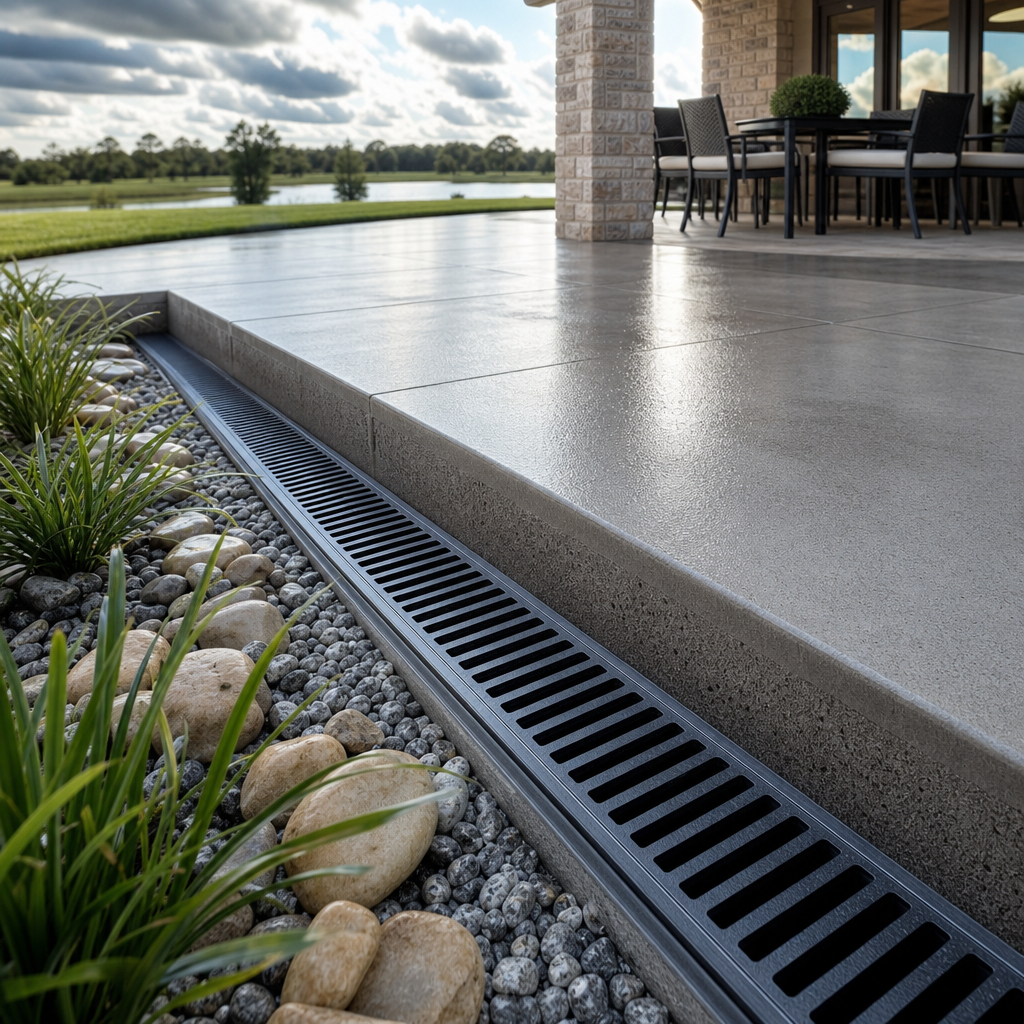
Water management is the foundation of patio longevity. We design every patio with intentional slope and drainage pathways.
Standard practice involves creating a gentle slope (typically 1/8 inch per foot) away from structures and toward natural drainage areas or constructed channels. This prevents water from pooling on the surface where it can seep into cracks and cause damage.
For patios adjacent to homes, we ensure water flows away from foundations. This protects not just the patio, but your home’s structural integrity. In areas with poor natural drainage, we construct French drains or install permeable pavers that allow water to filter through rather than pool on the surface.
We also consider subsurface drainage. Before pouring concrete, we prepare a proper base using compacted gravel that allows water to drain downward, preventing moisture from being trapped underneath the patio where it can cause settling or frost heave.
These drainage details exist in our project plans from day one. They’re not afterthoughts or shortcuts. Proper drainage design is why our patios remain stable and crack-free years after installation.
Maintenance Tips to Extend Your Patio Life
Your patio maintenance routine directly impacts how long protective finishes remain effective. Regular upkeep prevents small issues from becoming expensive repairs.
Here’s our recommended maintenance schedule:
- Monthly: Sweep debris and remove standing water. Clear gutters and downspouts if they drain toward your patio.
- Quarterly: Wash the patio with a soft brush and mild soap solution. This removes algae and mold growth before they stain or create slip hazards.
- Annually: Power wash if needed (using 3000 PSI or less to avoid surface damage), then inspect for new cracks or settling.
- Every 1-3 years: Reseal the patio depending on the sealer type and weather exposure.
Avoid using de-icing salts on your patio during winter. These salts draw moisture into the concrete and accelerate freeze-thaw damage. Use sand or non-salt ice melt instead.
Don’t pressure wash at excessive pressure or use acidic cleaners without professional guidance. These shortcuts damage the seal and the concrete itself.
Action item: Set calendar reminders for quarterly washing and annual inspection. These simple steps catch problems early when they’re inexpensive to address.
When Professional Resurfacing Becomes Necessary
Eventually, even well-maintained patios reach a point where resurfacing makes sense. This happens when surface damage outpaces what sealing and repairs can address.
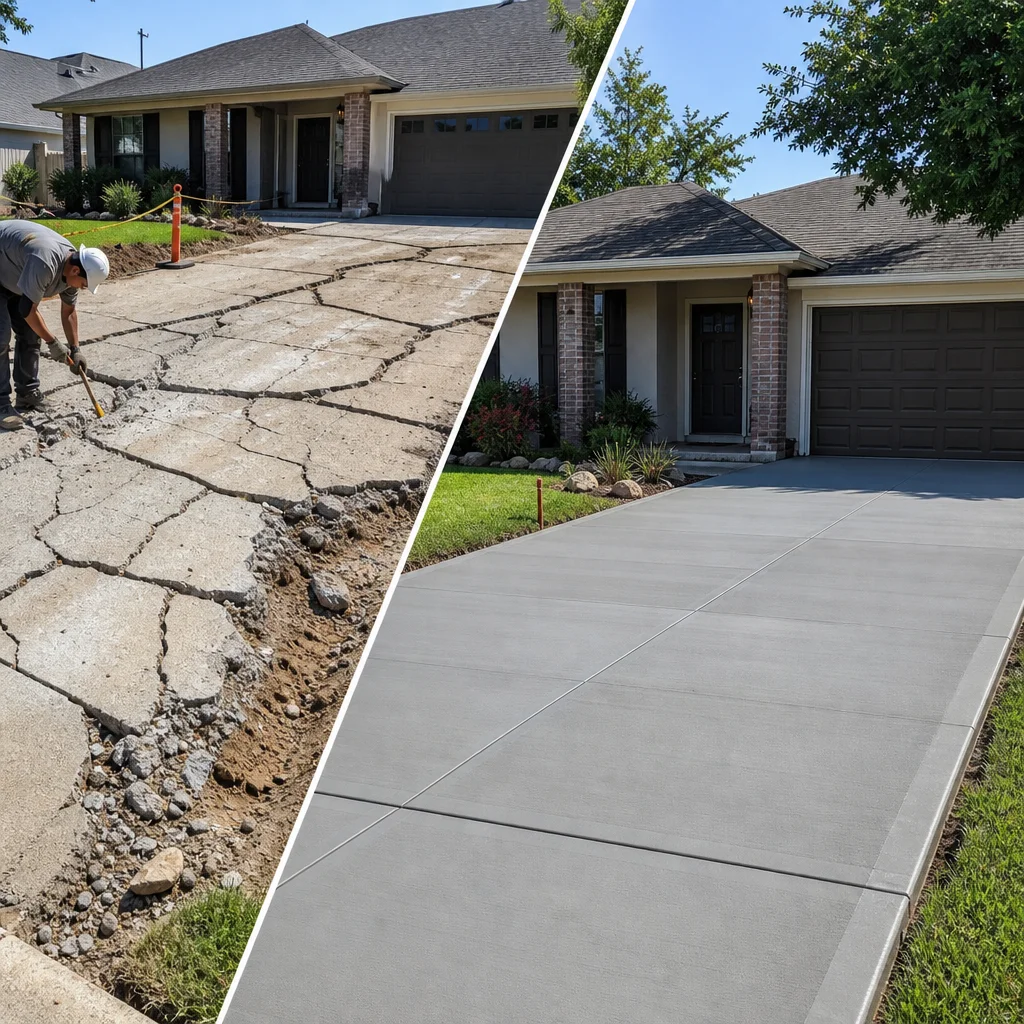
Signs that resurfacing is worth considering include widespread cracking, significant settling or unevenness, extensive spalling, or staining that won’t clean away. If more than 20% of your patio’s surface shows damage, targeted repairs won’t restore functionality and appearance as effectively as resurfacing.
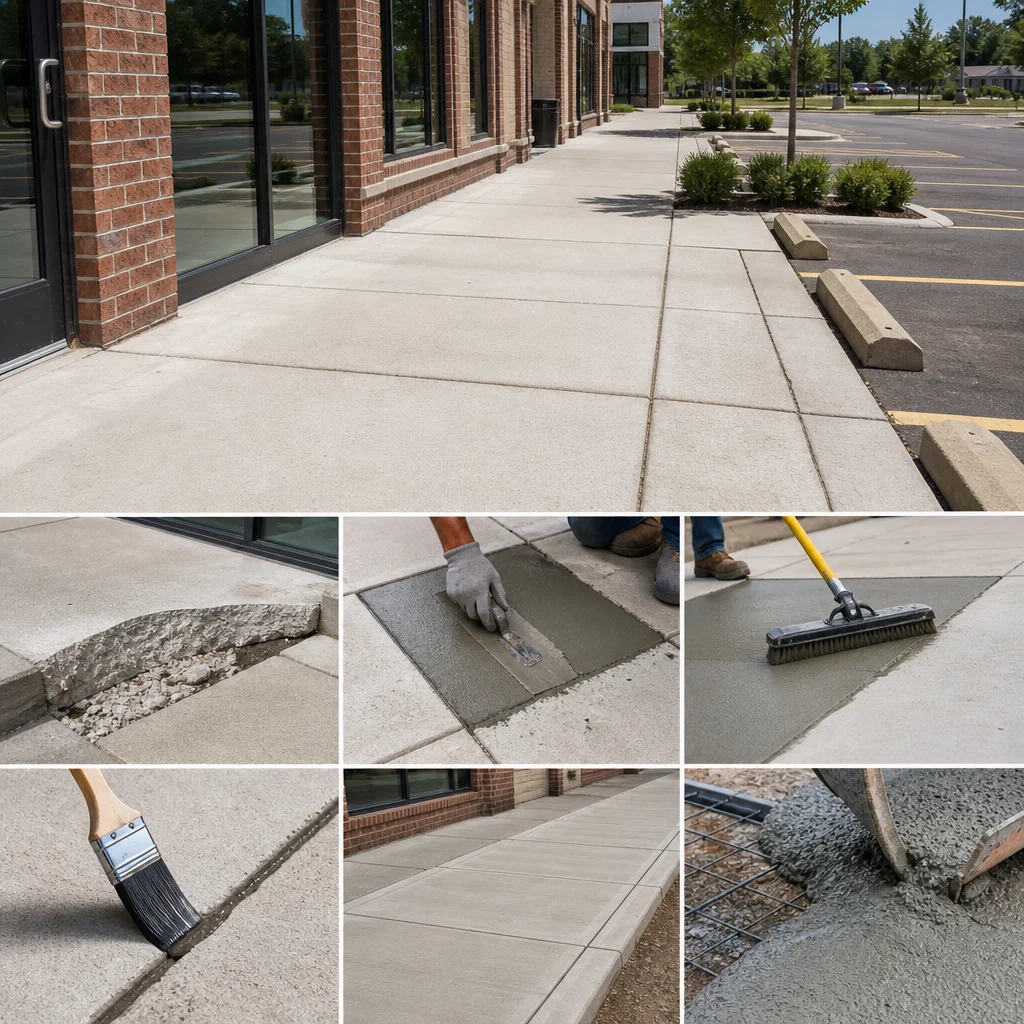
Resurfacing involves applying a new concrete layer over the existing patio. This is more cost-effective than removal and new installation, and it preserves the underlying structure if it’s still sound. We inspect your existing patio carefully to ensure the base is stable enough to support a resurface.
Modern resurfacing products are designed specifically for application over existing concrete. They bond properly and incorporate the same durable finishes available for new patios. You get a refreshed patio with extended life expectancy.
We don’t recommend resurfacing as a first solution. But when time and weather have compromised your existing finish, resurfacing delivers excellent value.
Our Process for Building Lasting Patios
Our concrete patio installation process combines proven construction methods with climate-specific decision-making.
We begin with a detailed site evaluation, assessing drainage, existing conditions, and your specific needs. Then we prepare the base properly, compacting soil and creating subsurface drainage if needed. The base is where many patios fail; we invest here.
Concrete is mixed to specifications proven to perform in our climate. We place and finish it with techniques that ensure even curing and proper density. Timing matters; we work during weather conditions that allow concrete to cure correctly.
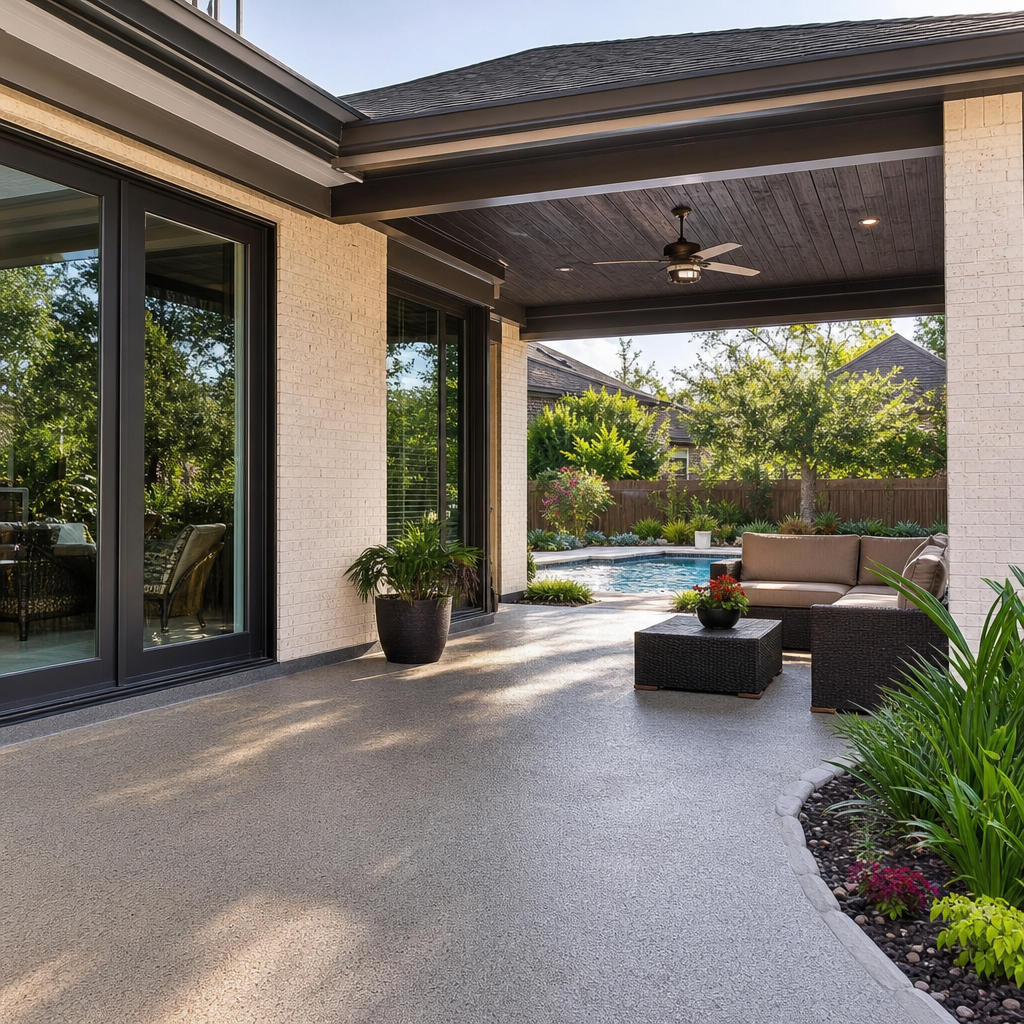
After concrete has fully cured, we apply your chosen protective finish. Whether that’s a penetrating sealer, acrylic coating, or decorative treatment, we use professional equipment and follow manufacturer specifications precisely.
We provide you with maintenance guidance tailored to your specific patio. This sets realistic expectations for upkeep and helps you make the most of your investment.
Lafayette Homeowners Trust Our Expertise
Since we started serving Lafayette, homeowners and business owners have relied on us for patio work that lasts. We understand local weather patterns, local soil conditions, and what finishes actually perform here.
Our licensed and insured team has seen what works and what fails. We’ve learned from experience that shortcuts cost customers money later. That’s why we build patios the right way, even when alternatives cost less upfront.
Every patio we build comes with our commitment to quality and our willingness to stand behind the work. When you choose us, you’re choosing a concrete patio contractor who knows Lafayette’s climate and builds for longevity.
Schedule Your Free Patio Evaluation Today
Whether you’re planning a new patio or considering options for an existing one, we’d like to help you understand your best choices for durability and value.
We offer free, no-obligation estimates for all patio projects. During your evaluation, we’ll assess your specific situation, discuss finish options suited to Lafayette’s climate, and provide honest guidance on maintenance expectations.
Contact us today to schedule your free patio evaluation. Let’s discuss how durable patio finishes can enhance your property for years to come.
Frequently Asked Questions (FAQ)
What patio finishes do we recommend for Lafayette’s humid climate?
We recommend sealed concrete with either acrylic or polyurethane coatings, as these provide excellent protection against moisture penetration and UV damage. Decorative finishes like stamped or colored concrete work well when paired with our high-quality seal coatings, which we apply to create a weather-resistant barrier. The key is matching the finish to your climate needs, which we assess during our free estimate.
How often do we need to reseal a patio in Lafayette?
We typically recommend resealing every 2-3 years for residential patios in our area, depending on foot traffic and weather exposure. The humid climate and temperature fluctuations here accelerate coating wear, so regular maintenance helps prevent moisture damage and extends your patio’s lifespan significantly. We can inspect your patio during a maintenance visit and let you know when resealing becomes necessary.
Can we fix a patio that’s already showing moisture damage?
Yes, we can address moisture issues through professional resurfacing or overlay applications, though prevention is always more cost-effective than repairs. If your patio shows cracking, scaling, or efflorescence from humidity damage, we assess the extent of the problem and recommend the best solution. We encourage homeowners to reach out early so we can prevent minor issues from becoming major structural concerns.