Why Lafayette Driveways Sink: Understanding Clay Soil Dynamics
Sunken driveways are one of the most common problems we address for Lafayette homeowners. Your driveway looked perfectly level when it was installed, but over months or years, sections begin to settle unevenly, creating trip hazards and water pooling issues. The culprit isn’t always poor installation. Lafayette’s unique clay soil composition creates conditions that naturally shift and compress beneath concrete slabs, causing the settling you’re experiencing.
The good news is that fixing sunken driveways doesn’t require ripping out your entire slab and starting over. Modern concrete leveling technology offers proven solutions that restore safety and function while protecting your investment.
Lafayette sits on expansive clay soil that behaves differently than the sandy or rocky soils found in other regions. Clay particles compress and shift more dramatically in response to moisture changes. During Louisiana’s wet seasons, clay absorbs water and expands. During dry spells, it shrinks and creates voids beneath your concrete slab.
When these voids develop under the driveway, concrete loses support and settles downward. This uneven settlement happens gradually, often affecting one section while leaving nearby areas untouched. The result is a driveway with visible depressions, lippage (where one slab edge sits higher than the adjacent section), and eventually, cracks that spread across the surface.
We’ve observed this pattern across hundreds of Lafayette properties. The clay soil dynamics that cause problems aren’t a reflection of installation quality, but rather the geological reality of our region. Understanding this helps homeowners recognize that settling is predictable and manageable through proper assessment and repair techniques.
Common Signs Your Driveway Needs Repair
Before sunken concrete becomes a serious liability, watch for these warning indicators:
- Water pooling in low spots after rain or when washing your car
- Uneven surface where you notice a dip when walking or driving
- Cracks radiating outward from a settled area
- A visible step or lip where one concrete section meets another
- Difficulty opening garage doors smoothly due to uneven approach
- Gravel or soil visible at the edges where concrete has pulled away
Small dips might seem minor, but they accelerate damage. Water settling in depressions penetrates concrete and freezes during winter, which causes spalling and widens cracks. Vehicle tires hitting lippage repeatedly creates stress points that spread damage quickly. Acting early prevents minor settling from becoming structural concerns.
Temporary Fixes vs. Permanent Solutions
Some homeowners attempt temporary measures before committing to proper repair. These approaches offer limited value:
Filling cracks with caulk or concrete patching compound stops water entry briefly, but doesn’t address the underlying voids causing settlement. When the concrete continues moving, patches fail and separation returns. Grinding down high spots creates a smoother surface but leaves the void beneath untouched, so settling continues in adjacent areas.
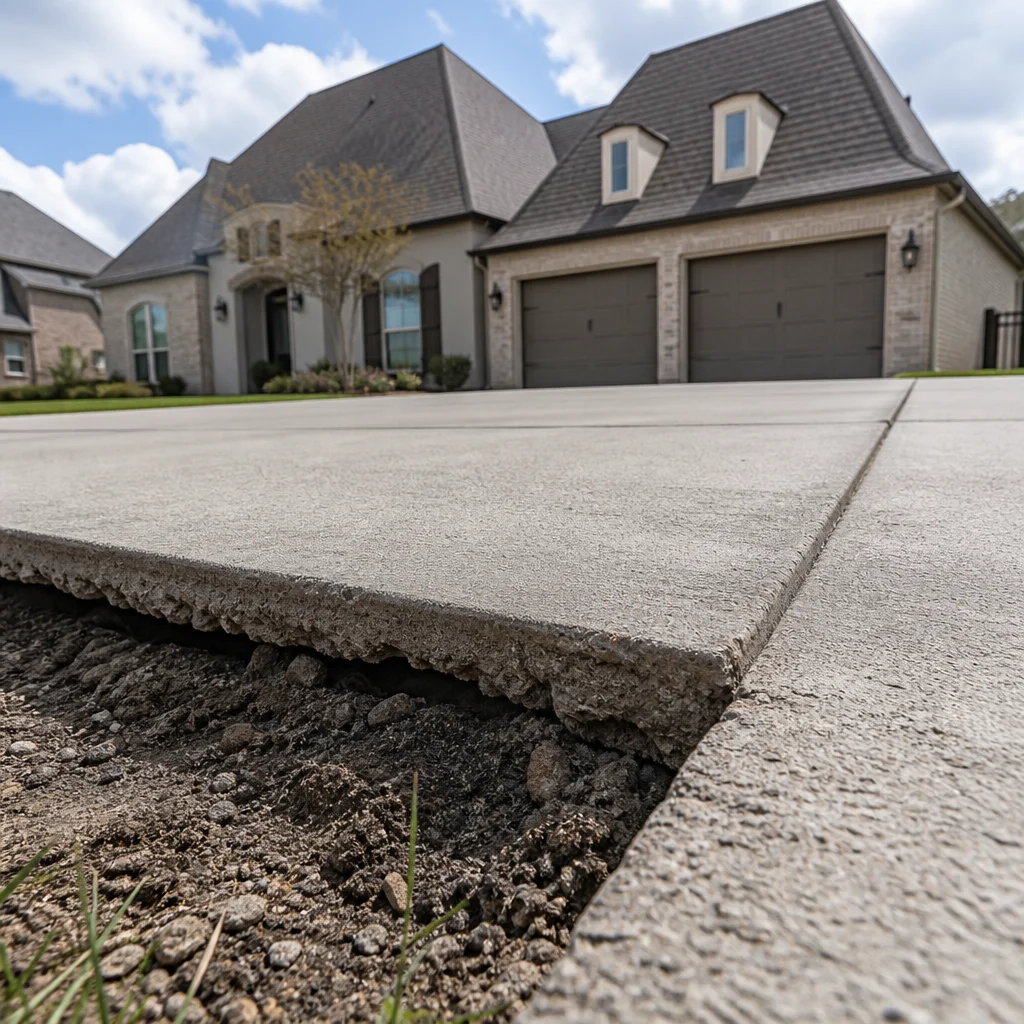
Sealcoating and overlays hide damage cosmetically but add weight to unstable sections, often worsening settlement. These solutions delay the inevitable and typically cost nearly as much as permanent fixes when you eventually need them.
Permanent repair means addressing the root cause: restoring support beneath the slab. This is where our concrete leveling approach delivers lasting results instead of temporary concealment.
Our Concrete Leveling Technology Explained
Concrete leveling, also called mudjacking or polyjacking, fills voids beneath settled concrete by injecting material through small holes drilled in the slab. This process restores support and raises the concrete back toward its original level.
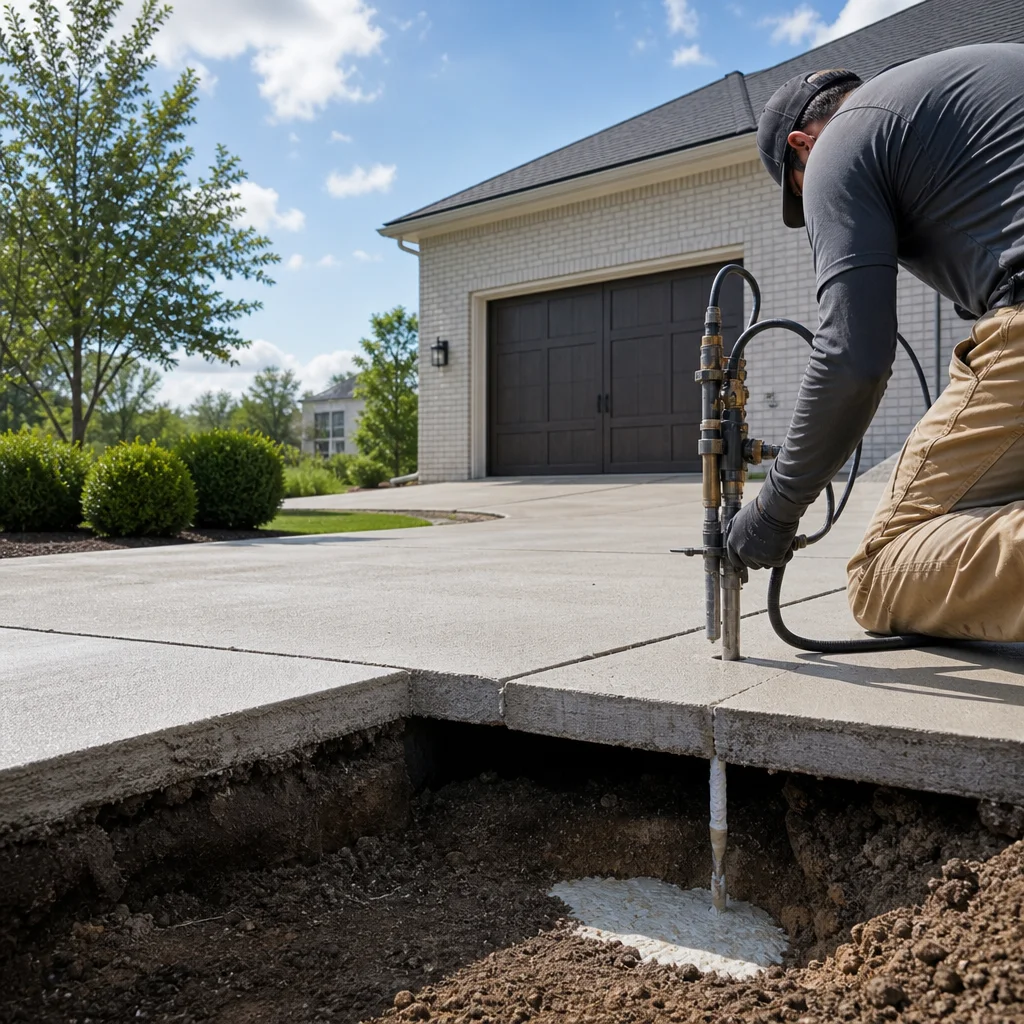
We use polyurethane foam injection, a modern advancement over traditional mud jacking. Polyurethane expands as it cures, filling every void and creating consistent support. Unlike mud, which can wash away with groundwater, polyurethane remains stable and doesn’t add excessive weight to the soil. The material cures within hours rather than days, so you can use your driveway the same day.
Our equipment precisely controls the pressure and volume of foam injected at each point. This prevents over-lifting, which can crack concrete or transfer settlement to adjacent areas. The holes we drill are small (less than a half-inch) and we seal them flush with the surface, leaving minimal cosmetic trace.
How We Assess Driveway Damage
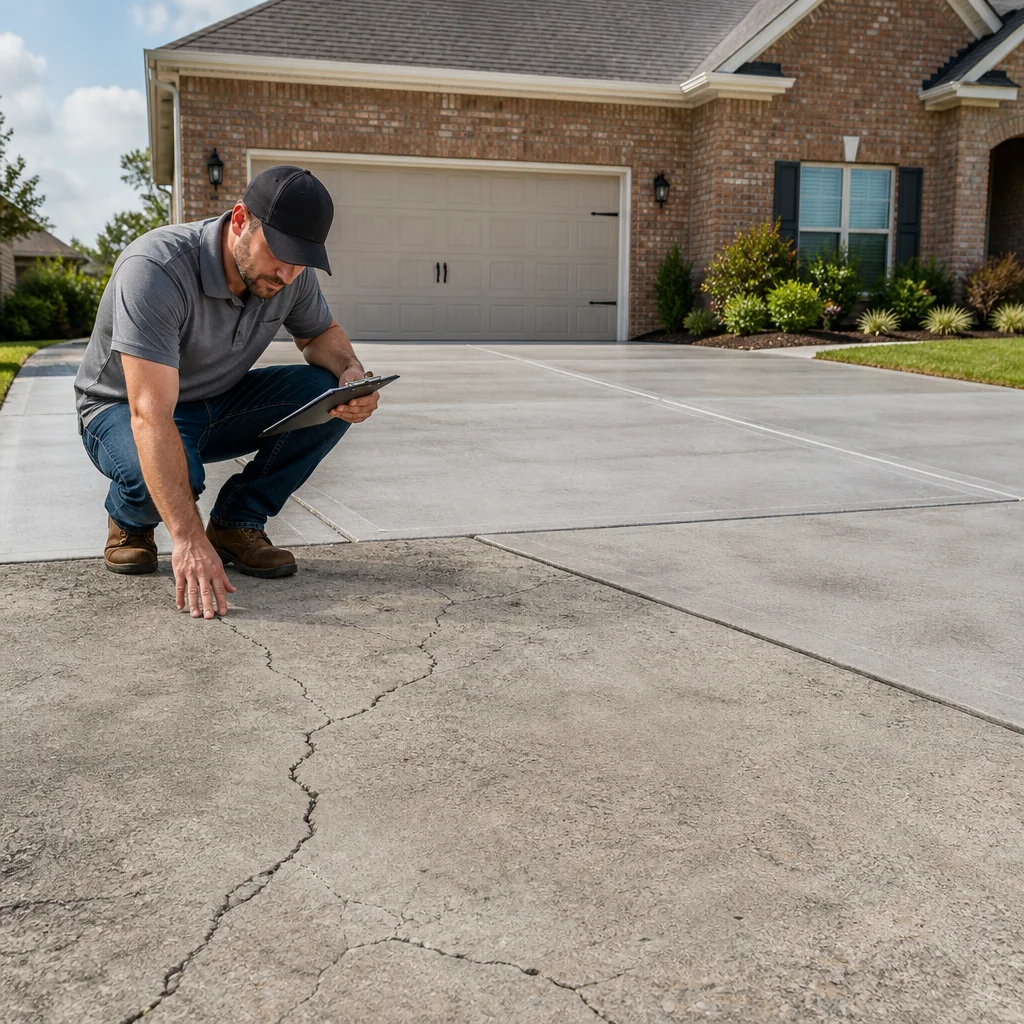
Proper repair begins with accurate damage assessment. When you schedule a free estimate with us, our team examines the entire driveway to identify all settled areas and understand what’s causing the problem.
We measure elevation changes across the surface using precision levels to quantify settling severity. We probe soil conditions to understand whether clay composition, poor drainage, or root intrusion is driving the problem. We inspect crack patterns and lippage to determine which sections need leveling and in what sequence.
This diagnostic process typically reveals that settling isn’t random. We often find that one particular area, like the end of the driveway nearest downspouts, shows more significant settlement. Understanding the cause helps us predict future movement and recommend preventive measures alongside repairs.
Our Proven Repair Process
When we move forward with leveling, we follow a systematic approach:
We drill small access points at strategic locations across settled sections, spacing them based on slab thickness and settlement severity. We inject polyurethane foam through each hole, monitoring lift in real-time. We continue injecting until the section returns to proper elevation and feels stable underfoot.
For driveways with multiple settled areas, we repair systematically from one end to the other, preventing transfer of pressure between sections. After foam cures, we seal the injection holes and inspect the entire surface to confirm proper drainage slope and level transitions.
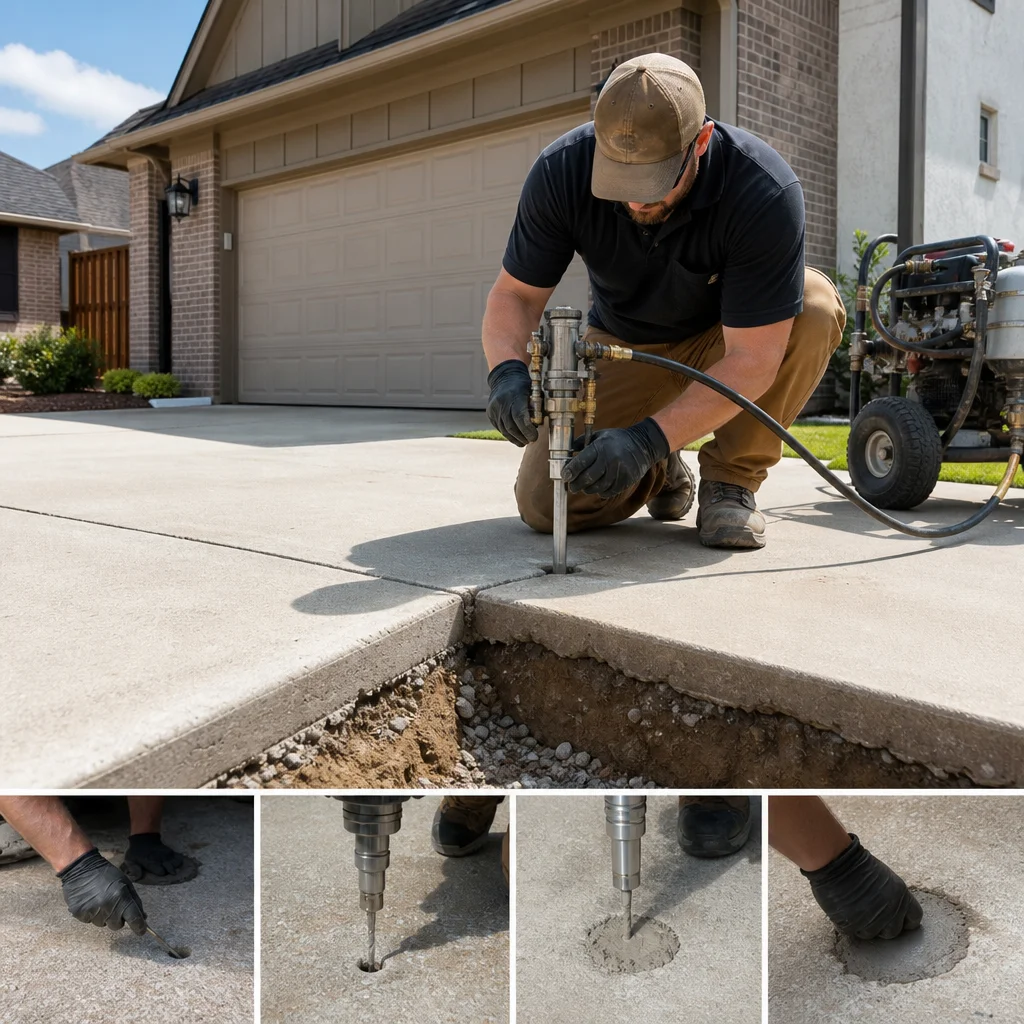
The entire process takes one day for most residential driveways. You can park on the driveway that evening and resume normal use immediately. No curing time, no access restrictions, no disruption to your routine.
Cost Comparison: DIY vs. Professional Services
Homeowners occasionally ask whether renting equipment and attempting leveling themselves might save money. Equipment rental costs alone run $300-500 per day, and you’ll need professional-grade foam ($100-200 per gallon) plus disposal fees for excess material.
More critically, improper injection pressure can crack concrete further or cause uncontrolled lifting that shifts settlement to new areas. Miscalculation of foam volume often results in under-lifting (leaving settled areas partially unstable) or over-lifting (creating new high spots). Incorrect drilling depth or angle can damage utility lines running beneath the driveway.
Professional leveling typically costs between $1,500-4,000 depending on driveway size and settlement severity. This investment includes expert assessment, precision equipment, and warranty coverage if issues arise. We include free estimates so you understand costs before committing, and our experience prevents costly mistakes.
Real Results from Lafayette Homeowners
We’ve restored hundreds of sunken driveways across Lafayette. One homeowner on Kaliste Saloom Road had a driveway that settled unevenly, creating a dangerous lip between her garage approach and main apron. After our leveling work, the transition became smooth and level again. She reported that her garage door now opens and closes smoothly, a problem she’d struggled with for two years.
A commercial property manager downtown saw water pooling across his parking lot after heavy rain, creating erosion issues and liability concerns. We leveled the affected sections, restored proper drainage slope, and eliminated the standing water. He’s since referred multiple other businesses to us for similar repairs.
These results aren’t anomalies. Concrete leveling addresses the actual problem, which is why the fix works reliably for property after property.
Preventing Future Driveway Settlement
Even after successful leveling, Lafayette’s clay soil will continue its natural cycle of expansion and contraction. We can’t eliminate this, but we can minimize its impact through prevention strategies:
Maintain proper drainage around the driveway perimeter. Downspouts should direct water at least six feet away from the concrete edge. Gutters that overflow or drain against the foundation accelerate clay saturation and settling. Keep gutters clean and functioning properly.
Address landscape irrigation wisely. Sprinkler systems that run against driveway perimeters saturate clay, promoting expansion and settlement. Position sprinklers away from concrete edges or adjust their spray patterns.
Monitor the area for new cracks or settling. Early detection allows us to address minor shifting before it becomes serious. Annual visual inspections catch small changes before they compound.
Why We’re Your Best Choice for Driveway Solutions
We’ve spent years becoming experts in Lafayette’s specific challenges. Our team understands clay soil behavior intimately and has developed repair techniques refined through hundreds of successful projects in this region. We’re licensed, insured, and equipped with modern polyurethane leveling technology that larger regional contractors often haven’t adopted.
Unlike general contractors who handle concrete as one service among many, we focus exclusively on concrete work. This specialization means every team member brings deep expertise to your project. We don’t subcontract leveling to third parties. Our crews handle assessment, injection, and finishing in-house, so we maintain quality control throughout.
We stand behind every repair with warranty coverage and provide honest assessments that sometimes recommend monitoring rather than immediate repair. This integrity builds the trust that makes us the preferred choice among Lafayette homeowners who’ve experienced our work.
Getting Your Free No-Obligation Estimate
Ready to understand what fixing your sunken driveway will actually cost? Contact us today for a free assessment. Our team will evaluate your driveway’s condition, identify settlement causes, and explain exactly what repair would involve and what it would cost.
There’s no obligation and no sales pressure. We want you to make an informed decision based on accurate information about your situation. Many homeowners find that once they understand their options, leveling becomes the obvious choice. Call us or visit our website to schedule your estimate today.
Frequently Asked Questions (FAQ)
Why do driveways sink so much in Lafayette?
Our area’s clay soil is the main culprit. Clay expands when wet and shrinks when it dries, causing the ground beneath your driveway to shift and settle unevenly. We’ve seen this pattern repeatedly in Lafayette, and it’s why many homeowners experience sunken driveways within 5-10 years of installation.
What’s the difference between leveling and replacing a sunken driveway?
We use concrete leveling to raise your existing driveway by injecting material beneath the surface, which is faster and more affordable than full replacement. Leveling works well for driveways with minor to moderate settling, while replacement is necessary only if your concrete has extensive cracking or structural damage we can’t safely repair.
How much does professional driveway repair cost compared to DIY attempts?
We offer free estimates so you can see exact pricing for your situation, but temporary DIY fixes typically fail within months and often cost more when you eventually need professional work. Our leveling solutions provide lasting results and protect your property from further damage, making professional service the smarter investment long-term.