Why Property Managers Choose Professional Parking Lot Solutions
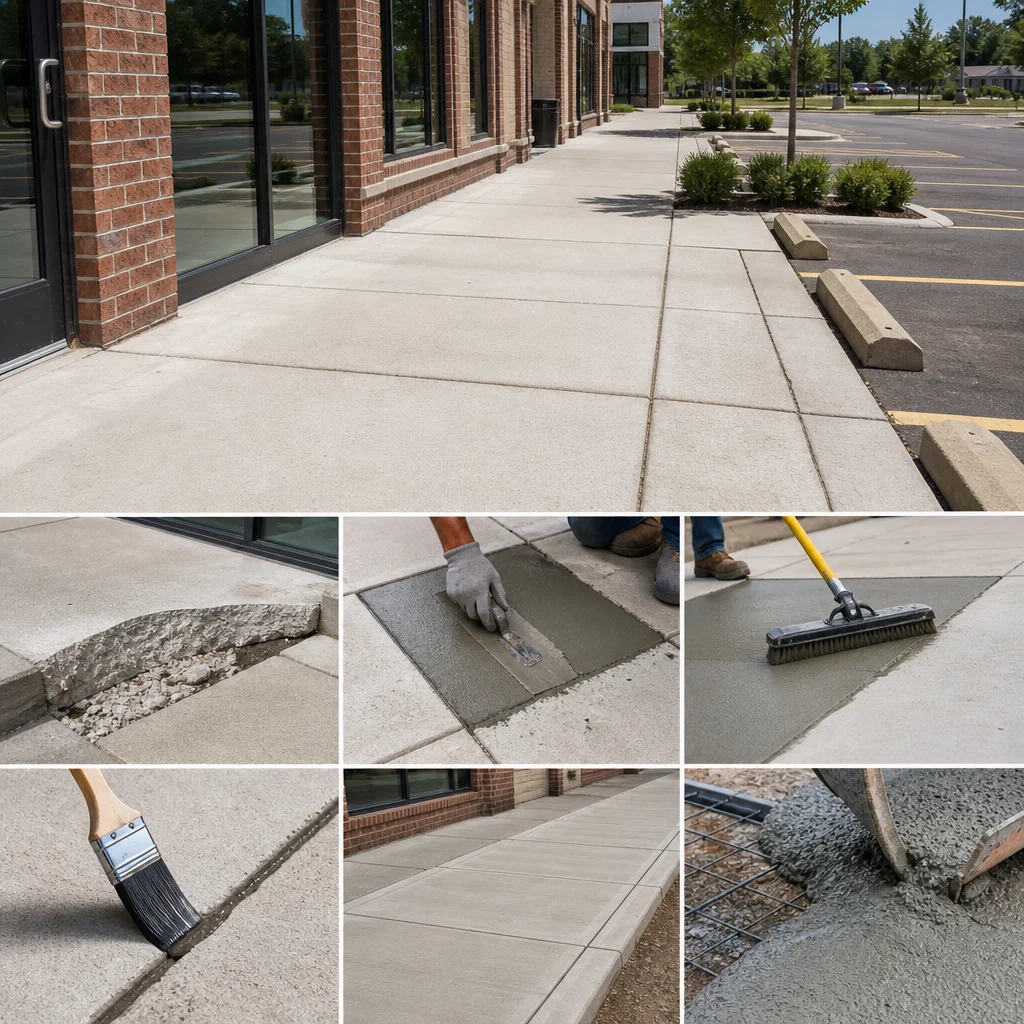
A parking lot is often the first impression customers have of your business. When that surface is cracked, uneven, or poorly maintained, it signals neglect—and worse, it creates liability risks. Property managers across Lafayette understand that investing in professional concrete parking lot solutions protects both their reputation and their bottom line.
Commercial properties face demands that standard asphalt or deteriorating concrete simply cannot meet. High traffic volumes, Louisiana’s intense weather cycles, and the need for ADA compliance all require solutions designed by experts who understand local conditions. We’ve worked with retail centers, office complexes, medical facilities, and multi-family properties, and the pattern is clear: businesses that prioritize proper concrete surfaces avoid costly emergency repairs, reduce insurance exposure, and improve tenant and customer satisfaction.
The difference between a DIY patch job and professional installation shows up in longevity. When we install or repair a commercial parking lot, we’re building something meant to last 30+ years with proper maintenance, not just patching problems until the next crisis.
Understanding ADA Parking Lot Requirements in Louisiana
The Americans with Disabilities Act sets specific standards for parking lot design, and Louisiana enforces these requirements strictly. Knowing what’s required isn’t optional; it’s a legal obligation that protects your business from lawsuits and penalties.
Here are the core ADA requirements for parking lots:
- Accessible parking spaces must be a minimum of 8 feet wide (with an additional 5-foot access aisle for van-accessible spaces)
- Parking spaces must be located on the shortest accessible route to the building entrance
- Slopes cannot exceed 1:48 (roughly 2%)
- Surfaces must be firm, stable, and slip-resistant
- Access aisles must connect to accessible routes leading to the building
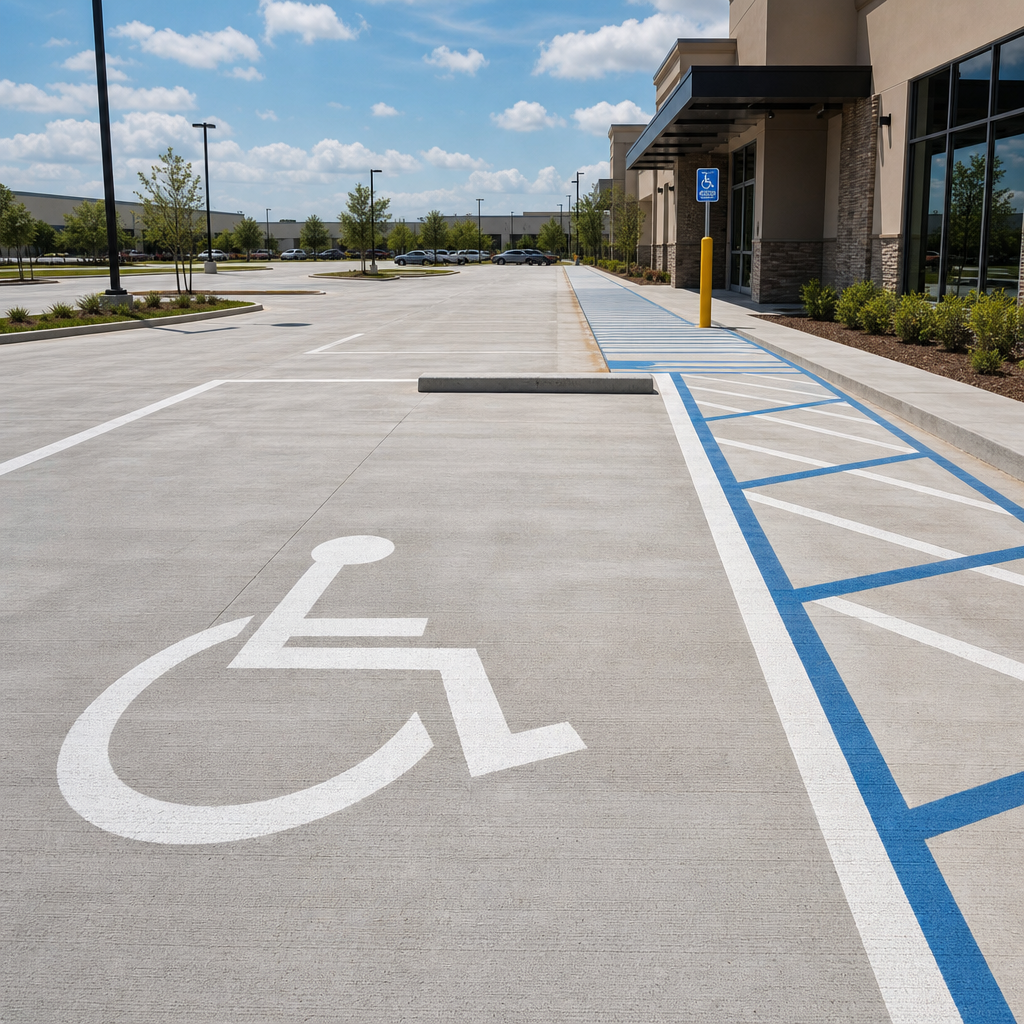
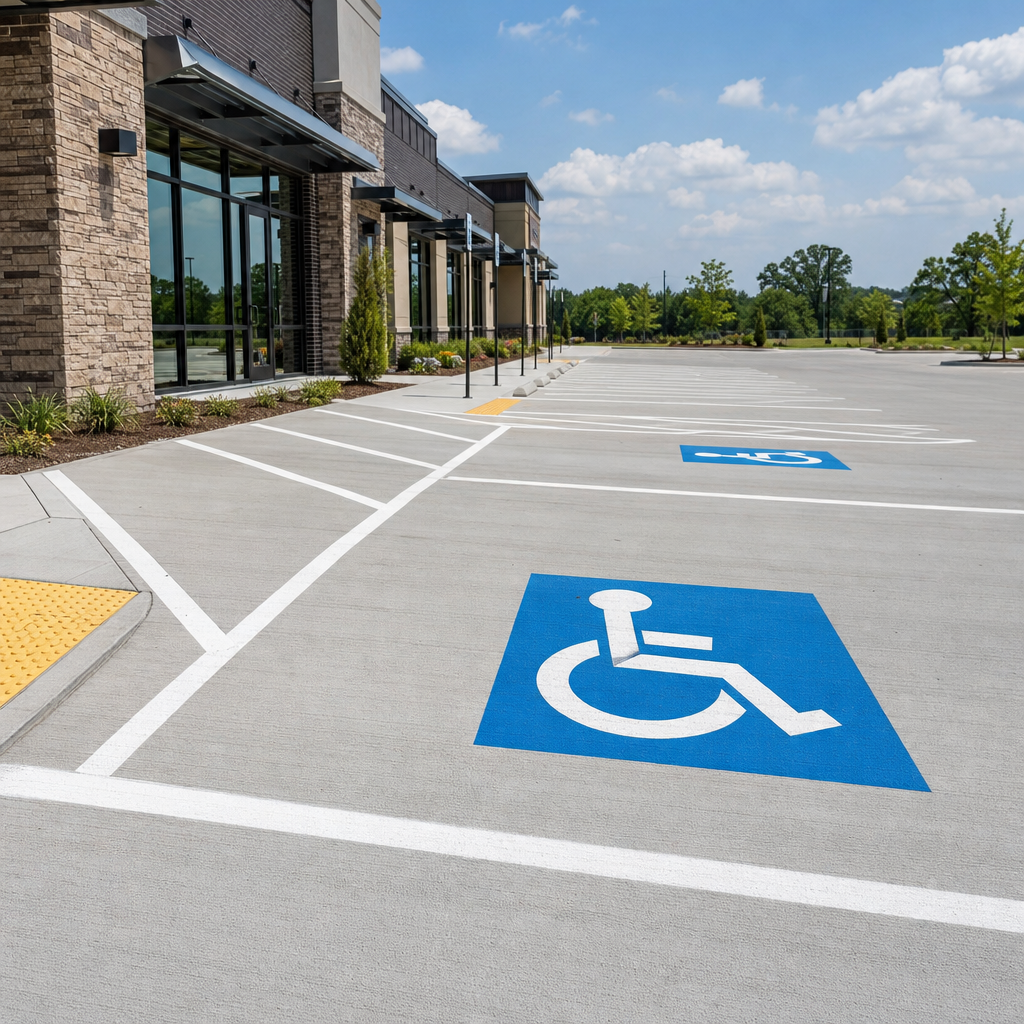
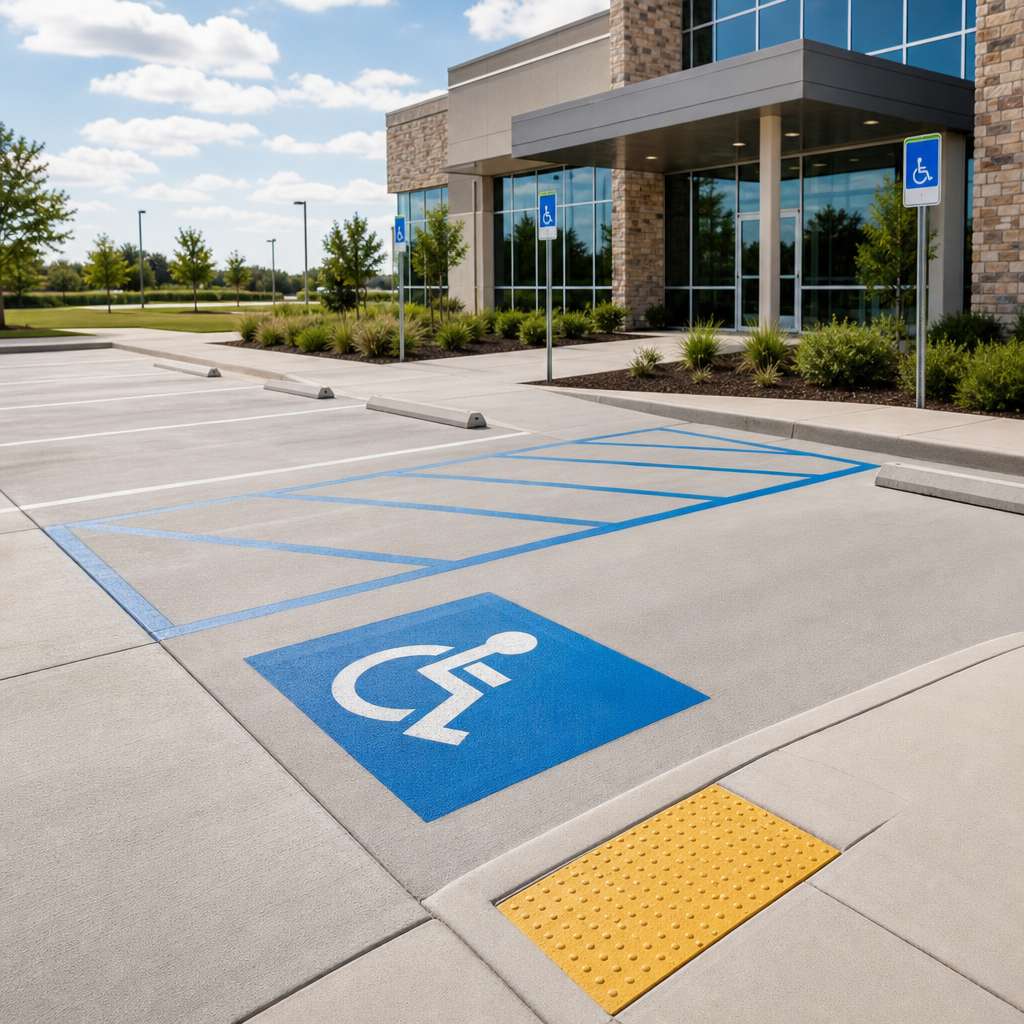
- Accessible spaces require proper signage and painted markings
Louisiana’s climate adds another layer of complexity. Heavy rainfall means drainage must be designed to prevent standing water, which is both an ADA violation and a safety hazard. Temperature swings and humidity can cause concrete to crack or settle unevenly if the foundation and installation aren’t executed correctly from the start.
Many property owners discover ADA non-compliance only when a complaint is filed or during a property inspection. That’s when the real costs hit—retrofitting an existing lot is far more expensive than getting it right initially.
The Problem with Aging or Non-Compliant Lots
Older parking lots rarely meet current ADA standards, and that’s a serious problem. Concrete that’s 15 or 20 years old may have settled, developed cracks, or developed lip edges where sections have shifted. These seemingly minor flaws violate ADA requirements and create trip hazards that can result in injuries and liability claims.
Non-compliance also becomes a rental or sale issue. Commercial tenants increasingly ask about ADA compliance during lease negotiations. Buyers of commercial property conduct due diligence on accessibility. An aging lot can kill a deal or reduce property value.
Beyond compliance, deteriorated concrete increases maintenance costs. Patching individual cracks temporarily solves the immediate problem, but water seeps underneath, expanding damage. In Louisiana’s humid climate, this cycle accelerates. What started as a small repair can balloon into foundation settling or extensive resurfacing needs within a few years.
We’ve seen businesses ignore these warning signs until a major failure forces an expensive emergency replacement. That’s when a parking lot that could have been professionally resurfaced for a planned expense becomes an urgent, budget-busting crisis.
How Our Concrete Parking Lot Services Meet Code Standards
We approach every commercial parking lot project with ADA compliance as a foundational requirement, not an afterthought. Our process includes site assessment, drainage evaluation, accessibility mapping, and installation that meets or exceeds Louisiana building codes.
When we design a concrete lot, we ensure:
- Proper slopes for drainage (within ADA limits)
- Reinforced concrete thickness scaled to your expected traffic and climate conditions
- Accessible routes that connect parking spaces to building entrances
- Load-bearing capacity for delivery trucks, emergency vehicles, or other heavy traffic
- Durable finishing that resists Louisiana’s moisture and temperature extremes
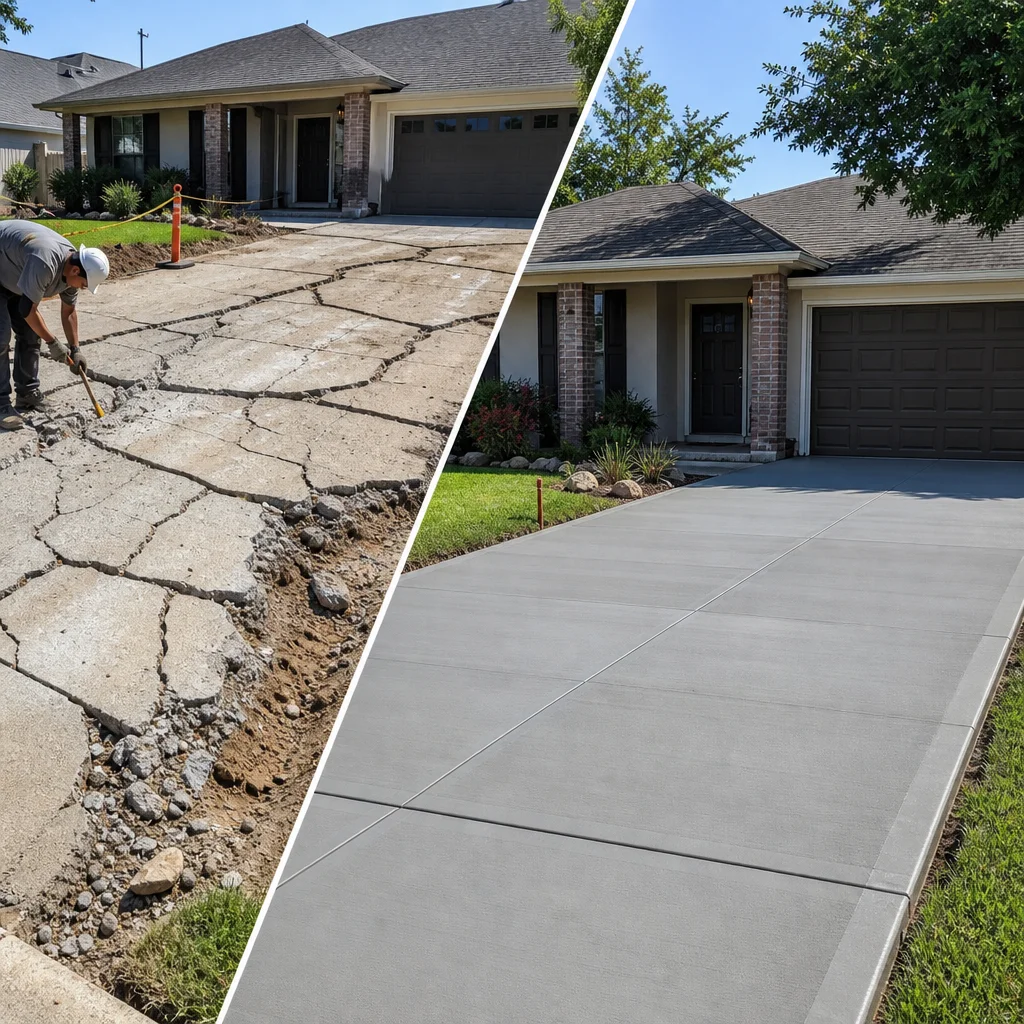
For properties transitioning from asphalt to concrete, we handle removal, site preparation, and new installation as a complete package. Concrete offers superior durability in our region’s conditions—it doesn’t soften in summer heat or crack from freeze-thaw cycles the way asphalt can.
We also manage the details that protect your investment: proper curing schedules, joint placement to control cracking, and concrete sealing to extend surface life. These aren’t visible to your customers, but they directly impact how long your lot will perform without major repair.
Durability and Cost Benefits of Commercial Concrete
The upfront cost of concrete installation is often higher than asphalt, but the long-term economics favor concrete significantly. A properly installed concrete parking lot lasts 30 to 40 years; asphalt typically needs resurfacing every 15 to 20 years.
Consider this scenario: A 10,000-square-foot parking lot in asphalt costs roughly $40,000 to install, but requires $6,000 to $8,000 in sealcoating and patching every 2-3 years. Over 30 years, that’s substantial accumulated expense. A concrete alternative costs more initially—perhaps $60,000 to $70,000—but with minimal maintenance (occasional sealing and crack repair), total cost of ownership is lower.
Concrete also offers operational benefits. Snow and ice removal is easier on concrete than asphalt. Stains are more visible and easier to clean, helping your lot look well-maintained. And from a liability perspective, concrete provides more consistent traction and fewer trip hazards when properly installed.
Louisiana businesses particularly benefit from concrete’s resistance to the state’s moisture and humidity. Concrete won’t bleed in summer heat or develop potholes from water infiltration the way asphalt can. That durability translates to fewer disruptions, less downtime, and more predictable budget cycles.
Installation Process and Minimal Downtime
We understand that your parking lot is a working asset. We coordinate installation to minimize business disruption, often scheduling work during off-peak hours or weekend closures when possible.
Our typical installation timeline follows this sequence:
- Site inspection and marking (1-2 days)
- Asphalt removal (if converting from existing surface)
- Subgrade preparation and compaction
- Base layer installation
- Concrete pouring and finishing
- Curing period (typically 7-14 days before full traffic is allowed)
For large lots, we can phase work—completing sections while keeping other areas accessible. Communication is constant so your team knows what to expect each day.
Weather matters in Louisiana. We monitor forecasts and adjust schedules to avoid rain during critical curing phases. Humidity and temperature influence curing time, and we account for these factors in our planning.
The result is a functional parking lot that opens to customers and vehicles on schedule, with no surprise extensions or cost overruns.
Ongoing Maintenance and Repair Options
A new concrete lot is a strong foundation, but it still needs care. We offer maintenance and repair services to keep your investment performing for decades.
Regular maintenance includes:
- Seal coating every 2-3 years to protect against moisture and UV damage
- Crack filling to prevent water infiltration
- Joint cleaning and resealing
- Pothole or spall repair (localized damage to the concrete surface)
- Line repainting and marking refresh
When damage does occur, we diagnose the cause. Is it a localized issue or a symptom of deeper settlement? We repair the actual problem, not just the symptom. Sometimes that means concrete leveling to correct settled sections; other times it’s straightforward patching.
Many of our commercial clients use a maintenance plan approach—a small annual investment that prevents expensive emergency repairs. That strategy keeps parking lots in compliance, extends asset life, and protects your property value.
Why Conkrete Workz Delivers Compliant Results
We’ve installed and repaired commercial parking lots across Lafayette and surrounding areas for years. We know Louisiana’s soil conditions, weather patterns, and the specific ADA and building code requirements that apply here.
Our team includes licensed, insured professionals trained in commercial concrete standards. We pull the appropriate permits, coordinate with local inspectors, and deliver documentation of compliance. Your property is protected, and you have the records to prove ADA compliance if ever questioned.
We also stand behind our work. Concrete parking lots from Conkrete Workz are built to last, and we’re available for follow-up maintenance and repairs whenever you need them. That’s a partnership, not just a transaction.
Getting Your Free Parking Lot Assessment
If your commercial parking lot is aging, showing signs of damage, or you’re unsure about ADA compliance, the next step is simple: contact us for a free no-obligation assessment. We’ll evaluate the current condition, identify any compliance gaps, discuss your options, and provide an estimate for the solution that fits your property and budget.
Reach out today at conkreteworkz.com or contact our team directly. We’ll schedule a time that works for you and deliver a clear, actionable plan for your parking lot’s future.
Frequently Asked Questions (FAQ)
What ADA parking lot requirements do we need to meet in Lafayette?
We design and install parking lots that comply with Louisiana’s ADA standards, which require proper space dimensions, accessible routes, and compliant signage. Our team ensures your lot meets the specific ratio of accessible spaces based on your total parking capacity and includes features like proper slope grades and textured surfaces. We handle all code requirements so you can operate without compliance concerns.
How long does a commercial parking lot installation take with minimal business disruption?
We typically complete most installations in phases that allow your business to maintain partial lot access during construction. Our process usually takes two to four weeks depending on lot size and existing surface conditions. We coordinate timing with you to minimize impact on your operations and customer access.
Why should we convert our asphalt lot to concrete instead of continuing repairs?
Concrete lasts significantly longer than asphalt with lower maintenance costs over its lifetime, often saving you money within 10-15 years despite higher upfront installation costs. Unlike asphalt that requires regular sealing and resurfacing, our concrete solutions need minimal maintenance and handle Louisiana’s weather and heavy traffic without deteriorating. We can evaluate your current lot condition and show you the long-term cost comparison during your free assessment.