How to Identify When Your Driveway Needs Attention
Your driveway takes a beating. Louisiana’s humid climate, occasional freeze-thaw cycles, and daily vehicle traffic create conditions that accelerate concrete deterioration. The question isn’t whether your driveway will eventually need work, but whether repair or replacement makes sense right now.
We’ve helped Lafayette homeowners navigate this decision for years. The answer depends on the extent of damage, your budget, and how much life your current surface has left. This guide walks you through identifying problems, weighing your options, and making an informed decision.
Start with a visual inspection. Walk your entire driveway and look for surface changes that signal trouble ahead.
Early warning signs include small cracks (hairline fractures less than 1/8 inch wide), minor scaling where the surface flakes slightly, or slight discoloration. These don’t require immediate action but indicate moisture is beginning to penetrate.
Check for more serious issues by noting:
- Cracks wider than 1/4 inch or cracks that branch in multiple directions
- Potholes or areas where chunks are missing
- Sunken or raised sections where the surface is uneven
- Standing water or poor drainage after rain
- Severe discoloration, staining, or white powder residue on the surface
You can also feel problems. Walk barefoot or with thin shoes and notice rough spots, spalling (flaking), or areas that feel loose or unstable underfoot. Drive slowly and listen for cracking sounds as your vehicle’s weight shifts across weak spots.
If you’re noticing any of these issues, Signs Your Driveway Needs Attention can help you determine urgency and next steps.
Common Driveway Problems We See in Lafayette
Lafayette’s environment creates specific challenges for concrete driveways.
Our subtropical climate means heat cycles that expand and contract concrete, freeze-thaw damage when winter temperatures dip, and constant moisture exposure accelerating deterioration. Salt from road treatments and de-icing compounds, combined with acidic soil conditions, chemically breaks down concrete surfaces over time.
We frequently encounter:
Alligator cracking – A pattern of interconnected cracks resembling alligator skin. This indicates structural failure beneath the surface and typically signals replacement is coming.
Settling and heaving – Uneven sections where the driveway has sunk or lifted. This happens when soil underneath shifts due to moisture changes or poor compaction during original installation.
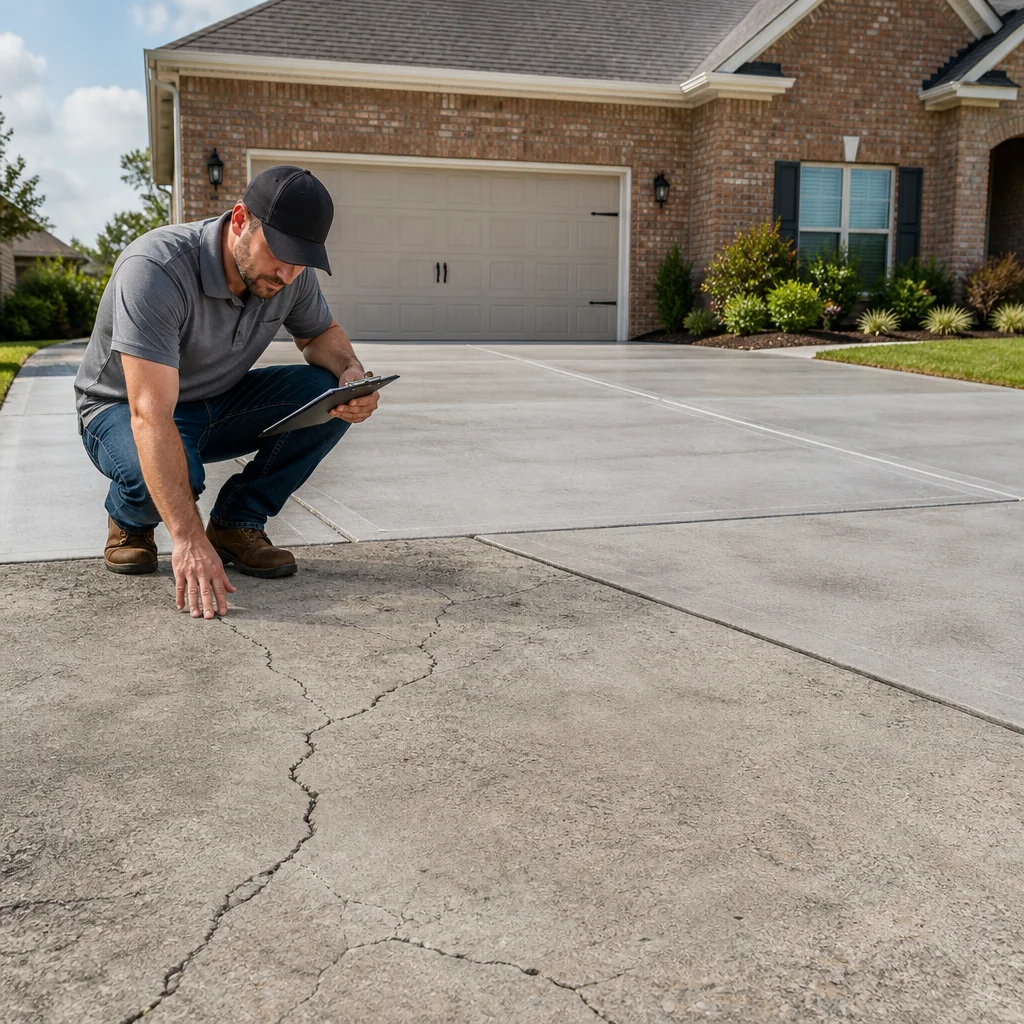
Spalling and scaling – Surface deterioration where chunks flake off or the top layer separates. Water penetration combined with freeze-thaw cycles causes this damage.
Edge deterioration – The sides and borders crumble first because they’re exposed to more water and have less support. This progresses inward if not addressed.
Drainage problems – Poor slope or settled sections that trap water accelerate all other damage types.
Repair Solutions That Extend Your Driveway’s Life
For early-stage damage, repair strategies can add years to your driveway’s lifespan.
Crack filling and sealing works well for linear cracks under 1/4 inch wide. We clean the crack thoroughly, remove any debris, and fill it with specialized concrete sealant or epoxy. This prevents water infiltration that causes expansion and further cracking. The result typically extends your driveway’s life by 3-5 years when cracks are caught early.
Concrete patching addresses potholes and spalling. We remove damaged concrete, clean the area, and fill it with concrete patching compound matched to your existing surface. Patches work best when damage is limited to small areas under 10 percent of total driveway surface.
Concrete leveling and mudjacking solves settling problems without full replacement. We pump a limestone-based slurry beneath sunken sections, lifting them back to proper level. This is significantly less expensive than replacement and restores drainage and safety. The process is complete the same day with minimal disruption.
Resurfacing applies a new layer of concrete or polyurethane coating over your existing driveway when surface damage is cosmetic but structure remains sound. This refreshes appearance and adds protection against further deterioration.
These solutions work when damage is localized and the underlying base remains stable. We recommend repair when your driveway is less than 20 years old and damaged areas comprise less than 25 percent of total surface.
When Replacement Makes Financial Sense
Replacement becomes the practical choice when damage is extensive or repair costs approach 50 percent of replacement pricing.
Replace your driveway if you’re seeing:
- Alligator cracking covering significant areas
- Multiple large sunken or heaved sections
- Extensive spalling affecting 30+ percent of the surface
- Structural failure evidenced by crumbling base material
- Driveway age exceeding 25-30 years
- Repeated repair needs on the same problem areas
Replacement also makes sense when you’re planning other exterior improvements (new garage, landscape redesign, or major landscaping). Removing and replacing concrete offers an opportunity to improve drainage, correct grading issues, and upgrade to reinforced concrete that resists future damage.
New concrete driveways last 25-30 years with proper maintenance. You’re investing in another generation of wear-free service rather than spending money on temporary fixes that delay the inevitable.
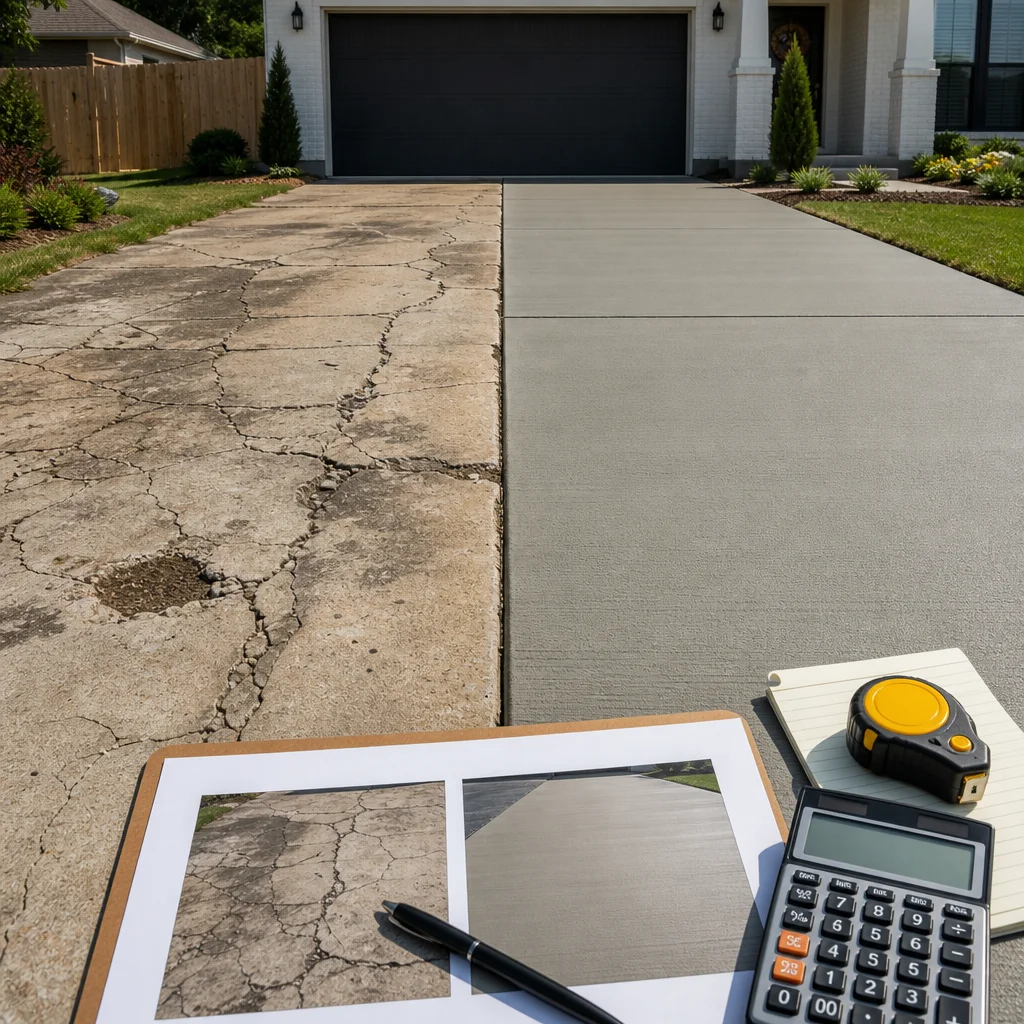
The Real Cost Comparison Between Repair and Replacement
Concrete driveway repair typically costs $300 to $1,500 depending on damage severity and repair method. Crack filling runs $200-$600. Patching small potholes costs $400-$800. Mudjacking sunken sections averages $800-$1,500 per area.
A complete concrete driveway replacement averages $8-$18 per square foot, with typical residential driveways (500-700 square feet) ranging $4,000-$12,600. This assumes standard 4-inch concrete with reinforcement. Larger commercial spaces or specialty finishes cost more.
The break-even point comes when cumulative repair costs reach 40-50 percent of replacement cost. If repairs keep recurring, replacement is more economical long-term because it eliminates the underlying problem rather than treating symptoms.
Our Complete Cost Guide for Lafayette provides detailed pricing for different scenarios in your area.
Why Professional Assessment Matters
The difference between a $500 repair and a $10,000 replacement hinges on accurate diagnosis. Surface cracks that look serious might indicate only cosmetic damage, while subtle settling could signal dangerous structural failure underneath.
We assess structural integrity by examining underlying support, checking for voids or erosion beneath the surface, testing concrete strength where possible, and evaluating whether damage is still-active (ongoing) or static (stopped). This context changes everything.
A driveway with visible alligator cracking might still be repairable if the base is solid and cracking stopped years ago. Alternatively, a driveway showing only minor surface issues might be close to failure if the foundation is compromised and damage is actively spreading.
Professional assessment also identifies secondary problems. Poor drainage might be driving concrete deterioration, meaning repair without fixing drainage will fail quickly. Improper original installation might cause recurring settling in specific areas. Identifying root causes prevents throwing money at symptoms.
Our Repair and Replacement Process
When you contact us for concrete driveway work, we begin with a comprehensive site inspection. We document existing conditions, identify damage patterns, and determine whether repair or replacement is appropriate for your situation.
For repairs, we develop a targeted approach addressing each problem type. We prepare the surface properly, apply materials suitable for Lafayette’s climate, and use techniques that maximize longevity. Quality repair work is more than filling cracks; it’s addressing why the cracks formed.
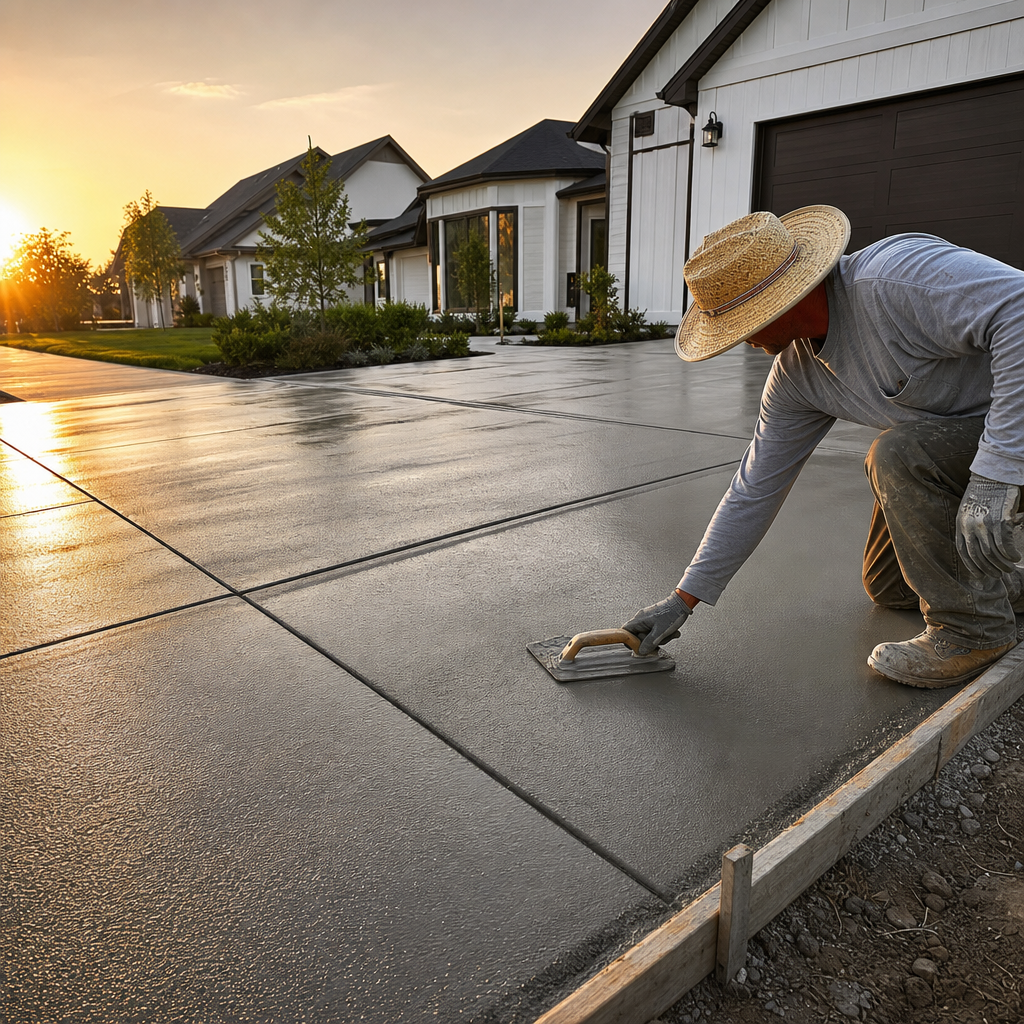
For replacement, we remove the old driveway, evaluate and improve the base if needed, re-grade for proper drainage, and pour new concrete with appropriate reinforcement. We ensure proper slope for water runoff and finish to your specifications.
Throughout the process, we keep you informed and answer questions about what we’re doing and why. Our licensed, insured team works on schedule and cleans up thoroughly when finished.
Getting Your Free No-Obligation Estimate
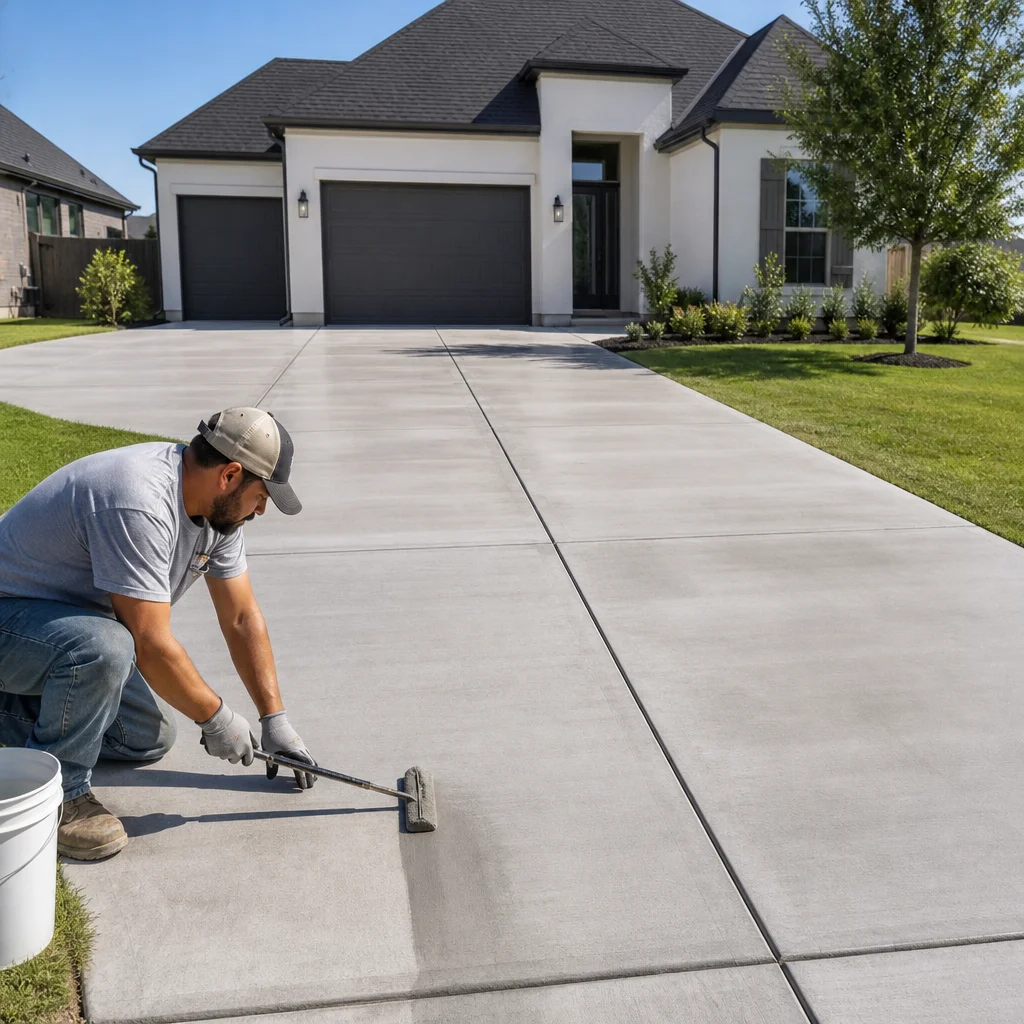
We offer free estimates for both repair and replacement work. There’s no pressure and no obligation. We’ll assess your driveway, explain what you’re seeing and why, outline your options with realistic pricing, and answer all your questions.
Call us or visit our website to schedule. We’ll provide an estimate within 24-48 hours in most cases. Many property owners find this conversation clarifies their options and helps them make confident decisions.
Protecting Your Investment After Work is Complete
After repair or replacement, proper maintenance maximizes your driveway’s lifespan.
Seal your concrete every 2-3 years. Sealing creates a protective barrier against moisture, chemicals, and UV damage that extends surface life by years. It’s inexpensive insurance against the deterioration we see starting around year 5-7 without it.
Control drainage by clearing debris from gutters and downspouts so water doesn’t pool on your driveway. Grade should slope away from structures, sending water toward storm drains or landscaped areas.
Remove salt promptly in winter and use calcium chloride rather than rock salt if de-icing is necessary. Fill new cracks immediately. Address small repairs before they become large ones.
Limit heavy loads on new concrete for the first 30 days while it cures fully. Avoid sharp-edged tire chains and minimize abrasive cleaning methods.
Your driveway represents a significant investment. Proper maintenance, timely repairs, and informed decisions about replacement protect that investment and ensure your concrete serves reliably for decades.
Frequently Asked Questions (FAQ)
When should we repair our driveway instead of replacing it?
We recommend repair when your driveway has isolated cracks, minor settling, or surface spalling that hasn’t affected the structural integrity. If damage covers less than 30% of the surface and the base remains stable, targeted repairs can extend your driveway’s life by several more years at a fraction of replacement costs. Our team can assess whether repair is viable during your free estimate.
How much does concrete driveway repair typically cost compared to replacement?
Repair costs generally range from $300 to $2,000 depending on the damage type and extent, while replacement typically runs $3,000 to $10,000 for a standard residential driveway. However, if your driveway requires extensive repairs across multiple areas, replacement often becomes the more economical choice long-term. We provide detailed cost comparisons so you can make the best decision for your property.
What maintenance steps can we take after our driveway repair or replacement?
We recommend sealing your concrete every two to three years to protect against moisture and UV damage, cleaning debris promptly, and filling small cracks before they worsen. Proper drainage around your driveway prevents water from pooling and causing structural problems. Following these steps significantly extends your driveway’s lifespan and protects your investment.