Signs Your Driveway Needs Professional Attention
Your driveway takes a beating. Every freeze-thaw cycle in Lafayette, heavy vehicle traffic, and Louisiana’s moisture-heavy climate chip away at concrete year after year. Eventually, you face a decision: repair what’s damaged or tear it out and start fresh?
We help property owners make this choice every week. The answer depends on how far the damage has progressed and what makes financial sense for your situation. This guide walks you through the signs, costs, and decision points so you can move forward with confidence.
Not every crack demands immediate action, but certain warning signs suggest your driveway is deteriorating faster than normal wear allows.
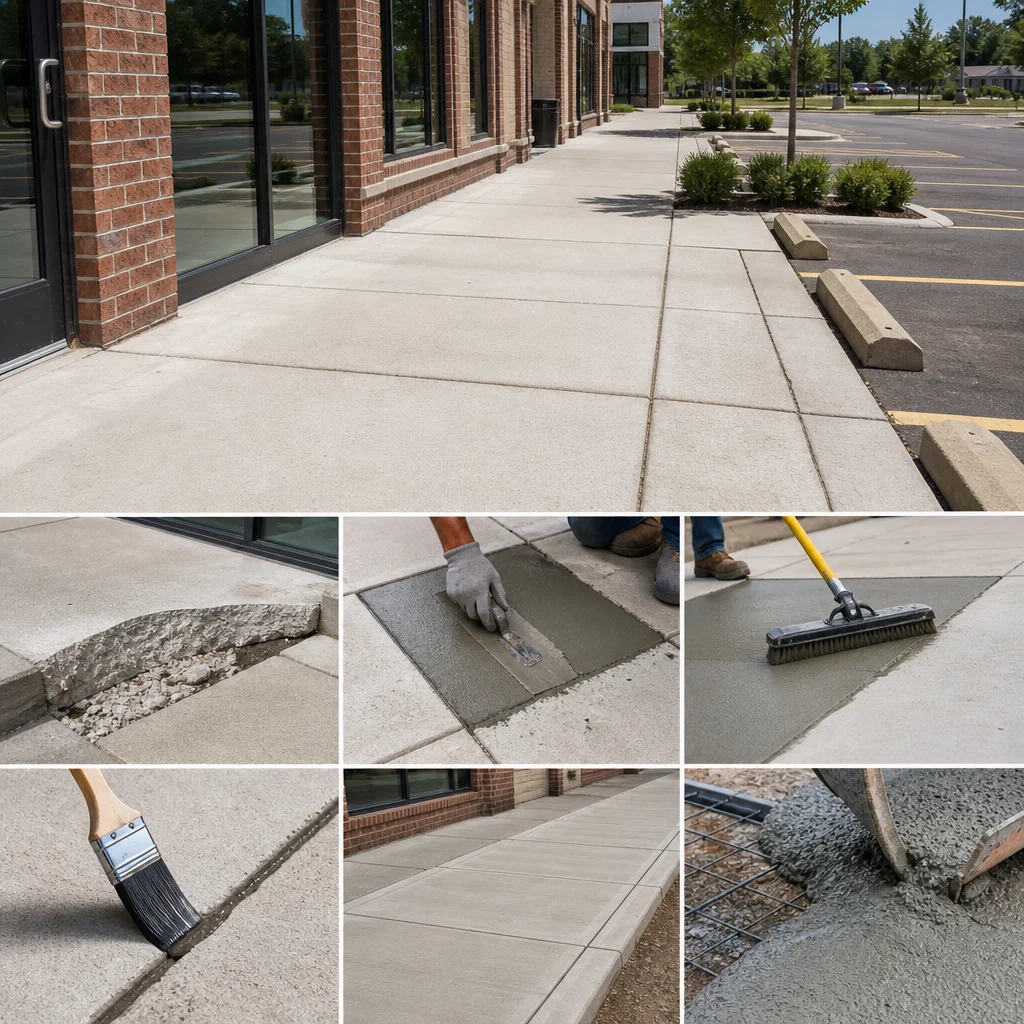
Watch for spalling, where the concrete surface flakes or peels away in chunks. You’ll see rough, uneven patches where the top layer is separating. Potholes that grow wider or deeper each season indicate the damage is accelerating. Sinking or heaving sections mean the foundation underneath has shifted, which won’t improve on its own.
Wide cracks (wider than 1/4 inch) that branch in multiple directions suggest structural movement rather than simple surface settling. If water pools in certain spots instead of draining properly, the driveway has likely settled unevenly. Discoloration, staining, or a white chalky powder on the surface can indicate moisture penetration and weakening of the concrete itself.
A few hairline cracks running in one or two directions? That’s typical and usually treatable with professional repair. But when you spot multiple warning signs together, it’s time to get a professional assessment rather than guessing whether repair will hold up.
Understanding the Cost Difference Between Repair and Replacement
Repair costs typically range from $300 to $1,500 depending on the extent of damage. Filling cracks, patching potholes, and addressing surface issues fall into this category. These solutions work when the underlying foundation is sound and damage is localized.
Full driveway replacement runs $2,500 to $8,000 or more for a standard residential driveway, depending on size, site conditions, and material choice. That’s a significant investment, but it includes removing the old concrete, preparing the base, pouring fresh material, and finishing it properly.
The tricky part? A driveway that seems like a repair candidate might actually cost nearly as much as replacement if damage is more widespread than it first appears. A repair that extends foundation work or requires removing large sections can blur the financial line quickly.
When we evaluate a driveway, we look at the cost-per-use calculation. Will a $1,200 repair extend the driveway’s life by 5 years? Then you’re spending $240 annually. Will that same driveway need replacement anyway within two years? Then a fresh installation for a few thousand more makes better long-term sense.
How We Assess Your Driveway’s Condition
Our process starts with a thorough visual inspection. We measure crack widths, identify the pattern of breaks, check for settlement or heaving, and assess how deep deterioration extends.
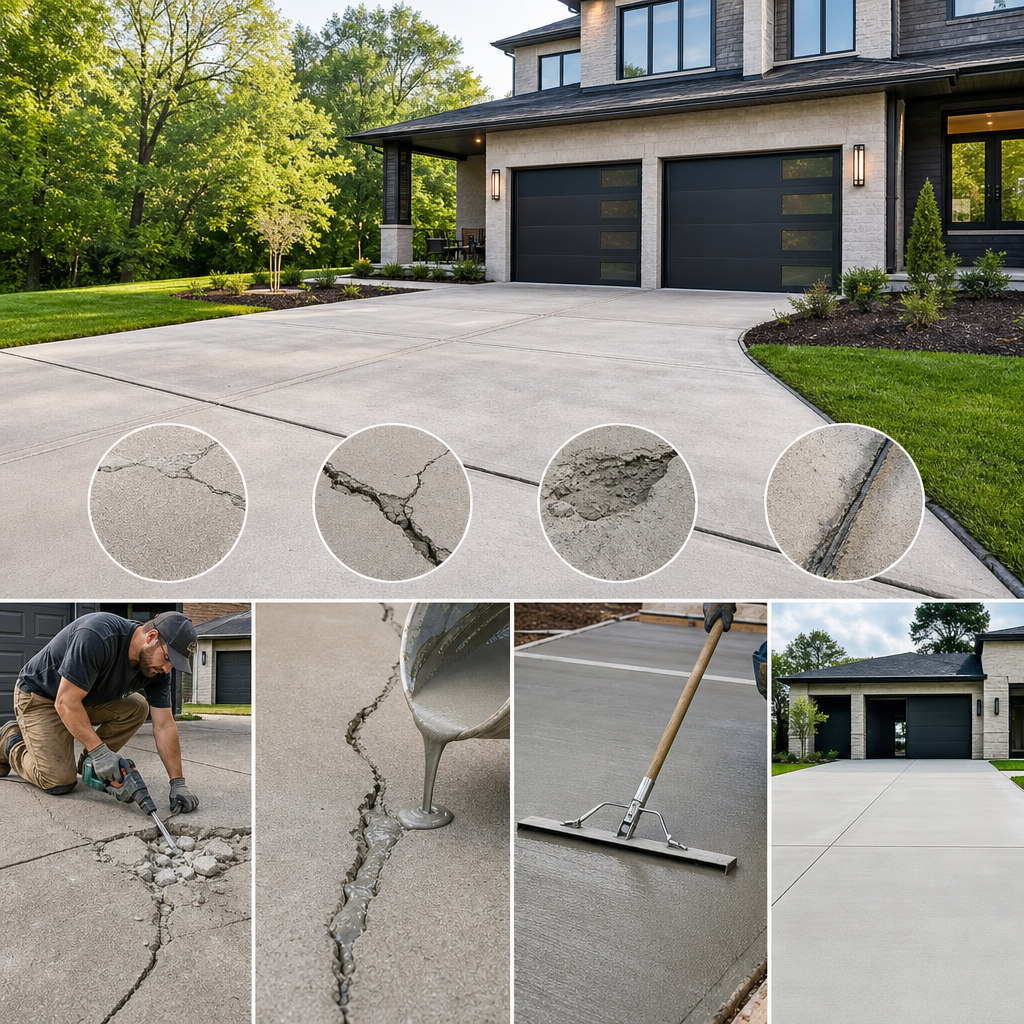
We look at the edges and corners, where moisture penetration and freeze-thaw damage often begins. We examine the transition points where the driveway meets the foundation or garage floor, since those areas experience extra stress. We probe suspected soft spots with basic tools to determine whether the concrete is still solid beneath the surface or if internal deterioration is occurring.
Weather history matters. Lafayette’s climate means freeze-thaw cycles combined with high humidity create particular stress. A driveway that’s 15 years old in our region might be at a different lifecycle stage than one in a drier climate.
We also ask about your maintenance history. Regular sealing, quick crack repairs, and proper drainage significantly extend concrete life. A driveway that’s been neglected will show accelerated failure compared to one that received basic care.
This assessment forms the basis of our honest recommendation. We’re not trying to push you toward the expensive option. We’re trying to tell you which choice will actually solve your problem without wasting money.
Repairing Cracks, Potholes, and Surface Damage
Concrete driveway repair addresses specific problem areas without disturbing the rest of the driveway. For narrow cracks, we clean out debris, apply crack filler or sealant, and finish the surface. For wider cracks that go deep, we may route and fill them with polyurethane or hydraulic cement for better adhesion.
Potholes require removal of the damaged concrete, cleanup of the hole, application of a bonding agent, and patching with concrete or asphalt repair compound. The key is removing all loose material and creating a clean surface for the patch to grip.
Surface spalling gets addressed by removing the damaged layer and applying a resurfacer or overlay that bonds to the remaining solid concrete. This approach works well when the damage is limited to the top 1-2 inches of a structurally sound driveway.
The success of these repairs depends entirely on catching the damage before it affects the foundation. If water has penetrated through cracks and damaged the base, patches won’t hold for long. That’s why honest assessment matters more than hoping a quick fix will suffice.
When Replacement Becomes the Better Investment
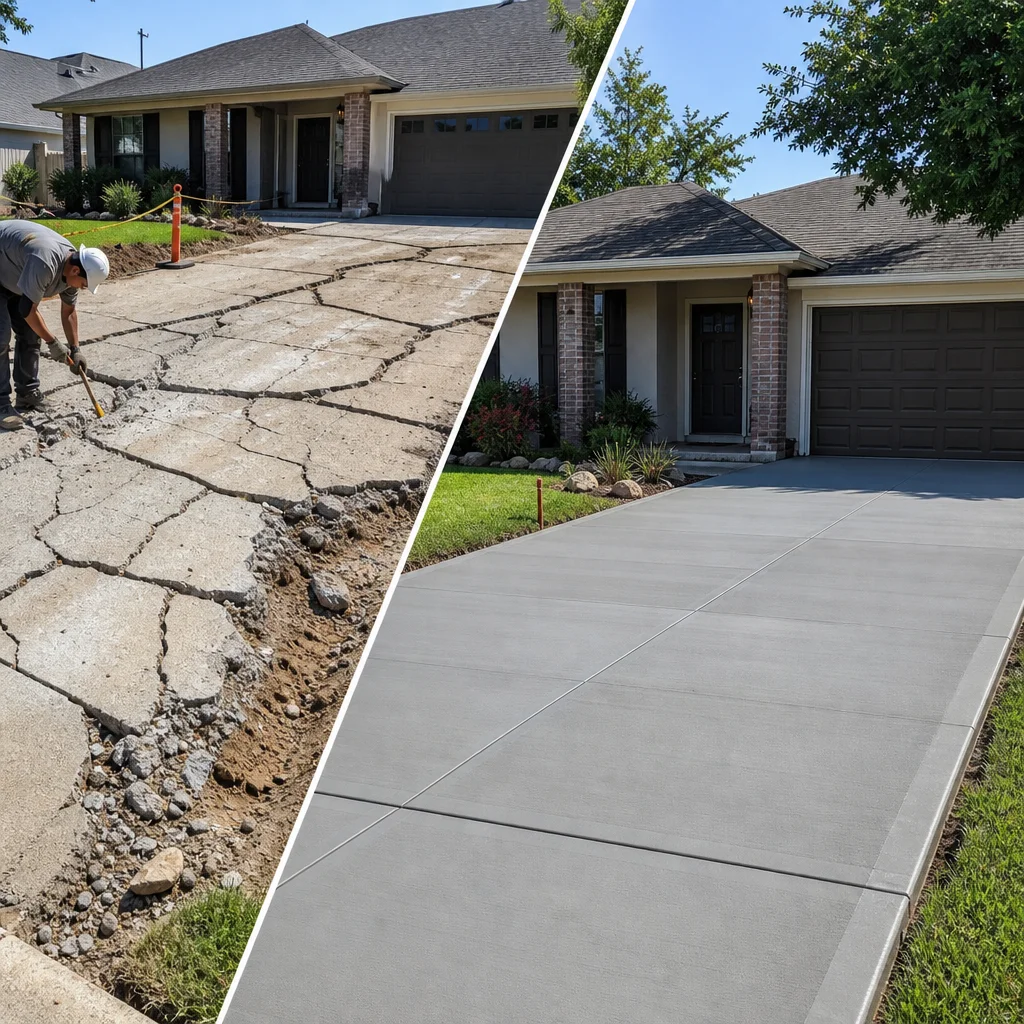
Replacement makes sense when damage is widespread across the driveway, when structural settlement is occurring, or when the concrete is nearing the end of its serviceable life anyway.
If more than 30 percent of the driveway surface shows significant damage, repair costs start approaching replacement costs. If the foundation has shifted dramatically (evident from heaving, sinking, or extensive cracking), repairing the surface won’t address the root problem. If the driveway is already 20-25 years old and showing multiple failure types, replacement provides a known timeline and warranty rather than hoping repairs buy more years.
Functional issues also matter. If your driveway no longer drains properly and is becoming a slip hazard or flooding concern, a new installation can incorporate proper grading and drainage improvements that repairs cannot.
Consider your long-term plans too. If you’re planning to stay in the home for another 15 years, replacement might make sense despite higher upfront cost. If you might relocate in five years, extending the current driveway’s life with repairs may be wiser.

The Long-Term Value of Choosing the Right Solution
The cheapest option today isn’t always the best value over time. A $1,000 repair that extends your driveway’s life by three years costs $333 annually. A $5,000 replacement that provides 20 years of service costs $250 annually while eliminating the hassle of repeated repairs, the risk of failure, and the inconvenience of ongoing maintenance.
New concrete also comes with modern benefits. Better finishing techniques, improved sealing, and updated design practices mean replacement driveways often perform better than older ones would have. You gain safety improvements, better drainage, and the flexibility to add features like decorative finishes or textured surfaces for traction.
From a property value perspective, a well-maintained concrete driveway is a visible asset. A deteriorating one with visible patches suggests poor property care to potential buyers or tenants. When curb appeal factors into your decision, that matters.
Why Our Concrete Experts Make the Decision Clear
We’ve seen enough driveways at every stage of deterioration to recognize the patterns. Our concrete driveway contractor team understands Lafayette’s specific climate challenges and how concrete responds to them over time.
Rather than pushing you toward either option, we give you the facts: what the damage means, what each solution costs, and how long each option will realistically last. We’ve earned the trust of property owners throughout Lafayette by being straightforward about whether repair or replacement makes sense for each situation.
We also stand behind our work with proper materials, solid technique, and follow-up maintenance advice. Whether we’re patching a pothole or pouring new concrete, we’re building something that will serve you reliably.
Getting Your Free No-Obligation Estimate Today
The best next step is a professional assessment of your specific driveway. We offer free, no-obligation estimates where we’ll inspect the damage, discuss both options, and provide honest guidance about which choice makes sense for your property.
Contact us through our website or call for a convenient time. We’ll spend the time necessary to understand what you’re dealing with, answer your questions, and give you a clear recommendation backed by experience.
There’s no pressure. Our goal is helping you make an informed decision, and sometimes that means telling you a repair will work fine. Other times, we’ll recommend replacement and explain why it’s the better long-term value.
Protecting Your Investment with Proper Maintenance
Whether you choose repair or replacement, ongoing maintenance extends the life of concrete dramatically. Apply sealant every 2-3 years to protect against moisture penetration and UV damage. Clean the driveway regularly and address small cracks immediately before they spread.

Avoid salt applications in winter if possible, as they accelerate concrete deterioration. Direct lawn irrigation and downspouts away from the driveway edges so water doesn’t undermine the foundation. Fill small cracks yourself with simple crack filler between professional inspections.
Proper maintenance prevents repair decisions from becoming replacement decisions. A driveway that receives basic care lasts 25-30 years. One that’s ignored might need replacement in 15.
Common Mistakes Property Owners Make
Ignoring small cracks until they become large structural problems is the most costly mistake. A $100 repair for a narrow crack today prevents a $3,000 pothole problem three years from now.
Assuming all concrete driveways perform the same way leads to incorrect expectations. Concrete thickness, base preparation, finishing quality, and climate all affect performance. Cheap installation or poor materials mean even new concrete fails faster.
Using inappropriate repair materials is another common error. Tar-based driveway sealant looks good but doesn’t bond properly to concrete cracks. Road salt works for ice but destroys concrete. Delaying decisions and hoping damage stabilizes on its own never works.
Finally, not getting professional assessment before making major decisions means property owners sometimes pay for replacement when repair would’ve worked, or pay for repeated repairs when replacement was the right call from the start.
Your driveway is too important to guess about. We’re here to help you see clearly what needs to happen and move forward with confidence. Reach out for your free estimate and let’s determine the right path for your property.
Frequently Asked Questions (FAQ)
How do we determine whether your driveway needs repair or replacement?
We inspect your driveway for crack severity, depth of damage, and overall structural integrity. Our team assesses factors like the size and pattern of cracks, the presence of potholes, and how much of the surface is affected. Based on this evaluation, we recommend repair if the damage is localized and structural integrity is sound, or replacement if deterioration is extensive and repair costs approach replacement costs.
What’s the typical cost difference between repairing and replacing a concrete driveway?
Repairs generally cost less upfront since we address specific problem areas like cracked sections or sunken portions. However, full replacement involves removing the old concrete and pouring new material, which requires more labor and materials. We provide free no-obligation estimates so you can see the exact costs for your property and make an informed decision based on your driveway’s condition.
Why should we choose concrete over asphalt for our driveway?
Concrete typically lasts 25-30 years with proper maintenance, significantly longer than asphalt’s 15-20 year lifespan. Our concrete driveways require less frequent repairs and maintenance compared to asphalt, and they withstand Louisiana’s climate and heavy use better. While concrete has higher initial costs, the durability and lower maintenance make it a better long-term investment for most Lafayette property owners.