Why Lafayette’s Clay Soil Creates Driveway Problems
If you’ve noticed your driveway settling unevenly or developing an unwelcome slope, you’re not alone in Lafayette. Our clay-heavy soil creates unique challenges for concrete structures, but the good news is that sunken driveways don’t always require complete replacement. At Conkrete Workz, we’ve helped countless property owners restore their driveways to safe, level condition using targeted repair methods that work with Lafayette’s geology rather than against it.
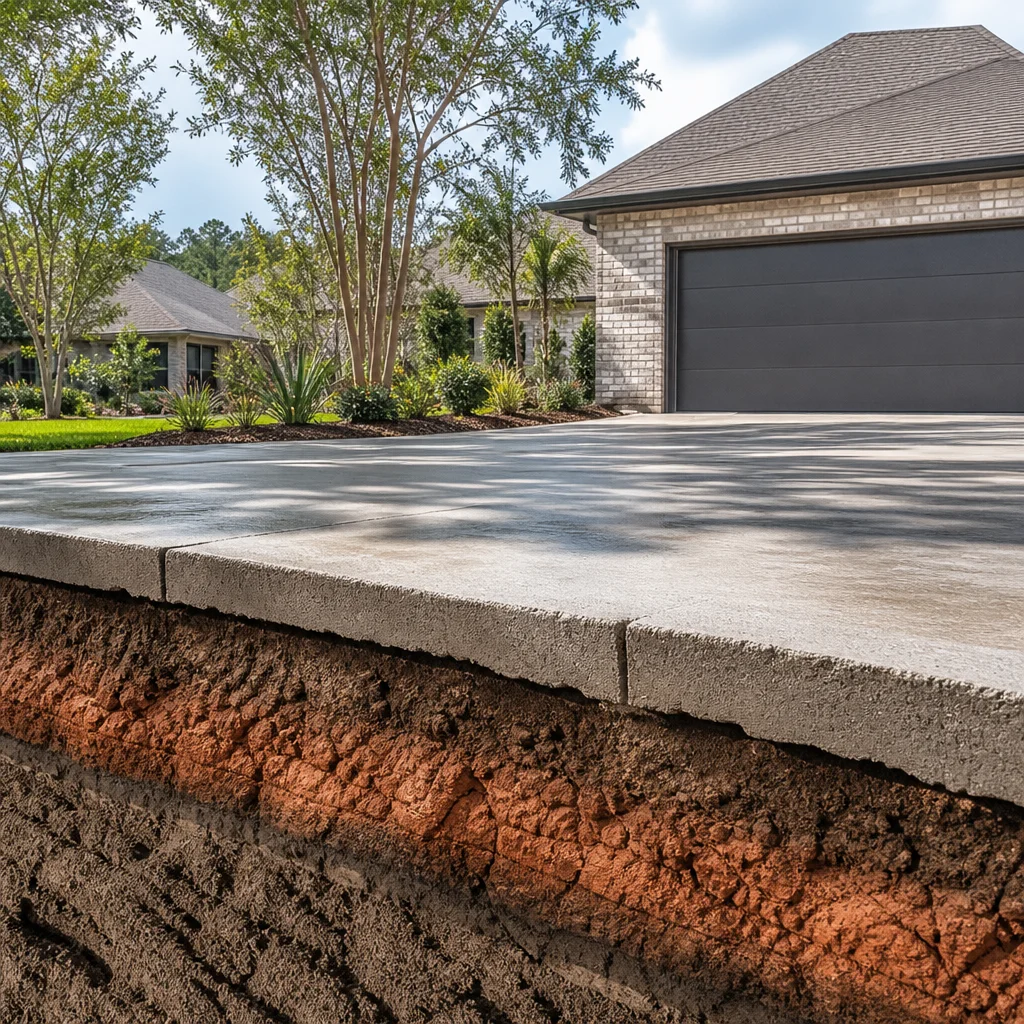
Lafayette sits on expansive clay soil that shifts seasonally with moisture changes. When heavy rains saturate the ground, clay expands. During dry spells, it shrinks and creates voids beneath your concrete. This constant movement puts tremendous pressure on your driveway foundation.
Unlike stable, well-draining soil in other regions, our local clay doesn’t provide consistent support. A driveway poured directly on clay without proper preparation becomes vulnerable to differential settling, where different sections sink at different rates. You’ll notice this as a slope where there should be level surface, or step-like transitions between sections.
Poor drainage compounds the problem. If water pools around your driveway or underneath it, the clay undergoes more severe expansion and contraction cycles. This accelerates the sinking process significantly. That’s why proper base preparation and drainage solutions matter so much for Lafayette properties.
The timeline varies. Some driveways show major settlement within 3-5 years, while others take a decade. The depth of your concrete pad, the thickness of your base layer, and how well water drains all influence how quickly problems appear.
Understanding How Concrete Sinks and Settles
Concrete itself doesn’t actually sink into the ground. What happens is the soil beneath it shifts and compresses, leaving the concrete to settle along with it. When the support system fails unevenly, you get the unsightly (and dangerous) result we call a sunken driveway.
Several mechanisms drive this settlement. Base soil compaction occurs naturally over time as the weight of the concrete presses down. In Lafayette clay, this happens faster than in other soil types. Soil erosion creates another problem: water washing away fine soil particles beneath the slab, leaving empty spaces that the concrete inevitably fills by sinking.
Structural movement in clay occurs because of moisture fluctuation. The expansion and contraction cycle stresses the concrete joints and causes hairline cracks. Once cracks form, water penetrates deeper, accelerating soil erosion underneath. This creates a cycle that worsens progressively.
You might see warning signs before major settlement appears: small cracks in a pattern, water pooling in new spots, or a subtle slope becoming more pronounced. Catching these early gives you more repair options and typically costs less than waiting for severe damage.
The Real Cost of Ignoring Sunken Driveways
A sunken driveway isn’t merely a cosmetic issue. Beyond the obvious trip hazard, it creates cascading problems that affect your property value and home safety.
Water pooling on uneven concrete creates both immediate and long-term damage. Rainwater that collects in sunken areas instead of running off will eventually penetrate into your foundation, garage floor, or basement. We’ve seen foundation cracks develop directly from water intrusion caused by poor driveway drainage and settlement.
The expense multiplies when you delay repair. A driveway that needs leveling today might require full replacement in three years if the underlying soil continues to shift unchecked. Full replacement costs significantly more than concrete leveling, which SUNKEN CONCRETE DOESN’T ALWAYS NEED REPLACEMENT.
Vehicle damage is another hidden cost. Repeated impact on uneven surfaces stresses suspension systems, wheels, and tires. Over time, this adds up to hundreds in unexpected repair bills. Guests and family also face slip-and-fall liability on your property, creating potential legal exposure.
Insurance claims related to foundation damage caused by water intrusion often don’t cover issues that stem from deferred maintenance on driveways and drainage. Protecting yourself means addressing settlement early.
Our Concrete Leveling Solutions for Lafayette Properties
We offer concrete leveling as our primary solution for sunken driveways in Lafayette. This method raises settled concrete back to proper grade without the cost and disruption of complete replacement.
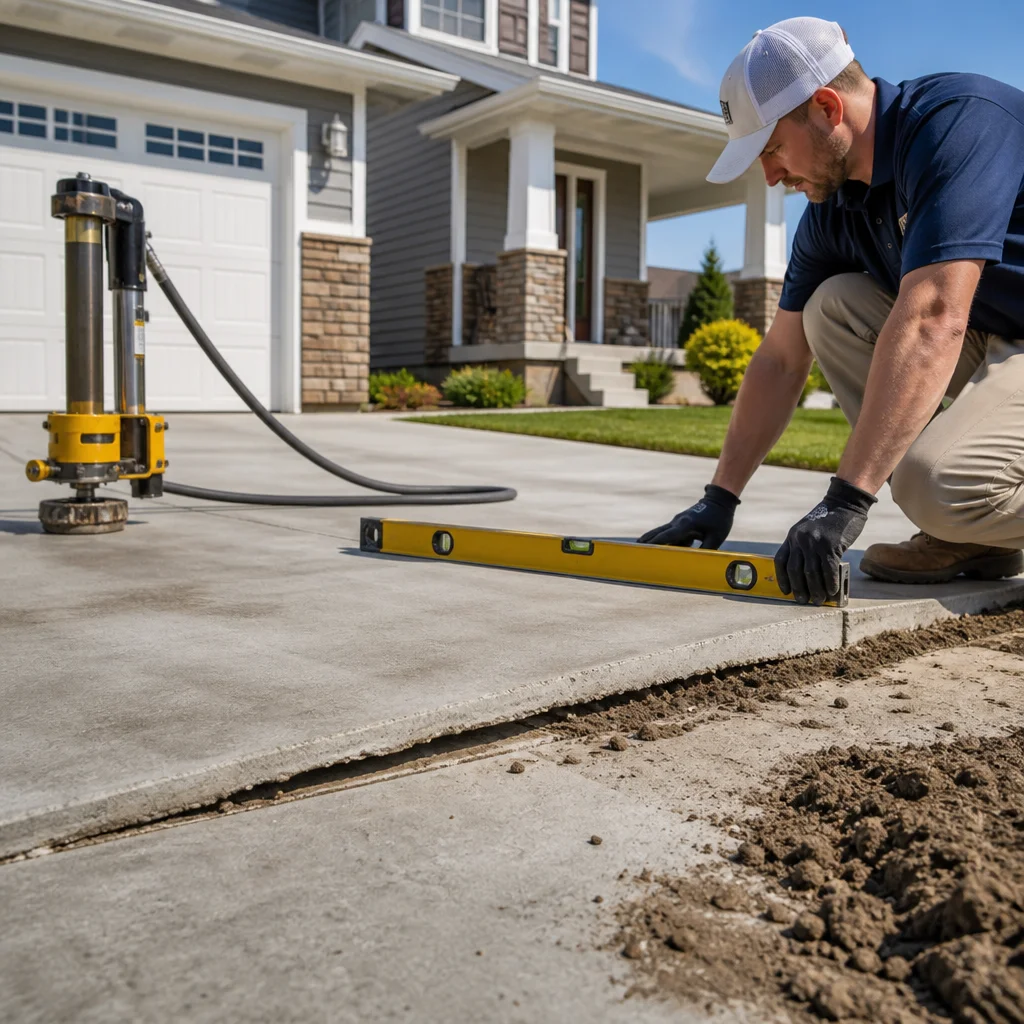
Polyurethane foam injection works well for Lafayette properties. We drill small holes beneath the sunken sections and inject expanding foam that lifts the concrete gradually and precisely. The foam bonds to the soil beneath, providing long-term support against future settling in clay soil. This method is fast, leaves minimal mess, and preserves the existing concrete structure.
Mud-jacking is another effective approach for certain situations. We pump a mixture of soil, water, and cement beneath your driveway to raise it back to grade. This method works particularly well when we need to address larger areas or when soil stability is compromised.
Both methods require proper diagnosis first. We assess soil conditions, identify the root cause of settlement, and recommend the approach that will give you the longest-lasting results given Lafayette’s clay conditions. We also address drainage issues that may have contributed to the settling, ensuring the problem doesn’t recur.
The Process: How We Repair Your Driveway
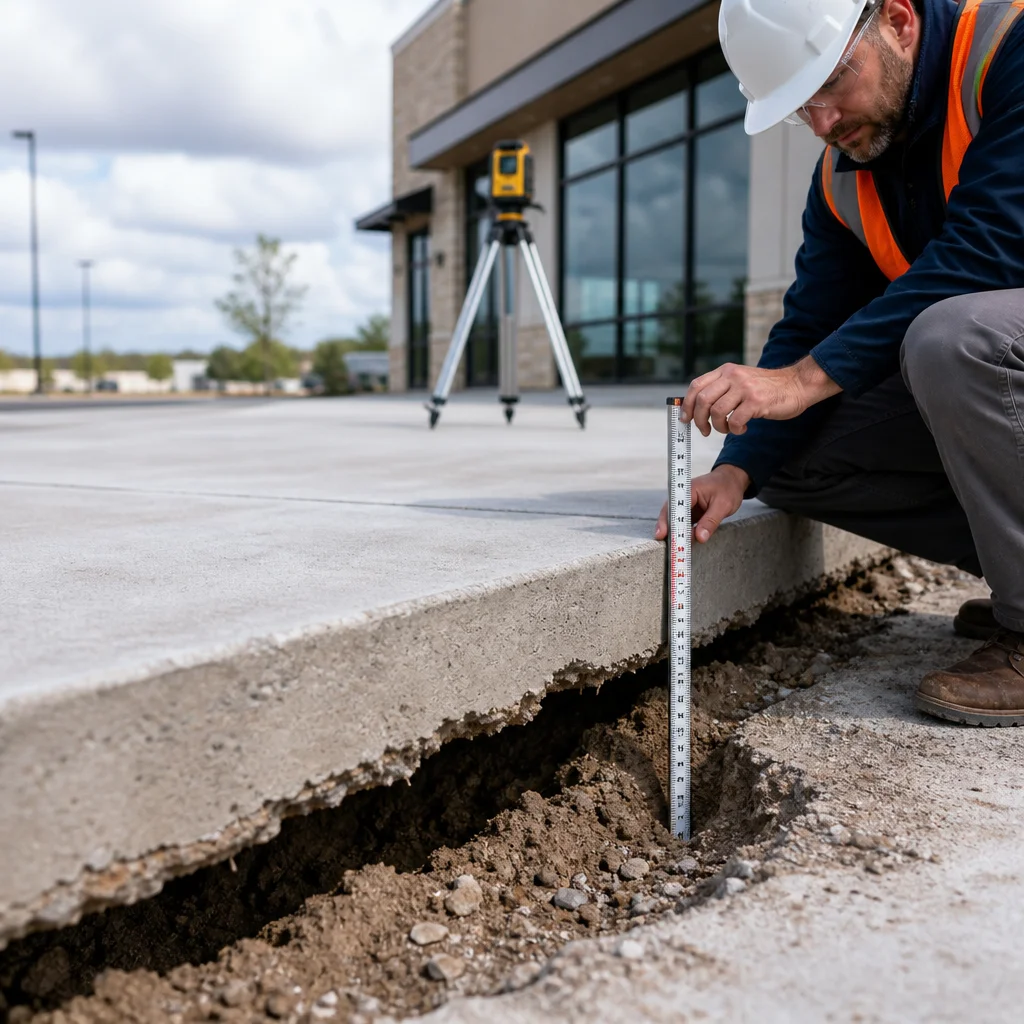
Our process begins with a thorough site evaluation. We examine the extent of settlement, check drainage patterns, and test soil conditions to understand what caused the problem. This assessment determines whether leveling will work or if replacement is genuinely necessary.
Once we’ve determined the best approach, we prepare the area. This involves clearing debris, protecting nearby landscape features, and setting up the equipment needed for the repair method we’ve selected.
For foam injection, we drill holes at strategic points beneath the sunken concrete. The diameter is small enough to be easily patched later. We then carefully inject the expanding foam, monitoring lift in real time to ensure we achieve proper grade without over-correction.
After leveling completes, we seal the drill holes and inspect the surface to confirm it meets safety and drainage standards. We also evaluate any contributing drainage issues and recommend solutions to prevent future settlement.
The entire process typically takes one day for most residential driveways, with minimal disruption to your property. Your driveway is ready to use within hours.
Why Professional Assessment Matters for Your Foundation
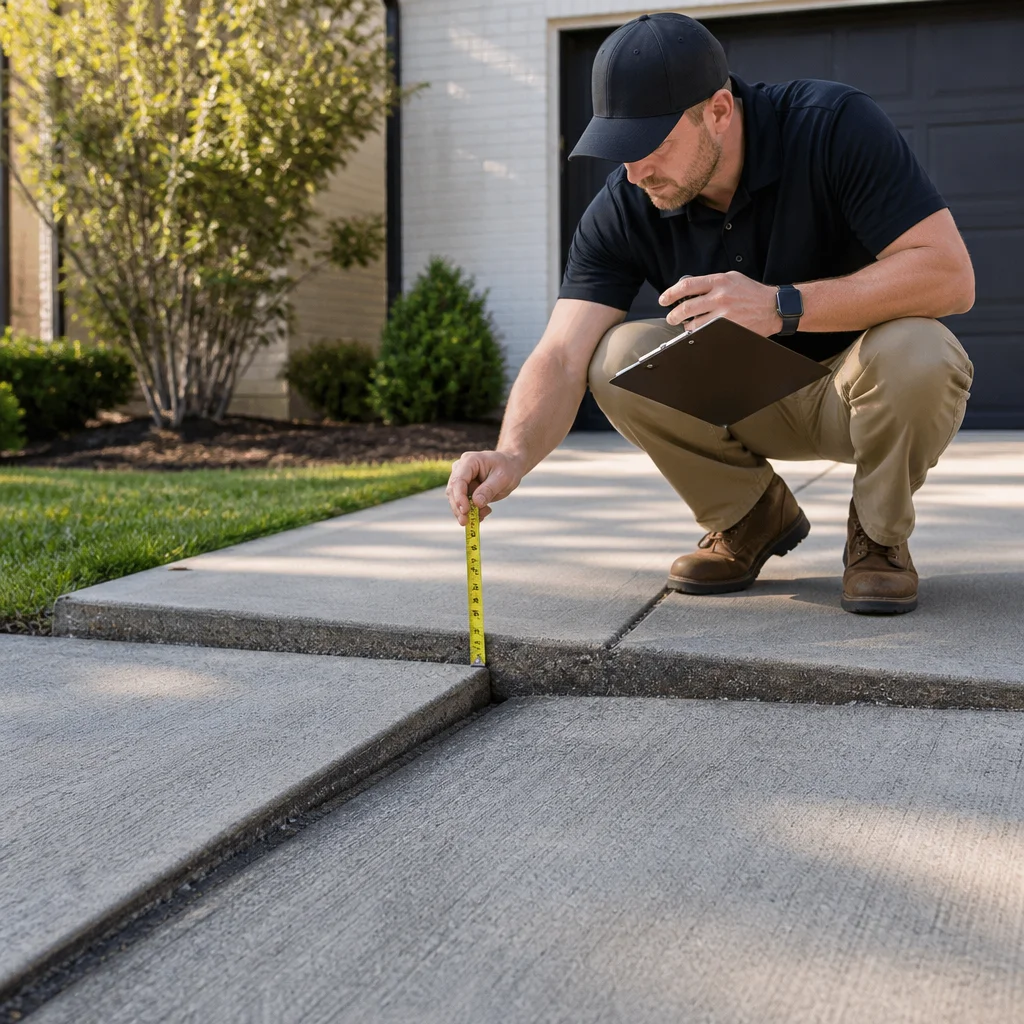
A sunken driveway often signals broader foundation issues, particularly in Lafayette clay soil. What appears to be isolated settlement in your driveway might indicate that your foundation slab itself is shifting.
Professional assessment catches these connections. We don’t just look at the driveway; we evaluate how it connects to your home’s foundation, the drainage patterns around your entire property, and the soil behavior beneath your structures. This comprehensive view helps us recommend solutions that protect both your driveway and your home.
Ignoring foundation concerns can lead to expensive repairs. Cracks in your foundation allow water intrusion, soil settlement around the foundation accelerates, and structural stress accumulates. Early professional evaluation prevents these cascading problems.
We’ve discovered buried drainage issues, failed French drains, and compromised soil conditions during routine driveway assessments. Addressing these during driveway repair costs far less than discovering them after foundation damage occurs.
Getting Started with Your Free No-Obligation Estimate
We offer free no-obligation estimates for all sunken concrete driveway repair in Lafayette and surrounding areas. There’s no pressure, no hidden fees, and no obligation to proceed with repairs.
During your estimate visit, we’ll thoroughly evaluate your situation, explain what’s causing the settlement, and present your repair options with transparent pricing. We’ll answer all your questions and give you the information you need to make a confident decision.
To schedule your estimate, visit our website at https://conkreteworkz.com/ or contact us directly. We’ll work around your schedule and typically complete assessments within a week of your call.
Protecting Your Investment After Repair
Once we’ve leveled your driveway, protecting your investment means maintaining proper drainage and monitoring for future settling.
Clear gutters and downspouts regularly so water drains away from your driveway, not toward it. Grade your landscape so water slopes away from your home and driveway. These simple maintenance steps dramatically extend the life of any concrete repair.
Seal cracks in your driveway concrete as soon as they appear. This prevents water from penetrating and reaching the base and soil beneath. We recommend checking your driveway twice yearly, particularly after heavy rain seasons.
Watch for warning signs of new settlement: returning slopes, new cracks, or water pooling in areas that previously drained well. Early detection allows for minor repairs rather than major reconstruction.
Common Questions About Sunken Concrete Repair
How long will concrete leveling last? Properly executed foam injection typically provides 15-25 years of stable support, particularly when we address underlying drainage issues. The longevity depends on soil stability and how well drainage is maintained.
Is leveling safe? Yes. The process gradually lifts concrete, and we monitor carefully to avoid damage. The final result is as structurally sound as the original pour.
Will my driveway match perfectly after repair? Concrete naturally varies in color and texture. The repaired section will match reasonably well, though slight color variation is normal with mature concrete.
What if leveling doesn’t work? In rare cases where soil conditions are severely compromised, we’ll recommend replacement. We’re honest about these situations upfront during our assessment.
Why Conkrete Workz is Your Lafayette Solution
We’ve spent years working in Lafayette’s unique soil conditions and understand how clay behaves through seasonal changes. Our team knows exactly how to diagnose settlement problems, recommend appropriate solutions, and execute repairs that hold up against our local challenges.
We’re licensed and insured, provide free no-obligation estimates, and back our work with professional standards. We address not just the symptom but the underlying cause, protecting your driveway and your property long-term.
If your Lafayette driveway is settling, contact us today for your free assessment. We’ll show you why leveling often beats replacement and why professional evaluation matters for your home’s long-term health.
Frequently Asked Questions (FAQ)
Why does concrete sink in Lafayette’s clay soil?
We’ve observed that Lafayette’s clay soil is particularly prone to expansion and contraction due to moisture changes. When heavy concrete presses on this unstable soil, it compacts unevenly, causing sections of your driveway or patio to settle at different rates. This is why we often see sunken concrete as a common problem for property owners in our area.
What’s the difference between concrete leveling and replacement?
We use concrete leveling, also called mudjacking or polyurethane injection, to raise settled sections back to their original height by pumping material beneath the slab. Replacement means removing and pouring new concrete, which costs significantly more and takes longer. Our leveling approach allows us to restore your driveway quickly while preserving the existing structure.
How do we know if your foundation needs attention beyond driveway repair?
We recommend a professional assessment because sunken driveways often indicate broader soil settlement issues affecting your home’s foundation. During our free no-obligation estimate, we evaluate the extent of settling and check whether the problem is isolated to your driveway or if it suggests deeper concerns with your property’s stability. This helps us recommend the right solution for your specific situation.