Why Garage Concrete Matters More Than You Think
Your garage floor takes a beating. It supports the weight of vehicles, handles oil spills, endures temperature swings, and bears moisture from Louisiana’s humid climate. A weak concrete slab can crack within a few years, leading to costly repairs and safety hazards. A properly reinforced garage concrete slab, on the other hand, can last 30+ years with minimal maintenance.
We’ve seen homeowners and business managers dismiss garage concrete as a simple pour-and-forget job. That mindset leads to premature deterioration and unexpected expenses. The truth is that reinforced garage concrete slabs require careful planning, quality materials, and expert installation from the start. When you invest in a durable foundation now, you protect your vehicles, equipment, and property value for decades.
Common Problems with Weak or Deteriorating Garage Slabs
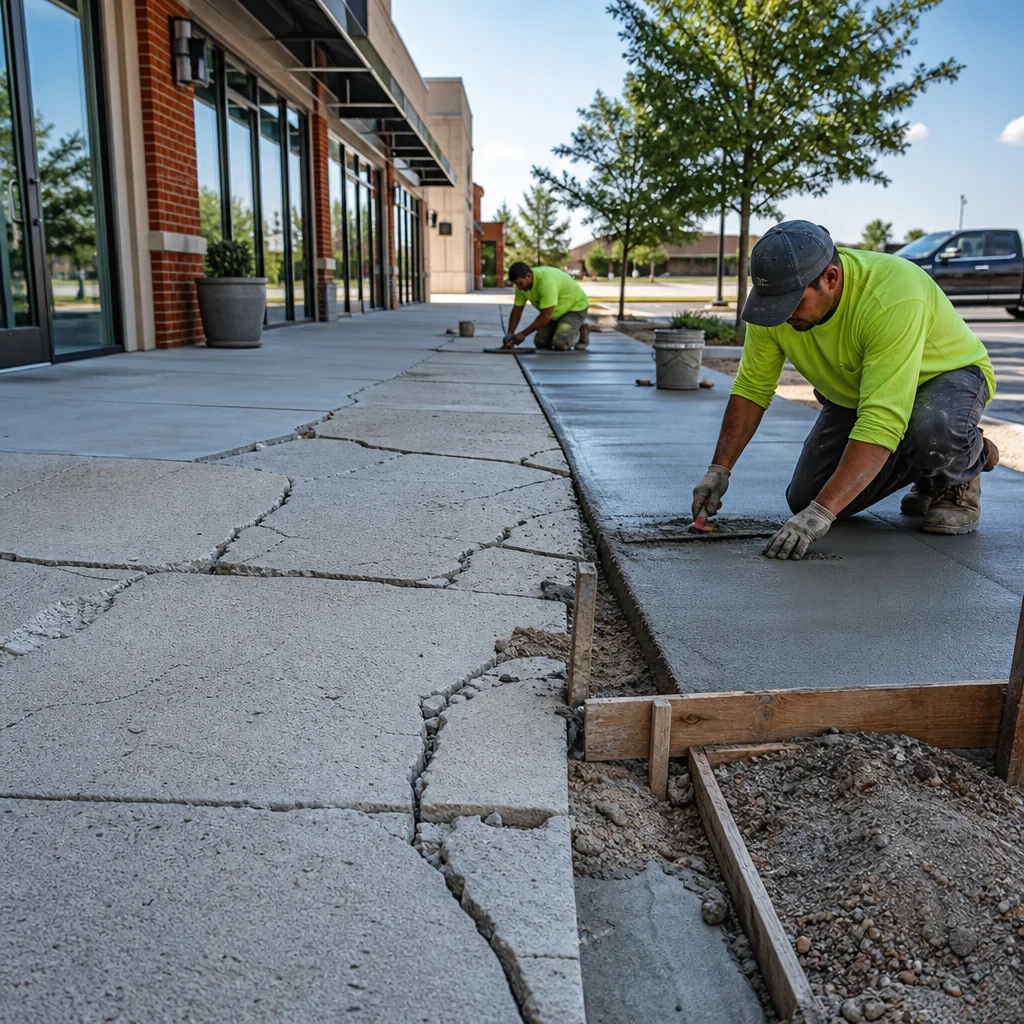
Many existing garage slabs in Lafayette suffer from preventable damage patterns. The most common issues we encounter are:
- Cracking and spalling (surface flaking) caused by freeze-thaw cycles and salt exposure
- Settling and uneven surfaces that create trip hazards and allow water pooling
- Potholes and deterioration from inadequate base preparation or poor drainage
- Separation between the slab and foundation walls, often indicating structural movement
- Staining and discoloration from chemical exposure, salt, and oil penetration
These problems often trace back to one root cause: insufficient reinforcement during the original installation. Without proper rebar placement or wire mesh, concrete cannot distribute stress evenly. Weight concentrates at weak points, and the slab fractures. Water penetrates cracks, freezes in winter, expands, and accelerates damage.
How Reinforcement Strengthens Your Garage Foundation
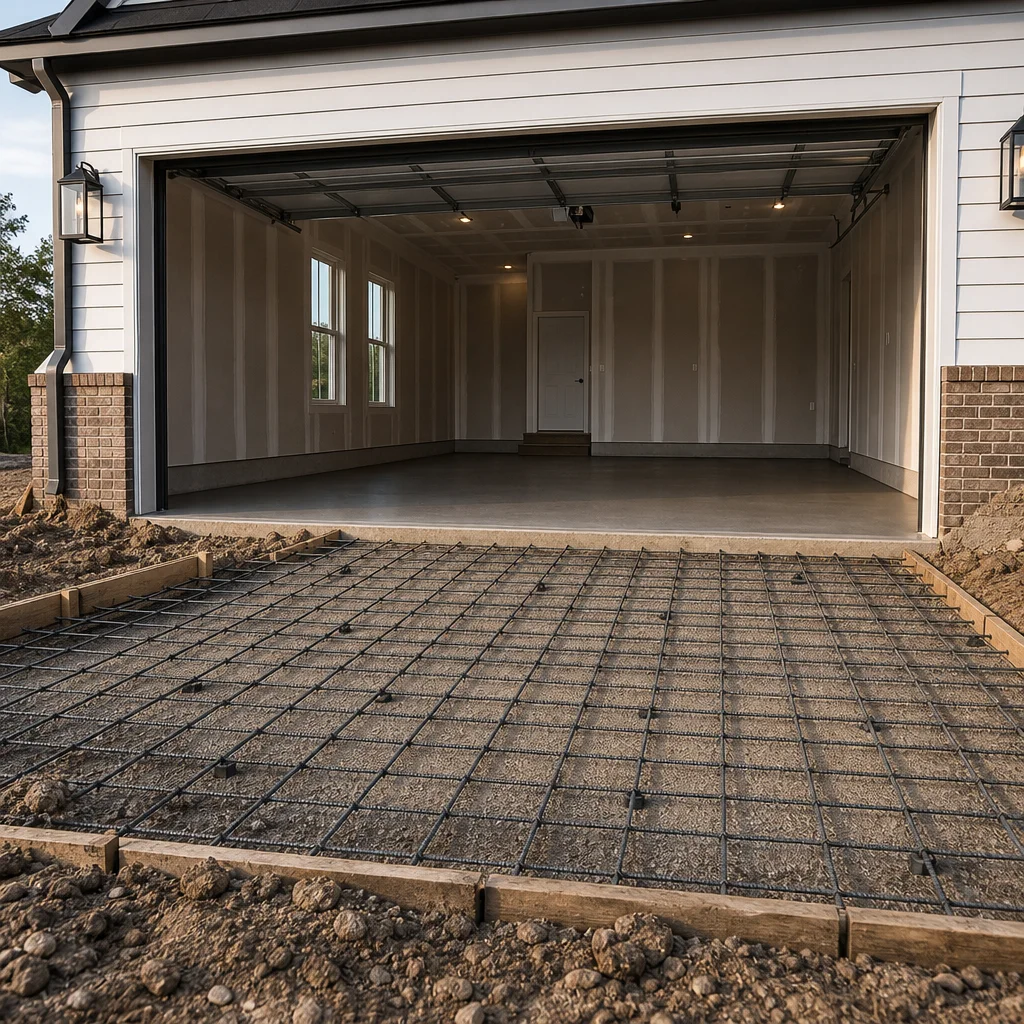
Reinforcement serves a specific mechanical purpose. Steel rebar (reinforcing bars) or welded wire fabric distributes tensile stress throughout the slab instead of allowing it to concentrate at failure points. When a vehicle’s weight presses down on your garage floor, the slab flexes slightly. Without reinforcement, that flex causes cracking. With it, the steel bars absorb the tensile forces and the concrete remains intact.
We design reinforcement layouts based on your garage’s size, soil conditions, and expected load. A two-car residential garage needs different reinforcement than a commercial loading dock. For residential applications, we typically use #4 rebar spaced 18 inches apart in both directions, creating a grid that holds the concrete together. For heavier commercial use, we increase density and sometimes add a thicker concrete layer.
The reinforcement also resists settling. When soil beneath the slab compacts unevenly (common in Louisiana’s variable soil composition), an unreinforced slab can crack at the settlement points. Reinforcement bridges these weak spots and maintains a level surface.
Our Specialized Reinforced Slab Installation Process
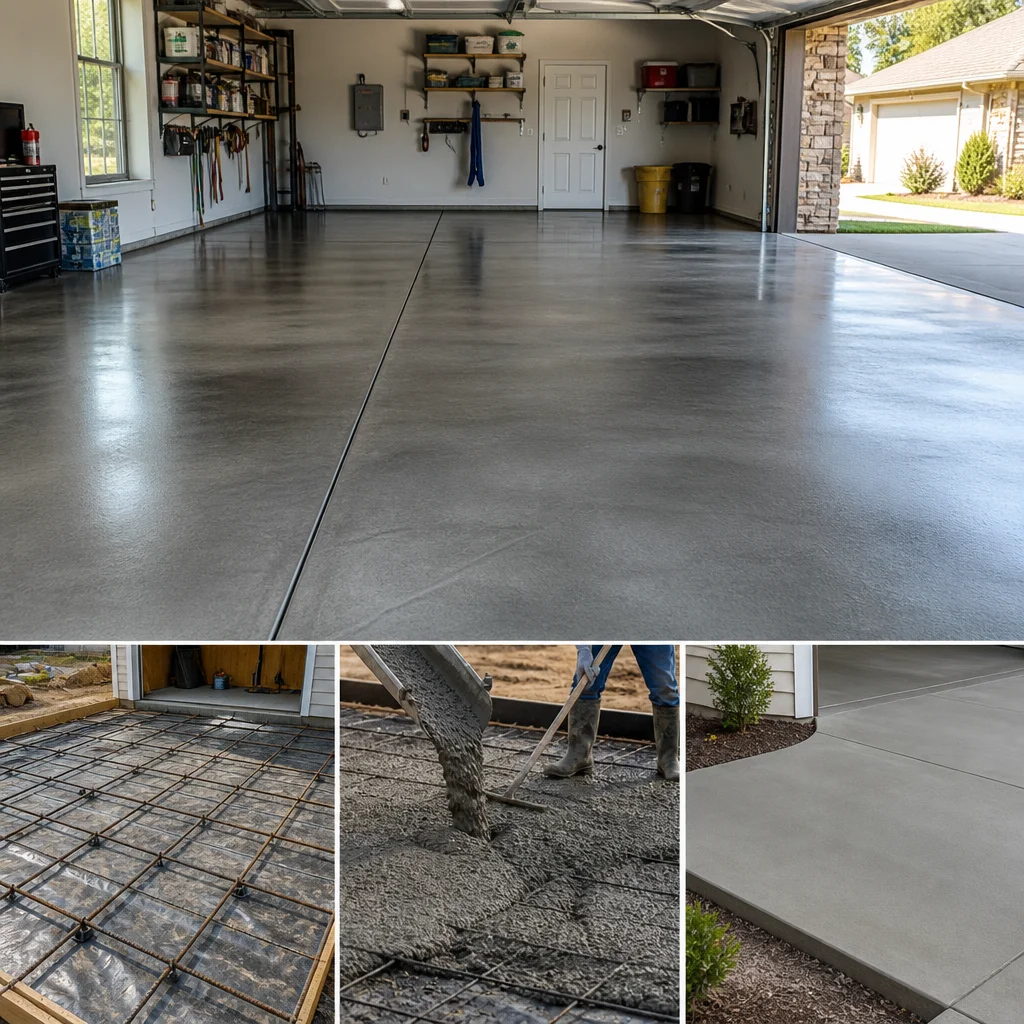
Our process begins with a thorough site evaluation. We assess soil conditions, drainage patterns, and existing damage. Poor drainage is a silent killer of concrete slabs, so we design appropriate slopes and sometimes install perimeter drains to direct water away from the structure.
Next, we prepare the base with 4-6 inches of compacted gravel, depending on soil quality. This prevents moisture from wicking up into the concrete and cushions the slab against minor settling. We then position reinforcement steel according to our design specifications, ensuring proper clearance from the bottom of the slab so the rebar sits in the middle of the concrete thickness.
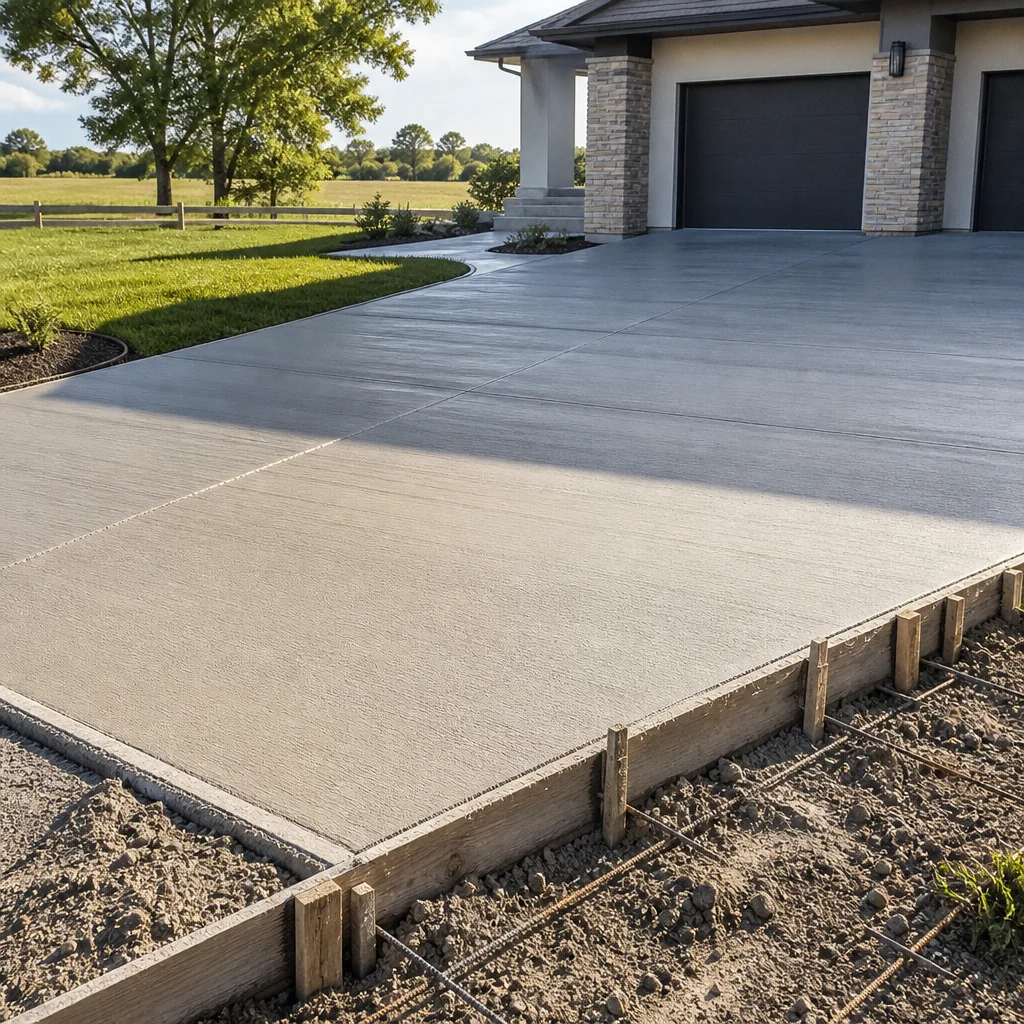
We pour a 5-6 inch concrete mix (for residential) or 6-8 inches (for commercial), carefully finishing the surface for a smooth, non-slip texture. Our finishing work includes proper troweling, broom finishing for traction, and edge beveling to reduce spalling. We control the concrete cure with proper moisture management to ensure maximum strength development.
Materials and Techniques We Use for Maximum Durability
We specify concrete mixes optimized for Louisiana’s climate. Our standard mix includes air entrainment (tiny air bubbles that allow water expansion without cracking during freeze-thaw cycles), proper water-to-cement ratios for strength, and sometimes fiber reinforcement as an additional crack-control layer.
For reinforcement, we use Grade 60 rebar that meets ASTM standards, never compromising on steel quality. In high-corrosion environments (near salt water or where road salt is used), we recommend epoxy-coated rebar to prevent rust that could weaken the slab.
Our finishing techniques also matter. A broom finish provides traction for vehicles and reduces slipping hazards. We bevel edges at 45 degrees to minimize spalling at corners. We also consider air quality during pours; humidity, temperature, and wind all affect concrete curing, so we adjust our timeline accordingly.
Protection Against Cracks, Settling, and Weather Damage
Proper joint design is critical for crack control. We install control joints (shallow grooves) in a grid pattern, typically every 4-6 feet in both directions. These joints give concrete a predetermined place to crack as it shrinks during curing and thermal cycles. Without them, cracks occur randomly and are harder to repair.
We also address the Louisiana moisture challenge directly. Moisture from below is a primary deterioration cause, so we sometimes install a moisture barrier beneath the slab or apply a penetrating sealer after curing. For commercial applications where chemical resistance is needed, we recommend epoxy or polyurethane coatings.
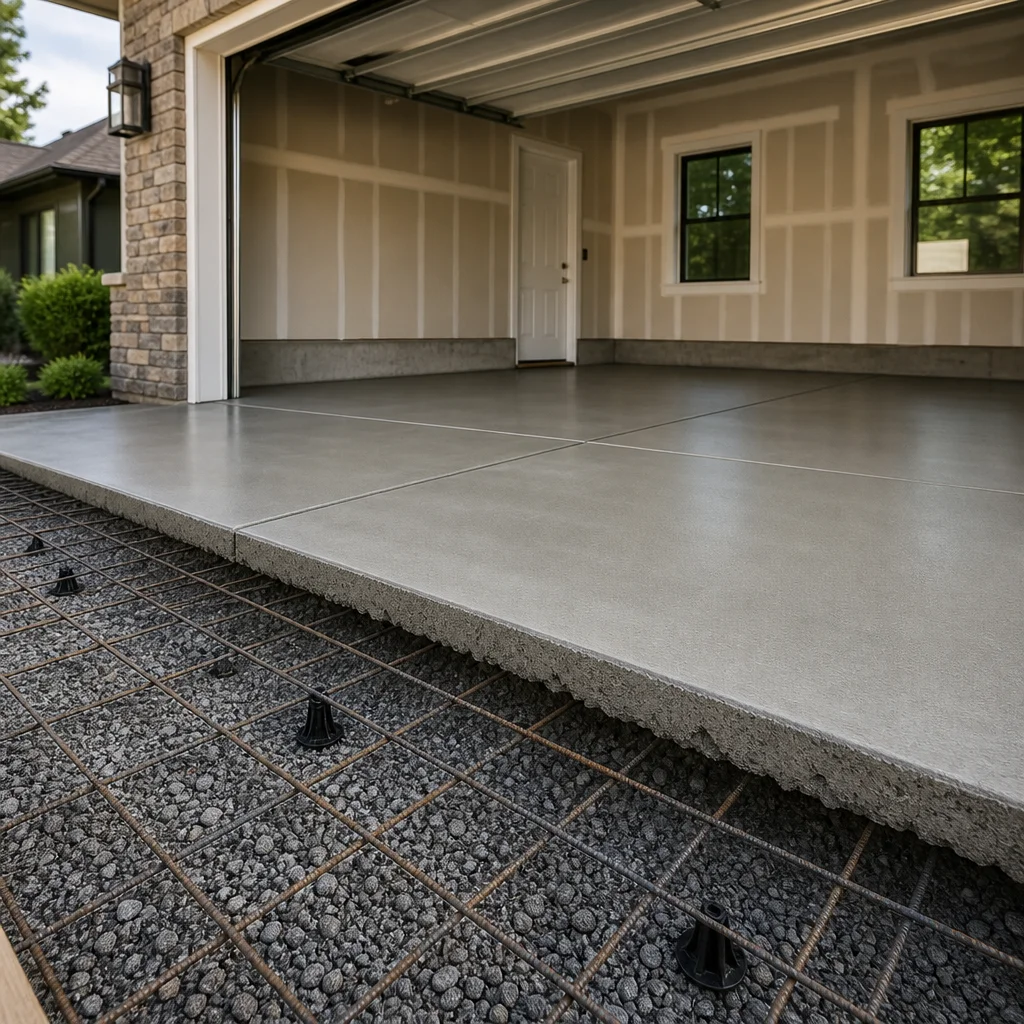
Proper slope is another protection layer. We slope the slab slightly (typically 1-2%) toward drain areas so water doesn’t pool. Standing water accelerates all forms of deterioration, so drainage design is not optional.
Commercial vs. Residential Garage Slab Solutions
Residential garage slabs prioritize cost-effectiveness and durability for typical vehicle storage and workshop use. A standard 24×24 foot two-car garage slab works well with our reinforcement grid spacing and 5.5-inch thickness. Homeowners benefit from the long-term investment without over-engineering.
Commercial applications demand heavier reinforcement and thicker slabs. A parking lot or loading dock experiences much higher traffic volumes and concentrated loads from trucks and forklifts. We design these slabs at 7-8 inches thick with denser rebar spacing (12-16 inches on center) and sometimes add additional dowels at joints to prevent vertical movement.
Commercial projects also typically need specialized coatings for chemical resistance. We’ve installed slabs for auto repair shops, warehouses, and manufacturing facilities where oil, solvents, and salt exposure is constant. The initial investment is higher, but the slab remains serviceable for 40+ years with proper maintenance.
The Cost-Benefit of Investing in Quality Now
A properly reinforced garage slab costs more upfront than a standard installation, typically 15-25% more depending on site conditions and reinforcement density. For a residential garage, this might mean an additional $1,500 to $3,000. For commercial applications, the premium is higher in absolute terms but often lower as a percentage of total cost.
The payoff comes from avoiding repairs. A cracked, spalling garage slab requires grinding, patching, and sealing work that costs $500-$2,000 depending on damage extent. In the worst case, a failing slab must be torn out and replaced entirely, a $5,000+ job. Quality reinforced installation eliminates or dramatically delays these costs.
Beyond repairs, a level, durable garage slab protects your vehicles and increases property value. Buyers recognize a well-maintained garage foundation as a sign of overall property care.
Our Track Record Serving Lafayette Property Owners
We’ve installed reinforced garage concrete slabs throughout Lafayette and surrounding areas for over a decade. Our team includes licensed and insured concrete specialists who understand Louisiana’s unique climate challenges. We’ve completed projects ranging from small residential garages to large commercial parking facilities, and we maintain consistent standards across all sizes.
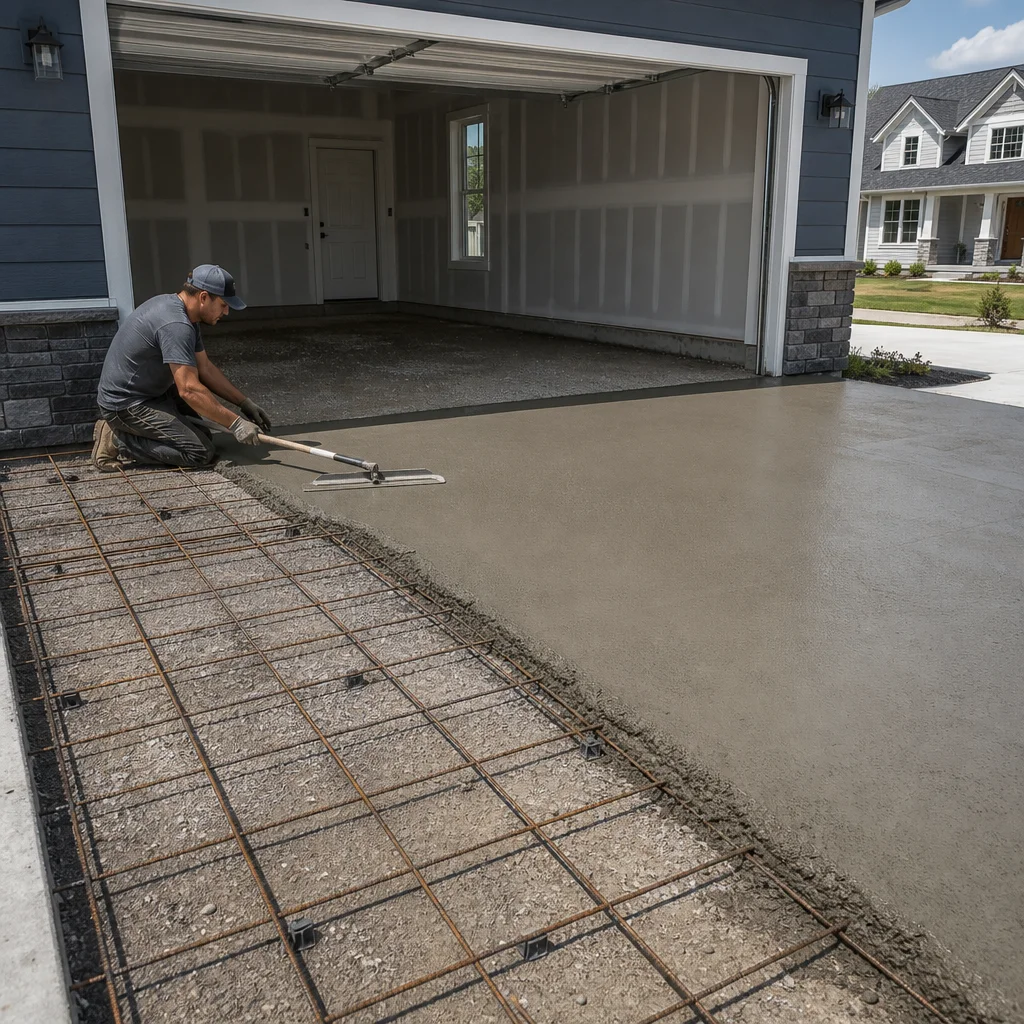
Our customers choose us for expertise, reliability, and transparent communication. We provide detailed estimates, explain our process clearly, and deliver on schedule. Our work carries our commitment to quality because we know homeowners and business managers depend on durable concrete for their operations.
Getting Your Free No-Obligation Estimate Today
If you’re planning a new garage, building addition, or need to replace a failing slab, we’re ready to help. We offer free, no-obligation estimates that include a site evaluation, reinforcement recommendations, and a detailed cost breakdown. There’s no pressure, no hidden charges, and no commitment until you decide to move forward.
Contact us today to schedule your estimate. We’ll assess your specific situation and recommend the reinforcement strategy that gives you the best value and durability for your investment. Our trusted concrete contractors are standing by to answer your questions and get your project started.
Frequently Asked Questions (FAQ)
What makes reinforced garage concrete slabs more durable than standard slabs?
We use steel reinforcement, typically rebar or wire mesh, throughout the concrete to distribute weight evenly and prevent cracking under stress. This reinforcement works with high-quality concrete mix to resist settling, vehicle load pressure, and temperature fluctuations that typically damage unreinforced slabs. Our reinforced approach significantly extends the lifespan of your garage floor and reduces the need for costly repairs down the road.
How long does it take us to install a reinforced garage concrete slab?
The timeline varies based on slab size and site conditions, but most residential garage installations take 3-7 days from start to finish, including prep work, reinforcement placement, pouring, and curing time. We schedule the project around your needs and weather conditions in Lafayette to ensure the concrete cures properly. We’ll provide you with a specific timeline during your free estimate so you know exactly what to expect.
What’s the difference between residential and commercial garage slab solutions we offer?
Our commercial slabs are engineered for heavier loads and higher traffic volume, using thicker reinforcement and specialized concrete mixes to handle equipment and vehicles. Residential slabs prioritize durability for personal vehicles while maintaining cost-effectiveness for homeowners. We assess your specific use and recommend the right solution during our no-obligation estimate.