Why Your South Louisiana Driveway Faces Unique Challenges
Your driveway is one of the hardest-working surfaces on your property. In South Louisiana, it faces pressures that concrete in other regions simply doesn’t encounter. Understanding how long you can expect your driveway to perform here helps you plan maintenance, repairs, and eventual replacement with confidence.
Lafayette and the surrounding areas present a perfect storm of conditions that test concrete durability. Our region combines intense heat, high humidity, frequent heavy rainfall, and expansive soil conditions. Unlike drier climates where concrete can last with minimal intervention, South Louisiana’s environment demands proactive care.
The combination of moisture and temperature swings creates stress that ordinary concrete struggles to handle. Water infiltrates the surface, freezes during colder periods, and thaws when heat returns. This freeze-thaw cycle, though less severe than northern winters, still causes micro-fractures and accelerates deterioration. Additionally, our acidic soil and proximity to chemical runoff add another layer of complexity that property owners often overlook.
Average Concrete Driveway Lifespan in Our Region
In ideal conditions across the country, a concrete driveway typically lasts 25 to 30 years. Here in South Louisiana, we generally see a shorter timeline of 15 to 20 years for standard concrete installations. This reduction stems directly from our climate’s relentless moisture and thermal stress.
However, this estimate isn’t fixed. Driveways built with proper technique, sealed regularly, and maintained consistently can approach that 20-year mark or beyond. Conversely, driveways installed without adequate drainage or sealed poorly may show significant damage within 10 years. The difference often comes down to installation quality and the owner’s commitment to maintenance.
How Heat and Humidity Shorten Driveway Life
South Louisiana’s heat is relentless. Summer temperatures regularly exceed 90 degrees Fahrenheit, and the asphalt around your driveway can reach much higher. This heat causes concrete to expand, and when cooler evenings arrive, it contracts. Over thousands of cycles, this movement creates stress points where cracks initiate and propagate.
Humidity compounds the problem by keeping moisture locked in the concrete’s pores. Concrete is porous by nature, and in our climate, it rarely fully dries. This persistent dampness prevents the material from achieving its full strength potential and leaves it vulnerable to chemical attacks. We often see surface scaling and spalling in driveways where moisture remains trapped year-round.
Direct sun exposure also degrades surface sealers faster here than in cooler regions. UV rays break down protective coatings more aggressively, leaving the concrete unshielded against water penetration and salt spray.
The Impact of Louisiana’s Heavy Rainfall on Concrete
Our region receives over 60 inches of annual rainfall, with intense downpours common in spring and summer. Each rainfall event introduces water into your driveway’s structure. Proper slope and drainage are essential, yet many driveways are installed without adequate consideration for water management.
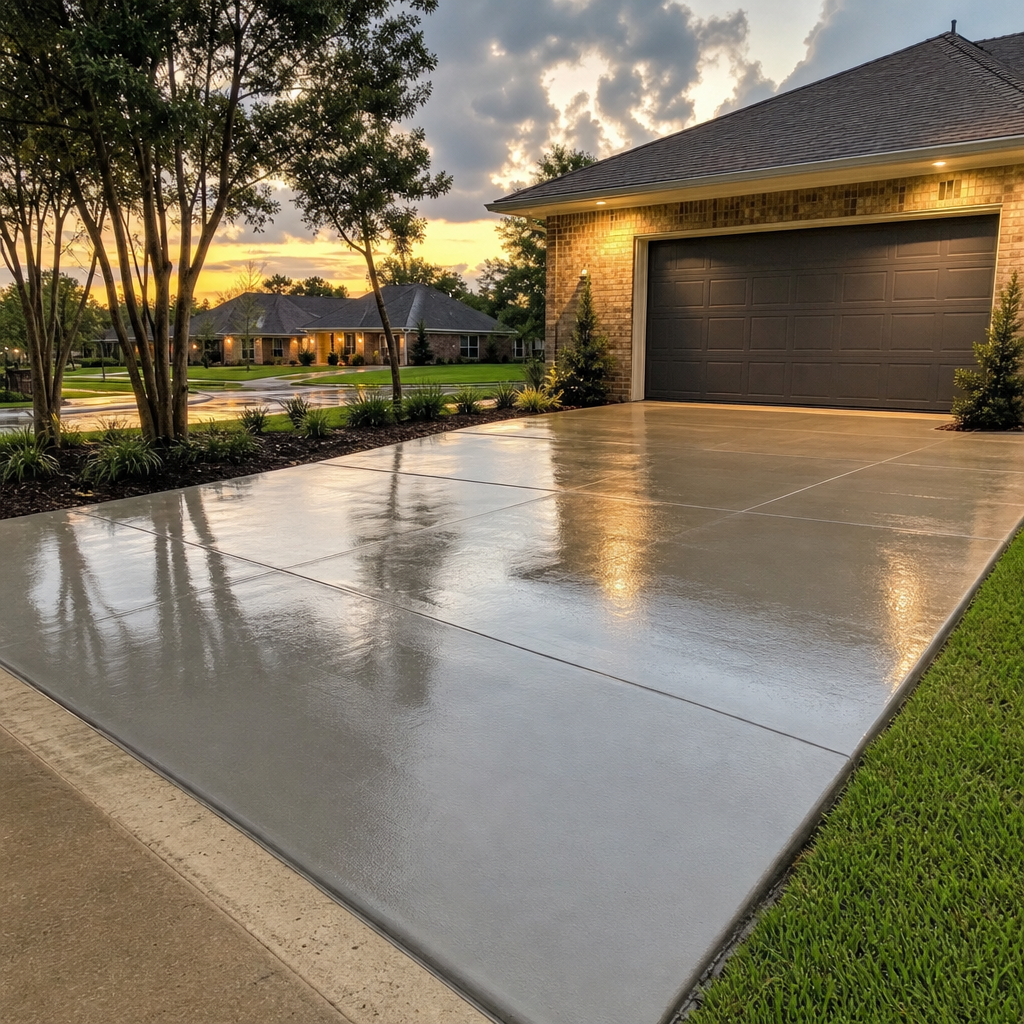
When water pools on your driveway or drains poorly, it forces its way into micro-cracks and weakens the concrete from within. The water carries minerals, acids from decaying vegetation, and eventually begins a process of internal erosion. Over months and years, this invisible damage accumulates until surface failure becomes visible.
Standing water also accelerates the growth of algae, mold, and mildew, which trap additional moisture against the concrete surface. These organic growths aren’t just unsightly; they work to break down the concrete’s top layers.
Chemical Exposure and Soil Conditions in Lafayette
Lafayette’s soil composition is predominantly clay and silt, which expands when wet and contracts when dry. This natural movement puts upward and downward pressure on concrete slabs. Unlike sandy soils in other regions that remain relatively stable, our expansive clay creates ongoing stress that contributes to cracking and settling.
Additionally, our acidic soil (typical of South Louisiana) slowly reacts with concrete’s alkaline compounds. This chemical reaction, though gradual, gradually weakens the concrete’s structure. Road salt used during rare icy conditions, fertilizers from nearby lawns, and de-icing chemicals all contribute to concrete degradation through chemical attack.
Industrial areas and properties near highways face additional chemical exposure from vehicle exhaust and road treatments. These compounds concentrate on concrete surfaces and penetrate into the material’s pores.
Signs Your Driveway Needs Professional Repairs
Early intervention can extend your driveway’s life significantly. Watch for these warning signs that repair or maintenance is needed.
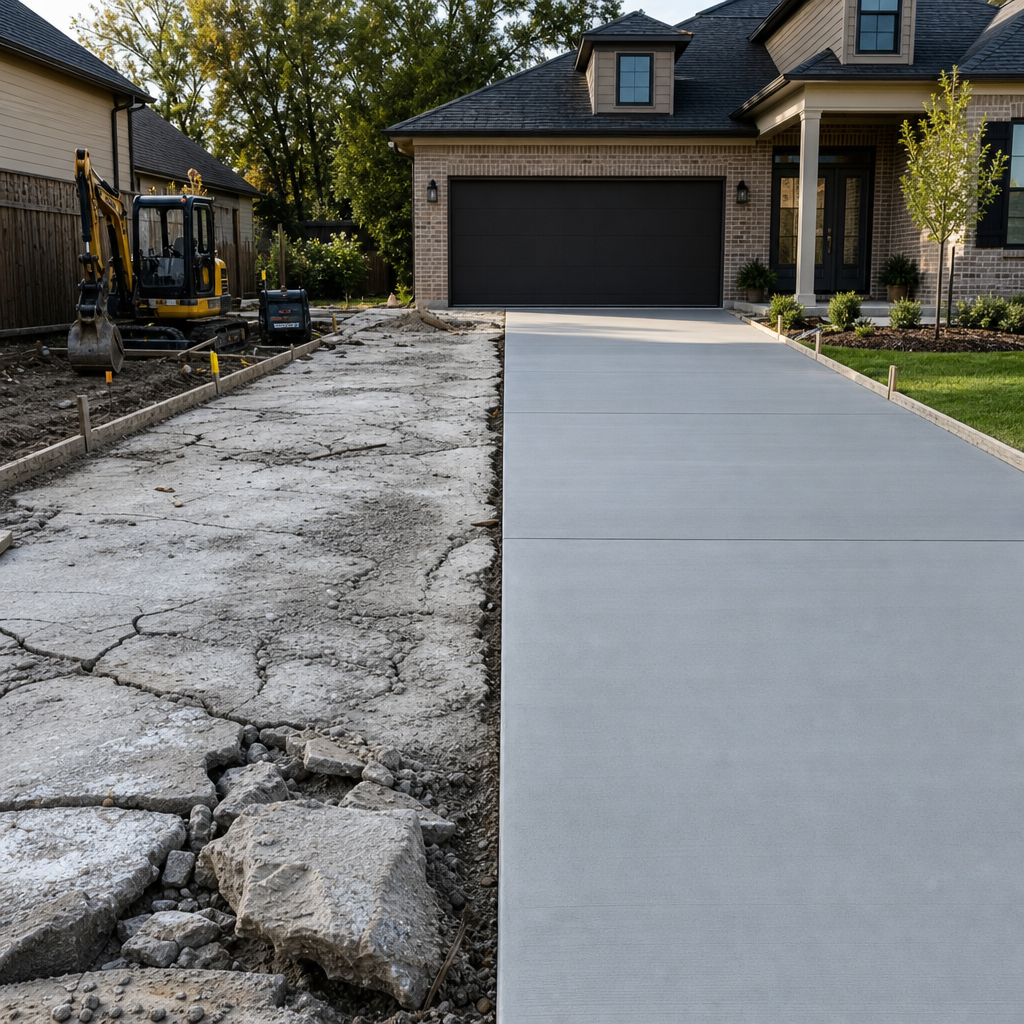
Hairline cracks (less than 1/8 inch wide) are the first indicator that water is beginning to penetrate. Linear cracks that run perpendicular to traffic patterns often indicate settling or thermal stress. Alligator cracking, where the surface breaks into a web-like pattern, signals that structural deterioration is underway.
Surface spalling appears as small chunks missing from the top layer. Scaling looks like a grainy, weathered surface where the top 1/8 inch flakes away. Both indicate moisture damage and require prompt sealing to prevent worsening. Uneven surfaces or raised edges between concrete sections suggest settlement, which we can address through concrete leveling to prevent further damage and tripping hazards.
Staining that won’t wash away often indicates water pooling or drainage problems. If your driveway slopes toward your home or garage rather than away from it, water is likely creating damage below the surface.
Extending Your Driveway’s Lifespan Through Proper Maintenance
Maintenance is your best investment for protecting your driveway. Sealing is non-negotiable in South Louisiana’s climate. We recommend sealing your driveway every 2 to 3 years, or even annually in high-traffic areas. Sealers create a protective barrier that prevents water and chemicals from penetrating the concrete.
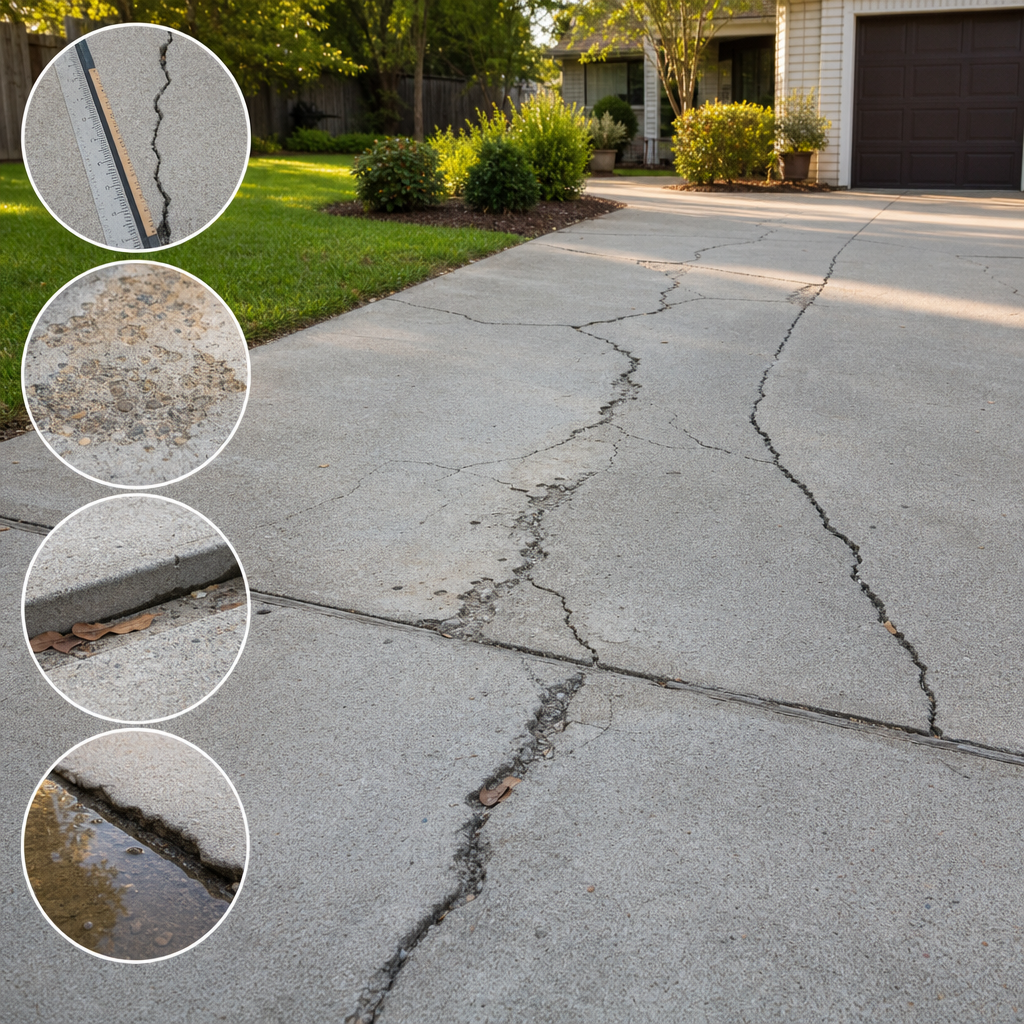
Keep debris cleared from the surface. Leaves and dirt trap moisture, accelerating deterioration. Sweep regularly and consider power washing annually to remove algae and mineral deposits.
Manage water drainage around your driveway. Ensure gutters direct water away from the edges, and regrade any areas where water pools. Even small adjustments prevent the chronic moisture problems that cause most damage.
Address cracks promptly. Fill hairline cracks with concrete filler before they widen. Waiting allows water to work deeper into the concrete, making repairs more expensive and extensive.
Avoid harsh de-icers and excessive salt. Use calcium chloride instead of sodium chloride when winter treatments are necessary. Limit salt application to areas where it’s truly needed.
How We Protect Driveways During Installation
Installation quality determines how long your driveway will perform. We build longevity into every project from the start.
Proper base preparation is foundational. We ensure adequate subsurface grading and compaction to promote water drainage away from the concrete. Poor base preparation is the leading cause of premature failure, so this step receives our full attention.
Correct concrete mix design accounts for South Louisiana’s environmental stressors. We specify concrete with air entrainment, which incorporates tiny air bubbles that allow water to escape and reduce freeze-thaw damage. The water-to-cement ratio is carefully controlled to maximize strength and minimize porosity.
Adequate slope for drainage is built into every project. A standard 1 to 2 percent slope (approximately 1/8 inch per foot) ensures water runs off rather than pooling. We also consider subsurface drainage when conditions warrant it.
Proper proper concrete curing is critical. Concrete must cure slowly and remain moist for at least seven days after installation. Rushing this process or allowing rapid drying creates weak surface layers vulnerable to our climate’s moisture. We manage curing meticulously to develop full strength throughout the concrete’s depth.
When Leveling and Repair Becomes Your Best Option
Not every driveway needs replacement. Many driveways that have settled or developed isolated damage can be restored through targeted repairs and leveling. This approach costs significantly less than replacement while restoring safety and function.
Settlement often occurs in sections of driveways, creating dangerous lips and trip hazards. Rather than replacing the entire driveway, concrete leveling can restore the surface to its original plane. This process uses polyurethane injection to fill voids beneath the slab, raising it back to proper height.
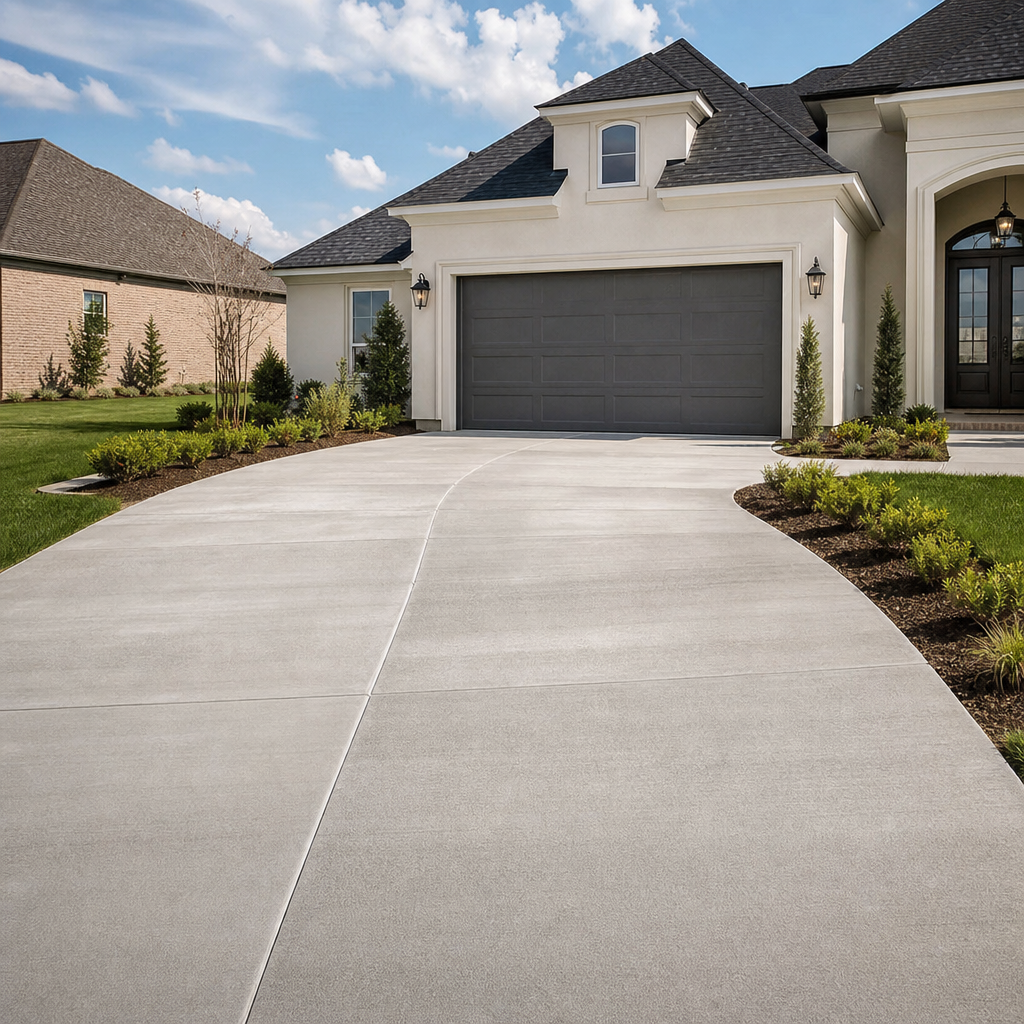
Localized spalling, cracking, and surface damage can be patched and sealed. If the damage is confined to 10 to 20 percent of the driveway’s area, repair is typically the economical choice. We assess the damage extent and recommend repair versus replacement based on cost-effectiveness and your timeline.
Investing in Quality Concrete Saves You Money Long-Term
The initial cost of quality concrete installation is higher than the cheapest option available. However, the math becomes clear when you calculate long-term costs. A driveway that lasts 18 to 20 years versus one that requires major repairs at year 10 saves thousands of dollars over two decades.
Quality installation includes proper materials, correct mix design, skilled labor, and meticulous curing. These factors cost more upfront but prevent expensive emergency repairs. A driveway installed properly in 2026 will outperform a cheaper installation by years while requiring far less intervention.
When evaluating concrete contractors, understand what’s included in their pricing. The cheapest bid often reflects shortcuts in base preparation, mix design, or curing. We provide detailed no-obligation estimates that explain exactly what you’re getting, so you can make an informed decision about your investment.
Your driveway is an asset worth protecting. We’re ready to help you understand your specific situation and recommend the right approach, whether that’s new installation, repair, or maintenance planning. Contact us for a free estimate and honest assessment of your driveway’s condition.
Frequently Asked Questions (FAQ)
What’s the typical lifespan of a concrete driveway in Lafayette?
We typically see concrete driveways in our region last between 25 to 30 years when properly maintained. However, South Louisiana’s hot, humid climate and heavy rainfall can shorten this timeframe if the concrete isn’t sealed or maintained regularly. We recommend getting a professional inspection every few years to catch any early signs of damage.
How does Louisiana’s climate affect my driveway’s durability?
Our region’s combination of intense heat, high humidity, and frequent heavy rains creates significant stress on concrete. The heat causes expansion and contraction, while moisture penetrates small cracks and weakens the concrete from within. Additionally, our acidic soil conditions can break down the concrete surface over time, which is why we emphasize proper sealing during installation.
What maintenance steps do we recommend to extend driveway life?
We suggest sealing your driveway every 2 to 3 years and cleaning it regularly to prevent algae and mold growth. Filling small cracks promptly prevents water from seeping deeper into the concrete, and ensuring proper drainage around the edges keeps excess moisture from pooling. If you notice any settling or significant cracking, reach out to us for a free evaluation to determine if repair or leveling is needed.