Why Curing Time Matters for Your New Driveway
Curing isn’t just a waiting period before you can park on your driveway. It’s the chemical process where concrete gains strength and durability. When concrete is first poured, it contains water that needs to evaporate and hydrate the cement particles. This transformation determines whether your driveway will last 20 years or need costly repairs within five.
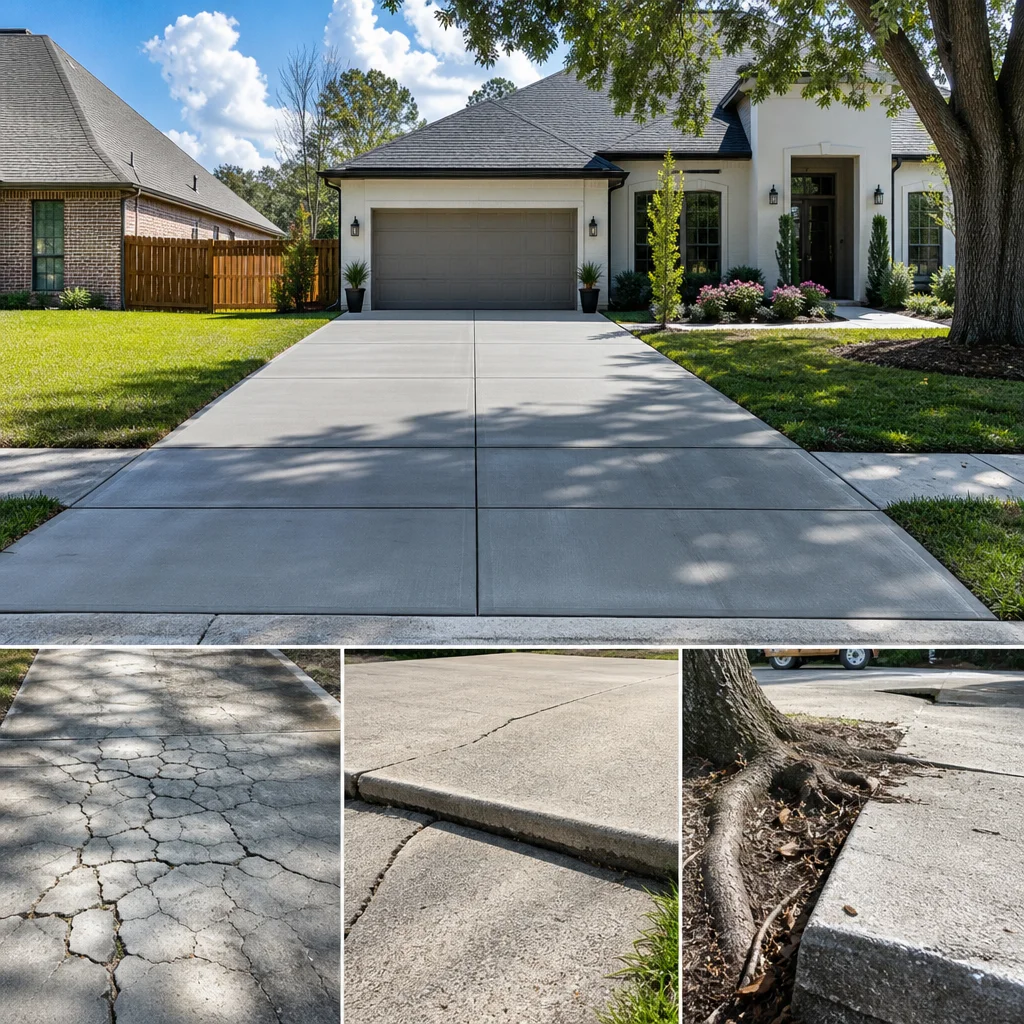
Rushing this process or exposing fresh concrete to stress before it’s ready leads to cracking, surface deterioration, and structural weakness. We’ve seen homeowners drive heavy vehicles on driveways that appeared solid but hadn’t fully cured, only to discover hairline cracks months later that spread into serious problems. Proper curing creates a dense, wear-resistant surface that handles Louisiana’s weather extremes.
Understanding your specific curing timeline helps you plan realistically and protect your investment from day one.
Louisiana Heat and Humidity: How They Affect Concrete
Louisiana’s climate creates unique challenges for concrete curing. Our hot, humid summers accelerate evaporation, while high moisture levels can trap water inside the concrete and slow the hydration process. This contradictory effect means curing behaves differently here than in drier climates.
When temperatures exceed 85 degrees Fahrenheit, concrete sets faster on the surface but may cure unevenly beneath. This surface-level strength gives a false impression of readiness while the interior remains vulnerable. Additionally, our frequent afternoon thunderstorms introduce unexpected moisture that can disrupt curing if proper precautions aren’t in place.
The good news: experienced contractors know how to work with these conditions rather than against them. Protecting your concrete during Louisiana’s specific weather patterns makes all the difference in final quality.
Standard Curing Timeline for Concrete Driveways
Most concrete reaches about 50 percent of its final strength within the first week. At 14 days, it typically reaches 90 percent strength. However, full curing continues for up to 28 days, and concrete actually keeps gaining strength for months afterward.
Here’s the practical breakdown for a typical Lafayette driveway:
- 24 hours: Surface is firm enough to walk on carefully; avoid heavy traffic
- 3-7 days: Can handle light vehicle traffic if cured properly
- 14 days: Suitable for regular passenger car use
- 28 days: Full strength achieved; ready for heavy loads
We recommend waiting the full 28 days before exposing your driveway to trucks, weight, or intense use. This timeline assumes ideal conditions with proper curing practices throughout.
Temperature and Weather Conditions in Lafayette
Lafayette summers regularly exceed 90 degrees with humidity levels between 70 and 85 percent. These conditions accelerate surface curing but create interior moisture issues. Our winters are mild, ranging from 50 to 65 degrees, which slows the overall curing process significantly.
Timing your driveway installation matters. Spring and early fall offer the most balanced conditions, with moderate temperatures and lower humidity than summer. If you install during summer heat, we take extra steps to manage rapid evaporation. Winter installations require patience and protective measures to ensure concrete cures fully despite cool temperatures.
Rain is another consideration. Lafayette receives about 5 inches monthly during peak seasons. We monitor forecasts carefully and plan installations to avoid heavy rain during critical curing windows, typically the first 48 hours after pouring.
Factors That Speed Up or Slow Down Curing
Beyond heat and humidity, several factors influence how quickly your concrete reaches usable strength:
Factors that speed curing: Higher air temperature, lower humidity, concrete mix design with rapid-set additives, and thinner concrete sections all accelerate the process. Direct sunlight on the surface increases evaporation.
Factors that slow curing: Cooler temperatures, high moisture in the air, thicker concrete sections, overcast skies, and concrete mixes designed for maximum durability rather than quick strength gain. Poor drainage around the site that keeps the concrete wet will significantly extend curing time.
The concrete mix itself plays a crucial role. Some mixes are formulated to reach strength quickly; others are designed for longevity and resist the cracking and shrinkage that fast curing can cause. We select mixes specifically for Lafayette’s climate to balance strength gain with crack resistance.
How We Prepare Your Driveway for Louisiana Conditions
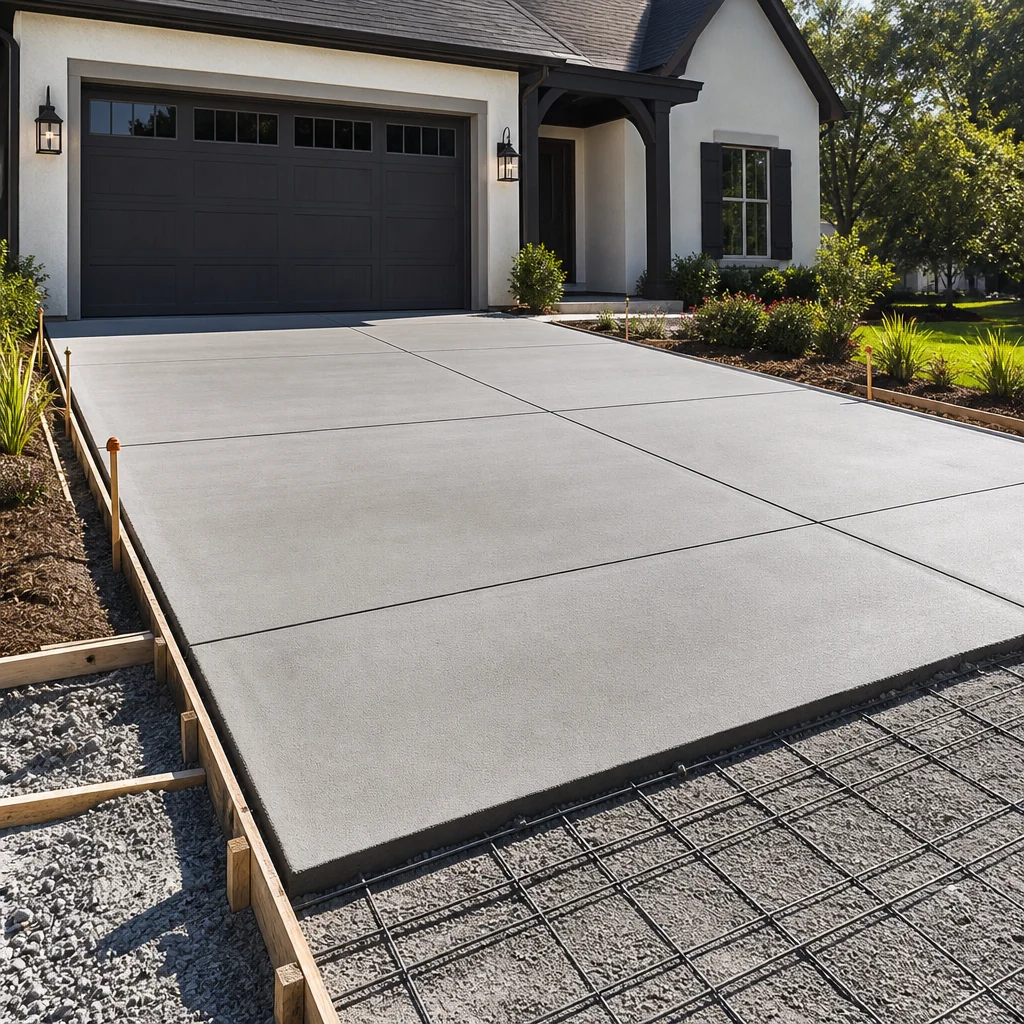
Our installation process includes specific steps to optimize curing in Louisiana’s heat and humidity. We begin with proper site preparation, ensuring excellent drainage so water doesn’t pool on or under your new concrete. Poor drainage is one of the leading causes of premature failure.
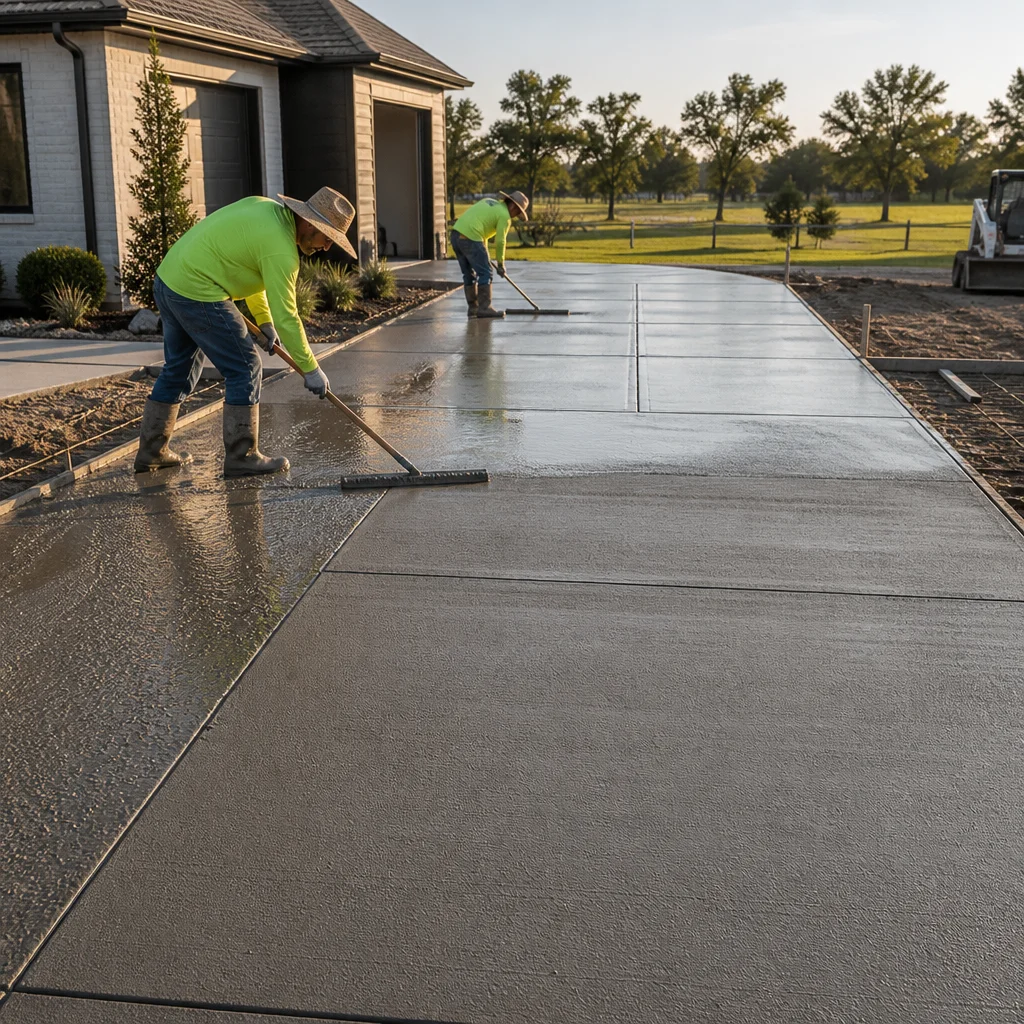
During the pour, we pay careful attention to concrete consolidation and finishing techniques that minimize surface cracking. We don’t rush the finishing process just because heat accelerates setting. Instead, we work deliberately to create a strong, smooth surface that will age well.
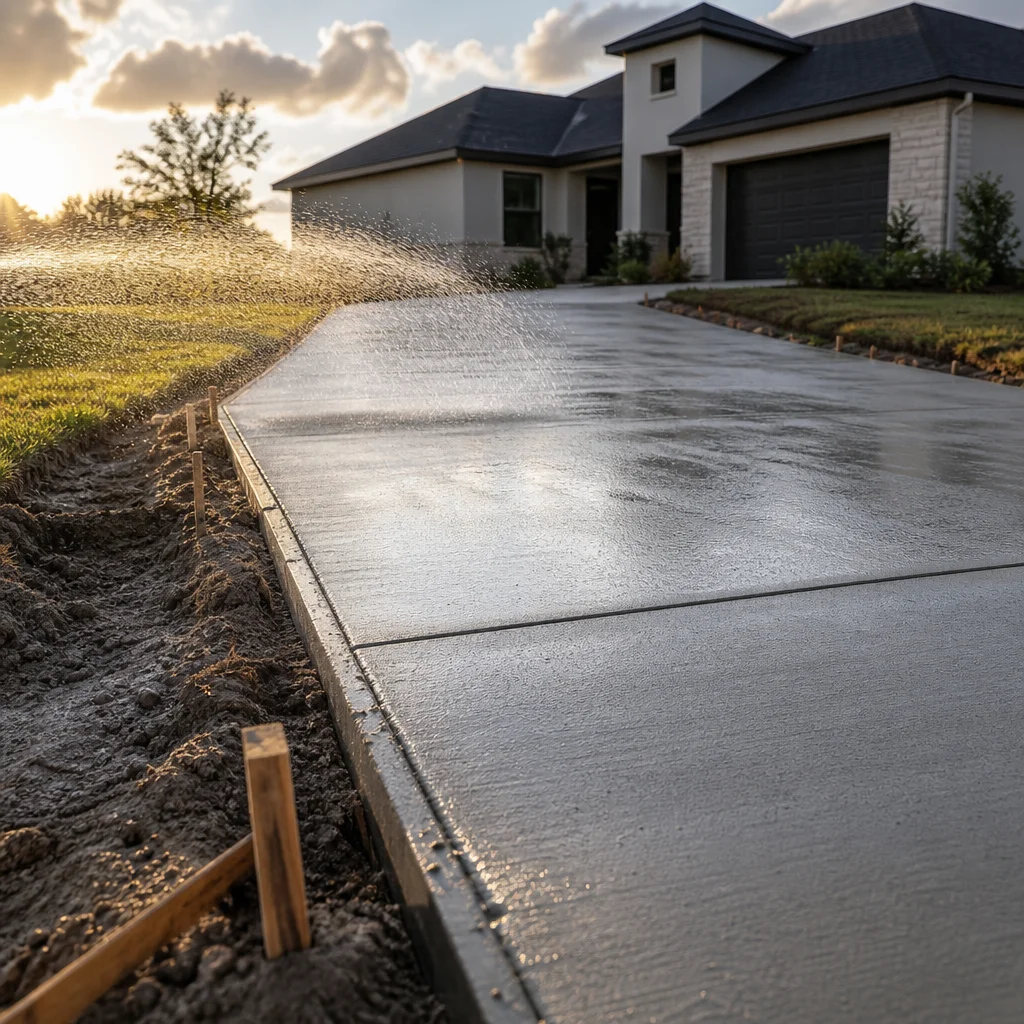
After pouring, we protect your concrete with curing compounds or moisture barriers that slow evaporation to an ideal rate. In summer heat, we may apply water mist to prevent the surface from drying too quickly while interior curing continues. This controlled approach prevents the internal-external stress that causes shrinkage cracks.
We also place temporary barriers around the site to keep vehicle and foot traffic away during the critical first week. Clear communication with our clients about these precautions prevents well-meaning neighbors or family members from stressing the concrete before it’s ready.
What You Should and Shouldn’t Do During Curing
During the curing period, your driveway requires specific care:
DO:
- Keep the surface clean from dirt and debris
- Allow light foot traffic after 24-48 hours if the concrete feels firm
- Water the concrete lightly if weather is exceptionally hot and dry
- Keep the surface protected from harsh weather if possible
DON’T:
- Drive vehicles on the driveway before the timeline we recommend
- Use salt or de-icing chemicals during the first month
- Allow pressure washing or power tools on the surface
- Expose the concrete to standing water or flooding
- Place heavy objects on the surface during the first 7-14 days
Sealing your driveway typically happens after 28 days of curing. Applying sealer too early traps moisture inside and can compromise the final finish. We guide each client on the ideal timing for sealing based on their specific installation conditions.
Protecting Your Investment: Post-Curing Maintenance
Once curing is complete, ongoing maintenance extends your driveway’s life significantly. We recommend annual cleaning to remove debris and prevent staining. Pressure washing at moderate settings (under 3000 PSI) works well without damaging the surface.
Sealant application every 2-3 years protects against UV damage, water penetration, and chemical exposure. Louisiana’s sun and humidity make sealing particularly important in our region. Regular sealing prevents the gradual degradation that leads to cracking and surface spalling.
Address small cracks immediately. Concrete repair becomes increasingly expensive the longer you wait, and Louisiana’s moisture climate means small cracks quickly become water entry points that cause deeper damage.
Our Proven Installation Process Ensures Proper Curing
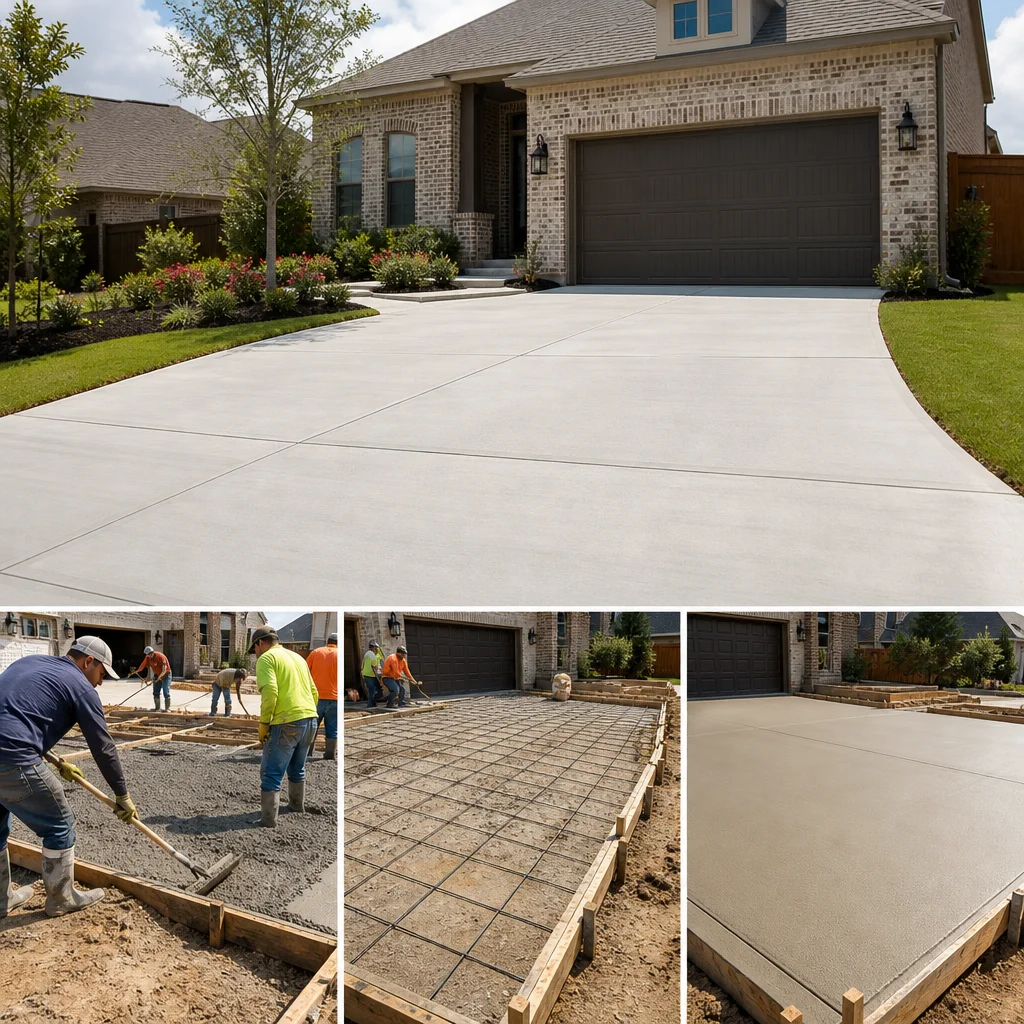
We’ve installed hundreds of driveways throughout Lafayette and understand exactly how to manage curing in our specific climate. Our process includes site assessment for drainage, proper excavation and base preparation, precise concrete mix selection, professional pouring and finishing, and tailored curing protocols based on seasonal conditions.
We monitor weather forecasts throughout the curing period and adjust our protection methods accordingly. If unexpected rain threatens, we increase drainage measures. If heat intensifies, we adjust misting schedules. This adaptive approach ensures your concrete cures optimally regardless of what Louisiana’s weather brings.
Our team remains available during the critical curing period to answer questions and address any concerns. We provide written curing instructions specific to your installation, so you’re never guessing about what’s appropriate during those first weeks.
When Your Driveway is Ready for Use
Your driveway reaches “usable strength” at different points depending on your plans. Light foot traffic is fine after 48 hours. Single passenger vehicles can use it safely after 7 days if conditions have been favorable. Regular vehicle traffic is appropriate after 14 days.
Wait the full 28 days before exposing your driveway to heavy vehicles, RVs, or trucks. If you’re concerned about timing, contact us to assess your specific installation and conditions. We can inspect the concrete and give you accurate guidance based on actual curing progress rather than just calendar days.
Common Mistakes That Compromise Driveway Longevity
The most frequent mistake we see is driving on concrete before it’s fully cured. Even if it feels solid, subsurface strength may not support vehicle weight. This causes internal cracking that worsens over time.
Another common error is poor drainage planning. Driveways that slope the wrong direction or lack proper base drainage fail prematurely because water undermines the concrete. This is preventable with correct installation but impossible to fix afterward.
Using rock salt or harsh de-icing chemicals during the first year accelerates surface deterioration. These chemicals penetrate micro-cracks in fresh concrete and expand with freeze-thaw cycles. Wait until the second winter to use these products, and even then, use them sparingly.
Finally, neglecting early sealing or using the wrong sealer product creates lasting problems. Some homeowners use automotive sealers or improper products that don’t protect concrete adequately. High-quality concrete sealer applied at the right time makes a dramatic difference in durability.
Get Your Professional Driveway Installation Today
If you’re planning a new driveway installation in Lafayette, we’re ready to help. Our concrete curing essentials guide provides additional detail on the science behind proper curing.
Contact us for a free, no-obligation estimate. We’ll assess your site, explain our process, and give you realistic timelines specific to current conditions. Our licensed, insured team handles everything from drainage planning through final sealing, so your driveway starts strong and stays strong for decades.
Proper concrete driveway curing in Louisiana heat requires knowledge, experience, and attention to detail. We bring all three to every project. Let’s build your driveway right.
Frequently Asked Questions (FAQ)
How long does concrete take to cure in Lafayette’s heat?
We typically advise our customers that concrete needs about 7 days of proper curing before light use, though full strength develops over 28 days. Louisiana’s heat and humidity actually speed up the initial curing process, but we take extra precautions to prevent rapid surface drying that could cause cracking. We manage moisture and temperature during installation to ensure your driveway cures evenly despite our humid climate.
What should we do or avoid while our new driveway is curing?
We recommend keeping vehicles and heavy equipment off your driveway for at least a week after installation. You should avoid power washing, sealing, or applying any coatings during the curing period, as these can interfere with the concrete’s development. Light foot traffic is generally fine after a few days, but we’ll provide specific guidance based on your particular installation.
Why does Louisiana’s weather affect concrete curing differently than other states?
Our combination of high temperatures and humidity creates unique curing conditions that differ from drier climates. We account for this by adjusting our installation techniques and protection methods to prevent issues like surface crazing or uneven curing. Our team has extensive experience managing these local conditions to ensure your concrete reaches proper strength and durability.