Why Foundation Cracks Demand Your Immediate Attention
A crack in your home’s foundation is unsettling, but not every crack signals disaster. Still, ignoring them entirely can be risky. Your foundation is literally what holds your house up, and cracks can range from harmless cosmetic issues to serious structural problems that compromise safety and property value.
In Lafayette, Louisiana’s climate with its moisture fluctuations and soil movement patterns, foundation cracks occur frequently. The difference between catching a minor issue early and letting it develop into a major problem often comes down to understanding what you’re looking at. Addressing foundation concerns promptly prevents water infiltration, mold growth, and expensive repairs down the road.
We’ve inspected hundreds of foundations across the Lafayette area, and we can tell you that property owners who act quickly on suspected problems spend far less overall than those who wait. Your first step is learning to distinguish between the two main categories of cracks so you know whether to call for professional help.
Understanding the Two Types of Foundation Cracks
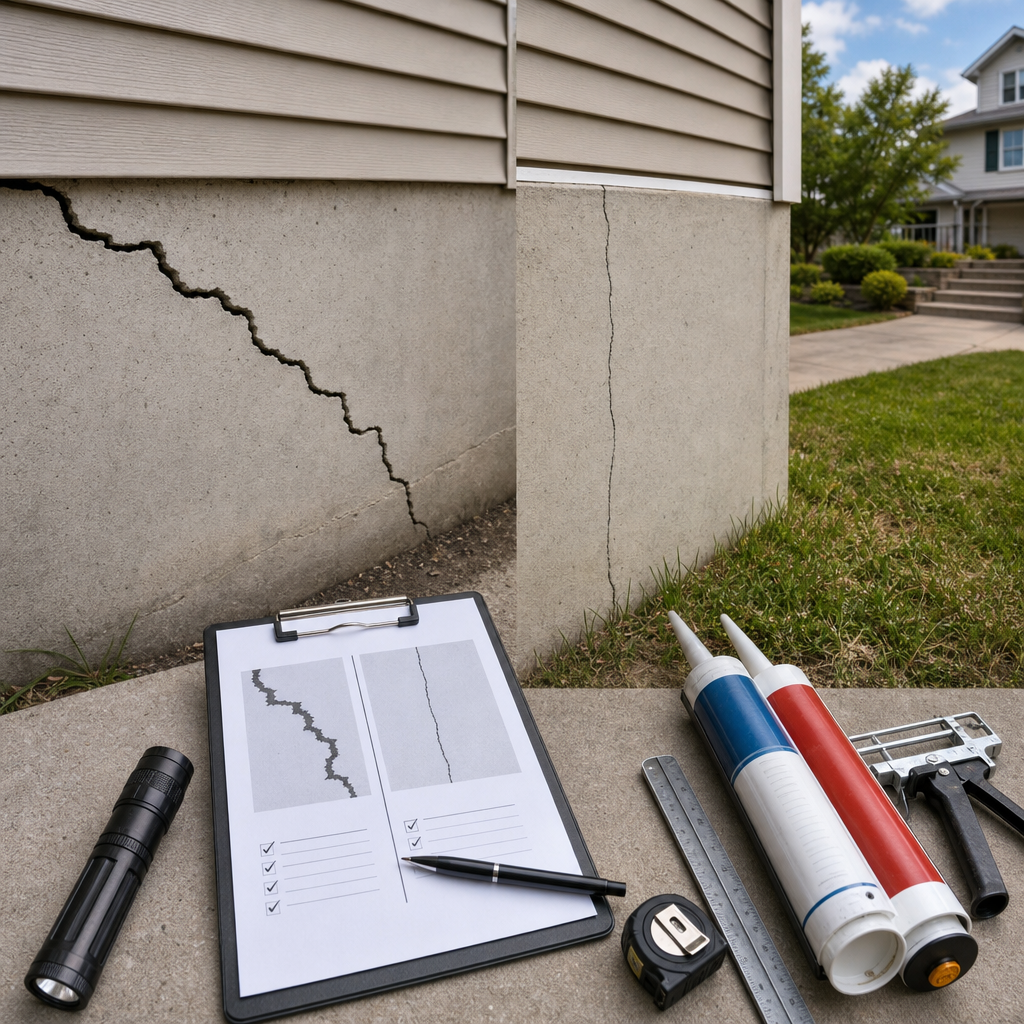
Foundation cracks fall into two distinct categories: structural and cosmetic. This distinction matters because it determines urgency, repair method, and cost.
Cosmetic cracks are surface-level issues that don’t threaten structural integrity. They’re typically hairline cracks, less than 1/8 inch wide, appearing in concrete slabs or basement walls. These develop from concrete curing, minor settling, or seasonal expansion and contraction. They’re common, often harmless, and rarely require expensive intervention.
Structural cracks indicate movement, stress, or weakness in the foundation itself. They’re usually wider (1/8 inch or larger), may leak, and signal that foundation components are shifting or experiencing loads they can’t handle. These cracks demand attention because they can worsen quickly and eventually affect your home’s structural integrity.
The key difference isn’t just the width or location, it’s what caused the crack and whether it’s likely to grow.
Structural Cracks: Recognizing the Warning Signs
Structural cracks have distinct characteristics that set them apart. Look for these red flags:
Width and pattern: Structural cracks are typically wider than 1/8 inch and often form in patterns rather than appearing as single lines. Diagonal cracks, multiple cracks running vertically, or cracks that step along mortar joints in foundation blocks are common structural patterns.
Horizontal cracks: Any horizontal crack in a foundation wall is concerning. Horizontal movement indicates lateral pressure from soil or water pushing against the foundation, a serious issue requiring professional assessment.
Leaking water: If water seeps through a crack during heavy rain or after wet weather, that’s structural. The crack has opened the foundation to water intrusion, which can lead to mold, deterioration, and further damage.
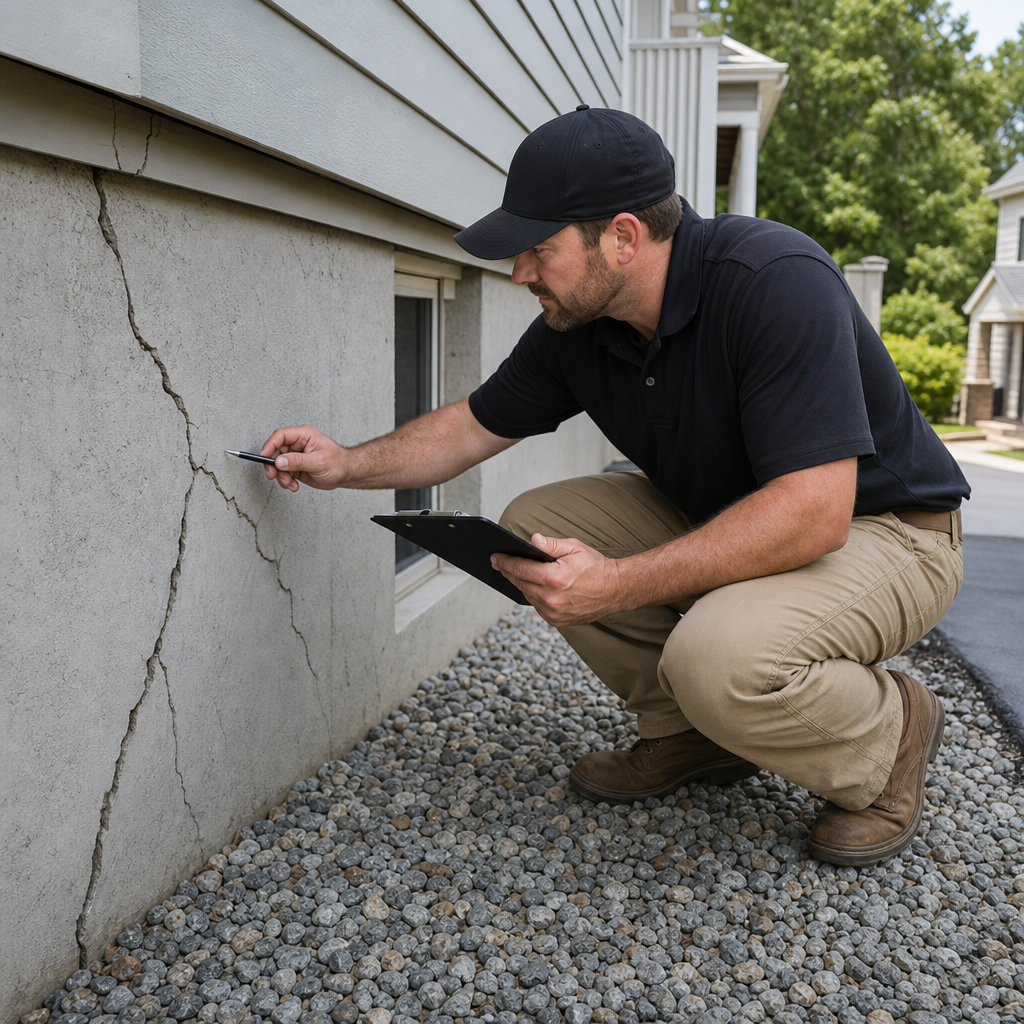
Growing cracks: If you notice a crack that appears larger than it was a few months ago, document it with photos and measurements. Progressive cracking indicates ongoing movement or settling.
Doors and windows jamming: When cracks are severe enough, they can cause foundation movement that misaligns door frames and window casings. Doors that stick or windows that won’t close properly can signal deeper foundation problems.
Bowing or bulging walls: This is an advanced sign. If foundation walls appear to bow inward or bulge outward, the foundation is under stress and needs immediate professional evaluation.
Cosmetic Cracks: When You Can Relax
Cosmetic cracks are common in concrete structures and don’t require emergency action. Here’s what to look for:
Hairline width: True cosmetic cracks are typically less than 1/8 inch wide, often thin enough that a credit card can’t fit into them.
Random single lines: Cosmetic cracks usually run in one direction without branching patterns. You might see a single crack running across a basement wall or patio.
Stable appearance: If a crack hasn’t changed in size over several months, it’s likely cosmetic. Document it with a photo and note the date, then recheck in three months.
No water intrusion: Cosmetic cracks rarely admit water. If your basement stays dry and the crack shows no signs of moisture, that’s a good indicator it’s superficial.
Age and location: New cracks in poured concrete slabs or walls are often cosmetic and appear as the concrete cures and shrinks slightly. Cracks along patio edges or in poured basement walls that don’t spread are typically harmless.
You can monitor cosmetic cracks yourself. They might never need repair, though some homeowners choose to seal them for aesthetics or to prevent minor water infiltration over decades.
How We Assess Your Foundation at Conkrete Workz
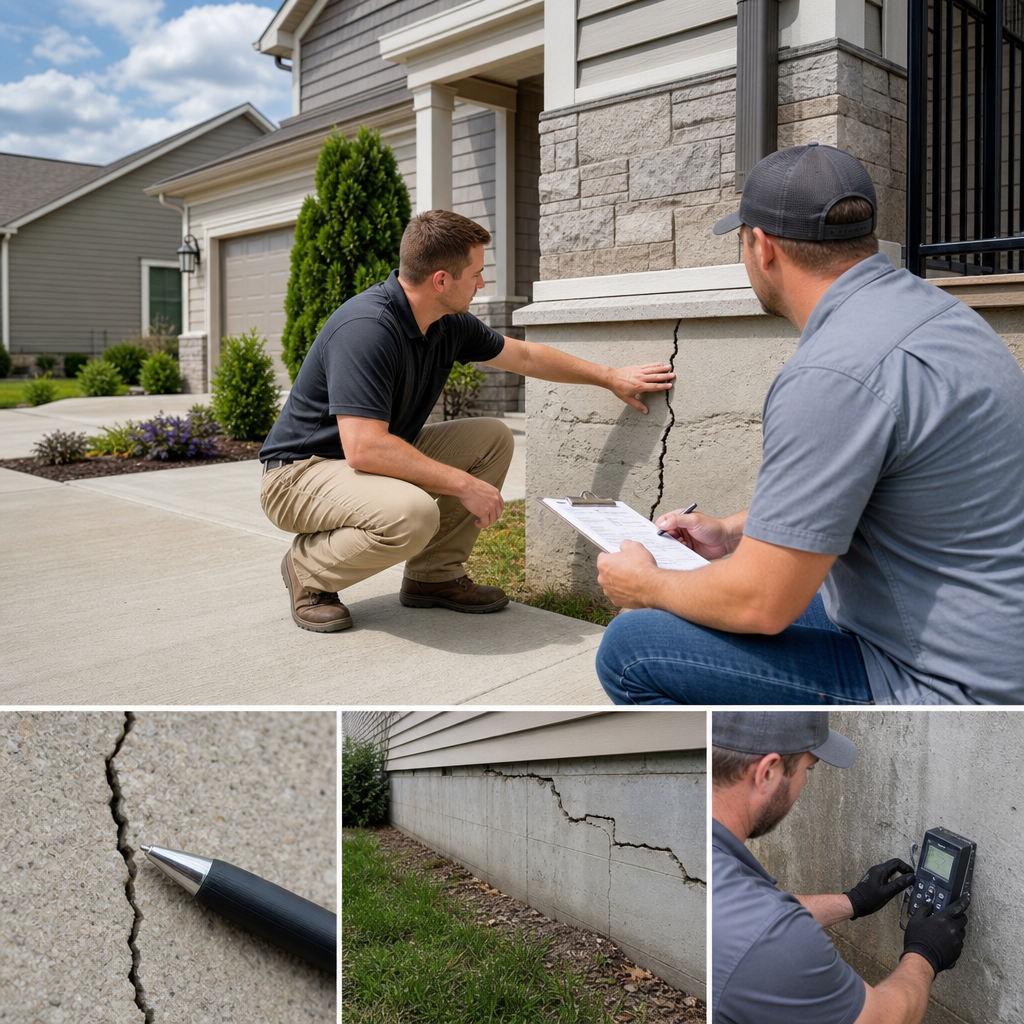
Our foundation assessment process combines visual inspection, measurement, and experience to classify your cracks accurately. We start by examining the crack carefully, noting its width, direction, pattern, and location. We measure the width at multiple points because cracks aren’t always uniform.
Next, we assess moisture and water intrusion risk. We check for efflorescence (white mineral deposits), water staining, or evidence of seepage. We also evaluate the overall condition of your foundation walls and slab, looking for other signs of movement or stress.
We ask about your home’s history: Has the crack appeared recently or has it been there for years? Have you noticed changes in doors, windows, or floors? Does water enter your basement during rain? These details help us understand whether movement is ongoing or stabilized.
For complex cases, we may recommend more advanced diagnostics like monitoring cracks over time with precision measurements or using specialized equipment to detect hidden damage. Our goal is to give you a clear, honest assessment so you understand exactly what you’re dealing with.
The Cost Difference Between Structural and Cosmetic Repairs
The financial gap between cosmetic and structural repairs is substantial. Cosmetic crack sealing typically costs between $100 and $300 per crack. We clean out the crack, apply caulk or sealant, and finish it. It’s straightforward and quick.
Structural repairs vary widely depending on the underlying cause and severity. If we’re addressing foundation settling, we might need to install piers or supports, costing $2,000 to $10,000 or more. If water pressure is forcing cracks, we may need to install interior or exterior drainage systems. Addressing bowing walls or major settlement issues can easily exceed $15,000.
The financial incentive to address structural issues early is clear: catching and fixing a widening crack while it’s still 1/4 inch wide is far cheaper than waiting until the foundation has shifted so much that doors won’t close and floors are uneven.
Our Professional Foundation Inspection Process
When we arrive for an inspection, we follow a systematic process. We examine all accessible foundation surfaces, both interior and exterior. We photograph and measure cracks, document their locations, and note any associated damage like mold, water staining, or structural shifts.
We assess drainage and grading around your home. Poor drainage or soil grading toward the house can cause foundation issues, so we evaluate these factors. We check for signs of pest damage, efflorescence, or deterioration in concrete joints.
We test for water intrusion by checking your basement or crawl space for moisture, dampness, or active leaks. We inspect the interior for signs of structural movement like wall cracks, floor unevenness, or misaligned door frames.
Finally, we discuss our findings with you, explain what we’ve observed, and provide recommendations. We explain whether your cracks are cosmetic or structural, what caused them, and what repair options exist. Our inspections are thorough because you deserve clarity before making decisions.
Why DIY Assessment Often Leads to Costly Mistakes
We understand the appeal of DIY evaluation, but foundation assessment requires experience. Well-meaning homeowners often misclassify cracks because they lack context about how foundations behave. A crack that seems minor might be early-stage structural movement. A crack that looks alarming might be entirely harmless.
Without proper tools and experience, you can’t accurately measure crack width or assess whether moisture is entering through a crack or from another source. You might seal a cosmetic crack unnecessarily, or worse, miss an early structural issue that could have been fixed affordably if caught in time.
Foundation problems are also progressive. A crack that’s 1/8 inch wide today might be 1/4 inch in six months if the underlying issue isn’t addressed. Early professional assessment gives you a chance to stop that progression. Waiting and hoping typically costs more.
Steps We Take to Repair Structural Foundation Issues
Our approach to structural repairs depends on the root cause. For foundation cracks caused by excess water pressure, we implement drainage solutions like interior sump pump systems, exterior French drains, or foundation coatings that prevent water from seeping through. These address the cause, not just the symptom.
For settling or movement-related cracks, we might recommend underpinning with adjustable piers, helical piers, or other support systems that stabilize the foundation and prevent further movement. These are more involved projects, but they’re often the only way to stop progressive damage.
For concrete crack repair itself, we use appropriate methods based on severity. Hairline structural cracks might be injected with polyurethane foam or epoxy that bonds the concrete. Larger cracks might require routing out the crack, cleaning it thoroughly, and filling it with specialized concrete repair material.
We always address the underlying cause first. Patching a crack without fixing what caused it is temporary and frustrating. We focus on permanent solutions that prevent recurrence.
Getting Your Free No-Obligation Foundation Estimate
When you notice foundation cracks, don’t wait and wonder. We offer free, no-obligation foundation estimates to Lafayette property owners. We’ll inspect your foundation, assess your cracks, explain what we’ve found, and provide a clear recommendation and quote for any work needed.
Contact us through our website at https://conkreteworkz.com/ or call us directly. We’ll schedule a convenient time, arrive with our inspection tools and expertise, and give you honest guidance. Whether your cracks are cosmetic or structural, whether you ultimately choose us or another contractor, you’ll understand exactly what you’re dealing with.
Your home’s foundation is too important to guess about. Let our experienced team provide the clarity and professional assessment you need to make informed decisions.
Frequently Asked Questions (FAQ)
What’s the difference between structural and cosmetic foundation cracks?
Cosmetic cracks are surface-level issues that don’t affect your home’s stability, while structural cracks indicate movement or damage that compromises the foundation’s integrity. We recommend having any crack larger than 1/8 inch wide or cracks that run horizontally or diagonally inspected by our team, as these patterns often signal structural concerns that need professional attention.
How do we determine if my foundation crack is serious?
Our inspection process involves measuring crack width and direction, examining surrounding areas for additional damage patterns, and checking for signs of water intrusion or foundation settlement. We also assess whether cracks are actively growing or stable, which helps us recommend the right repair approach tailored to your specific situation.
Should I attempt to repair foundation cracks myself?
We strongly advise against DIY foundation repairs because misdiagnosis can be costly and dangerous. What appears to be a minor cosmetic crack may actually be the visible symptom of a deeper structural problem, and using the wrong repair method can allow damage to worsen over time.