Why Damaged Sidewalks Put Your Property at Risk
Sidewalks take a beating in Louisiana. Freeze-thaw cycles, moisture infiltration, heavy foot traffic, and tree root pressure all work against your concrete over time. A cracked or uneven sidewalk isn’t just an eyesore—it creates genuine safety hazards and legal liability for your property. We’ve repaired hundreds of damaged sidewalks throughout Lafayette and the surrounding area, and we’ve learned exactly what causes failure and how to prevent it.
This guide covers what you need to know about sidewalk damage, local compliance requirements, and how professional repair protects both your property and your neighbors.
Damaged sidewalks create three distinct problems: personal injury liability, accelerated deterioration, and code violations that can trigger fines or repair orders from the city.
When someone trips on a raised or cracked section of your sidewalk, you may be held liable for their injuries. Louisiana property owners have a legal duty to maintain safe conditions on their premises, including adjacent public sidewalks in many cases. A documented fall resulting in medical bills could lead to a personal injury claim against your homeowner’s or commercial liability insurance. Even if insurance covers the claim, your rates increase and your reputation suffers.
Beyond liability, small cracks and chips expand rapidly. Water seeps into hairline fractures, freezes during cold snaps, and exerts pressure that widens the damage. What starts as a quarter-inch crack becomes a half-inch gap in one winter season. Tree roots pushing against deteriorating concrete accelerate this process even more. Within a few years, you’re facing a complete sidewalk replacement instead of a simple repair.
Lafayette’s city codes also specify sidewalk condition standards. If your sidewalk shows significant damage, trip hazards exceeding a certain height difference, or surface defects, the city can issue a notice requiring repairs within a specified timeframe. Ignoring these notices carries financial penalties and can complicate property sales or insurance claims.
The takeaway: address sidewalk damage early, before it becomes a safety incident, a financial headache, or a code enforcement issue.
Common Sidewalk Problems We Address in Lafayette
We’ve identified several recurring damage patterns unique to our climate and soil conditions.
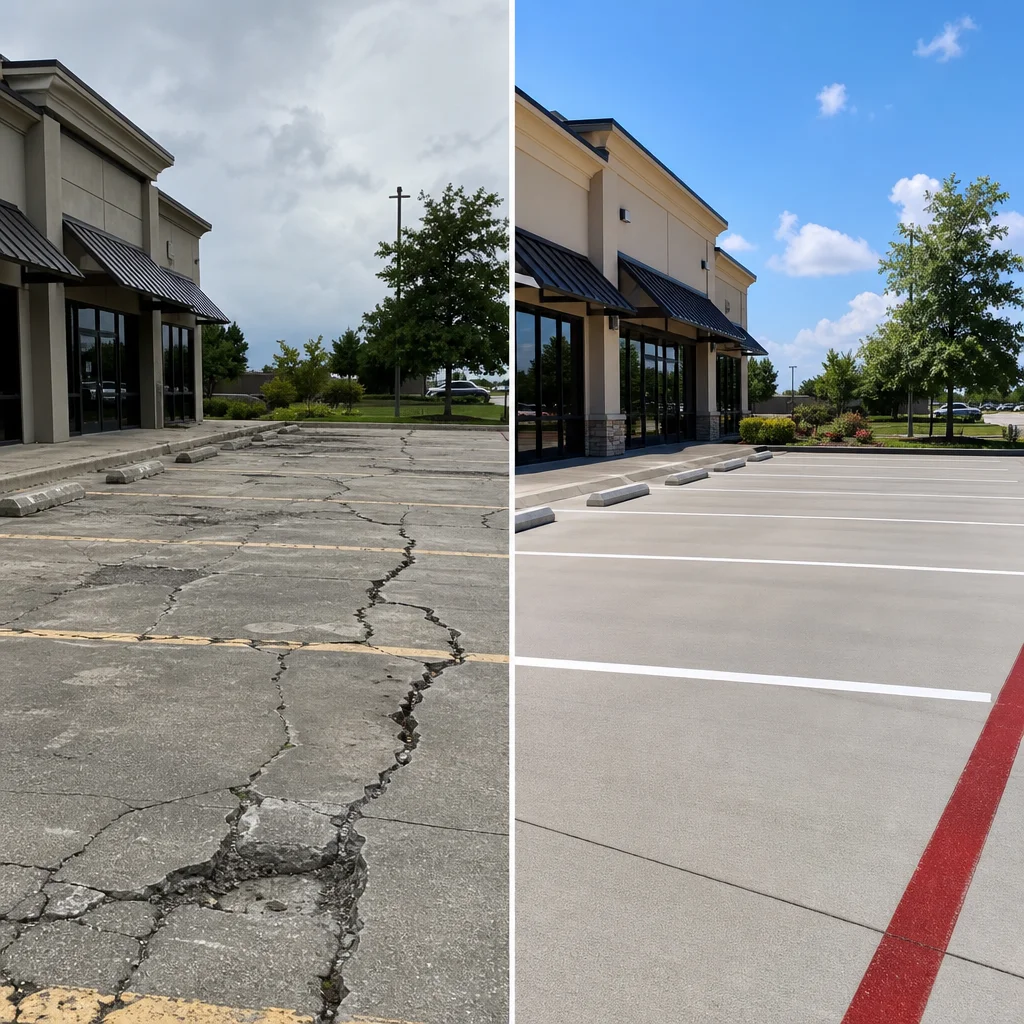
Concrete cracks are the most common issue. Horizontal shrinkage cracks appear as the concrete cures and loses moisture. These are often cosmetic but do allow water infiltration. Linear cracks running perpendicular to traffic patterns indicate settling or thermal stress. Alligator cracking (a pattern of intersecting cracks resembling an alligator’s skin) signals structural failure beneath the surface and requires more aggressive intervention.
Trip hazards and uneven surfaces occur when sections settle at different rates or tree roots lift sections upward. Even a quarter-inch elevation change creates a tripping hazard. Elderly pedestrians and people with mobility challenges are especially vulnerable.
Spalling and scaling happen when the concrete surface flakes or peels away. This typically results from salt exposure (both road salt and chemical de-icing products) or moisture cycling. The damage is usually concentrated near the surface but indicates the concrete’s durability is compromised.
Potholes and surface erosion develop where water collects or traffic is heaviest. These expand quickly because water continuously washes away the damaged concrete particles.
Root damage is especially prevalent in Lafayette, where mature trees line many streets. Tree roots seeking moisture naturally grow toward sidewalk edges and eventually push concrete upward or create voids beneath the slab.
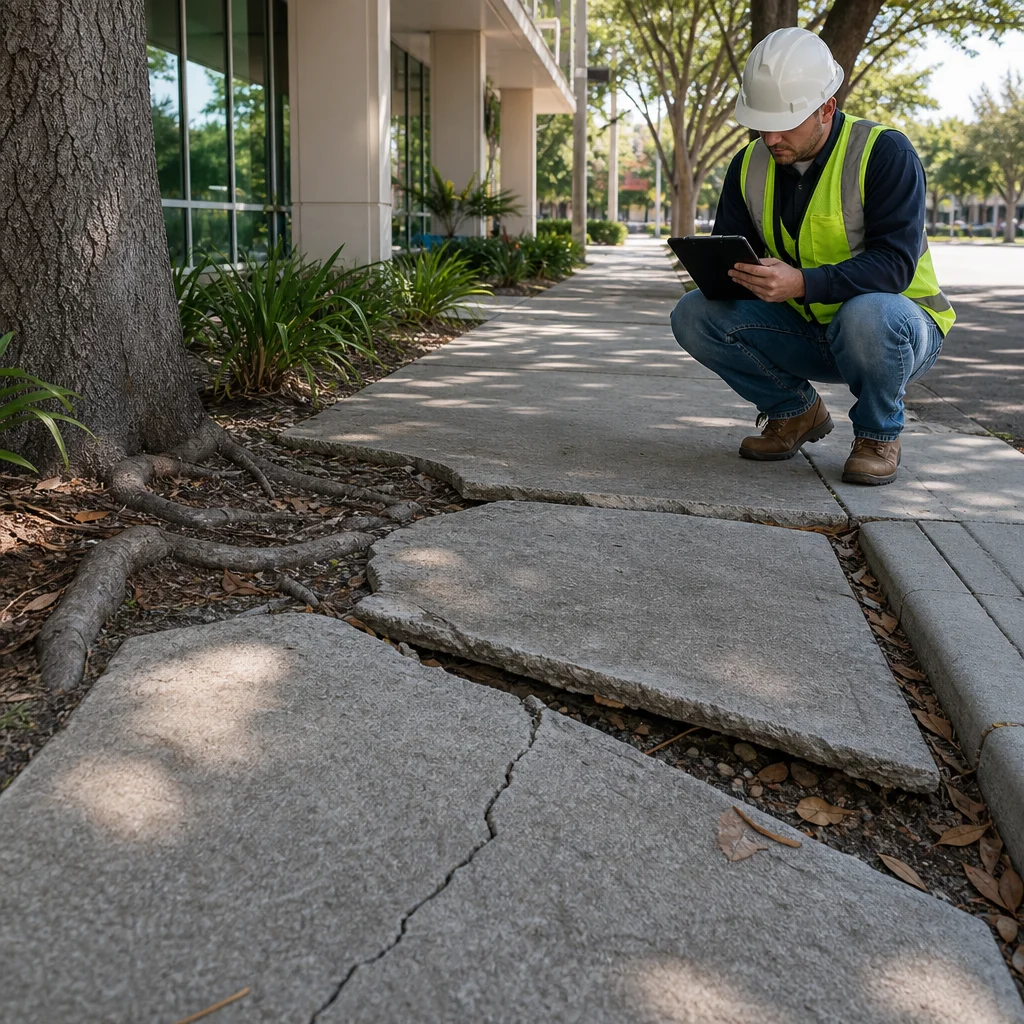
Each of these problems requires a different repair approach. A surface crack might need sealing; an uneven section might need mud-jacking or grinding; severe spalling might require partial removal and replacement. Proper diagnosis determines the right solution.
Local Safety Codes and Compliance Requirements
Lafayette follows the International Building Code (IBC) and Louisiana State Building Standards, which set minimum requirements for sidewalk condition. The city’s Public Works Department enforces these standards through regular inspections and complaint-driven enforcement.
Key compliance points include:
- Trip hazard limits: Any vertical change between adjacent concrete sections exceeding 1/4 inch is considered a trip hazard and must be corrected.
- Surface smoothness: Sidewalk surfaces must be reasonably smooth and free of pronounced ridges, depressions, or defects that create stumbling hazards.
- Width requirements: Most residential sidewalks must be at least 4 feet wide; commercial sidewalks have varying width requirements depending on location and expected foot traffic.
- Slope and drainage: Sidewalks must slope away from adjacent structures at a minimum of 1/8 inch per foot to prevent water accumulation.
- Load capacity: Sidewalks must support typical pedestrian loads without cracking or settling.
When the city identifies non-compliant sidewalks, property owners receive a notice with a repair timeline (typically 30-90 days, depending on severity). Delaying repairs can result in fines ranging from $100 to $500 per day of non-compliance, depending on the specific violation.
If you’ve received a code enforcement notice or are uncertain whether your sidewalk meets current standards, contact us for an inspection and assessment. We can identify specific code violations and recommend the most cost-effective repair approach to bring your property into compliance.
How Our Repair Process Ensures Long-Term Durability
Our concrete sidewalk repair process focuses on addressing root causes, not just surface symptoms.
We start with a thorough inspection and assessment. This includes identifying the underlying cause of the damage (settling, moisture, tree roots, structural issues), determining whether the damage is expanding, and evaluating whether repair or replacement is more practical. We document everything with photos and measurements so you understand exactly what we’re addressing.
For cracks and minor surface damage, we use industrial-grade concrete sealants that flex with temperature changes and prevent water infiltration. We clean the crack thoroughly, apply primer if needed, and fill with polyurethane or epoxy compounds that bond chemically to the existing concrete. This approach stops the crack from expanding and extends the sidewalk’s functional life by several years.
For uneven sections caused by settling, we may use concrete leveling (mud-jacking or polyurethane foam injection). This process pumps material beneath the sunken section to gradually raise it back to proper height and grade. It’s less invasive than removal and replacement, costs significantly less, and preserves the original concrete if it’s otherwise sound.
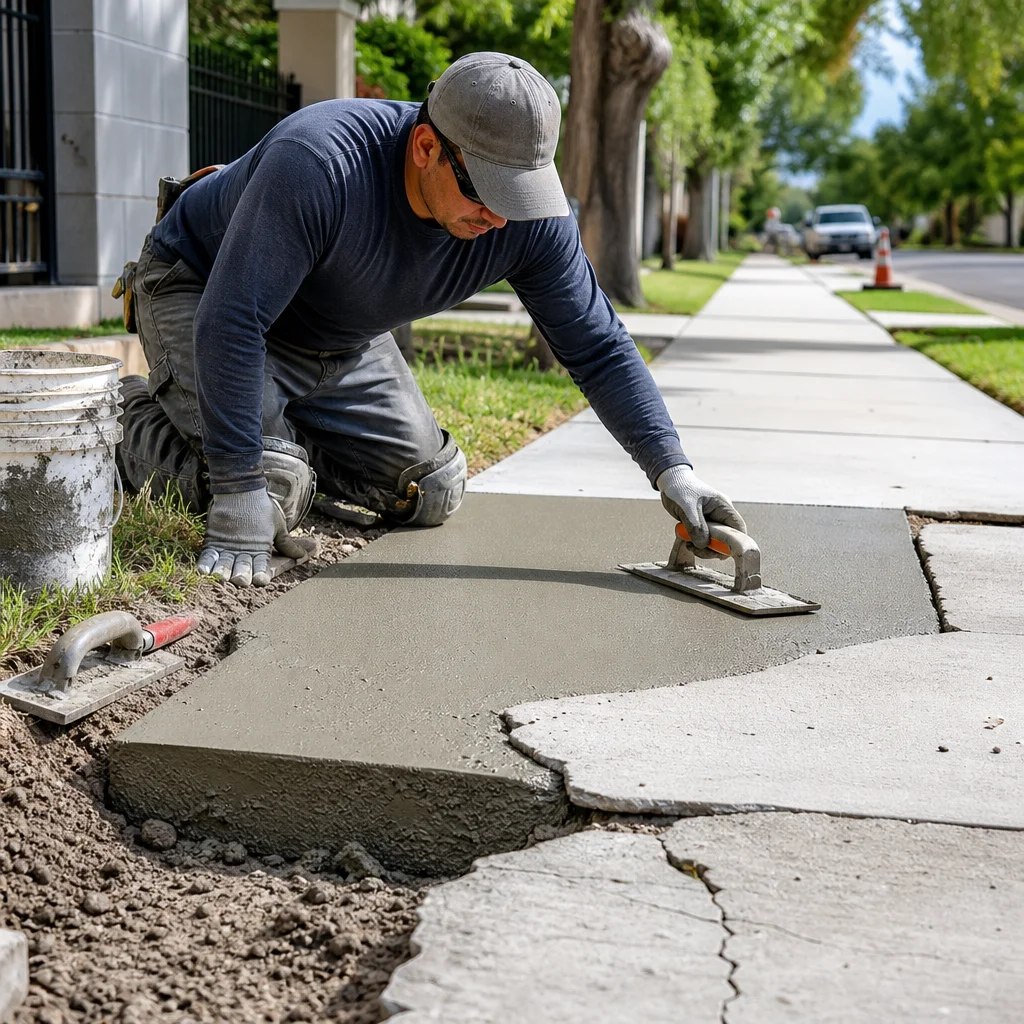
For severe damage, spalling, or structural issues, we remove the affected section and pour new concrete matching the existing grade and slope. We use quality concrete mix designed for Louisiana’s climate, with proper air entrainment to resist freeze-thaw damage and salt exposure. We finish the surface with the same texture and appearance as surrounding concrete for a seamless repair.
Throughout the repair process, we pay careful attention to proper slope (1/8 inch per foot away from structures), adequate curing time (we typically protect newly poured concrete for 7 days), and proper joint spacing to minimize future cracking.
Preventive Maintenance to Extend Sidewalk Life
A few straightforward maintenance practices significantly extend sidewalk lifespan and prevent many common problems.
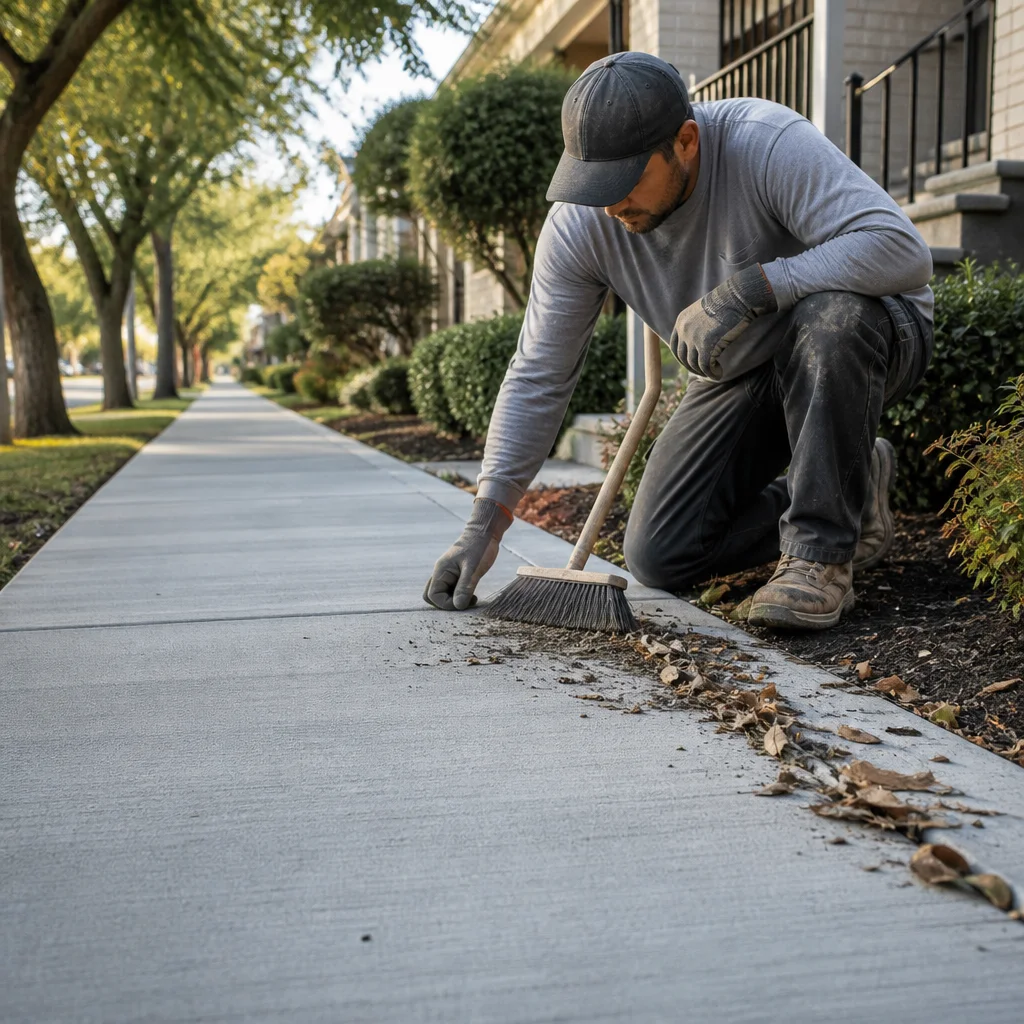
Clear debris and vegetation regularly. Remove leaves, dirt, and organic matter from the sidewalk surface and nearby. Decomposing vegetation retains moisture and promotes concrete deterioration. Trim tree branches and roots as needed to prevent contact with the concrete.
Address water drainage issues. Ensure water from gutters, downspouts, and grading doesn’t pool on or near your sidewalk. Standing water accelerates deterioration and promotes algae growth. If your sidewalk is collecting water, consider directing drainage away or adding gentle slope adjustments.
Limit salt and chemical exposure. While road salt is often applied by the city, minimize additional salt use on your own sidewalk during winter. Sodium chloride penetrates concrete and initiates corrosion of embedded reinforcement. If you must use de-icing products, opt for calcium chloride (less damaging) or sand for traction instead.
Seal cracks promptly. Don’t wait for small cracks to expand. Contact us as soon as you notice a new crack forming. Early sealing costs a fraction of later repair.
Schedule annual inspections, especially after severe weather or if you live near large trees. Identifying problems early prevents expensive repairs and code compliance issues.
Our Free No-Obligation Sidewalk Estimate Process
We offer free estimates for all sidewalk repair and replacement work. There’s no obligation, no pressure, and no hidden fees.
Here’s how it works:
- Contact us via phone or our website with photos and a description of the damage.
- We schedule a convenient time to visit your property and inspect the sidewalk thoroughly.
- During the inspection, we assess the damage, identify root causes, discuss repair options, and explain the pros and cons of each approach.
- We provide a detailed written estimate that outlines the scope of work, materials, timeline, and cost.
- You review the estimate and decide whether to proceed. Many property owners use our estimate alongside other quotes to make an informed decision.
Our estimates typically include photos of the damage, specific details about the repair method, recommended preventive maintenance, and estimated durability of the repair. We’re transparent about what we can and cannot fix and honest about whether repair or replacement makes sense for your specific situation.
Ready to get started? Check out our guide to getting a free Lafayette concrete estimate for tips on preparing for the inspection and evaluating contractor proposals.
Why Lafayette Property Owners Trust Our Team
We’ve been serving Lafayette and surrounding areas for years, building a reputation for honest assessments, quality work, and reliable service. Here’s what sets us apart:
Licensed and insured: We carry all required licenses and liability insurance. Your property is protected if anything goes wrong during the repair process.
Local expertise: We understand Lafayette’s climate, soil composition, and local code requirements. We know which repair methods work best for our specific conditions and which problems are most common in our area.
Transparent communication: We explain the damage in plain language, discuss repair options honestly, and never oversell unnecessary work. You’ll know exactly what you’re paying for and why.
Quality materials and workmanship: We use concrete mixes and sealants formulated for Louisiana’s freeze-thaw cycles and moisture. Our installation follows industry best practices and local code requirements.
Warranty and follow-up: We stand behind our work with appropriate warranties and check in after completion to ensure you’re satisfied.
Browse our full range of concrete services for Lafayette property owners to see our experience with driveways, patios, foundations, and other concrete work.
Getting Started With Professional Sidewalk Repair
If you’ve noticed cracks, uneven sections, spalling, or other sidewalk damage, the first step is a professional assessment. Small problems today become expensive problems later. Code violations carry penalties and complicate property transactions. Safety hazards expose you to liability.
Here’s what to do next:
- Document the damage with a few clear photos showing the affected area from multiple angles.
- Note any trip hazards, water pooling, or other safety concerns.
- Contact us via phone or our website to schedule a free no-obligation estimate.
- During the inspection, we’ll explain what caused the damage, what repair options exist, and what the work will cost.
- Review our estimate and decide whether to move forward.
We’re here to help keep your Lafayette property safe, compliant, and attractive. Whether you need a simple crack seal, concrete leveling, or complete sidewalk replacement, we have the expertise and experience to do the job right. Reach out today to get your free estimate.
Frequently Asked Questions (FAQ)
What types of sidewalk damage do we repair in Lafayette?
We handle a wide range of concrete sidewalk issues including cracks, uneven surfaces, spalling, and crumbling edges. Our team addresses everything from minor surface damage to structural problems that pose safety hazards to pedestrians. We assess each situation during our free estimate to determine the best repair approach for your specific situation.
How do we ensure our sidewalk repairs meet Lafayette’s safety codes?
We stay current with local safety regulations and compliance requirements that apply to residential and commercial properties in Lafayette. Our repairs are designed to eliminate trip hazards and meet code standards for proper surface elevation and durability. When we complete your project, you can be confident that your sidewalk meets all applicable safety guidelines.
What’s included in your free sidewalk repair estimate?
We visit your property to inspect the damage, discuss your concerns, and evaluate repair options without any obligation. Our estimate covers the scope of work needed, materials, timeline, and cost so you have all the information to make your decision. We answer your questions during this process and explain how our repair methods will extend your sidewalk’s lifespan.