Why Patio Finish Choice Matters in Lafayette’s Humid Environment
Lafayette’s subtropical climate presents unique challenges for concrete patios. High humidity, frequent rainfall, and temperature swings stress unprotected surfaces year-round. The choice between sealed and unsealed concrete isn’t just aesthetic—it directly determines how long your patio will remain structurally sound and attractive.
We’ve seen countless patios in the Lafayette area deteriorate prematurely simply because property owners didn’t understand what their concrete actually needed. An unsealed patio might look fine at first, but within a few seasons, moisture infiltration creates problems that become expensive to fix. Sealing your concrete patio is a proactive investment that pays dividends through decades of reliable performance.
Your patio finish choice affects not only durability but also maintenance costs, appearance, and the overall value of your property. Understanding these differences helps you make an informed decision that aligns with your budget and long-term plans.
Unsealed Concrete Patios: The Hidden Risks
Unsealed concrete is porous. It absorbs water like a sponge, and in Lafayette’s wet environment, that spells trouble. Without a protective barrier, moisture penetrates the surface and travels through the concrete matrix, triggering a chain reaction of damage.
The primary risks include:
- Freeze-thaw cycling damage: While Lafayette winters are mild, temperature fluctuations still occur. Water trapped inside concrete expands when it cools, creating internal pressure that eventually causes cracking and spalling.
- Efflorescence: A white, chalky residue appears on the surface as water carries salts and minerals to the top. Beyond being unsightly, it indicates active moisture movement.
- Staining and discoloration: Unsealed concrete stains easily from dirt, algae, mold, and organic debris—all common in humid climates.
- Structural deterioration: Repeated moisture cycles weaken the concrete itself, reducing its lifespan by 50% or more compared to sealed alternatives.
Unsealed patios also become slippery when wet, creating safety hazards for you and your guests. The surface degrades faster under UV exposure too, losing its original appearance within just a few years.
How Moisture Damage Develops in Our Climate
Lafayette receives significant rainfall throughout the year, and our humidity levels remain high even between storms. This constant moisture exposure accelerates concrete degradation through several mechanisms.
Water enters unsealed concrete through capillary action and direct absorption. Once inside, it travels through microscopic pores, carrying dissolved minerals and salts deeper into the material. In humid conditions, evaporation happens slowly, so moisture lingers and concentrates within the concrete structure. This prolonged exposure weakens the cement paste that binds aggregate particles together.
When temperatures drop even slightly, any moisture in the concrete can freeze, expanding by approximately 9 percent. This expansion creates microcracks that grow larger with each cycle. Over time, these cracks connect and widen, allowing even more water infiltration. The problem compounds exponentially—by year three or four, you’re likely looking at significant surface damage and structural concerns.
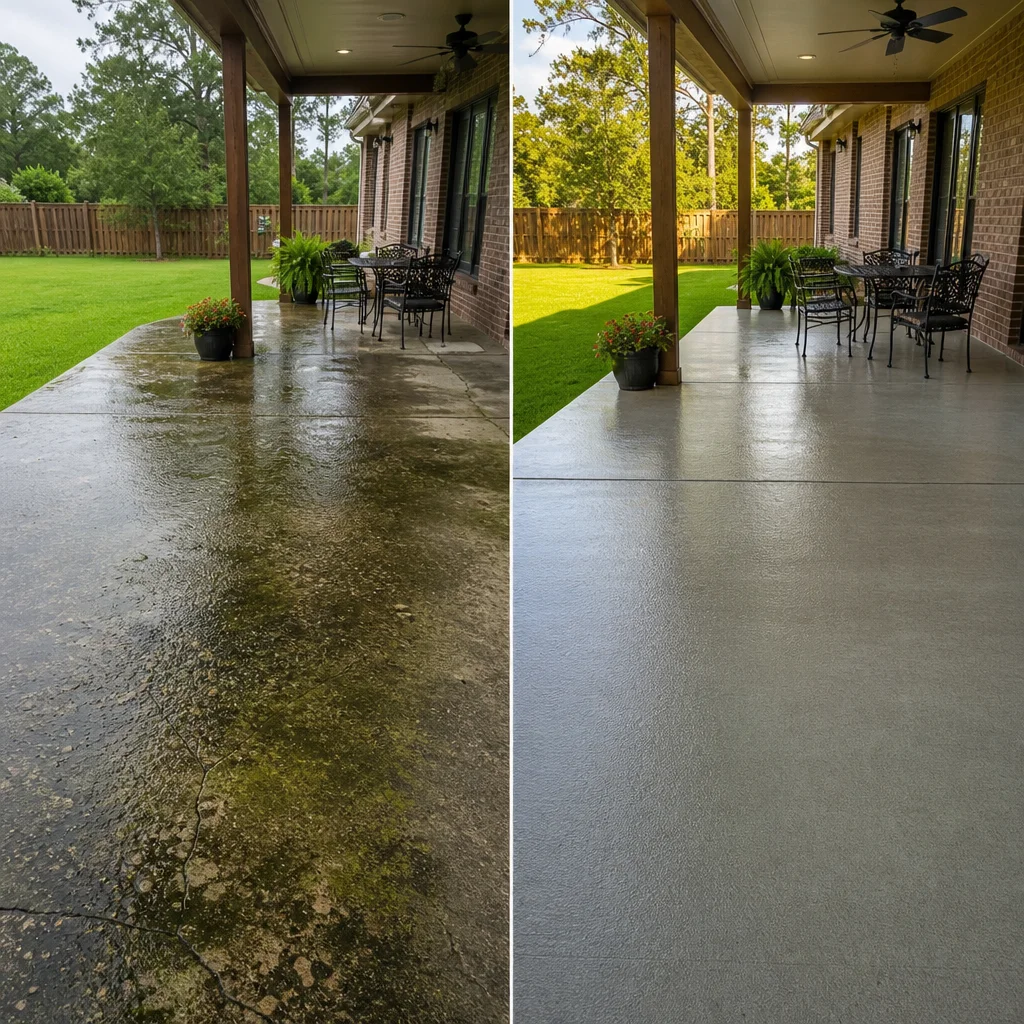
Salt from nearby groundwater or applied de-icers (though rare in Lafayette) accelerates this deterioration by chemically attacking the cement matrix. For commercial properties or patios near roadways, this risk increases substantially.
Sealed Concrete Patios: Superior Protection and Performance
Sealing concrete creates a protective barrier that blocks moisture infiltration while still allowing the material to breathe. Professional-grade sealers don’t sit on top of the concrete like paint; they penetrate slightly and form a chemical bond that becomes part of the surface.
A properly sealed patio prevents water from entering the concrete in the first place. Without moisture intrusion, freeze-thaw damage becomes impossible, efflorescence disappears, and the concrete maintains its structural integrity for decades. Sealed surfaces also resist staining, remain less slippery in wet conditions, and preserve their original appearance much longer.
The seal also provides UV protection, slowing the natural fading and graying that occurs when unsealed concrete oxidizes under sunlight. Your patio retains its rich color and fresh appearance year after year, requiring far less effort to keep clean.
Our Proven Sealing Solutions for Long-Lasting Results
We apply two main types of concrete sealers depending on your patio’s specific needs and your aesthetic preferences.
Penetrating sealers soak into the concrete and cure beneath the surface. They don’t change the patio’s appearance significantly but provide excellent water resistance and allow moisture vapor to escape. These work well if you prefer the natural look of concrete while gaining protection.
Topical sealers create a visible protective layer on the surface. They enhance color depth and can provide a matte, satin, or high-gloss finish depending on the product. Topical sealers offer superior stain resistance and typically last longer between reapplications.
We recommend quality, UV-stable formulations engineered for Louisiana’s climate. Budget sealers break down quickly under intense sun and humidity, requiring frequent resealing that becomes costly. Professional-grade products we use are designed to last 3-5 years on average, with some lasting even longer under typical residential conditions.
Our team applies sealers using professional equipment that ensures even coverage and proper curing. This attention to application technique is just as important as the product itself—improper sealing leaves weak spots where water can still penetrate.
Comparing Durability: Sealed vs Unsealed Over Time
The durability gap between sealed and unsealed concrete widens each year in Lafayette’s climate. Here’s what you can realistically expect:
Unsealed concrete: By year 2-3, surface discoloration and minor staining become visible. By year 4-5, small cracks appear, often radiating from corners or edges. By year 7-10, significant spalling, cracking, and structural concerns emerge. Many unsealed patios require expensive repairs or replacement by year 10.
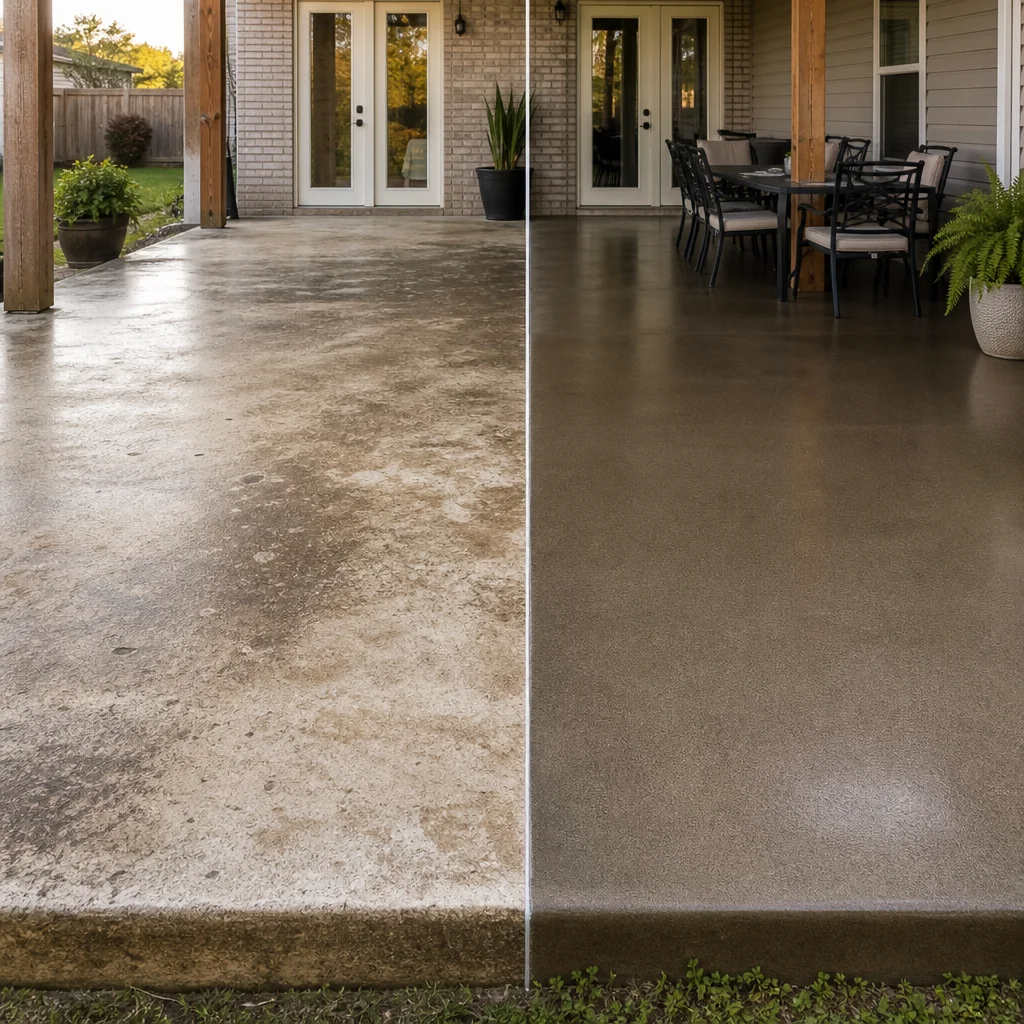
Sealed concrete: After year 1-2, minimal visual changes occur. The surface remains clean and protected. Around year 3-4, we recommend resealing to refresh protection. If properly maintained with periodic resealing, sealed concrete patios routinely last 20-30 years or longer.
That’s not hyperbole—we’ve maintained sealed patios throughout Lafayette that have performed flawlessly for two decades. The cost difference between sealing every 3-4 years pales in comparison to the expense of structural repairs or complete patio replacement.
Maintenance Requirements: What You’ll Actually Spend
Unsealed patios demand constant attention in our humid environment. You’ll need to power wash frequently to manage algae, mold, and dirt accumulation. Stains set quickly and become permanent if not treated immediately. You’ll spend time and money on stain removers and cleaning solutions just to keep the patio looking acceptable.
Sealed patios require minimal upkeep. Regular sweeping and occasional gentle washing with mild soap and water keeps them clean. Because the seal prevents staining, dirt doesn’t bond to the surface the way it does on unsealed concrete. Most debris simply washes away with a light rinse.
The primary maintenance task is resealing every 3-4 years. This is straightforward and far less expensive than dealing with damage from moisture infiltration. Over a 20-year period, periodic resealing costs a fraction of what you’d spend on repairs for an unsealed patio that deteriorates.
For commercial properties or high-traffic areas, the maintenance savings increase even more. We can help you develop a maintenance schedule that fits your specific situation and budget.
Aesthetic Benefits of Professional Sealing
Beyond protection, sealing transforms how your patio looks. A fresh seal enhances the concrete’s color, making grays richer and any decorative finishes more vibrant. The surface gains depth that simple concrete lacks.
If you chose a decorative finish like stained or stamped concrete, sealing is essential to make those investments shine. Color-enhancing sealers can bring out subtle tones you might not have appreciated in the raw concrete. Glossy finishes create a sophisticated appearance, while matte sealers provide a contemporary, understated look.
Your patio becomes an extension of your home that you can actually enjoy without worrying about appearance. Guests notice the difference between a tired, stained patio and one that’s been properly sealed. It signals that you maintain your property and care about quality.
Why We Recommend Sealed Finishes for Every Lafayette Property
After decades of experience serving Lafayette property owners, we’ve seen the long-term outcomes of both approaches. Sealed concrete consistently outperforms unsealed alternatives in our climate. The initial cost difference is modest, but the value difference over time is substantial.
Whether your patio serves a residential family gathering space or supports commercial operations, sealing is the clear choice. Weatherproof patio solutions in Louisiana aren’t optional extras—they’re necessities in our environment.
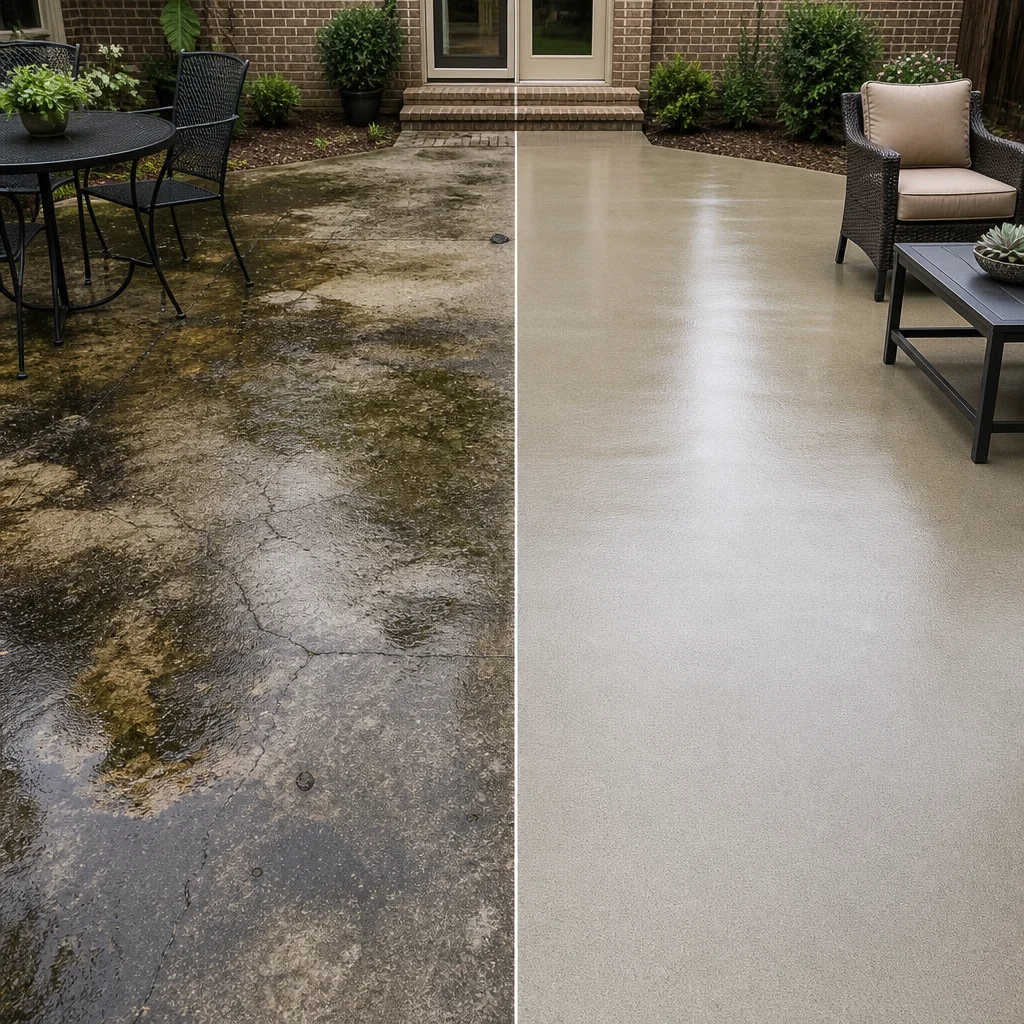
Unsealed patios are essentially a ticking clock. You’ll eventually face the same sealing expense anyway, but only after allowing years of preventable damage to occur. Starting with a proper seal protects your investment from day one and saves money across the entire lifespan of your patio.
We’ve built our reputation on honest recommendations and quality workmanship. We don’t push sealing as an upsell—we recommend it because it’s the right decision for every Lafayette property owner who wants a durable, attractive patio that lasts.
Getting Your Durable Patio Started Today
Ready to protect your patio investment? We’re here to guide you through the process from start to finish.
Our first step is a free no-obligation estimate. We’ll inspect your existing patio or discuss your new installation plans, assess your specific needs, and recommend the sealing solution that makes sense for your property and budget. We’ll explain the differences between options clearly so you understand exactly what you’re getting.
If you’re planning a new patio, we can integrate professional sealing into the installation process, ensuring optimal results from day one. If you have an existing patio, we can prepare the surface properly before applying the seal, addressing any minor damage and cleaning thoroughly to maximize sealer performance.
Contact us today to schedule your free estimate. We’ll show you how sealed concrete performs in Lafayette’s climate and help you make the investment that keeps your patio beautiful and functional for decades to come.
Frequently Asked Questions (FAQ)
What’s the main difference between sealed and unsealed concrete patios in Lafayette?
We’ve found that unsealed patios absorb moisture from our humid climate, which leads to staining, cracking, and surface deterioration over time. Our sealed patios have a protective coating that prevents water penetration, keeping the concrete stronger and looking better for years longer.
How often do we need to maintain a sealed patio?
We recommend resealing your patio every 2-3 years, depending on foot traffic and weather exposure. Between sealing applications, you’ll just need regular cleaning and sweeping, which is significantly less work than dealing with the damage that develops on unsealed concrete in our Louisiana environment.
Will sealing change the appearance of our concrete patio?
We can apply sealing products that either enhance the natural color of your concrete for a richer look or maintain the original appearance you prefer. Professional sealing also gives the surface a subtle sheen that many of our customers find more attractive than bare concrete.