1. Verify Licensing and Insurance Coverage
This is your first and most critical checkpoint. A licensed and insured Lafayette contractor protects you legally and financially. Louisiana requires concrete contractors to hold appropriate state licensing, and Louisiana homeowners need contractors carrying both general liability and workers’ compensation insurance.
Ask any potential contractor to provide proof of current licensing. Don’t just accept verbal assurances—request documentation you can verify. Many contractors are happy to share this information because it demonstrates professionalism and establishes trust. You should also confirm their insurance is active and covers the scope of work you’re planning.
Here’s what happens without proper coverage: if a worker is injured on your property and the contractor lacks workers’ comp, you could face personal liability claims. If the patio work causes property damage and they lack general liability insurance, your homeowner’s policy may not cover contractor-related incidents.
Next step: Call the Louisiana State Licensing Board to verify contractor credentials, and request copies of both general liability and workers’ comp certificates before getting estimates.
2. Check References and Completed Project Portfolio
References tell you how a contractor actually performs, not just what they promise. A residential patio contractor should have multiple completed projects in Lafayette and the surrounding area. Ask for at least three recent references from homeowners who had similar work done within the last two years.
When you contact references, ask specific questions: Did the work finish on schedule? How did they handle unexpected issues? Would they hire this contractor again? Are there any problems with the patio now? Pay attention to whether references sound enthusiastic or hesitant.
Better yet, ask the contractor if you can visit completed patios in person. Seeing a finished project gives you a sense of their attention to detail, finishing quality, and design approach. You’ll notice things like edge work, surface consistency, drainage slope, and how well the patio integrates with the landscape.
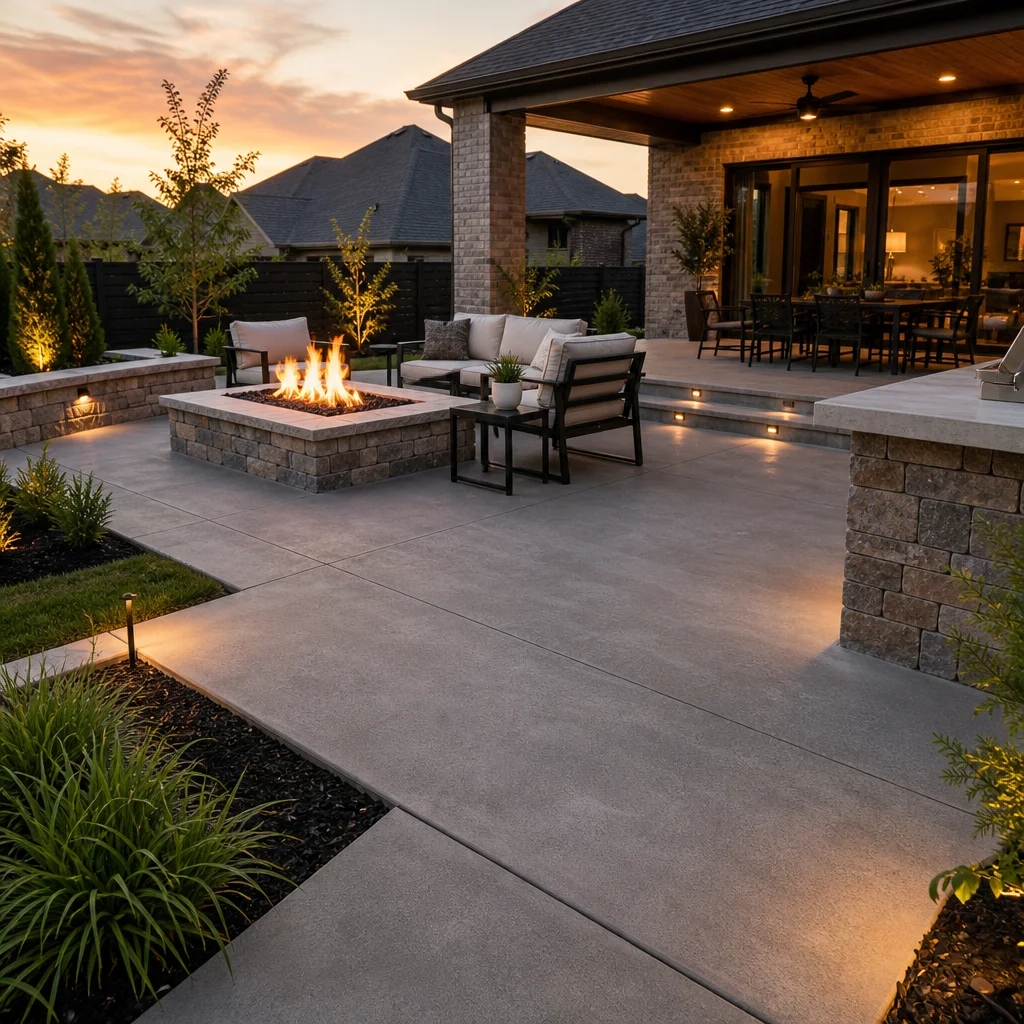
A strong portfolio shows variety: different patio sizes, materials (standard concrete, stamped concrete, stained finishes), and design styles. If every project looks similar or the contractor struggles to show recent work, that’s a red flag.
Next step: Request a portfolio with photos and client contact information, then spend 20 minutes calling references and asking about their actual experience.
3. Review Local Experience and Expertise
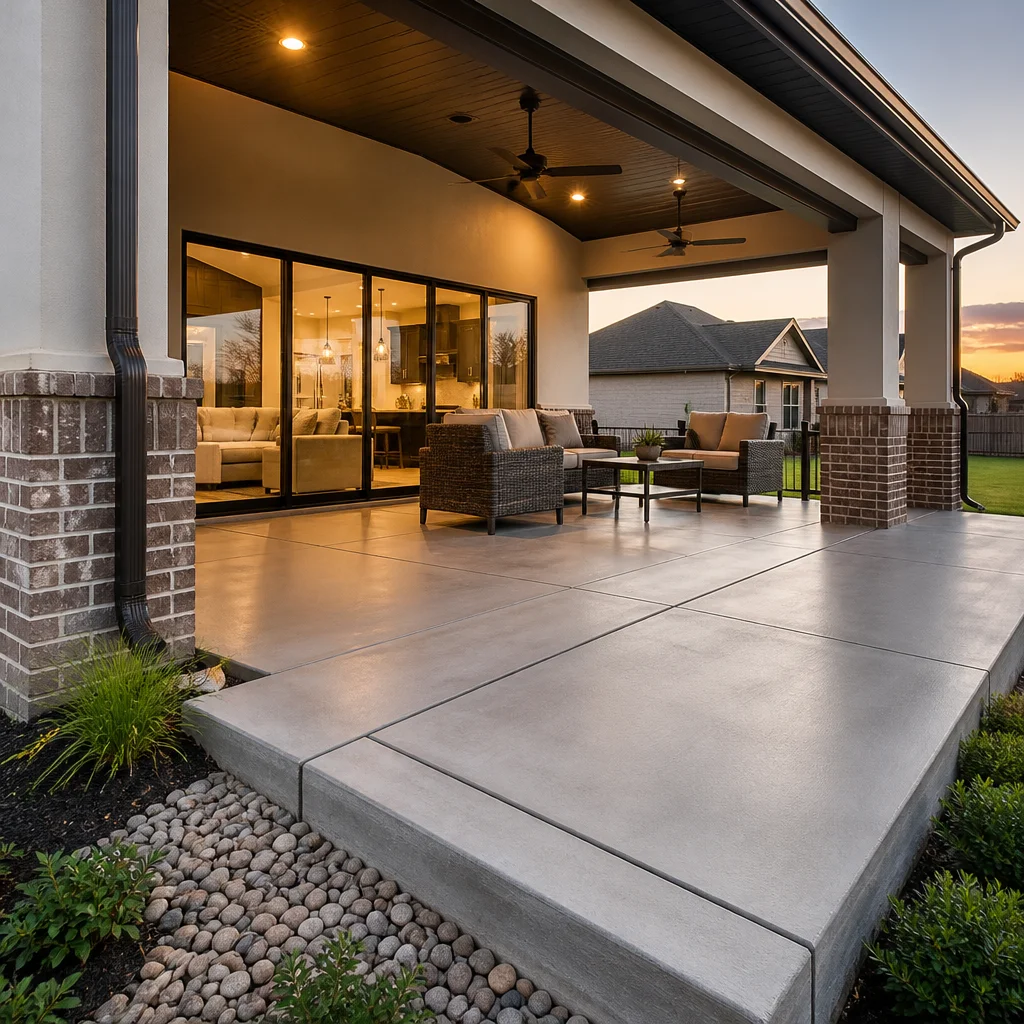
Lafayette’s climate and soil conditions create specific demands for patio construction. Heavy Louisiana rains require proper drainage and slope. Our acidic soils can affect concrete longevity if not properly sealed. Summer heat and humidity cycles put stress on concrete that contractors unfamiliar with the region might underestimate.
A contractor with deep local experience understands these factors and builds patios designed to handle them. They know which materials hold up best, how to properly grade for drainage, and which sealing treatments work in our climate. They’ve seen what fails and what thrives over time.
Ask how long they’ve been serving the Lafayette area specifically. Contractors who’ve worked here for 10 plus years have navigated multiple seasonal cycles and learned what works. They likely know local soil engineers, suppliers, and inspectors. This network creates efficiency and quality advantages.
Local expertise also means understanding Lafayette’s building codes and permitting requirements. Some patio work requires permits, and a knowledgeable contractor handles this properly rather than cutting corners on compliance.
Next step: Ask directly how many years they’ve worked in Lafayette and what they’ve learned about our local conditions that affects their patio construction approach.
4. Compare Detailed Written Estimates
Never rely on phone estimates or rough quotes. A detailed written estimate protects both you and the contractor. It specifies materials, labor, timeline, and payment terms in writing so there’s no confusion later.
Compare estimates side by side, but don’t automatically choose the lowest price. A significantly lower estimate often means the contractor is cutting corners on materials, skipping preparation steps, or underestimating the scope. Watch for vague line items like “labor” without specifics about what that includes.
Quality estimates break down: concrete grade and thickness, site preparation and excavation, reinforcement (wire mesh or rebar), finishing method, sealing, and any additional features like borders or integrated features. They specify the concrete mix design, air entrapment (critical for freeze-thaw resistance in Louisiana), and curing processes.
When comparing, make sure you’re truly comparing the same work. One contractor might include site cleanup and hauling away old concrete; another might not. One might include sealing; another treats it as an upgrade. Standardizing the scope across estimates makes comparison meaningful.
Understanding estimate components gives you the knowledge to ask the right questions and spot inconsistencies. A vague estimate is a warning sign that the contractor either doesn’t know their costs or is being deliberately unclear.
Next step: Request written estimates from at least three contractors and ask them to specify exactly what’s included, what materials they’re using, and what warranty they’re providing.
5. Assess Communication and Customer Service
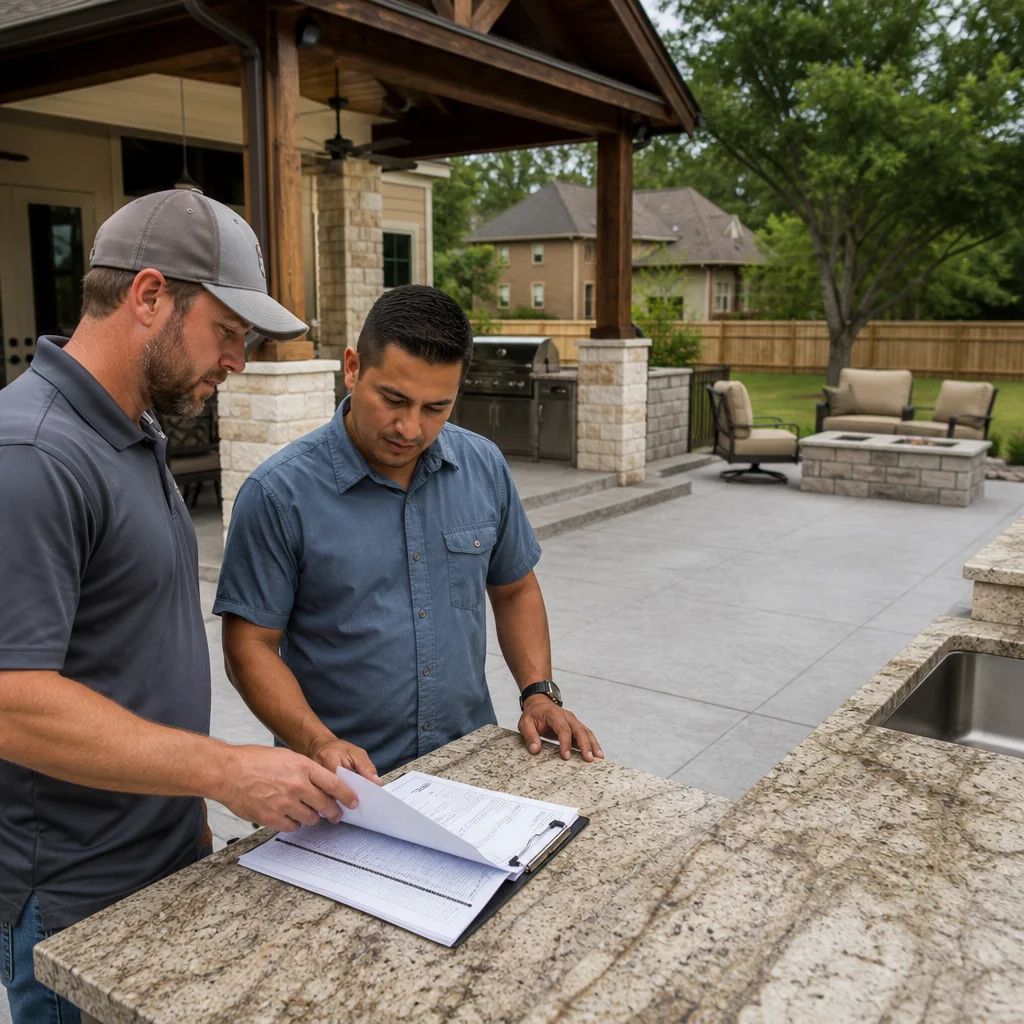
How a contractor communicates before the contract predicts how they’ll communicate during the project. Do they return calls promptly? Do they listen to what you want or push their preferred approach? Do they explain technical concepts clearly, or use jargon without clarifying?
Pay attention to whether they ask questions about your vision, timeline, and budget constraints. A contractor who takes time to understand your needs upfront designs better solutions than one who assumes a standard approach.
During your interactions, notice their professionalism. Are they punctual for consultations? Do they show up prepared with tools to measure and assess your space? Do they follow up with written summaries of conversations? These behaviors indicate whether they’ll manage your project professionally.
Good communication also includes setting expectations about the timeline, weather delays, potential challenges, and how decisions will be made if issues arise during construction. A contractor who clearly explains the process and your role in it reduces stress and surprises.
Next step: Have a detailed conversation with your top two contractor choices and notice whether they ask thoughtful questions about your project goals and concerns.
6. Confirm Warranty and Guarantee Offerings
Concrete patios don’t last forever, but quality work should perform well for many years. Reputable contractors typically warranty their work for 1-5 years against defects in materials and installation. The warranty should cover issues like cracking from poor base preparation, surface scaling, or improper finishing.
Understand what the warranty actually covers. Does it include seal coating for maintenance? Does it cover freeze-thaw damage, or does the contractor exclude weather-related issues? Are you required to maintain the patio in specific ways (applying sealant annually, for example) for the warranty to remain valid?
A warranty is only as good as the contractor’s willingness to honor it. A contractor who’s been in business for decades with satisfied customers is more likely to stand behind their work than a fly-by-night operation. This is another reason references and longevity matter.
Some contractors offer extended warranties or maintenance plans that include periodic sealing and inspection. These can add value, especially in Louisiana’s demanding climate, though they come at additional cost.
Next step: Ask specifically about warranty terms, what’s covered, what’s excluded, and how claims are handled if problems arise.
7. Evaluate Material Quality and Construction Methods
The best patio contractors don’t cut corners on materials or process. Standard concrete isn’t all the same. Quality concrete uses the right mix design for your climate, proper air entrapment to resist freeze-thaw cycles, and appropriate reinforcement based on load and soil conditions.
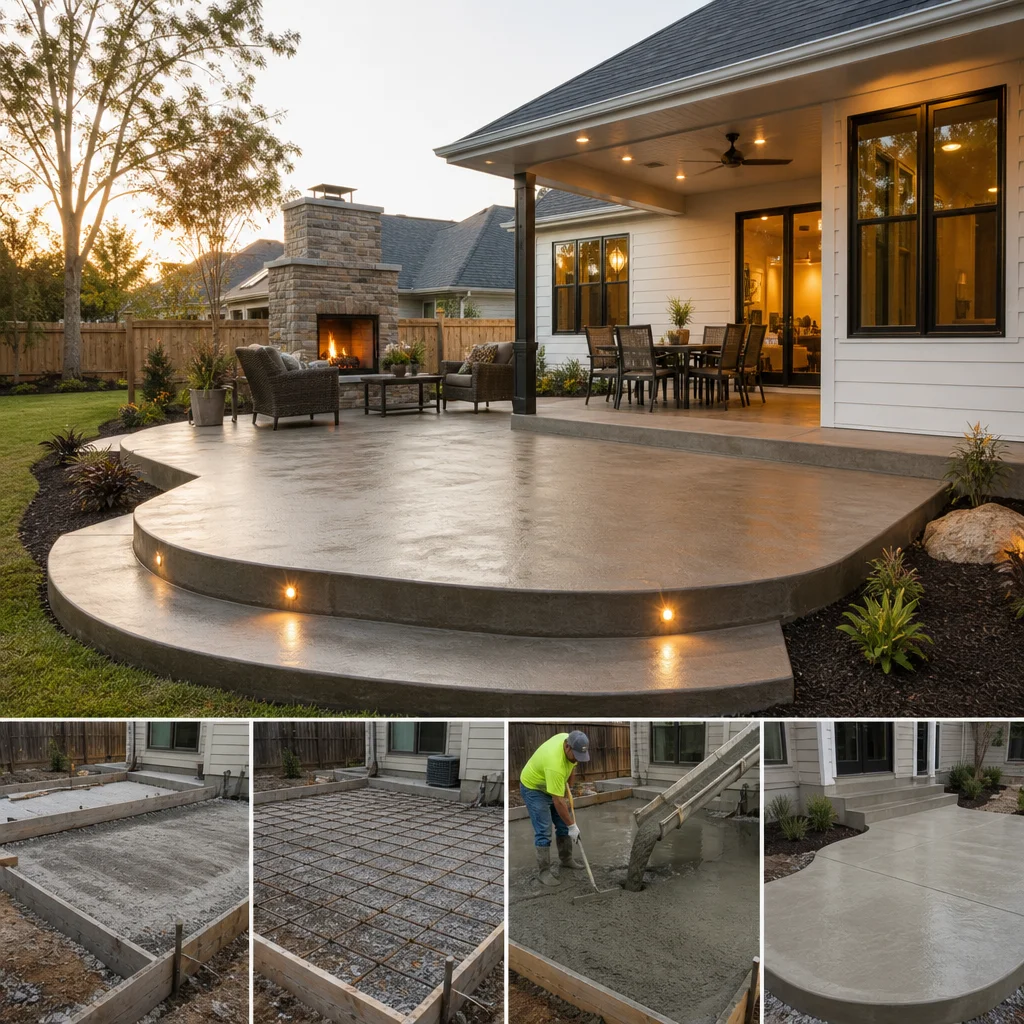
Ask about the concrete strength (compressive strength, measured in PSI). Residential patios typically use 3500-4000 PSI concrete, which provides durability and longevity. Lower strength concrete saves money short-term but fails sooner, especially in Louisiana’s climate variations.
Preparation is equally important as the concrete itself. A contractor who properly excavates, compacts the base, installs adequate gravel base, and accounts for proper drainage prevents future problems. Poor base preparation leads to settling, cracking, and failure years later.
Finishing method matters too. Hand finishing creates texture and appearance but requires skill. Some contractors use power trowels improperly, creating a polished surface that becomes dangerously slippery when wet. Proper finishing provides both aesthetics and safety.
Finally, discuss sealing. High-quality sealing protects concrete from stains, moisture penetration, and weathering. A contractor who recommends appropriate sealing and explains its importance demonstrates commitment to long-term durability.
Next step: Ask your potential contractors about their specific concrete mix design, base preparation steps, finishing methods, and post-installation sealing recommendations.
For further reading: Licensed and insured Lafayette contractor.
Frequently Asked Questions (FAQ)
How do we ensure quality on every patio project we complete?
We maintain high standards through our licensed and insured team, who follow proven construction methods and use quality materials on every job. Our process includes detailed planning, professional installation, and thorough site preparation to ensure your patio lasts for years. We also stand behind our work with warranty coverage so you can have confidence in what we build.
What should homeowners expect during the patio installation process?
We start with a free no-obligation estimate where we assess your space and discuss your vision for the project. Once you approve our detailed written proposal, our team handles all aspects of construction, keeping communication open throughout the work. We focus on minimizing disruption to your property while delivering the finished patio on schedule.
Can we handle patios in different styles or do we specialize in one type?
We work on a wide variety of patio designs and concrete finishes tailored to what our clients want. Whether you’re looking for a simple functional patio or a decorative space that enhances your backyard, we have the expertise to execute it. We’re happy to review your ideas during our initial consultation and show you examples from our completed projects in the Lafayette area.