Why Commercial Slab Settling Threatens Your Lafayette Business
Concrete slab settling isn’t just a cosmetic issue. When your commercial foundation shifts, it creates operational problems that ripple through your business. Uneven floors throw off equipment calibration, cause tripping hazards for customers and employees, and signal structural concerns that worry clients before they ever step through your door.
Lafayette’s soil composition and moisture fluctuations make slab settling a genuine risk here. The clay-heavy foundation typical in our region expands when wet and shrinks when dry, putting pressure on concrete slabs year-round. For businesses, this translates to potential liability exposure, costly emergency repairs, and disrupted operations at the worst possible times.
We’ve seen retail locations lose customers over visible cracking, warehouses struggle with equipment alignment on uneven floors, and office buildings face tenant complaints about safety concerns. Prevention is far more manageable than dealing with the aftermath of settling.
The Hidden Costs of Settling Concrete Slabs
Most business owners only notice slab settling when it’s advanced enough to create obvious problems. By that point, costs multiply quickly. A minor settlement issue that costs $2,000 to prevent can balloon into a $15,000 repair job once structural damage occurs.
Consider the secondary expenses:
- Equipment replacement or recalibration due to misalignment
- Temporary business closures during emergency repairs
- Liability claims from injuries related to uneven surfaces
- Increased insurance premiums after incidents
- Lost customer confidence from visible structural problems
- Potential code violations that delay reopening
Beyond the direct financial hit, settling slabs create uncertainty. You can’t reliably schedule expansions, plan renovations, or invest in facility improvements when the foundation itself is unstable. That uncertainty compounds over time.
How We Identify Early Signs of Slab Movement
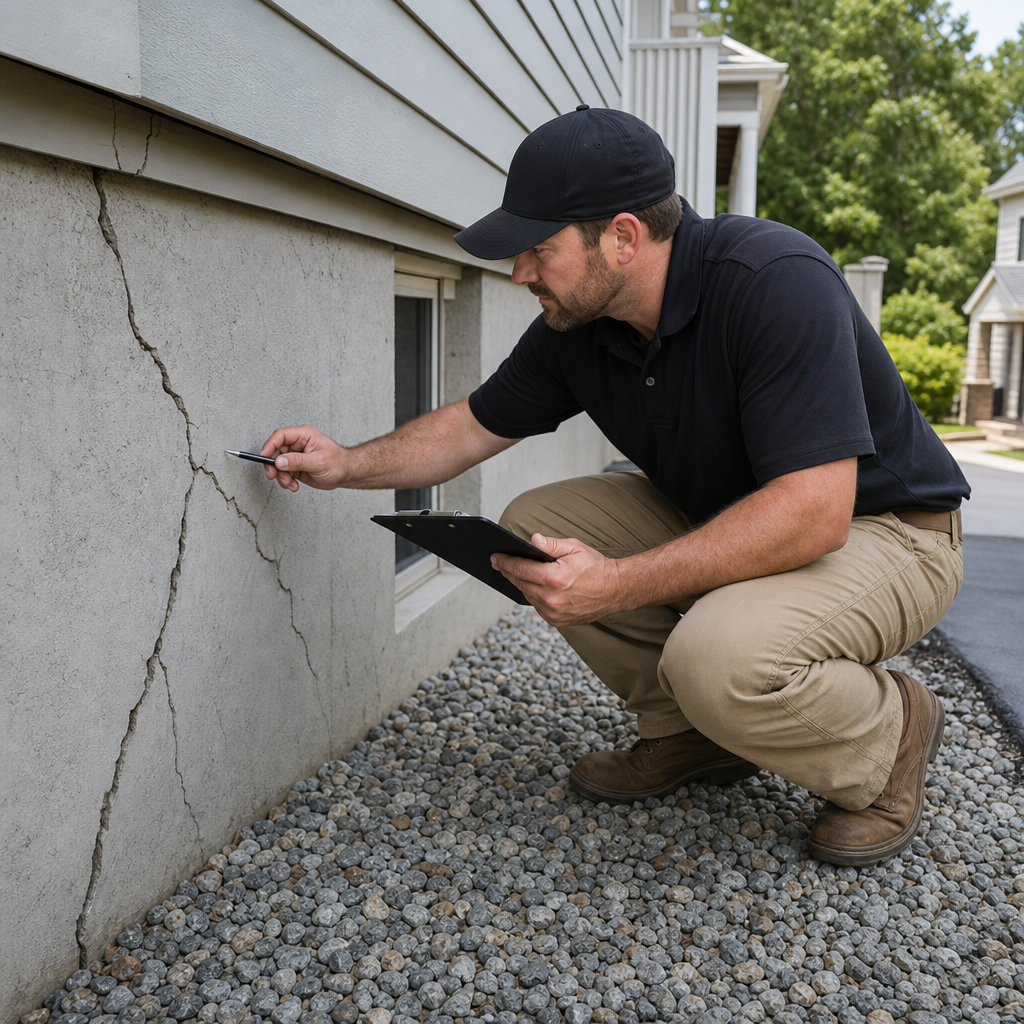
Early detection changes everything. We look for subtle indicators that most business owners miss until damage becomes severe. Our team knows what warning signs appear in Lafayette’s specific climate conditions.
We assess for these key markers:
- Hairline cracks that widen over weeks or months
- Doors and windows that stick or won’t seal properly
- Gaps appearing between walls and concrete floors
- Slight elevation changes across floor surfaces
- Water pooling in areas that previously drained well
We also evaluate site-specific factors: drainage patterns around your building, soil moisture levels, nearby vegetation that affects water absorption, and any previous settling history in your area. This context matters more than individual symptoms alone.
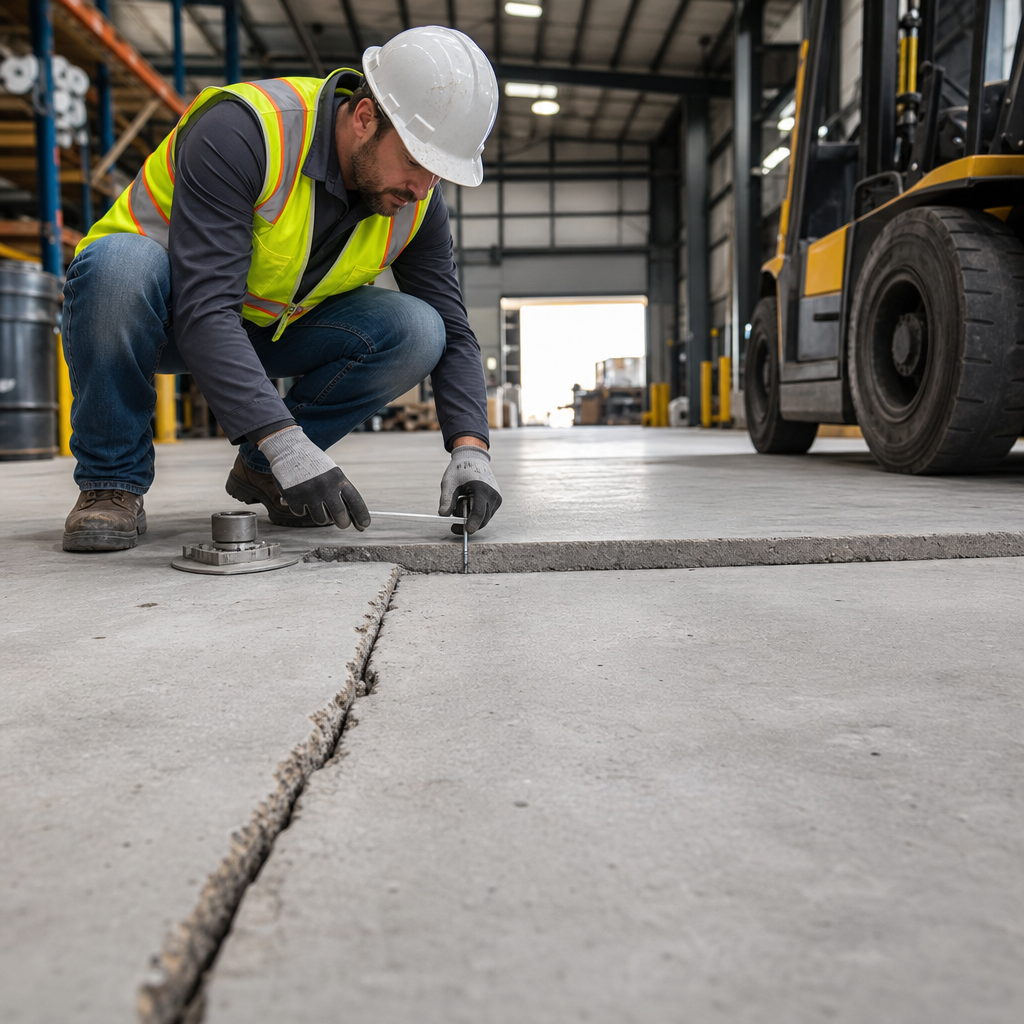
Our comprehensive inspection includes ground-penetrating radar to assess soil conditions beneath the surface, moisture testing, and detailed documentation of current conditions. This baseline helps us track any movement and adjust our prevention approach accordingly.
Our Proven Prevention Strategies for Commercial Properties
We implement prevention at multiple levels because settling rarely stems from a single cause. A layered approach addresses the various factors that destabilize commercial slabs.
Proper drainage management tops our priority list. Water that pools around your foundation accelerates settling, so we design systems that direct water away from the building perimeter. This includes grading adjustments, gutter extensions, and sometimes subsurface drainage installation.
We also specify appropriate concrete mixes for Lafayette’s climate. Standard concrete performs differently under our humidity levels and temperature swings than it does in drier regions. We adjust air content, water-cement ratios, and curing practices to create slabs that resist the expansion-contraction cycle that stresses foundations.
For new construction, we recommend our best ways to prevent slab settling approach, which emphasizes proper site preparation as the foundation for everything else.
Foundation Preparation: Getting It Right from the Start
We can’t overstate how much foundation preparation determines long-term slab performance. Poor prep work guarantees future problems, while solid preparation prevents years of headaches.
Our preparation process includes:
- Soil analysis to identify clay content and moisture characteristics
- Removal of unsuitable surface material and organic matter
- Base layer compaction to specified densities
- Moisture barrier installation to prevent capillary rise
- Subbase material selection matched to local soil conditions
We compact in controlled lifts rather than one heavy pass. This builds a stable base that resists differential settling. The moisture barrier deserves particular attention in Lafayette, where groundwater can rise into the concrete base and destabilize it.
For commercial properties, we sometimes recommend a gravel base with geotextile fabric rather than compacted soil alone. The additional cost upfront prevents settling that would cost exponentially more to repair.
Ongoing Maintenance to Protect Your Investment
Prevention doesn’t end at installation. Maintenance practices over the life of your slab determine whether settling develops years later. We help our clients understand what ongoing care looks like.
Regular drainage maintenance keeps water moving away from your foundation. Gutters need cleaning, downspout extensions need inspection, and landscaping should slope away from the building. Annually, take 30 minutes to verify water isn’t pooling anywhere adjacent to your concrete.
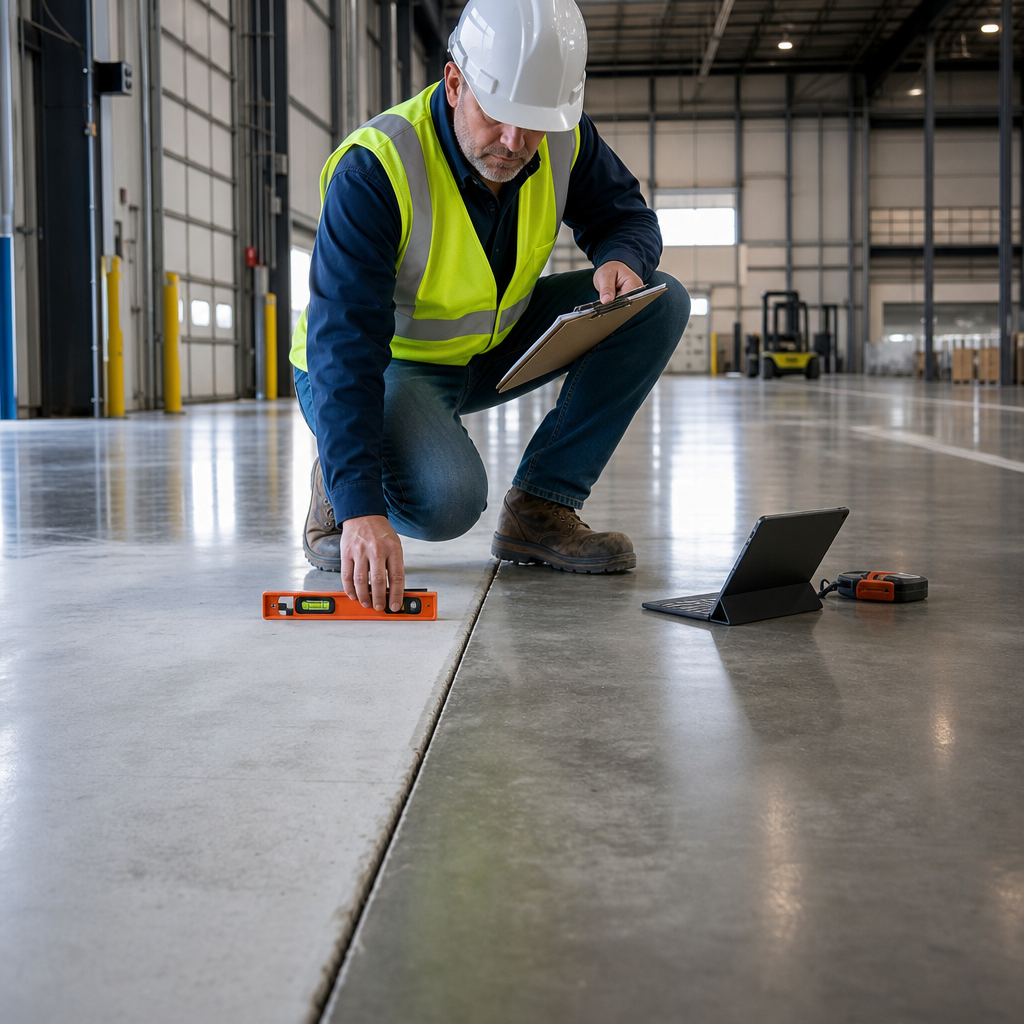
Monitor for the early signs we mentioned earlier. Photograph cracks and check them periodically. If a crack grows noticeably over weeks or months, contact us before the problem advances. Early intervention addresses settling while options remain affordable and non-invasive.
Manage vegetation carefully near your building. Tree roots draw moisture from soil, causing localized drying and settlement. Conversely, dense landscaping that prevents evaporation can keep soil oversaturated. We recommend maintaining clear space within several feet of your foundation.
Our Comprehensive Assessment Process
When we evaluate a commercial property for slab settling risk, we conduct a thorough assessment that goes beyond visual inspection. This detailed approach identifies problems before they impact your business operations.
We start with historical research. Has the property settled before? Are there records of previous repairs? We talk with facility managers about any changes they’ve noticed and review building history.
Our on-site assessment includes moisture testing in the concrete and soil, measurement of floor elevation across different areas, documentation of any visible cracking or structural concerns, and evaluation of drainage systems. We use precision equipment to identify even millimeter-scale elevation changes.
We also assess environmental factors specific to your property: proximity to trees, gutter and downspout functionality, grade slope around the building perimeter, and soil composition from available site records. This complete picture lets us identify which prevention strategies will be most effective for your situation.
How We Execute Prevention Solutions
Execution requires precision and attention to detail. We don’t take shortcuts, even when working around active business operations.
For new construction, we implement prevention from the foundation stage. This means proper site prep, correct material selection, controlled curing practices, and drainage system installation before the building rises above the foundation.
For existing commercial properties showing early settling signs, we often recommend slab leveling combined with drainage improvements. Mudjacking or polyurethane injection can raise settled areas back to proper elevation while we simultaneously address the moisture and soil issues causing settling.
In some cases, we install subsurface drainage systems or extend downspout lines further from the building. These modifications might seem minor, but they fundamentally change how water interacts with your foundation.
Our work is always backed by our licensed and insured team. We carry comprehensive liability coverage and maintain all necessary licensing for commercial projects in Lafayette and surrounding areas.
Real Results from Lafayette Commercial Projects
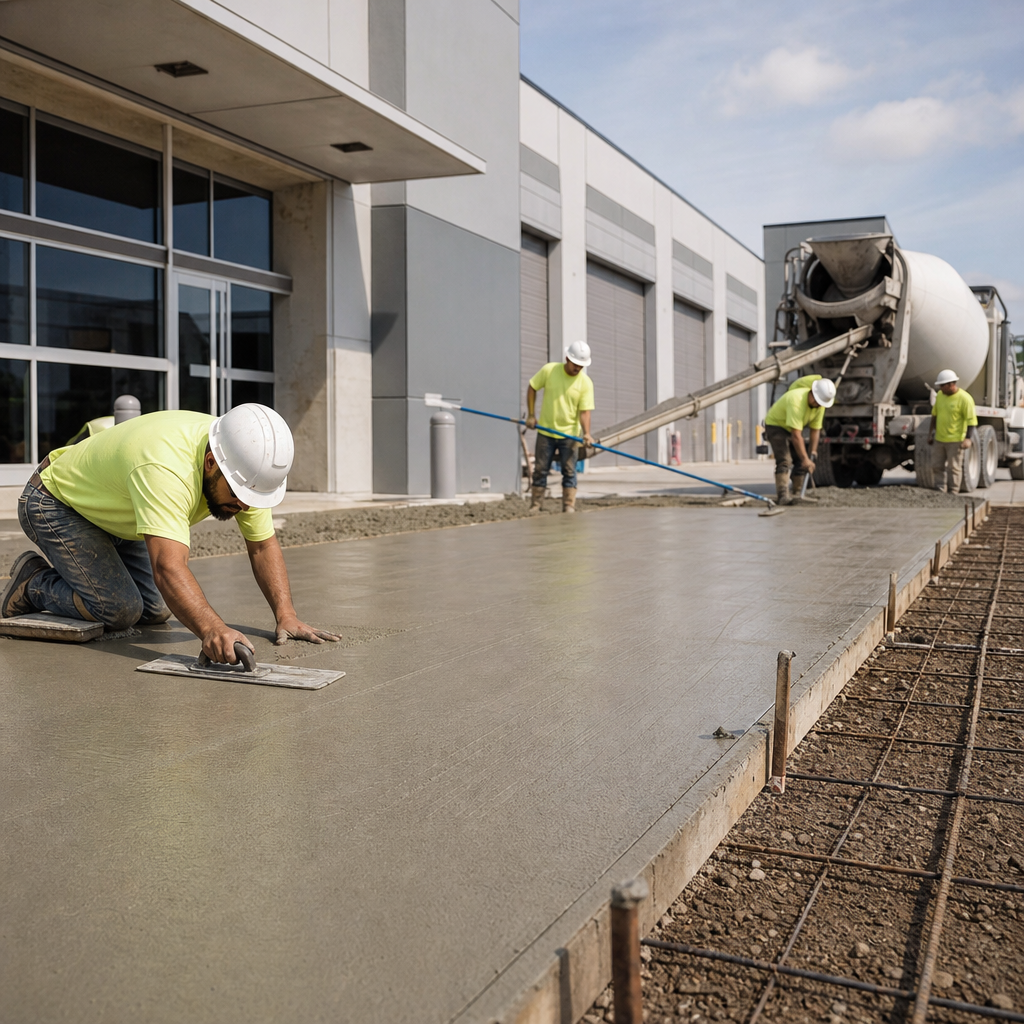
Our experience across Lafayette’s commercial landscape has taught us what works reliably in our specific environment. A few examples illustrate the difference professional prevention makes.
We recently worked with a warehouse facility that had noticed slight floor elevation changes affecting equipment alignment. Rather than waiting for settling to progress, we addressed the underlying drainage issues around the building perimeter and installed a minor moisture barrier retrofit. Six months later, elevation measurements confirmed no additional settling had occurred, and the equipment continued operating without alignment adjustments.
A retail location avoided a catastrophic repair bill by catching hairline cracks early. We assessed the situation, identified soil moisture as the primary factor, extended their gutter system further from the building, and implemented monitoring. Two years later, those initial cracks haven’t widened, and the property has remained structurally sound.
These outcomes didn’t happen by accident. They resulted from careful assessment, appropriate prevention strategies implemented promptly, and ongoing monitoring to catch any issues early.
Protecting Your Business with Professional Concrete Services
Your commercial concrete foundation deserves the same professional attention you give every other critical business system. Prevention costs less than emergency repairs and protects your operations from disruption.
We’re ready to assess your Lafayette commercial property and recommend prevention strategies tailored to your specific situation. Our process starts with a free no-obligation estimate where we evaluate your property, discuss concerns, and outline what we recommend.
Whether you’re planning new commercial construction and want foundation done right, or you’ve noticed early settling signs in an existing building, contact our team. We’ll help you protect your investment and keep your business operating smoothly for years to come.
Frequently Asked Questions (FAQ)
What causes commercial slab settling in Lafayette?
We see slab settling occur when the soil beneath your concrete hasn’t been properly prepared or when ground conditions change over time. Poor drainage, inadequate compaction during installation, and soil erosion are the main culprits we address with our clients. We’ve also found that heavy machinery traffic and seasonal moisture fluctuations accelerate the settling process on commercial properties.
How can we prevent settling issues before they start?
We begin with thorough foundation preparation, including proper soil testing and compaction to ensure a stable base for your concrete. Our team installs appropriate drainage systems and uses reinforced materials designed to handle Lafayette’s climate and soil conditions. We also recommend regular maintenance inspections so we can catch potential problems early and make adjustments before significant damage occurs.
What’s our process if settling has already begun?
We start by conducting a comprehensive assessment to measure the extent of movement and identify underlying causes at your property. Depending on our findings, we may recommend concrete leveling, slab replacement, or additional drainage solutions. We’ll walk you through all options and explain how each approach protects your business from further complications.